

Octopath Traveler 0 isn’t really Octopath Traveler. It’s good. It’s even excellent, frequently and for long stretches of time. But it’s not Octopath Traveler for this very simple reason: Both the original Octopath Traveler and its sequel told the stories of eight (“Octo”) different people, who would eventually come together (“All roads that you travel on, if you will, lead to Rome”) to tackle the later game challenges together. Octopath Traveler 0 doesn’t have this structure at all.
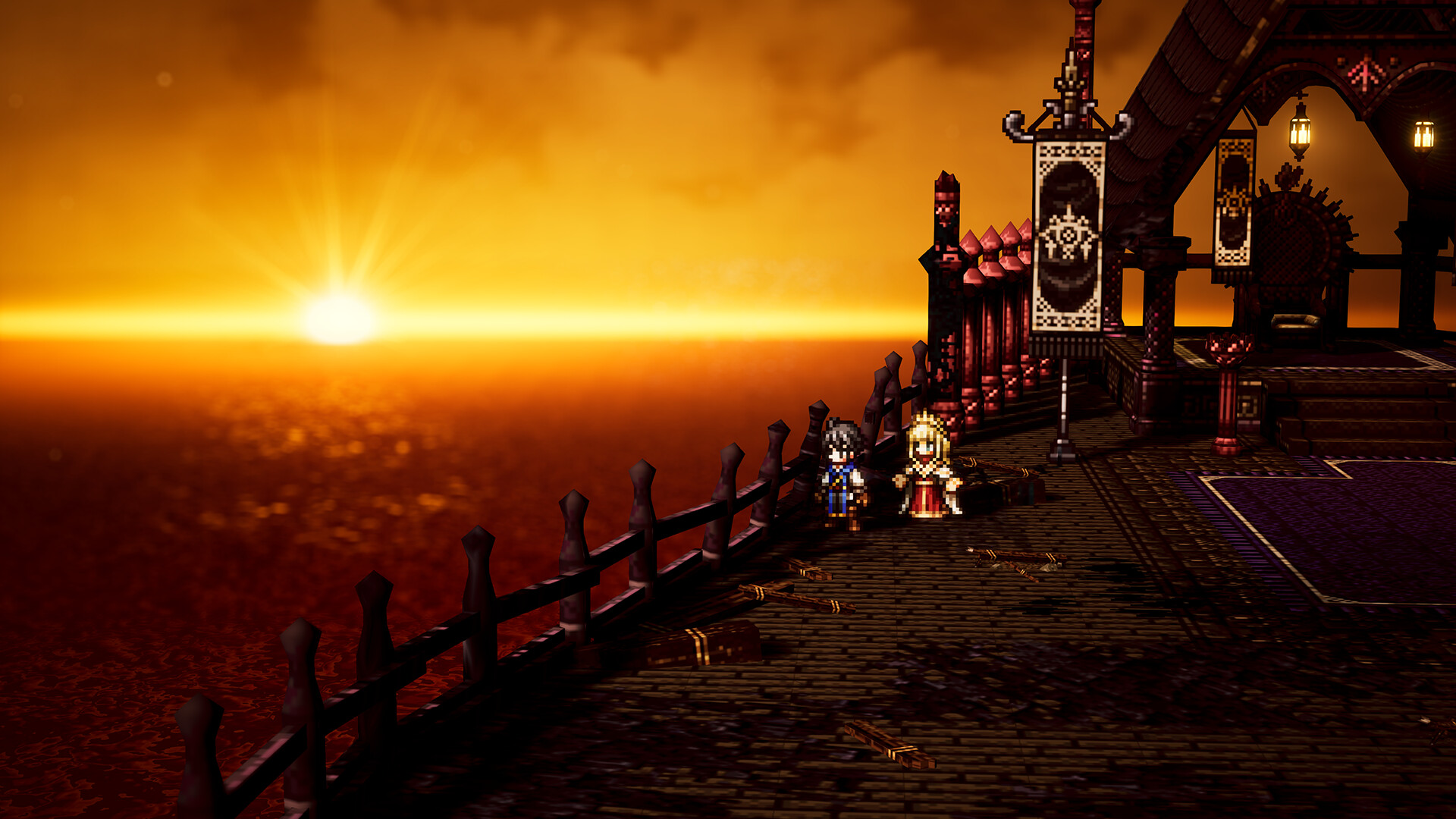
Aesthetically, it looks the part, with yet another breathtaking application of the HD-2D engine. I think the thing I love most about it is that it allows for some enormously complex and subtle animations, and given the often-emotional storytelling that you’ll find in Octopath Traveler, it really needed emotive, evocative sprites. In fact, I would go as far as to argue that because sprites are particularly good at demonstrating a single emotion at a time, this approach is a superior way of depicting the melodrama (in the theatrical sense of the word) when compared to what the biggest budget “realistic” graphics engine could achieve. This is sprite art as a form of poetry, and it has always been the most immediately appealing thing about Octopath Traveler.
Where it diverges from its predecessors is that you don’t follow a story of eight characters bound by fate. Instead, you play as a self-insert protagonist, who travels the world recruiting dozens of characters in her efforts to rebuild her town that ravagers burned to the ground, and extract revenge and justice for the fallen. Conan Traveler/Red Sonja Traveler would perhaps be a more fitting title.

Or at least it is to start. I have to be clear here, there’s no way you can cover the entire plot of Octopath Traveler 0, in part because it’s of a scope and length that makes the Legends of Heroes titles seem modest by comparison. Every time you think that you’re coming to what should be an end point, the game just finds another way to push on.
This is because its roots are in a free-to-play gatcha game, and like all gatcha games, the developers need to keep people logging in and playing into perpetuity, so they keep throwing more plotlines, characters, and escalation into the mix. The developers have removed the gatcha mechanics and tuned the experience to fit with a premium-priced title (and have done it so well that unless you knew it was originally a gatcha game, you would likely never have guessed), and then really allowed the characters and epic scenario to breathe. It’s genuinely impressive how well the characters and scenarios have been written, and how thought-provoking some of the themes around the key “villainous traits” of wealth, power, and fame can be. Assuming you can stomach the sometimes slow slog of it all, Octopath Traveler is right up there with the aforementioned Legends of Heroes as an example of game writers that understand that the epic narrative genre is about more than throwing length at the player for the sake of it.
The combat side of things allows you to drag up to eight characters around with you (so I guess there is an “octo” in the game after all), and sticks to the series’ traditions otherwise. Just like with Bravely Default, you can build up actions over a series of turns to unleash up to four attacks in one go. Meanwhile, if you attack enemies with something that they’re weak to, a little shield with a number in it will start ticking down. Once it hits 0 the enemy is stunned and you get a free turn where attacks will do extra damage. Ideally, you want to trigger this stunned state when all your characters have maximum bonus attacks to burn, and really reign hellfire on the defenceless enemy.
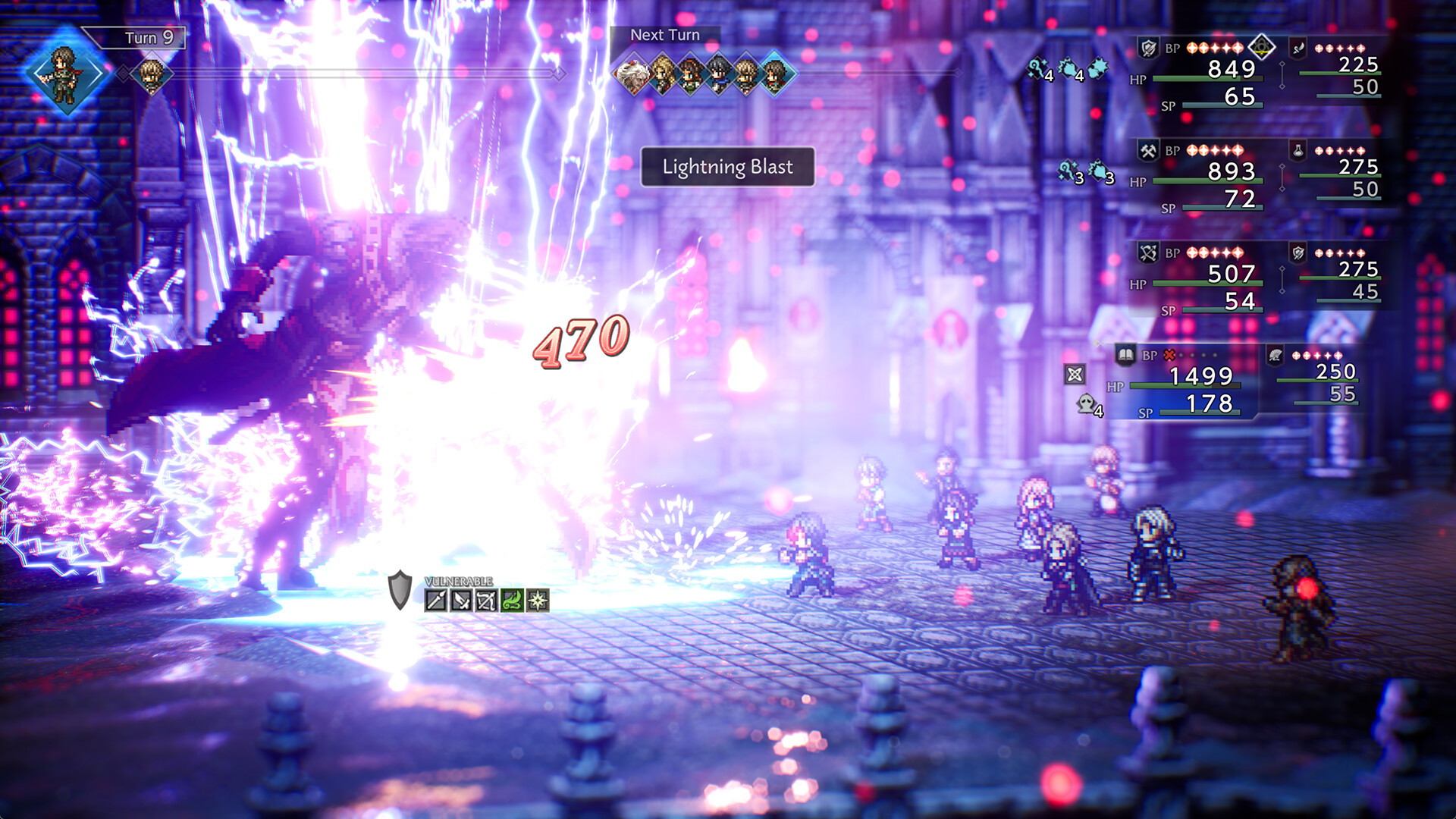
It’s a highly strategic combat system and more than willing to punish players who don’t think tactically about it. Waste the immense firepower that you have potential access to, and the enemy will flatten you, even in the early stages of the game. With so many characters to fill the party out, and with the ability to highly tailor and switch between skills for your own hero, Octopath Traveler 0 has an almost staggering level of “min-maxing” available for players who really want to take advantage of that.
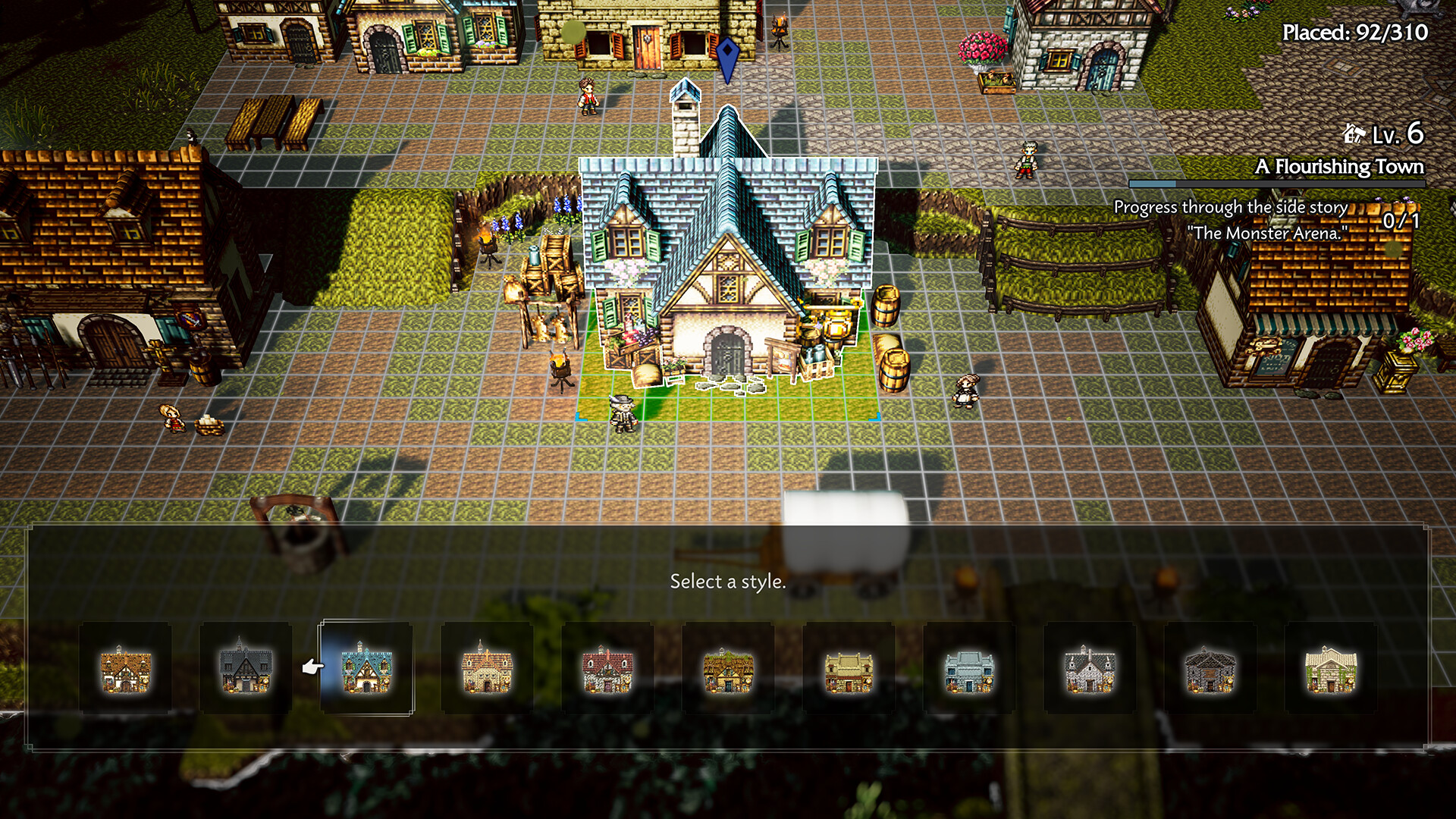
If you want to take a break from the combat, then you can spend time focusing on building up a new town from the ruins of your village. It’s not Sim City, of course, but you do need to collect resources, build the right structures and find the right people with the right skillsets to bring into town to build up a thriving community. As you build, you’ll achieve various bonuses to help you in your quest – cheaper shops and so on – and a broad range of aesthetic options encourages you to be creative with how your new home will look. Again, this is a slow grind, but the town arc does have a plotline of its own that is worth following, and the end result is rewarding.
Really, the only thing I don’t care for is the need to use your character’s various abilities on NPCs. You’ll need to try and goad information out of them, or convince them to give you their spare items, for example. This boils down to a percentage chance of success, with the consequence for failure being that your reputation in the local area will decrease. You can always cheat your way around this by saving the game immediately before an attempt, and exiting and loading again until you pass the attempt. It’s a silly and arbitrary system that adds nothing to the rest of the game, and I don’t know why Square Enix persists with putting it into this series.
It just goes to show the strength of Octopath Traveler that this one entirely playable and only slightly inelegant mechanic is my biggest issue with the game. Gorgeous art, an excellent soundtrack, a massive epic narrative that actually feels earned thanks to the strength of the writing and characterisation, and an exciting, tactical combat system. Yeah, it is, quite genuinely, an 80+ hour game, but that’s what the Christmas break is for, right?




The idea of “sprite art as poetry” is absolutely fascinating and makes so much sense. I’ve never encountered that idea before but it explains so much about how sprite games can still be so emotionally resonant even in a time dominated by “realistic” graphics that often feel dry and empty. Love it!
I hadn’t really thought about it before sitting down to write this review, but thank you! I feel like I should write more about this. I shall dwell on it 🙂