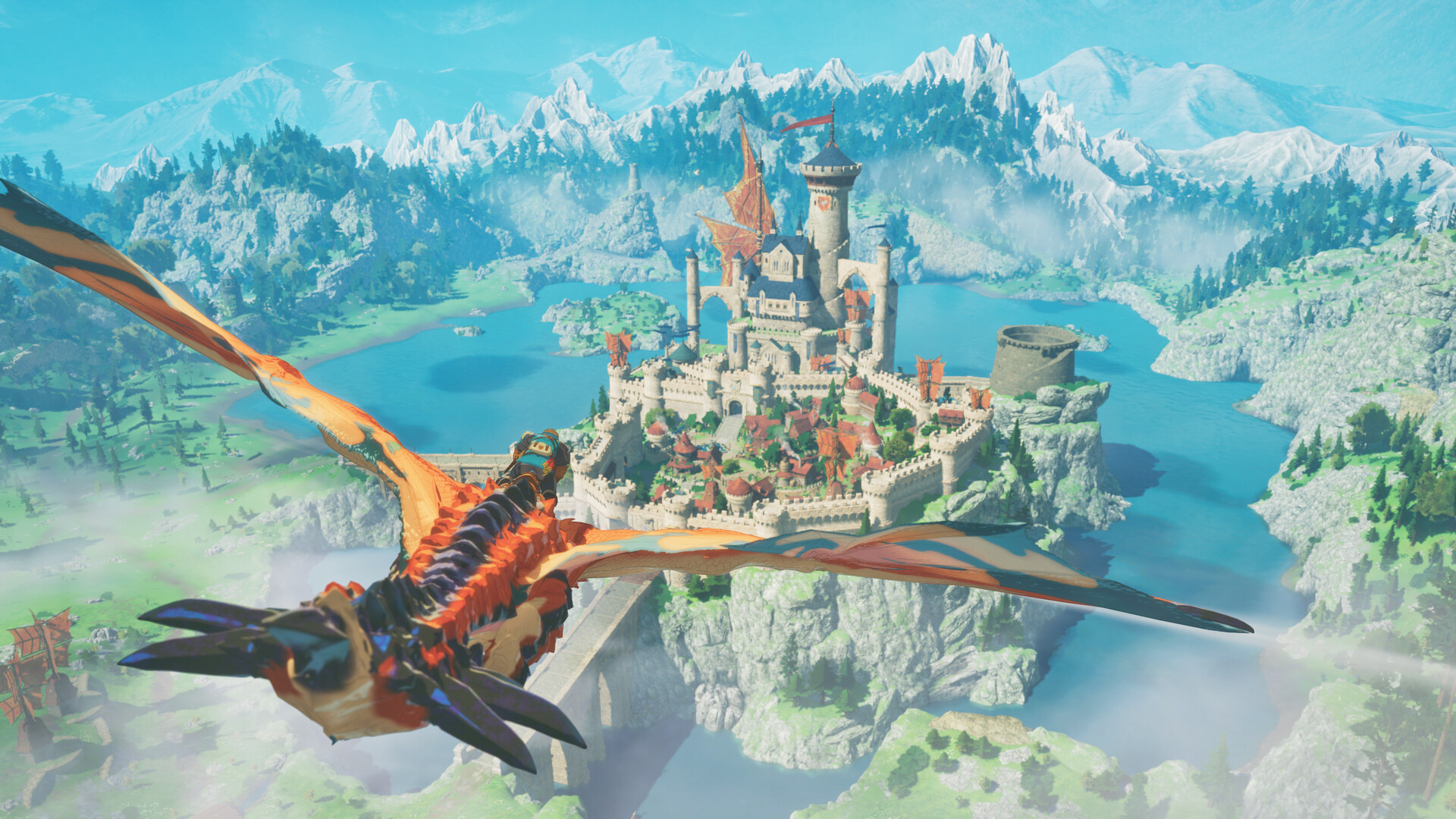


For people who enjoyed the vibes of Monster Hunter, but found the challenging, highly technical action combat to be overwhelming, Capcom came up with the Monster Hunter Stories series. The first two were enjoyable, but with Monster Hunter Stories 3: Twisted Reflection, Capcom has landed on something really special indeed.
It also feels like Capcom’s response to criticism that has been levelled at the Monster Hunter series, and bubbled away under the surface for some time now. In Monster Hunter, you’re thrown into the role of a character who is… shall we say, disruptive to the local ecosystems. Whether it’s taking down the big monsters (who have clearly settled in to be part of the equilibrium of the environment, else the sheer power of them would mean the land around them would be a wasteland), or simply slaughtering otherwise peaceful beasts for a steak or set of bones to upgrade their armour, Monster Hunter allowed players to exploit the environment with little care or concern for the damage they were doing.
Monster Hunter Stories goes in a very different direction. Here, particularly with Stories 3, you’re cast as a character whose job and very reason for being is to keep the environment in equilibrium. Rather than slaughtering monsters for their resources, you’re instead encouraged to preserve eggs and form close relationships with the monsters that you raise (saving many endangered species as you do). The main enemies are monsters that have gone “feral” and become a danger to the environment around them. The overarching plot also touches on some key thematic concerns, too, including a generally well-executed metaphor for the upcoming conflicts we face in the real world if we allow climate change to start rendering parts of the planet uninhabitable.

That’s not to say it’s overly serious – the characters are all cutsey anime for a reason, and one of the main sidequests is tracking down Monster Hunter’s pig-like characters, all of which are wearing adorable and also often very funny costumes. But there is a genuinely interesting and heartfelt story bubbling underneath the weird and wonderful aesthetics and characterisation, and it’ll keep you playing just like any good JRPG’s narrative will.
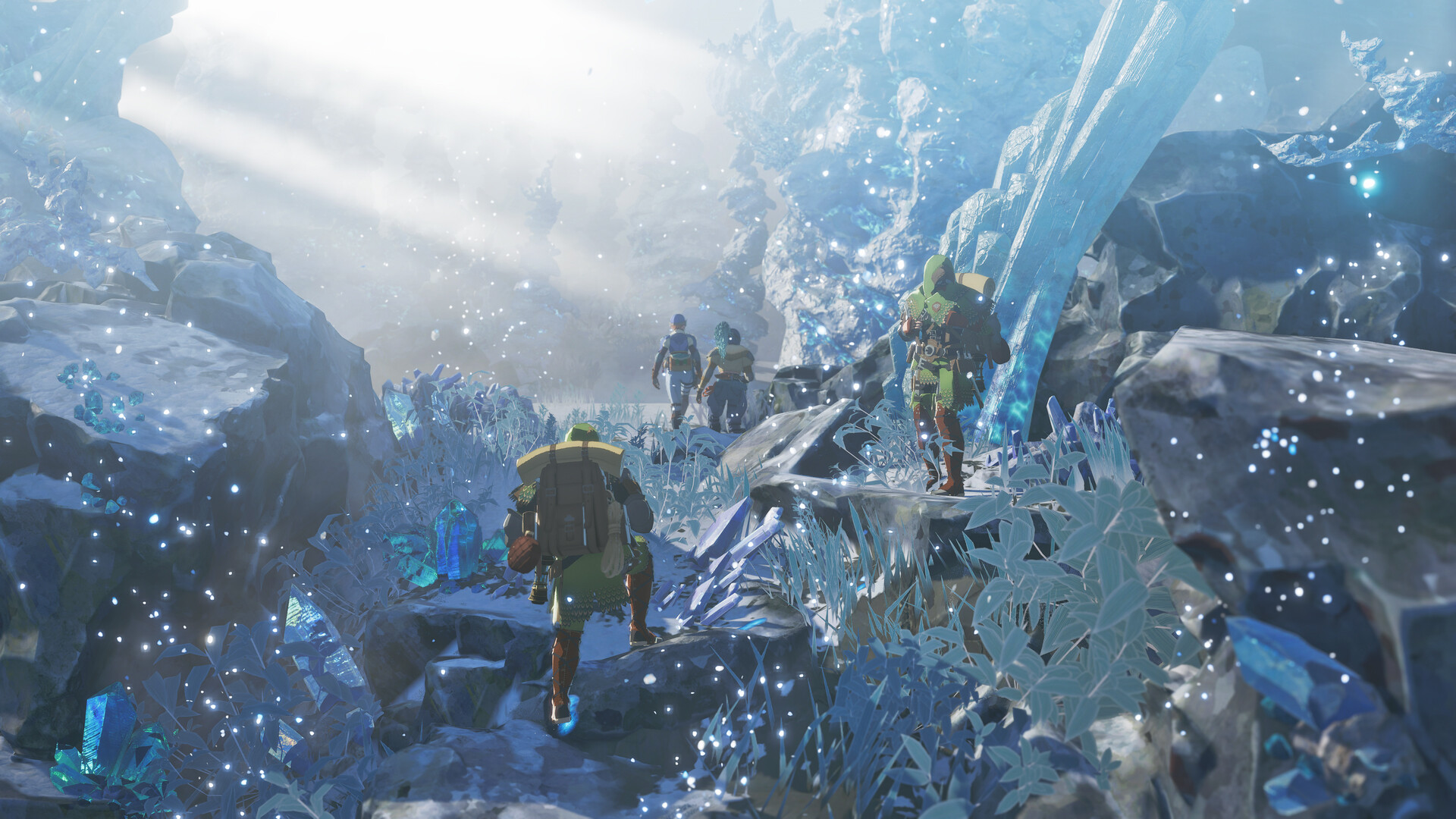
There’s also a deeper focus on characterisation and standard RPG-like banter between the characters, too. Monster Hunter Stories 3 is structured like a standard JRPG, with similar mission structures, in a massive world that invites exploration. At first, you’ll be limited in where you can go, but you’ll acquire a stable of different monsters, each with its own abilities, and after a long introduction, you’ll be able to largely explore for yourself. You can also set up camps, interact with the companions you have with you at times, and so on. There are probably people out there who still don’t realise just how traditional the JRPG structure of the Stories series is, and that’s a pity, because any genre fan who misses Stories 3 is really missing a masterclass in understanding what makes the genre tick.
Combat does have several tricks of its own, however. First and foremost, while you’re saving all those monsters as a good deed, you’re also doing so because you’ll be able to take them into combat, and there’s a Pokémon-like system of min-maxing monster stats at play for players that want to really engage with the breeding and specialisation systems.
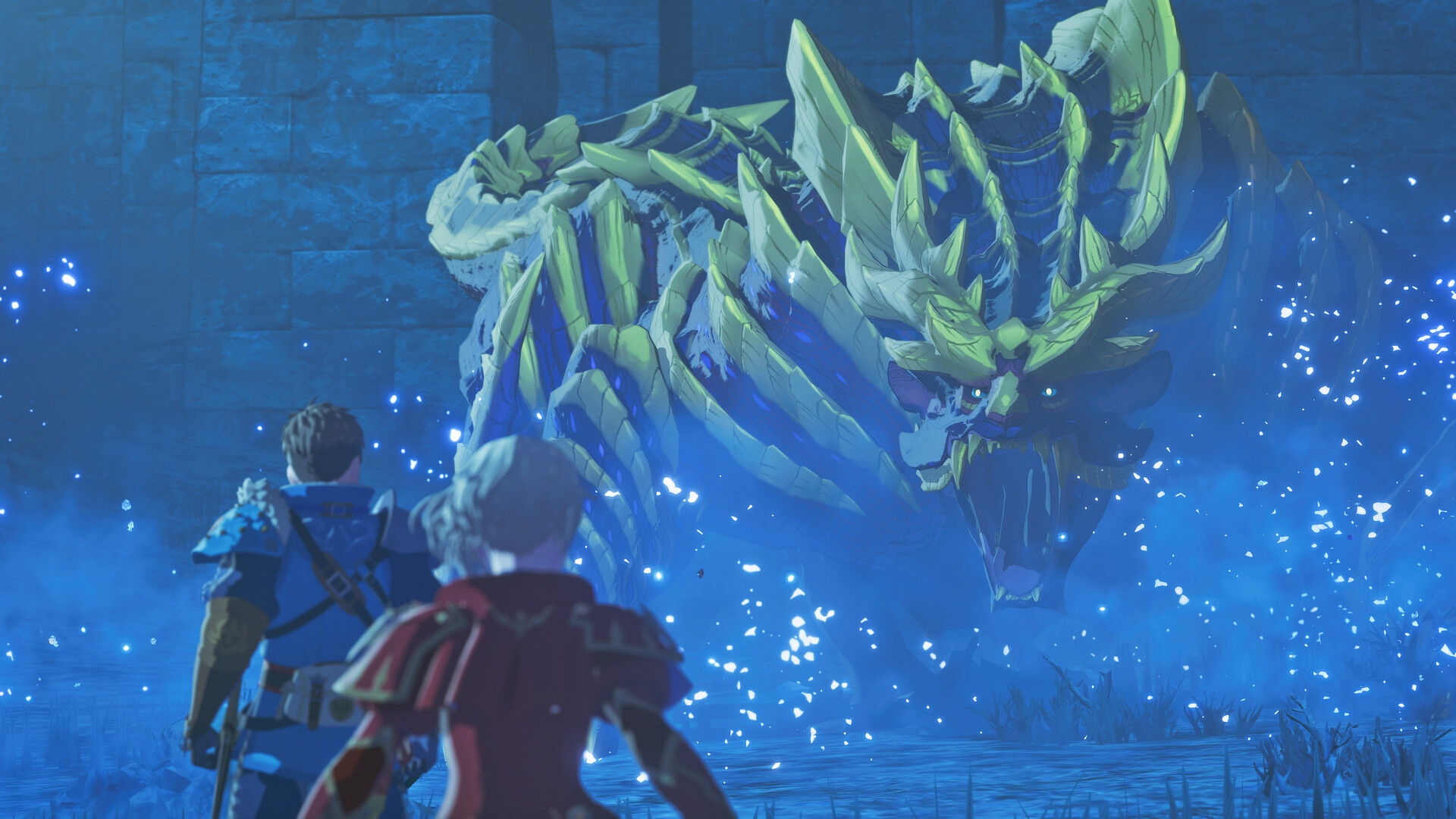
Battles themselves are turn-based affairs. At a very basic level, Monster Hunter Stories 3 operates on a “Rock-Paper-Scissors” system where Speed, Power, and Technical skills each have one weakness and one strength. If a monster attacks you when you use a skill that they’re weak against, you’ll get a free hit. It goes the other way too, however, and monsters are able to change their attack preferences and mix things up in a way that can make fighting them – especially newer monsters that you haven’t fought much of before – nail-biting.
On top of that, stronger monsters have crystals growing out of them, which give them some lethal abilities until they’re destroyed. The challenge is that those lethal abilities often mean defensive or counter skills that can make targeting the crystals a risk in itself.
You do have a host of abilities in your pocket that can help counter the raw power and massive health bars of the enemy monsters, however. For one thing, once you have battered through a monster’s defences, you temporarily stun them, which allows you to do an “all-in” attack with your party for massive damage. It’s also possible to build up a special meter and, once full, ride your monster into battle. This unlocks some spectacularly powerful attacks and specials.
There are other quirks that you’ll learn along the way, too, with the grand sum being a surprisingly tactical and complex combat system. And one that is, at times, exceedingly difficult. Monsters can do an incredible amount of damage, and it only takes one or two bad turns for defeat to suddenly look very likely. While the turn-based combat still means the game is more accessible than the main Monster Hunter series in the sense that more people can play it and not have the controls and intense action overwhelm them, the developers clearly listened to the complaints of people that found the previous two Stories titles to be too easy, and came out here to ensure that almost every encounter felt like it was a meaty, challenging experience.
The game runs really well on Switch 2, all things considered. I haven’t played it on PC or the big consoles to compare, but the frame rate is pretty steady at 30fps (and fps are much less of an issue for turn-based games). What is really impressive is being able to climb to the top of a mountain and see some gorgeous vistas pan out in front of you. And then, in combat, the really big special attacks have the kind of visual energy and spectacle that is right up there with Square Enix’s finest work with the summons specials in the Final Fantasy series.
It is hard to shake the feeling that Monster Hunter Stories 3 is going to slip under the radar, and that would be a real shame. This is not merely a charming sidestep for Monster Hunter fans. It is a confident, ambitious JRPG in its own right, with strong storytelling, smart systems, and a clear identity. For the first time, the spinoff feels every bit as essential as the main series.