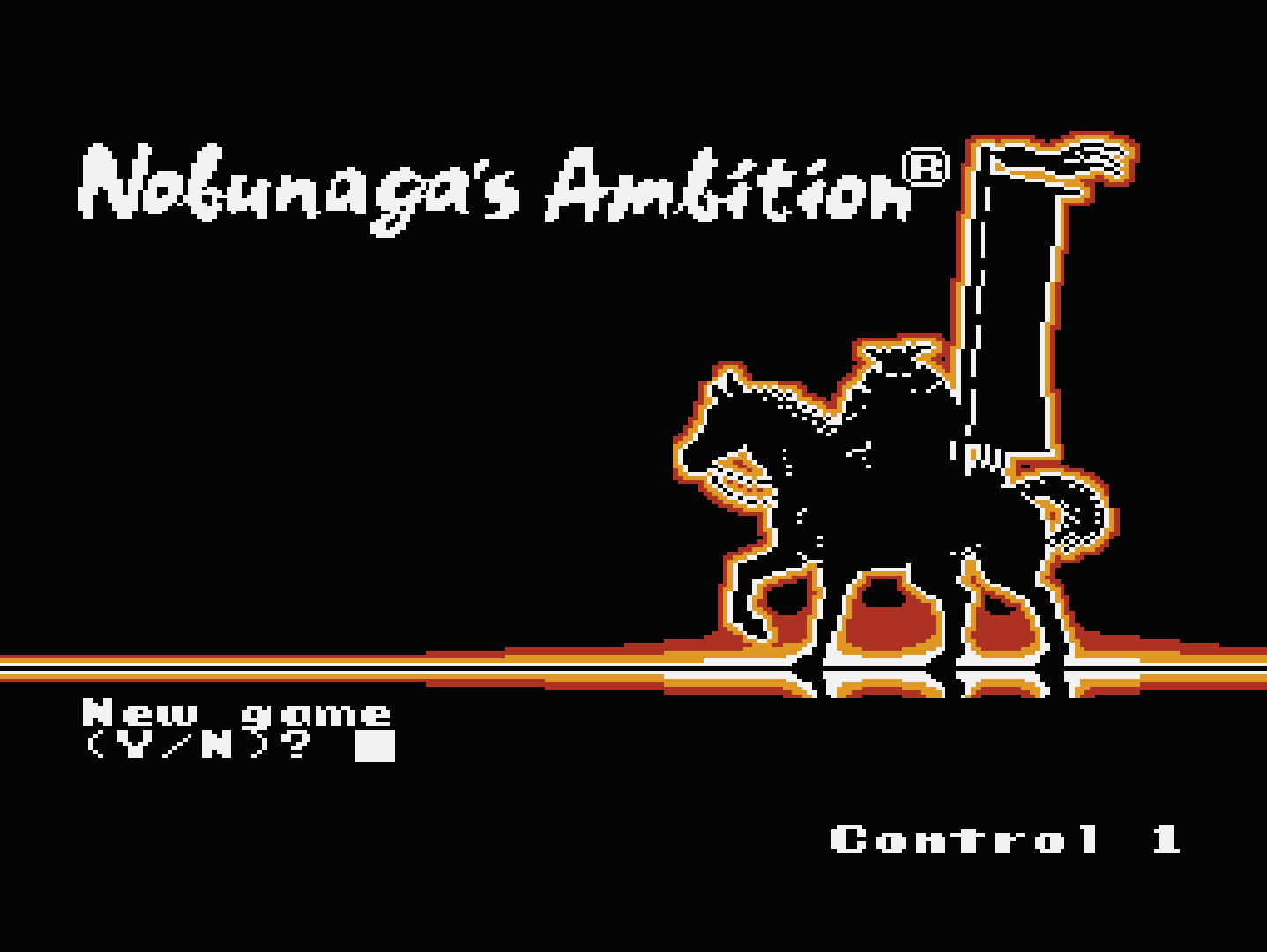


Just when I think my love for the work of Hamster Corporation has peaked, the team goes and finds a whole new level. Arcade Archives is doing the good lord Hatsune Miku’s work in preserving a whole bunch of arcade games that the rights owners either can’t, or see little value in. Now, the team is turning its attention to console games as well, and Console Archives Nobunaga’s Ambition is one exceptional early statement.
Nobunaga’s Ambition is one of the oldest serious strategy properties in existence. Consider this: The first Europa Universalis was released in 2008. Age of Empires was 1997. Command & Conquer 1995. Heroes of Might & Magic was also 1995. Warcraft 1994. Civilization was released in 1991.
Nobunaga’s Ambition was 1983. Almost a full decade before Civilization. That release was in Japan only, but the series still made its way out west a full half decade before almost any other strategy game, with that game (Nobunaga no Yabo 2, or Nobunaga’s Ambition) released on eight-bit consoles globally in 1986. That is the game that Hamster has preserved here.

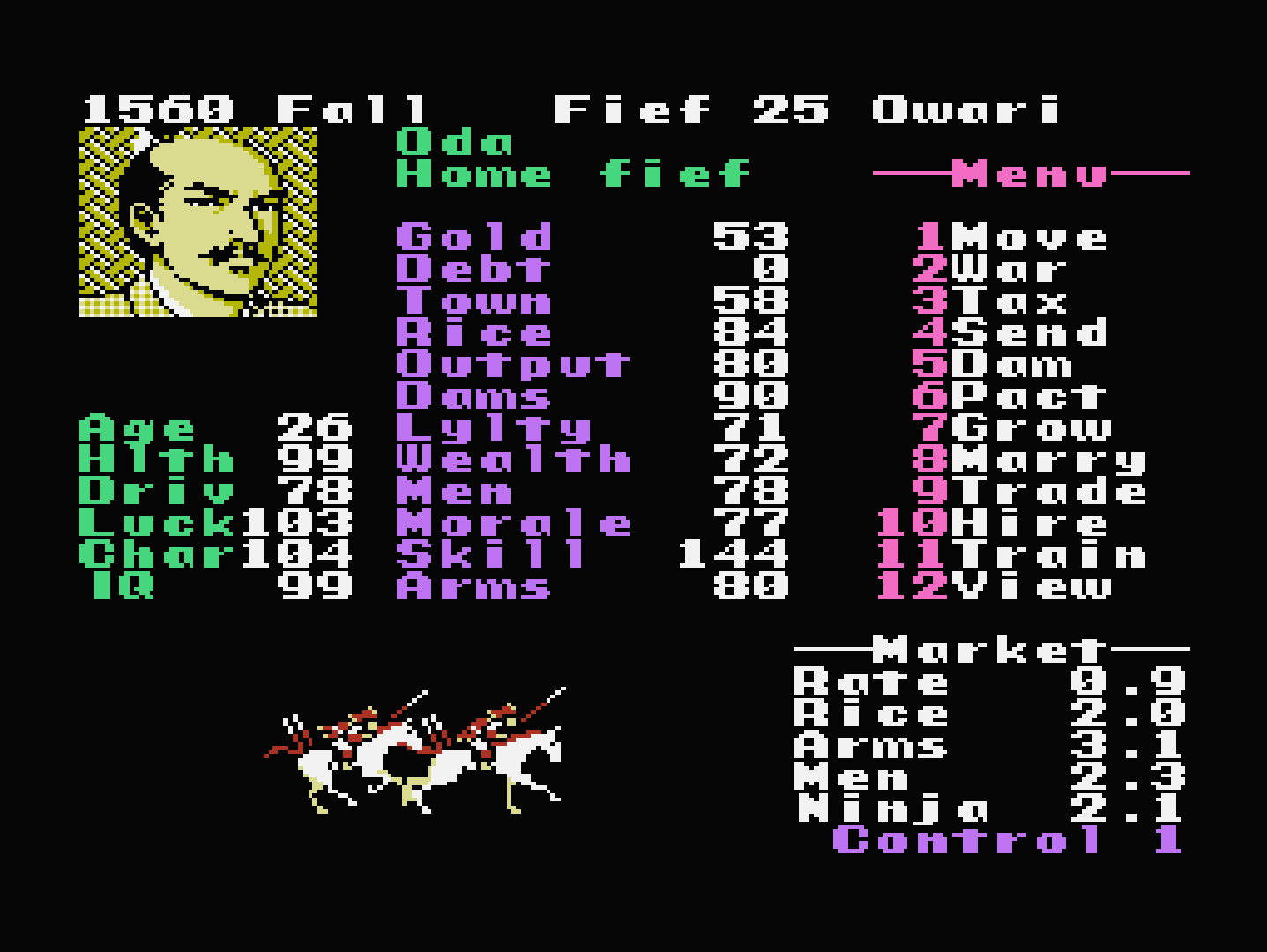
If you’ve ever played a Nobunaga’s Ambition before – and I really hope you have, because I’ve been encouraging you to try them for years now at DDNet – then this release will be comfortingly familiar. You’ll pick your leader of choice from any of the provinces that were involved in the Sengoku era, and then spend the rest of the game taking turns to build up your resources, invest in your farms, town commerce, and armies, throw some money into diplomacy to keep some nearby provinces on-side, and then invade the others to expand your territory. The game is broken into seasons, with each season allowing you to do one thing, and as is usual for the series, you’ll never quite feel like you have enough time for everything you’ll want to get done.
When you go to war, combat also plays out in a turn-based fashion. You’ll lay your armies out over a grid, and then take chess-like turns to move them around a map, clashing with rival enemies and occupying key strategic locations. Compared with later Nobunaga’s Ambition titles, the battle areas are smaller, but otherwise, this combat will also be familiar because every single Romance of the Three Kingdoms and Nobunaga’s Ambition title used it until finally shifting to a more real-time combat style in the more recent releases.
Nobunaga’s Ambition is so very difficult. Increase taxes, and you’ll get the money you need to finance the war machine, but the peasants might revolt, and suddenly you’re fighting militias. Attack one enemy, and if you’re not secure in alliances or have enough troops to leave behind, the next thing you’ll know is that another province has attacked your home castle. Spend time training soldiers or building up your town, and you’ll find that your units are underequipped. Spent time dealing with the merchant to get the equipment you’ll need, only to discover that a rival has stolen away some of your peasant labourers.
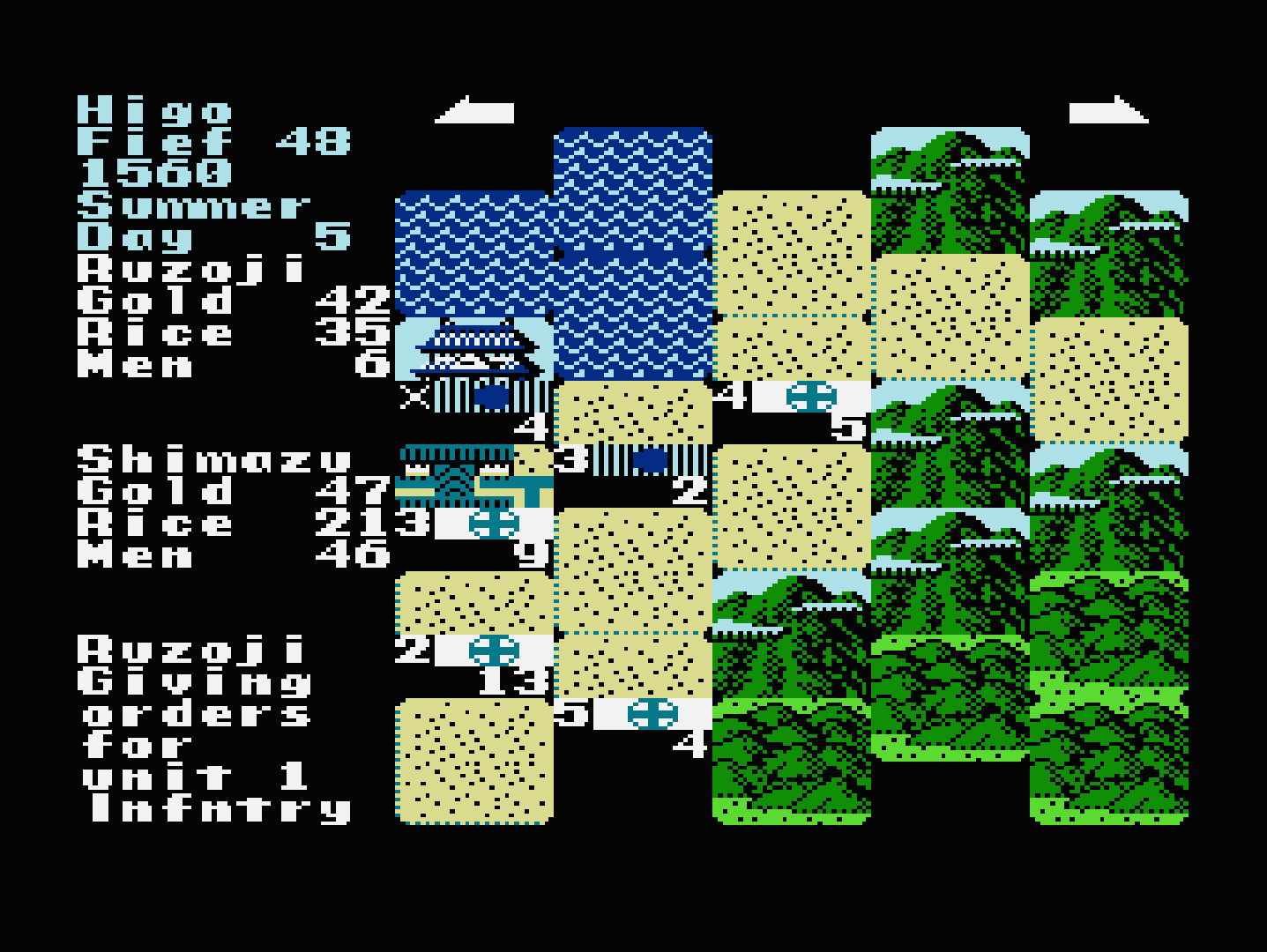
It’s actually genuinely impressive how much depth is in this game, even by today’s standards. Yes, the AI is a little blunt and rote, but have you tried playing Civilization 1 recently? It’s amazing how much more robust and engaging each of the layered systems is. The scope of the game is also incredible as you really can take control of every leader across all of Japan (not including Hokkaido and Okinawa, which were not part of Japan at that point in history). Some of the leaders are in an impossible position or simply too weak to fend off the inevitable invasion from one of the greater powers around them, but all the way back in 1986, Koei (no Tecmo at that point) was willing to let you at least try.
It’s even still visually appealing thanks to the cute little animations that accompany each activity that you undertake. The only area where Nobunaga’s Ambition comes across as really dated is the interface. Moving the map around to get a full view of Japan is painful, as is moving units in battle. However, the biggest issue is that there are a lot of different things that you can do each turn, but the in-game menu only lets you see some of them. I’d failed at an entire campaign before I realised that there were more options for actions than initially show up, and I needed to flick between different “pages” of menus each turn.
Of course, back in those days, there wasn’t much that could be done about the clumsy interfaces anyway, and once you get used to it, Nobunaga’s Ambition is highly playable.
There aren’t many people out there in the market for an ancient turn-based strategy game, and that’s why it’s fallen to Hamster to preserve something that Koei Tecmo doesn’t see value in. We’d have a Nobunaga’s Ambition collection if there was even a whiff of real money in it, guaranteed. There are already plenty of new Nobunaga’s Ambitions available on the Switch, and even two of the SNES titles available via the Switch’s SNES app. One of those two is the enhanced port of this very game.
But it’s nice to have the genesis of such a storied series available, too. Like with any art form, being able to track the progress and changes that occur over time has inherent value to people who love the medium, and games like Nobunaga’s Ambition are like settling down to a vintage Humphrey Bogart or Charlie Chaplin film: they help you to appreciate the entire medium all the more.