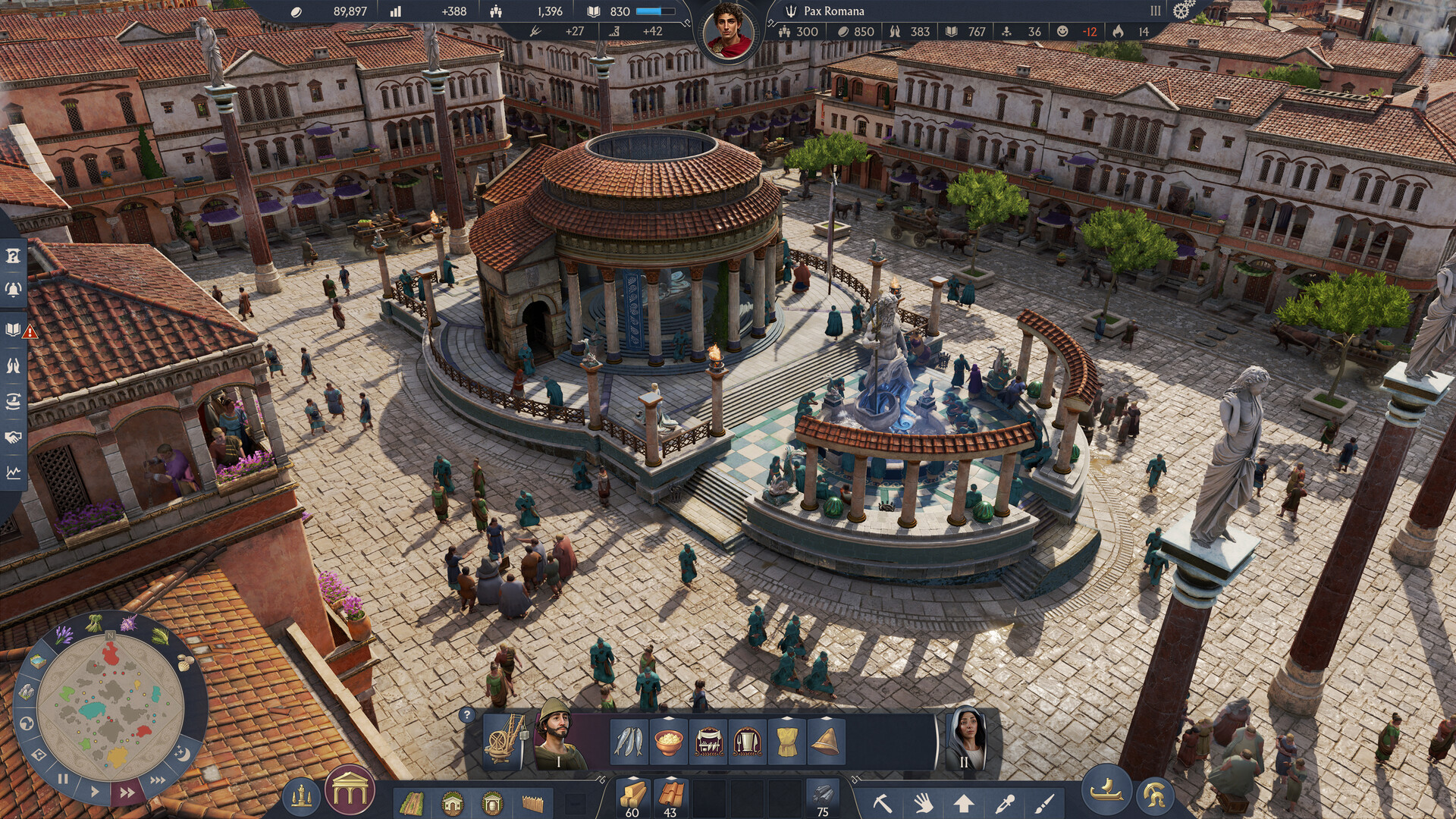


Of all the empires in all of history, the Roman Empire seems to have a unique ability to captivate. Perhaps because it was the first large-scale European empire – the one that “tamed Europe” as such, and so people look to it as the genesis of “Western civilisation.” It’s certainly easy to see how the wave of white nationalists plaguing the planet right now would celebrate that. But perhaps it’s just because so much of ancient Rome was just fascinating and/or silly. Caligula’s my favourite. What a champ. Anyhow, the point is I’m not surprised that Ubisoft would eventually turn to Rome for one of its Anno series, and we now have that with Anno 117: Pax Romana.
Anno 117 doesn’t break with the Anno formula too greatly, and that’s generally a good thing, because Anno is good stuff. The main focus of the gameplay remains your efforts to carefully build a civilisation that continues to meet the ever-escalating needs of the population. At first, when you’re managing a small village, the population has simple wishes. They want access to food and shelter (shocking, that), as well as a marketplace and inn to gather, socialise, and have a business.
It doesn’t take long before you’re throwing down all kinds of farms and production buildings to provide clothing options, tiles and stone resources, and building religious buildings and providing grander entertainment options. While you do all of this, you also need to make sure you’re getting the urban planning right, because all the amenity buildings have a certain ring of influence, and residential buildings outside of those rings don’t benefit from the amenities, meaning that the people living in them remain unhappy and/or impoverished. Of course, building too many amenities means that the cost of maintenance outpaces that revenue from the population, and so the entire city runs out of money.

When I think of all my beloved city builders – earlier Sim Cities, Tropico, Cities: Skylines and so on, I feel like Anno is the one that is most puzzle-like in how you go about building the city up. You need to be able to pack roads, buildings, and more in with greater precision than even Tetris requires, and you need to do so thinking about 20 steps ahead, because your population is never satisfied for long, and the rate of growth required that Anno facilitates is pretty staggering.
Of course, all of this is what anyone who has played an Anno game already knows. As I said, the basic game doesn’t deviate too greatly, but there are some significant differences that feel very naturally integrated, but do add new dimensions that I think existing series fans will appreciate. One is the ability to place diagonal roads. I know that might not SOUND like much (and is something that other city builders have now been doing for a long time), but it opens important city planning options and also means the cities end up looking more vibrant and less like a nightmarish suburbia of uniform, neat blocks.
There’s also militaries this time – and not just ocean combat. Actual land warfare, which means that you’ll want to have in the back of your mind that, at some point, you’ll need to defend the city from an invading horde. I must admit I wasn’t sure about this as I’m not generally a fan of combat in my city builders (it’s the one thing I don’t love about Tropico, for example). I’m not even much of a fan of combat in stuff like Civilization. I like winning through pacifism. However, props to the developers here because it’s very cleverly implemented and really does influence urban planning in a way that I found very intriguing as I got stuck into it.
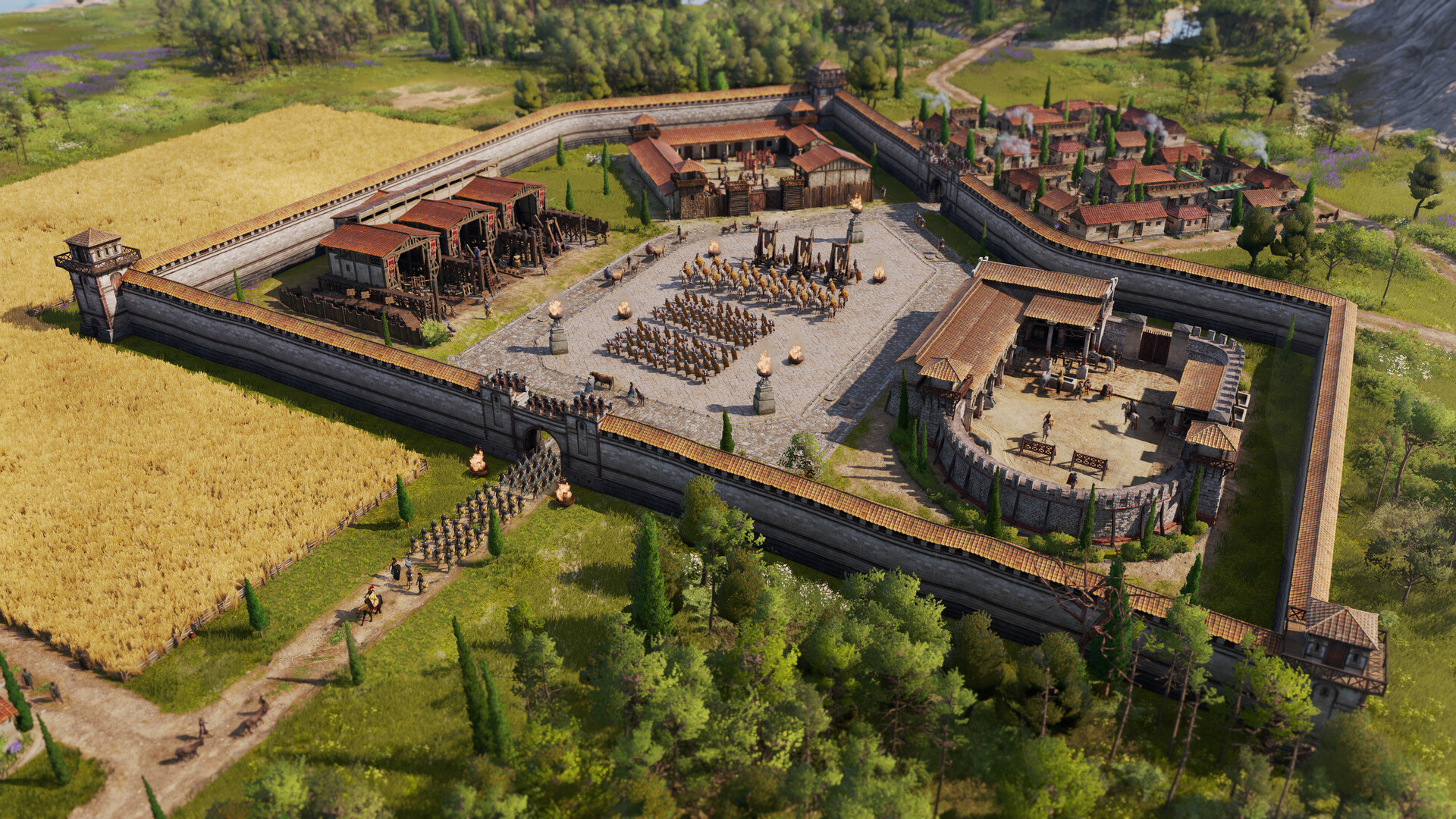
The game is also a little less restrictive in terms of progress. There’s a tech tree now, which gives you some control over how your city advances. Additionally, as any Anno fan will tell you one of the greatest frustrations was the way the game would prevent you from being able to advance your population to the next “tier” without having met every one of an increasingly demanding set of needs. Now you don’t have to meet all those needs, but you will get bonuses if you do.
The other big element of Anno games is the story, and Anno 117 is no different there. That story won’t exactly win Academy Awards or be celebrated as anything particularly innovative, but it does have several pathways that you can follow based on the decisions that you make, and it’s enjoyable to see how those threads play out, whether you choose to be a loyalist or a rebel. You’ll also be tasked with building cities in multiple locations and dealing with a whole heap of requests and side-stories along the way. Some might still see the story mode as the “tutorial” before getting stuck into the sandbox mode, though it’s clear that so much more effort went into it than that. The developers definitely went out of their way to reflect the clandestine politics of Rome, if nothing else, and if nothing else, that’s been an intriguing story hook for almost 2,000 years now.
With its hugely appealing setting, rendered gorgeously well and near-blockbuster production values, Anno 117 might not be Ubisoft’s biggest breadwinner, but this is a confident and well-considered step forward for the series. When you think about what distinguishes a great city builder, you’d have to say that near to the top is when you can pan the camera back and feel like you’ve genuinely built something, and taken a couple of buildings and roads and turned it into a thriving city. The very best city builders make you want to learn about urban planning, and with Anno 117 it comes with a second benefit – it’ll make you want to learn more about what made the Ancient Roman cities tick as well.






Your contempt for the idea of Rome being the progenitor of what we call “western civilization” would probably hold more water if it wasn’t written using the LATIN alphabet.
What contempt? There’s no contempt there. All I wrote was that Rome was the first major European empire – which is true (given that Macedonia is generally considered to be an Asian empire as most of its territory extended that way) – and that white supremacists latch onto it, which is also true. It’s not like they’re fans of ancient history in general since they don’t know anything about any of the other great empires of the time. It’s just Rome because Rome was “white”.
If you want to see contempt, wait for the next time I have a chance to write about Sparta.
The idea that white supremacists would be the ones proclaiming this idea sounds contemptuous. Especially as actual white supremacists are either Christian nationalists or neopagans (and the most classic ones only considered Anglo-saxons to be “white”), and if they ever bring Roman empire up, it’s to mock their “degenerate” ways that *surely* were the reason the empire fell.
Of course there’s another brand of propagandists promoting outright lies about the Romans who tend to call everyone disagreeing with them “white supremacists”. They’re just as slimy.
What are you talking about? I didn’t say that the white supremacists “proclaimed” anything. Just that they tend to be more aware of and interested in Roman history than, say, the Persian, Chinese or Mongol empires, because it’s a historical reality that Rome was the first major European (and white) empire. I run into these kinds of people all the time on social media so I know they exist.
Or at least that’s the particular flavour of white supremacy that we have here in Australia. European history and peoples in general = good and accepted. Everyone else = needs to be ethnically cleansed. Down here, they accepted Italians (and Greeks) as white enough a few decades back.
I dunno if we even have the second kind of person you mentioned there. I haven’t come across any of them.
Perhaps it’s different in Europe. It is your own history over there after all.
It’s not different over here Matt. You’re trying to be nice and openminded and I commend you but quite frankly, Smagg’s talking nonsense and reading stuff into what you wrote that you clearly didn’t say. They’re trying to pick a fight or why else would they mention the latin alphabet? What alphabet were you supposed to use?