

Resident Evil has always been a tale of placing corporate profit over human rights.
From Resident Evil 1’s human experimentation, to Resident Evil 2’s company town, all the way to Resident Evil Village’s superpowered feudal lords, Resident Evil has always worn its ideology on its sleeve.
Greedy, corrupt politicians wielding government military power to further corporate interests and increase the wealth of already unfathomably wealthy oligarchs. The meagre impact of toothless regulation in the face of overwhelming amounts of personal wealth. And the consequences (or complete lack thereof) of the exposure of these individuals to the legal system. If you have enough money, the system can’t touch you.
Thankfully, nothing like that would ever happen in real life.

While Resident Evil highlights the uselessness of governments and power structures in bringing the evil wealthy to justice, it also posits the solution, and that is individual direct action. Our heroes: Chris, Jill; the STARs of the show. The right people in the wrong place at the right time to fight back and lead the grassroots violent revolution.
While the system can’t help you, you can help yourself with direct action.
You can kill these evil rich bastards yourself.
Which brings us to Leon S. Kennedy.
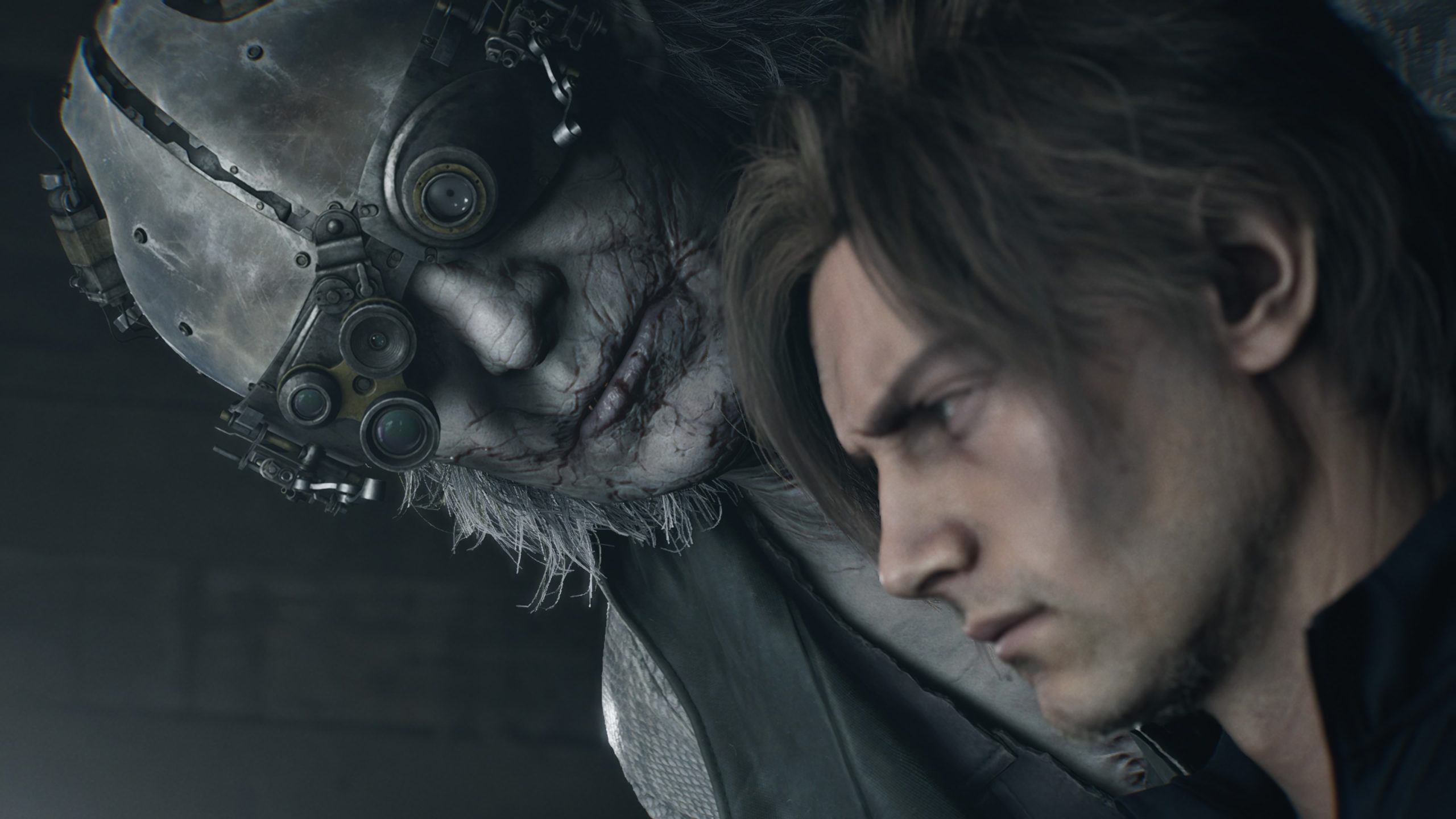
Resident Evil Requiem sees series regular Leon pushing 50, held together with duct tape and trauma. A victim of what was done to him in past games, and what he chose to put himself through afterwards to stop it from happening to anyone else. He looks grizzled, and craggy, and worn, and broken, and, most obviously, very very sick.
Still working for the fictional Division of Security Operations (DSO) under the purview of the US government, Leon is investigating the suspicious deaths of Raccoon City survivors.

Our deuteragonist is a new addition to the cast. Grace Ashcroft is a young FBI analyst whose mother escaped Raccoon City during (the) Outbreak. She is also tasked with investigating the same mysterious deaths, one of which happened in the very same hotel in which her mother Alyssa was murdered.
Great interagency communication there.
What flows from there is a relatively simple tale that builds on the convoluted mess that is Resident Evil lore. Rather than focus on the ridiculousness of massive conspiracies and underground laboratories and plans for complete global domination — all still present, of course — Requiem instead chooses a more personal route, forcing our protagonists to face their own past traumas. Requiem does its best to show the horrific impact of the actions of those greedy, powerful few, but it’s also a story about hope and redemption for the damaged. In a way, it is the most introspective story in the series, and I respect that choice, even if it is rather surface-level and unsophisticated.
The two characters’ stories intertwine with each other, similar to those of Resident Evils 2 and 6. The difference here is that there are no two separate campaigns for each character. Instead, you alternate between Grace and Leon to fill out the gaps in the narrative, seeing what each character experiences at certain times.
It’s an interesting narrative choice, and one that I’m not sure works. I feel like the A/B campaign system was perfected in Resident Evil 2, and Requiem has some moments that would work fantastically with the separated campaign structure. There might be some pacing issues in a split campaign though, especially in the back third of the game.
This linear system works well to tell its story as is, however there are some wild, almost jarring gameplay shifts between the two characters that takes some getting used to.
It’s less like sushi, and more like steak lollipops.
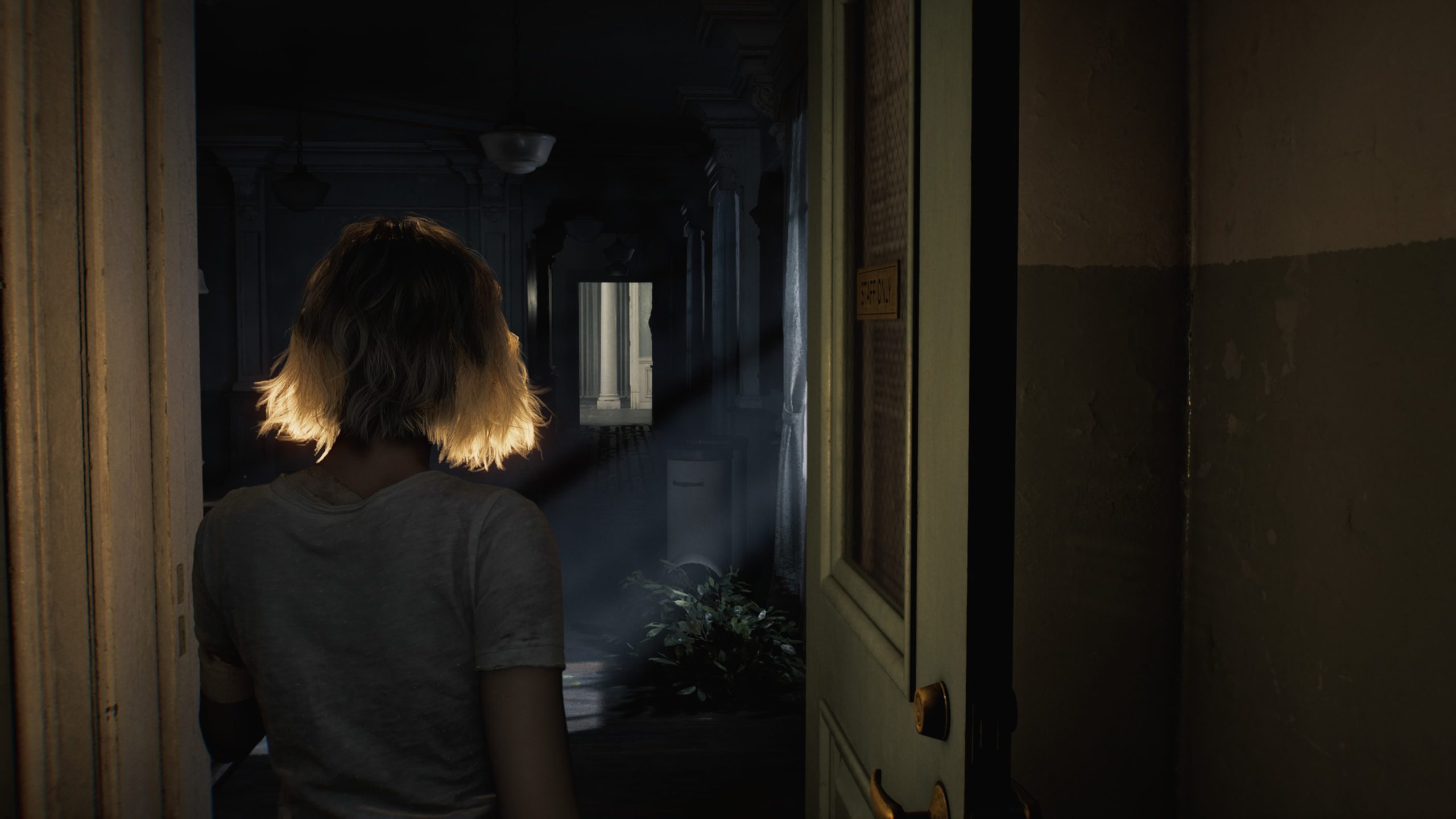
Grace’s gameplay is more claustrophobic survival stalker horror than action, especially in the early game. You’re often scrounging for bullets and health, sneaking around distracted zombies, and waiting for the opportune time to hit or run. She feels weak and vulnerable, like the inexperienced data analyst that she is.
Leon, in contrast, comes equipped for the mission. We know he can handle himself in a gunfight, and so he immediately does. Instead of making one or two zombies a mortal threat, Requiem throws stronger, faster, more at you to compensate, ratcheting up the action.
Grace’s arsenal is very limited, and most of her defensive options come from craftable weapons. She has access to item boxes, meaning she can dump items in and out of her inventory in save rooms.
Leon can upgrade his weapons using currency earned from kills, and he has access to a hatchet that will let him parry enemy attacks. Time it right and you can stun an enemy, leaving them open to an instant kill.
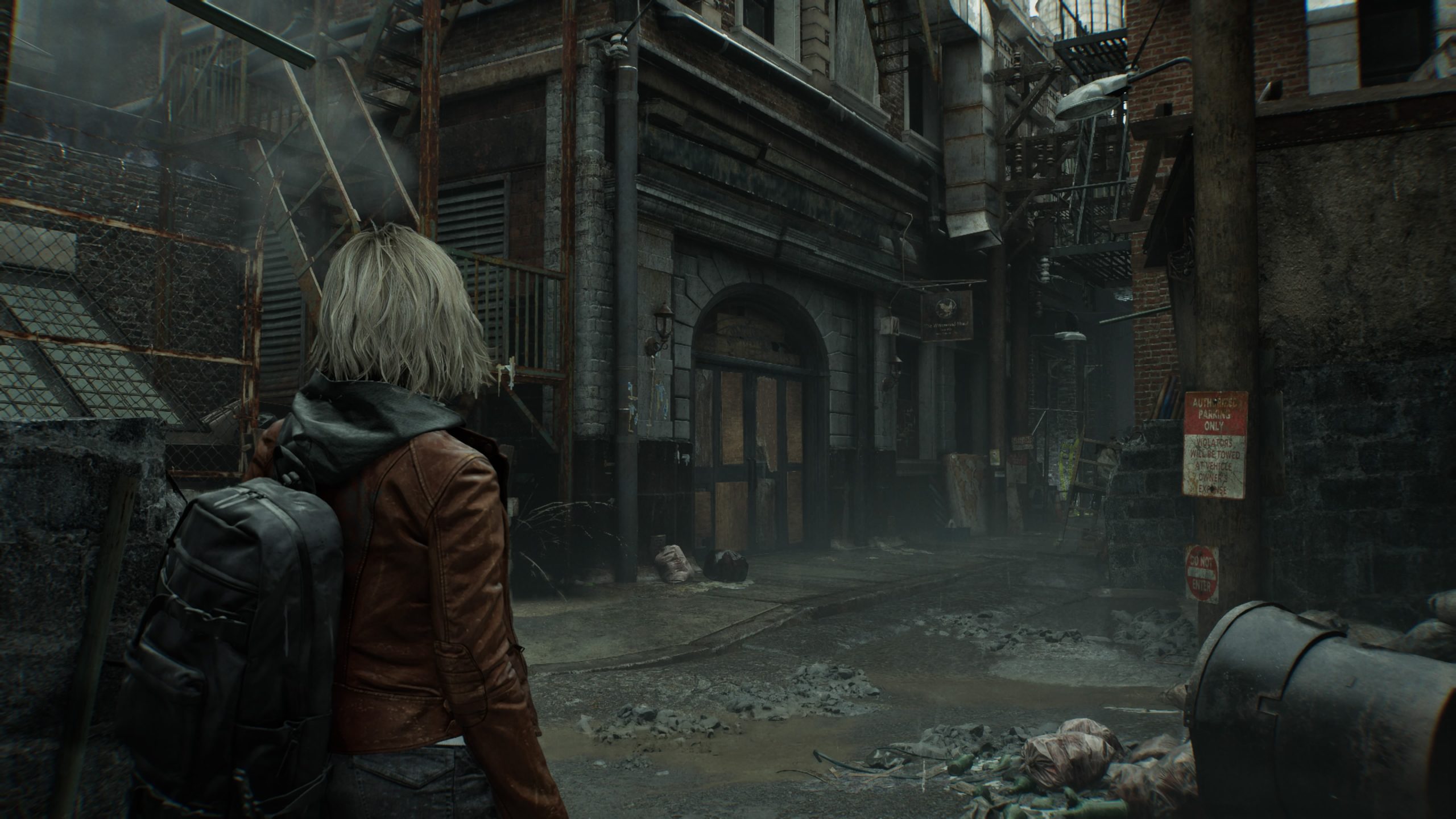
Each character’s inventory is handled differently, with Grace using the standard-since-Resident Evil 7 grid style and Leon using a Resident Evil 4 attache case style, with the inventory Tetris that entails. Leon can hold more items, but can’t store them in a box like Grace can.
Both characters face some very light puzzle elements which mostly consist of finding a specific item to open a specific door. They’re all well telegraphed, contained within an area, and entirely uncomplicated.
Requiem also telegraphs its action moments, and the horror has become a bit predictable. I found myself rarely surprised by the obvious setpiece setups. You’ll wander into a room full of headless bodies and scattered shotgun shells, or a precariously dangling elevator, and know exactly what is going to happen.
There are moments of tension and a lot of creepiness, but I rarely felt any real sense of fear. Jumpscares are minimal, and the instakill stealth sections are mercifully rare (but always unwelcome).
Unfortunately, due to pacing and the linear campaign structure, Leon’s unique mechanics never really get room to breathe. His arsenal lacks depth, and the upgrade system is undercooked due to the brevity and placement of his sections.

While a full upgrade system makes sense in games like Resident Evil 4 or 5 where you’ll be sticking with the same weapons for the entire game, Requiem’s gameplay bifurcation means you only have half a game with Leon and his systems. That means upgrades have to come faster, and have fewer steps to completion, and that leads to an unpleasant shallowness.
It’s a strange stopgap that further accentuates the two distinct approaches to the game. I don’t mind Resident Evil as a series trying new things. I don’t mind it trying to recapture the heights of the series either. But I’m not sure I like both positions juxtaposed so starkly.
Another way that Requiem attempts to bridge the gap between the old and the new is in its choice around first and third person game styles. Thematically, it’s awkward. Mechanically, it’s brilliant.
By default, Grace’s gameplay is first person and Leon’s is third person. This can be changed at any time in the menu, and the changes are simple, dramatic, and surprisingly complex.
Your first-person view is not simply a camera switch from outside to inside your character’s eyes — it’s a whole new set of gameplay changes.
In third person, your character gets new animations. Grace will slow down and stumble in panic while fleeing pursuing enemies. Critically, your overall speed doesn’t change, as the small lunge as she gets up averages out the speed. You’ll have more inertia, and bump up against things more often, feeling clumsier than the smoother first person view, which is offset by your greater spatial awareness and ability to change directions with the flick of the stick, instead of turret turning. Aiming a gun in third person feels steadier, while swinging a knife is less precise.
It never feels clumsily implemented or like a straight up camera reposition, like a Bethesda RPG or indeed Resident Evil Village does. Instead, it feels like two completely separate games designed from the ground up with that specific viewpoint in mind. The way these two gameplay perspectives dovetail into each other seamlessly while offering such fundamentally different but equally polished experiences is a kind of game design genius.
Like all the latest Resident Evil games, it takes itself a little too seriously. Gone are the truly goofy moments, replaced with gritty Hollywood-style action cutscenes and growled exposition. There are a few exceptions — like a motorcycle chase that had me giggling and wincing at its complete disregard for physics — but their inclusion only emphasises the series’ shift towards Big Triple-A Blockbuster territory and away from scrappy B-movie cheese. Many people like this change. I’m not really one of them.
I can’t say the shift towards blockbuster is all bad. Requiem looks undeniably stunning. Capcom’s proprietary RE Engine has always looked great, and Requiem, ditching the shackles of the PS4 and Xbox One, is the best-looking RE game yet.
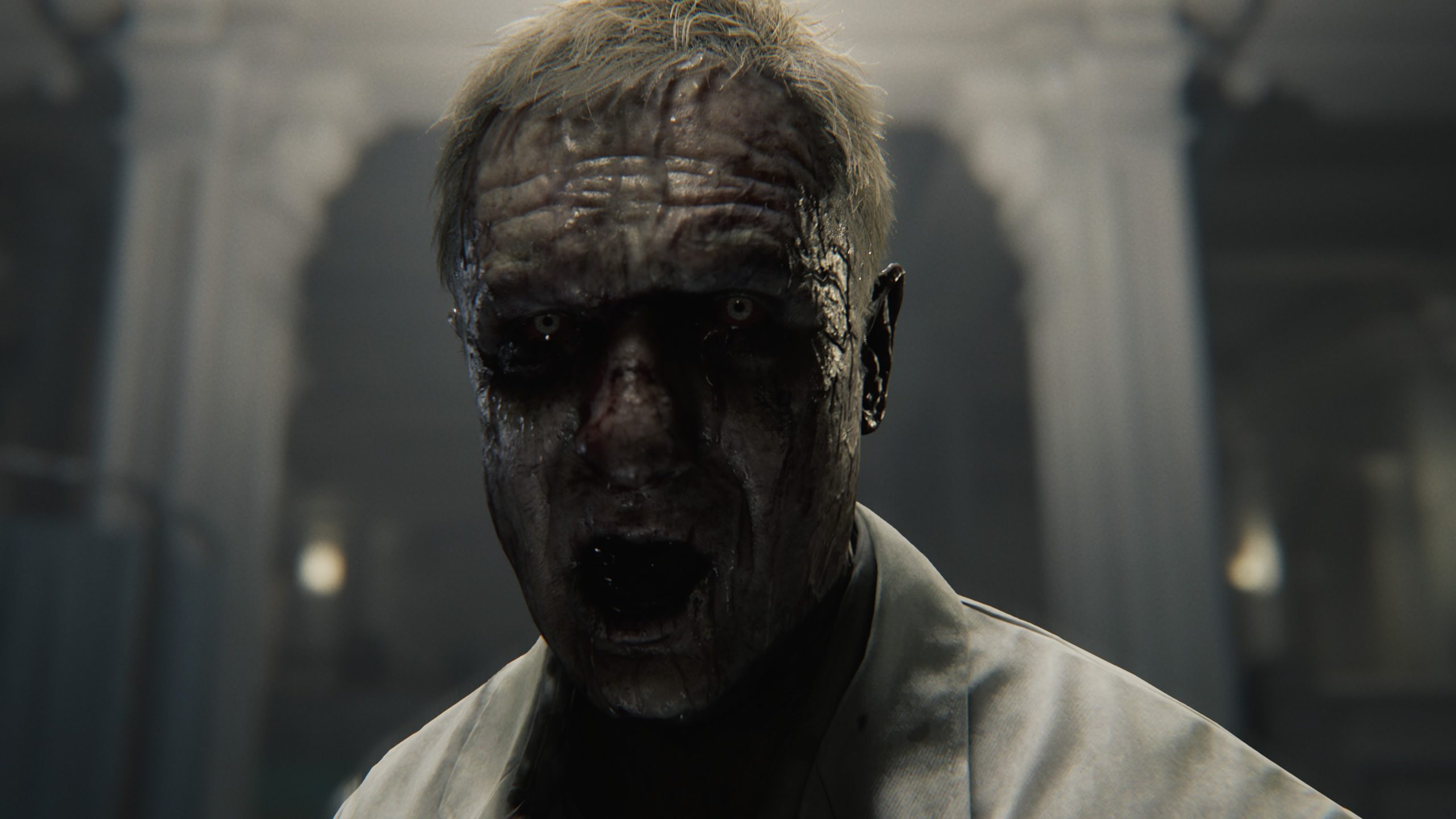
From the way gentle firelight plays through Grace’s ragged hair, to a blasted and crumbling Raccoon City under harsh daylight, and the rusted-on ichor of “processing” facilities, Requiem pulls no visual punches.
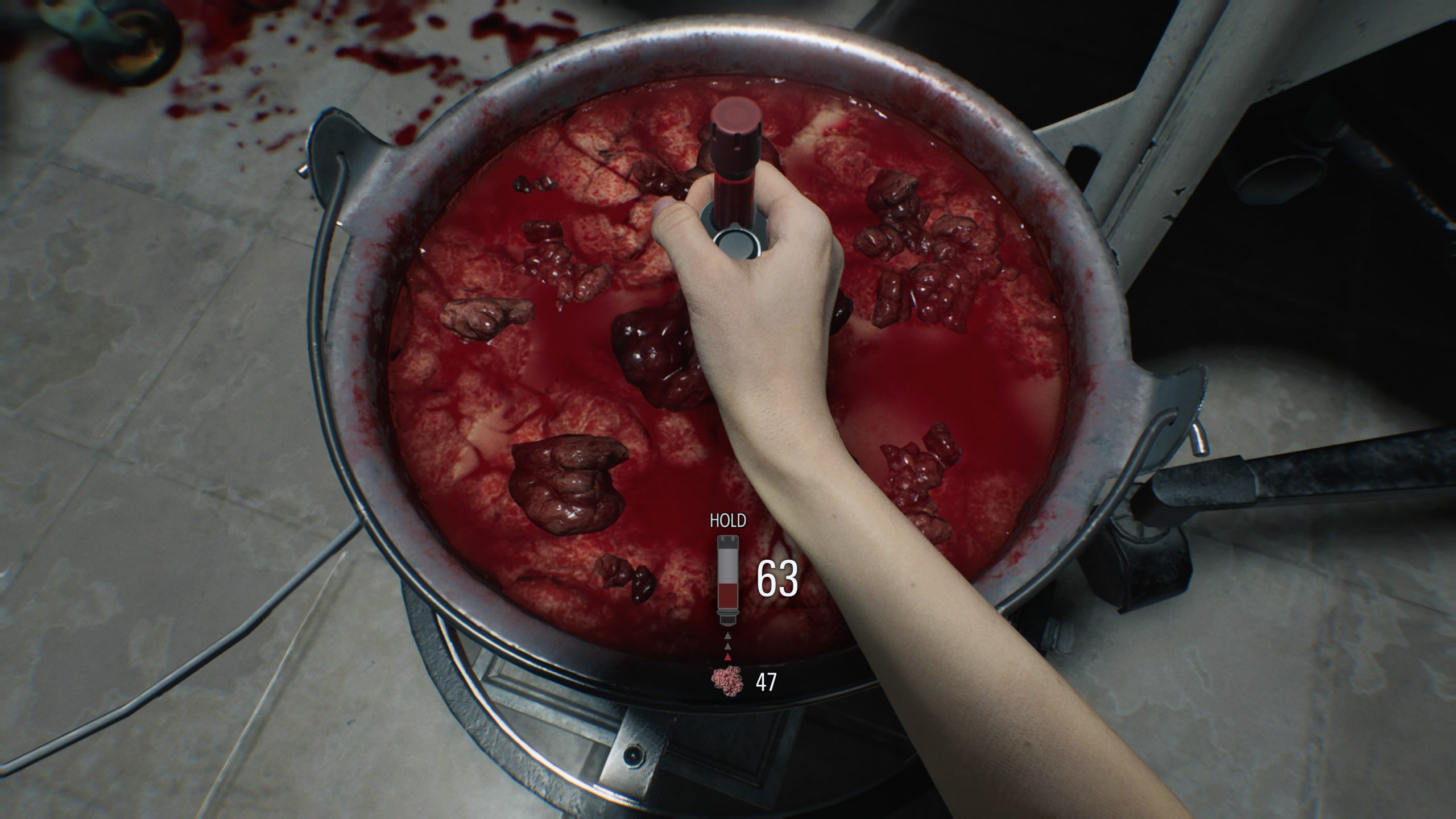
And the blood. Oh so much delicious, viscous blood. Gallons of the stuff. Waterfalls. Splattering and spraying everything, everywhere, all at once.
Requiem also has some of the most gratuitously wet gore I’ve ever seen, and the most brutal, horrific death animations in the series. It’s chasing disgusting realism, while simultaneously being ridiculously over the top, in another expression of the game’s constant blockbuster/pulp confusion.
There are still issues with RE Engine’s abysmal screen space reflections, which create a grainy, swimming image full of visual noise and jittery artifacts. It’s the one obvious flaw in the game’s presentation, and it plagues a good two-thirds of the game due to choices of art direction.
At the end of my ten-hour first playthrough and two subsequent completions, I’m not sure what to think of Requiem. It’s a game of halves — although I’m not sure exactly how many halves. It expresses its antipathy in almost every gameplay mechanic and aesthetic choice. It is simultaneously brilliant and confused. It is horror. It is action. It is old Resident Evil. It is new Resident Evil. It is both at the same time, but it is neither together.
I thoroughly enjoyed each separate segment (except one) as discrete gameplay units and distinct slices of Resident Evil history. But as a coherent overall experience and statement of intent, Resident Evil Requiem is a mutated beast left to exsanguinate on the floor.