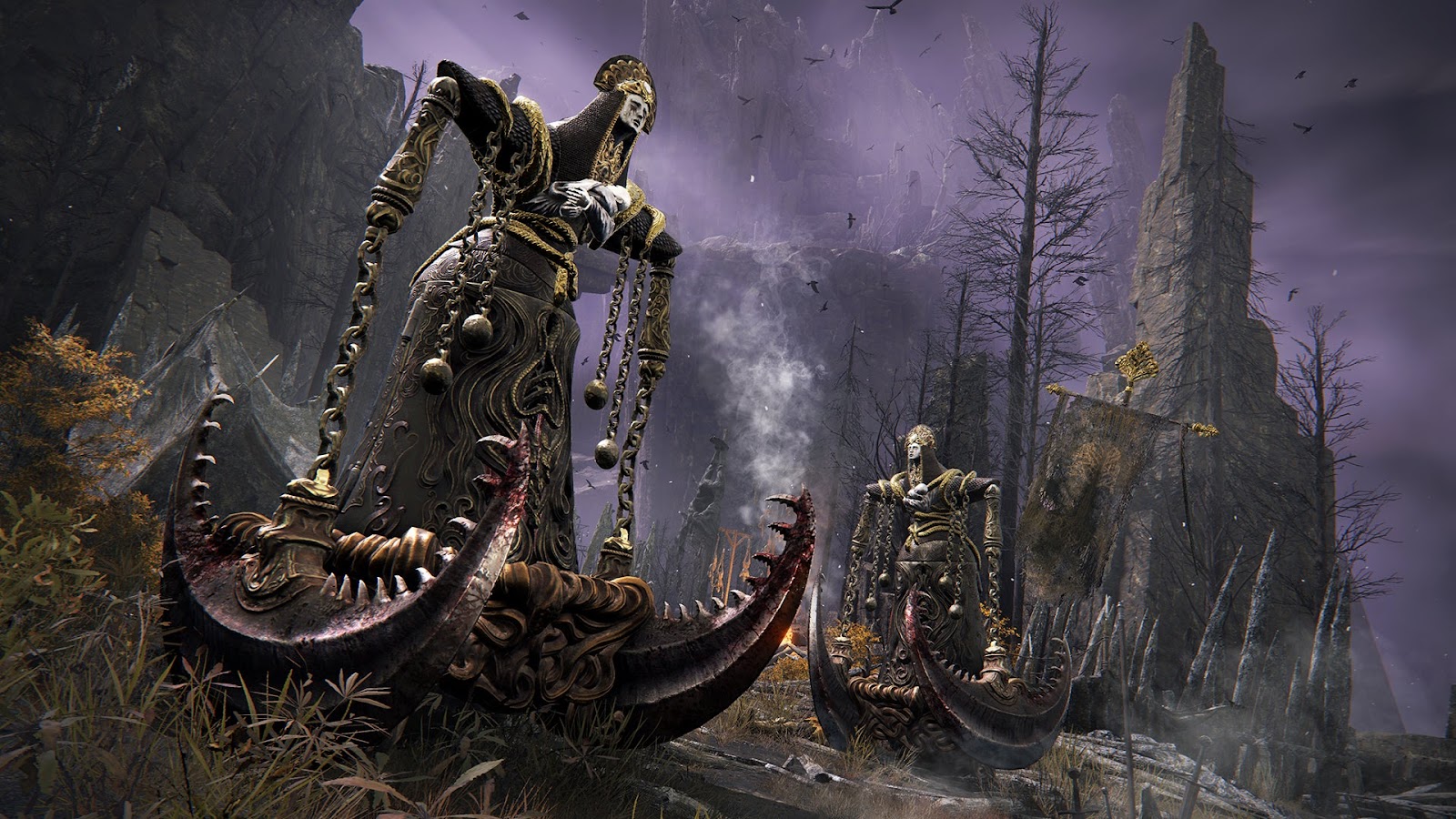


Elden Ring is an incredible game, and I already have a very in-depth review covering why I consider it to be a genuine masterpiece within the “games-as-art” canon. I’m not going to re-litigate that in reviewing the Switch 2 release of Elden Ring: Tarnished Edition. Everything that applied to that original review applies here as well. In fact, it’s genuinely impressive just how completely the gothic ambience translates to the Switch’s relatively humble screen.
Just to be up-front about this though: the Switch 2 version of Elden Ring is a slight downgrade from its big console and PC brothers. It’s truly impressive that the downgrade manifests itself in such minor ways, with loading times that are a second or two longer, or a framerate that is very steady, but not quite as silken. However, those compromises (particularly the frame rate) do matter for a game that is as demanding on timing and precision as Elden Ring is.
There’s also a small issue from the hardware itself. The Switch 2’s Joy-Cons don’t offer quite the same nuanced travel as a standard controller, so if you’re playing the game in handheld mode, you’ve got ever-so-slightly less depth of control. Again, it by no means makes Elden Ring unplayable, but, again, for a game as demanding on its players as Elden Ring, those tiny nuances will matter. The long and short of it is that if you’re playing Elden Ring on another platform, I’m not 100% sure you’ll be sold on grabbing it on Switch 2 as well. I, personally, much prefer the portability and am happy for the compromises for that form factor, but I also realise that I’m something of an outlier in that regard.
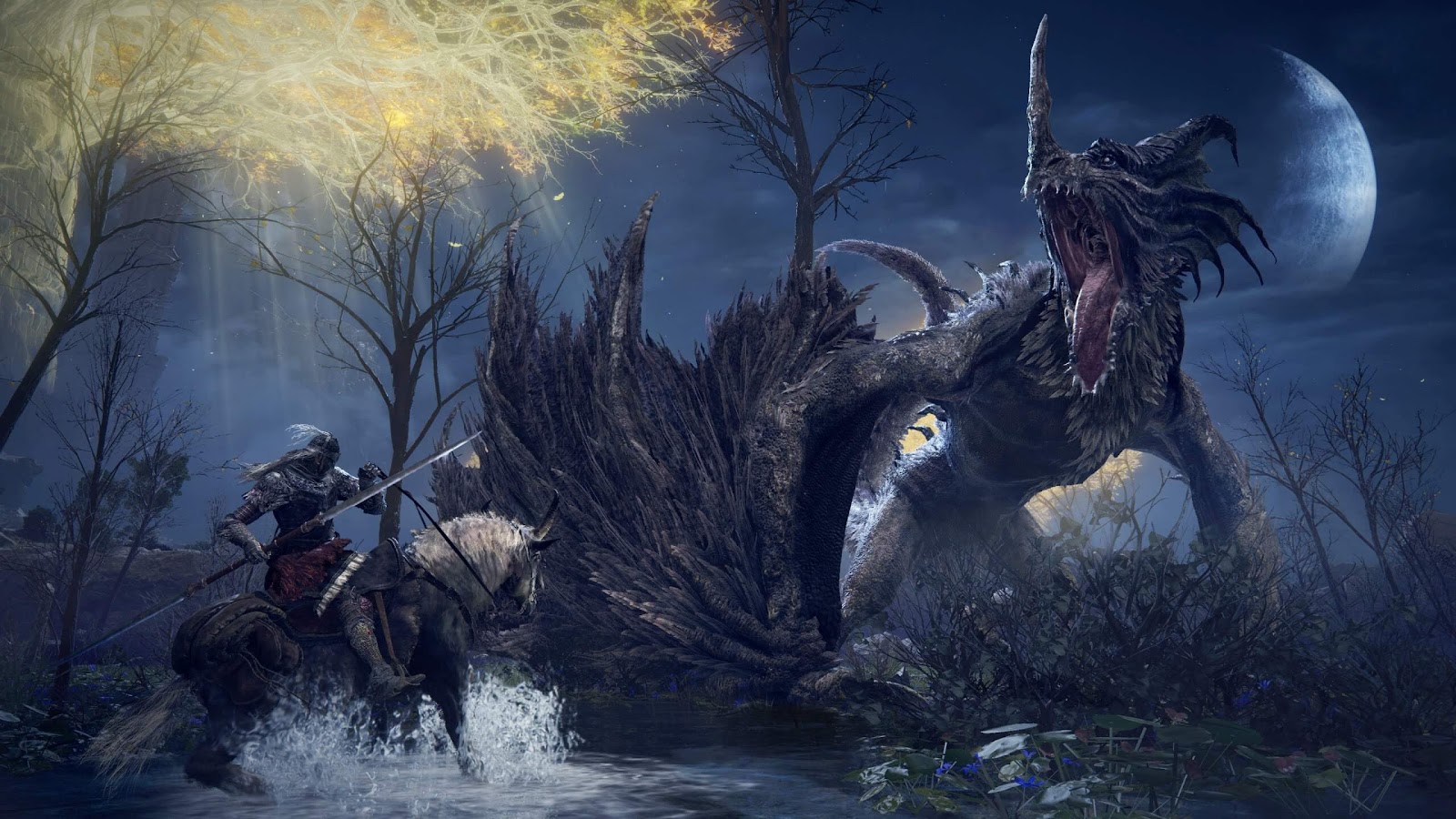
Mind you, none of what I said didn’t apply to the Nintendo Switch port of Dark Souls back in the day, and when I log into that game from time to time I still see the occasional ghostly outline wandering around. Clearly there is an audience for these things, and I don’t want to understate just how impressive it is that an open world as drenched in atmosphere and expansive in scope as Elden Ring is plays on the Switch 2. And you get the universally celebrated expansion, Shadow of the Erdtree, to go with the universally celebrated base game. The world looks utterly gorgeous on the Switch 2’s screen, and while I was initially concerned that the smaller form factor would make it harder to make out key details, I’ve had no issue whatsoever in making my way around the world again.
The only other downside that needs to be noted is the multiplayer. Perhaps because the frame rates between versions are slightly different (which would make things much tougher for a Switch 2 player), Elden Ring’s multiplayer isn’t cross-play. You can only team up with or go to war with other Switch 2 players. This is a bummer to people who might have wanted to buddy up with specific players on a different platform, but, again, I do have to note that Dark Souls had no issue with the multiplayer experience being populated on the Switch, and I cannot imagine that the long-term case will be any different for Elden Ring. This is one of those games that most people would feel an urge to own, so if you’re counting on getting some randoms into your game to help with one of the bosses, I would be surprised if you’re waiting for long.
This has been a difficult review to write. Firstly, because everything that makes Elden Ring a special experience is not exclusive to the Switch 2 release, I really recommend you read my review of the original game to get an understanding of just how strongly I feel about this game. Everything I wrote in that review applies here too. But also, in acknowledging that the Switch 2 port of Elden Ring isn’t quite up to the standard of the game playing on the PlayStation 5, this review sounds more negative than it should. The differences are a rounding error, and what is important is that this masterpiece runs perfectly well on a very portable console.