
I got started with Koei Tecmo’s Musou (Warriors) series later than many of the other long-term fans. Samurai Warriors 3 on the Wii was my first title, and after putting hundreds of hours into that game, I went looking for other Warriors titles. My first Dynasty Warriors title was 6, so I missed those early PlayStation 2 titles. Being able to enjoy Dynasty Warriors 3 has therefore been a delightfully nostalgic trip, despite having no background with this specific title.
Remember when almost every review relished the opportunity to slam a Warriors game for being a “button masher”? Even when the critic clearly spent no time playing the game? I remember one particularly iconic review where the critic wrote about how Samurai Warriors 3 was about the “Three Kingdoms era”, clearly having borrowed “ideas” for his review from a Dynasty Warriors one and failing to clue that the “Samurai” in the title meant the game was probably not set in ancient China. That was a major (major) publication, too. There was a time when this series was infamous for how little respect it got from the mainstream games press, despite being routinely loved to bits by a tiny niche.
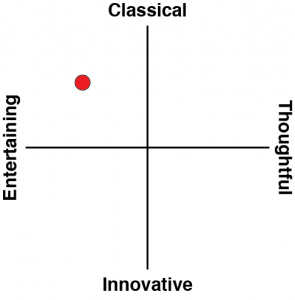
These days, things are better in the eyes of the mainstream as Koei Tecmo has worked hard to bring complexity to the combat systems, deepen the storytelling, and move away from the iconic so-bad-it’s-truly-awesome trash rock and mind-breakingly b-tier voice tracks. I do like the modern Warriors games plenty, but at the same time, there is an undeniably campy joy about those older Warriors titles, and Dynasty Warriors 3: Complete Edition Remastered (which, for the record, is a collection of both the base game and Xtreme Legends, which was essentially an extended “expansion pack” released as a separate title) is like a special gift to those oldest of series fans. This was one of the relatively few “early era” Warriors games that received a positive outlook from critics, which is perhaps why Koei turned to it for the first run at a Warriors Remaster, and the team has done a really good job with refining the experience without replacing what did draw people to it back in 2001.

I do love that for this project Koei Tecmo has resisted overhauling the combat system to align it with Origins and other recent Warriors titles. The temptation would have been surely there, because people like the modern Musou combat systems, while the older ones are far more polarising. But there is something cathartic to the more straightforward hack-and-slash action that I’ve personally felt is missing from the more recent outings. Something that you could throw on at the end of a particularly difficult week and just take your aggression out on.
That’s not to say Koei hasn’t touched the combat at all. There’s an evade button, for one thing, and you now also get a window to counter an enemy leader’s special attacks before they launch them. There are tweaks to the map and save systems to make information a little clearer (you can now spot at a glance where the healing items are) and failure a little less punitive (you can now jump back to a checkpoint rather than having to restart the entire level).
There’s also the weapon fusion mechanics from later games in this remaster. This allows you to get rid of older and weaker weapons that you acquire while playing, while also strengthening the weapon that you are using. It’s a system that helps you customise your character to the way that you prefer to play, and making the most of that system is absolutely essential for managing the highest difficulty setting – the beloved (by fans) Chaos setting.
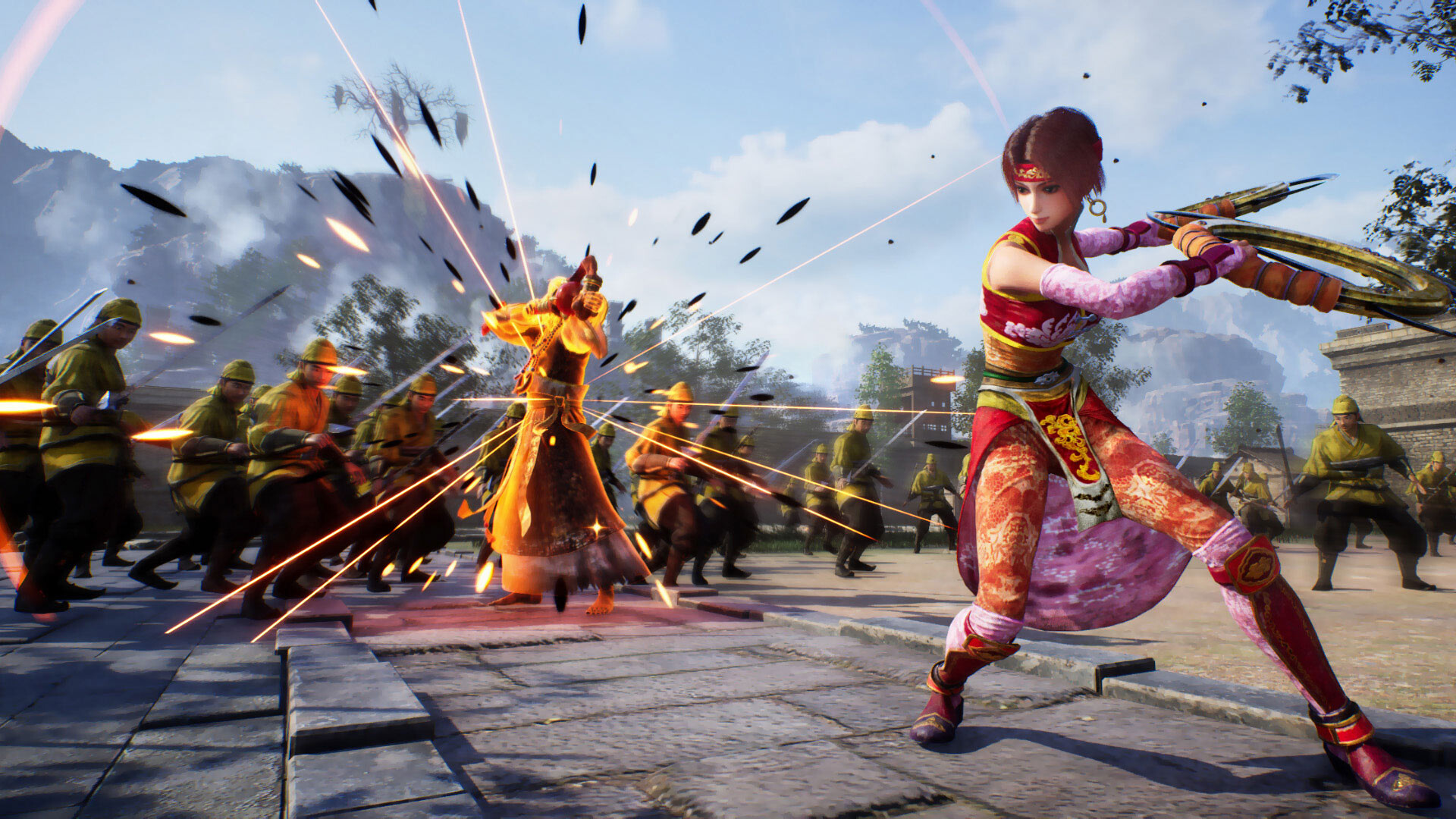
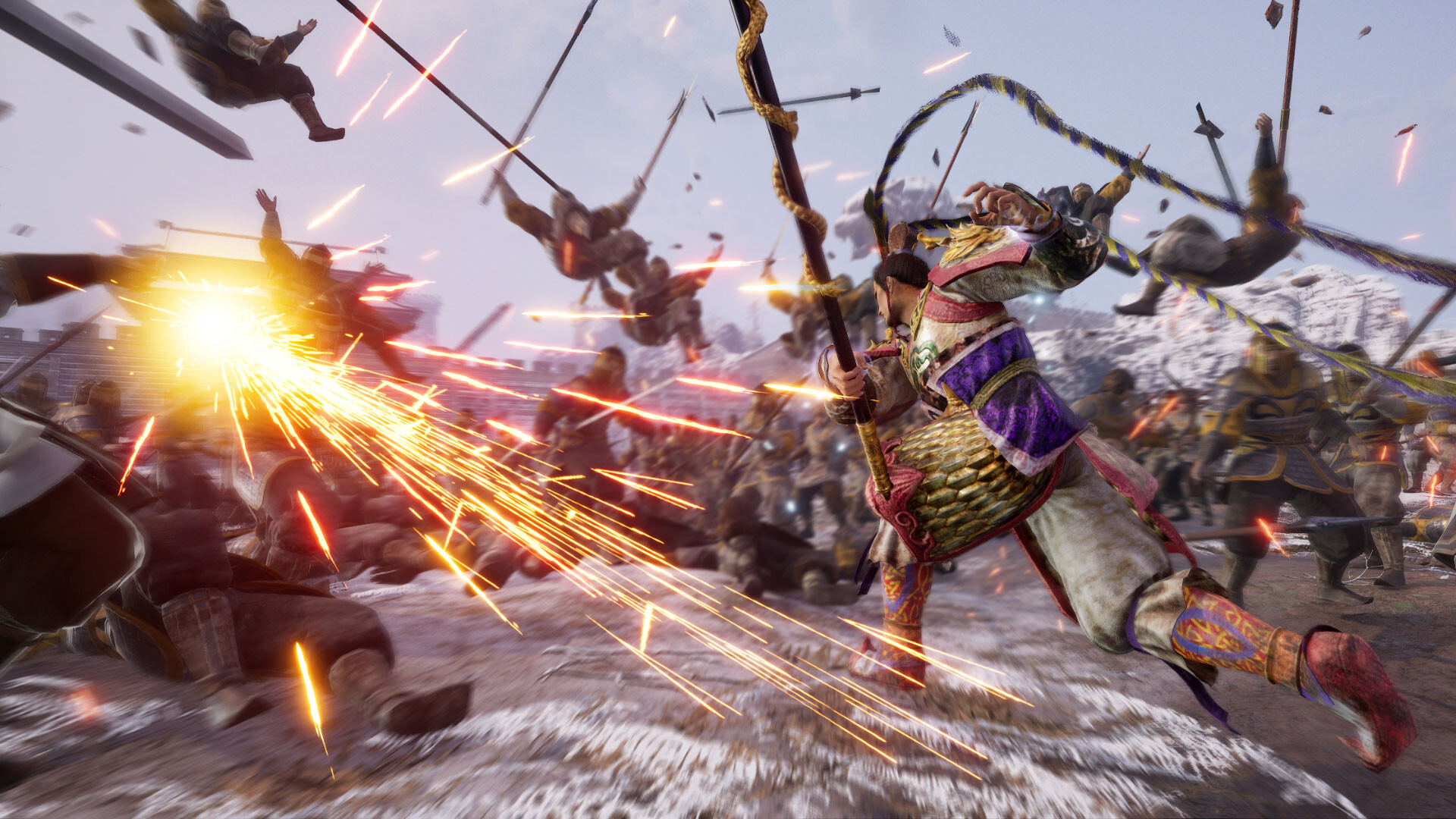
On the presentation side, there has been a massive visual overhaul, which was always going to be necessary. Cutscenes have been totally redone to be more cinematic, while the on-the-field action has much more detail and much less pop-in than the original title did. I don’t think anyone will miss the pop-in of early-era Warriors games, where entire squadrons of enemy soldiers would just appear out of thin air, almost within striking distance, because the game’s engine could only render so many despite attempting to recreate the bedlam of a battlefield with thousands of soldiers running around. That was always a presentational and even gameplay flaw that was difficult for even the fans to defend.
What hasn’t changed, and might take some readjusting to, is just how many enemies you’ll carve your way through in a battle. The more recent games make a 1000 KO count in a single battle an almost effortless guarantee. These older games very rarely got up to even that number. It’s not that they’re any less action-oriented, but rather your character’s attacks are typically less capable of clearing the entire screen in one go. Dynasty Warriors 3 is more a story of beelining towards enemy leaders and making sure you take them out efficiently.
On the audio side, the main change that was made was to add a Chinese voice track, which is entirely fitting for a game set in Chinese history. My ears are not attuned well enough to Chinese acting to tell if the acting is of a high standard or closer to the unrepentant cheese of the English and Japanese voice tracks, but either way I’ve found myself drawn to it, as it’s just a better aesthetic fit for the action. For those that want to stick to the original production, those options are all there.
The only area I was disappointed was that Koei didn’t take the opportunity to build more context into the storytelling. Earlier Warriors games simply threw you into a sequence of battles relevant to whatever character you were controlling at the time, and if you wanted to learn more about that particular battle, why it occurred and what, historically, happened in it, you needed to go searching elsewhere. Later Warriors games do a better job of explaining the links between battles, the timelines and circumstances involved. I would have liked to see Koei put a little more effort in there, as I actually happen to believe that its games are an effective way of introducing people to both history and the Romance of the Three Kingdoms novel that everyone should read at some point.
That one very mild disappointment aside, I’ve loved the opportunity to go back to the early era of Musou with Dynasty Warriors 3: Complete Edition Remastered. Koei Tecmo have nailed the way to handle a remaster of a nostalgic title – the team has made the refinements that allow you to remember the game that you loved playing, without being reminded that, with the passage of time, most games “age poorly” and both aesthetics and gameplay systems have been improved on over the decades since. I wouldn’t recommend this to someone as their first-ever Warriors title, but if you came to the series later and have enjoyed anything from, say, Dynasty Warriors 8 through Origins, here’s a perfect opportunity to go back and see what the oldest fans have been enjoying for more than 25 years now.