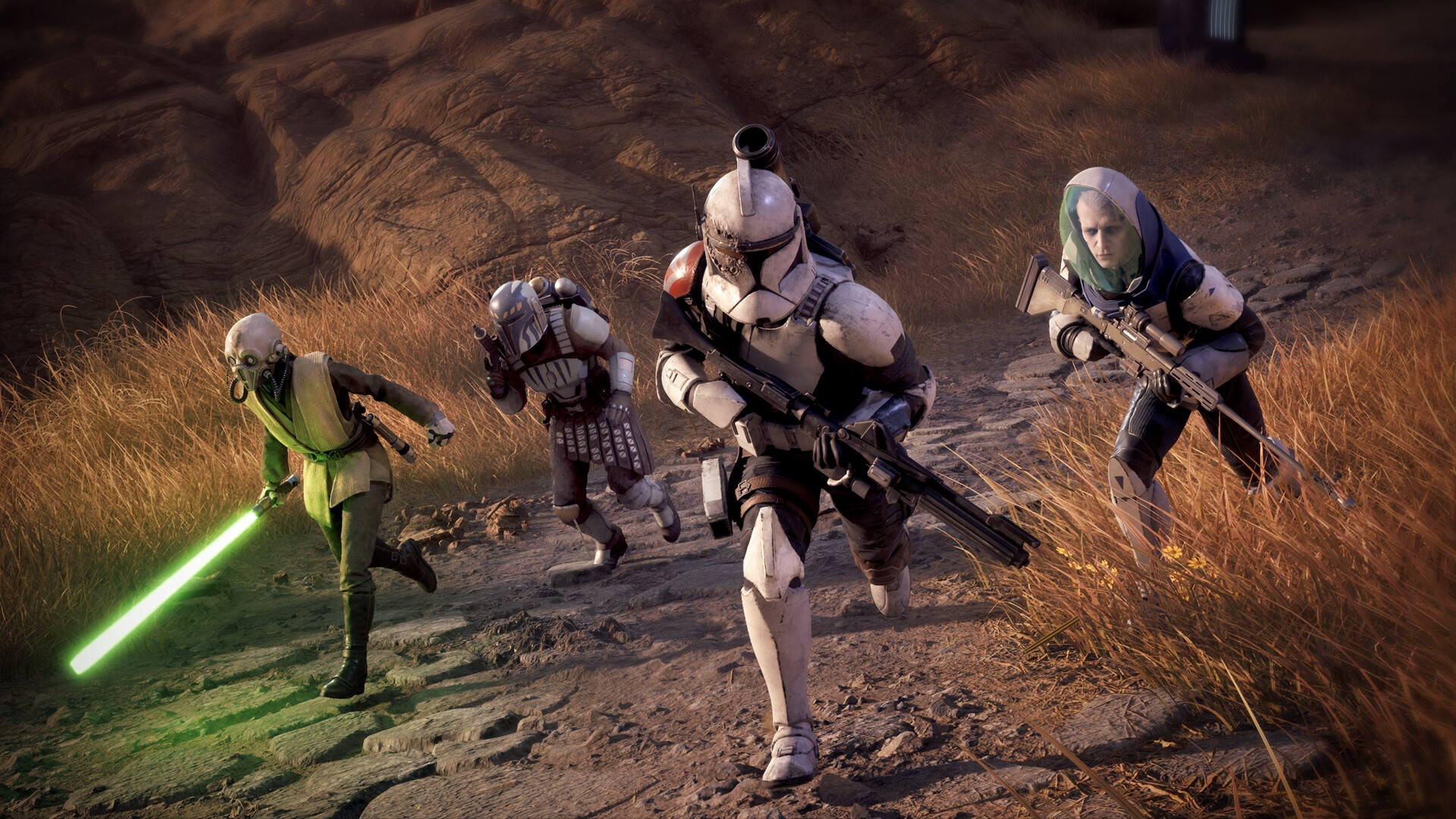


Star Wars Zero Company is an excellent tactics game in the XCOM vein (it’s been a while since we had a high-profile entry in this particular subgenre!). It’s an awful Star Wars game, but I’ll forgive it because the tactics really is that good.
That it is such a good tactics experience is probably unsurprising given that the developer, Bit Reactor, was founded by people from Firaxis, who had experience working on the XCOM franchise. This is the company’s first title, and it’s a confident step forward (and congratulations to them for getting to play with one of the world’s most valuable properties as their very first title).
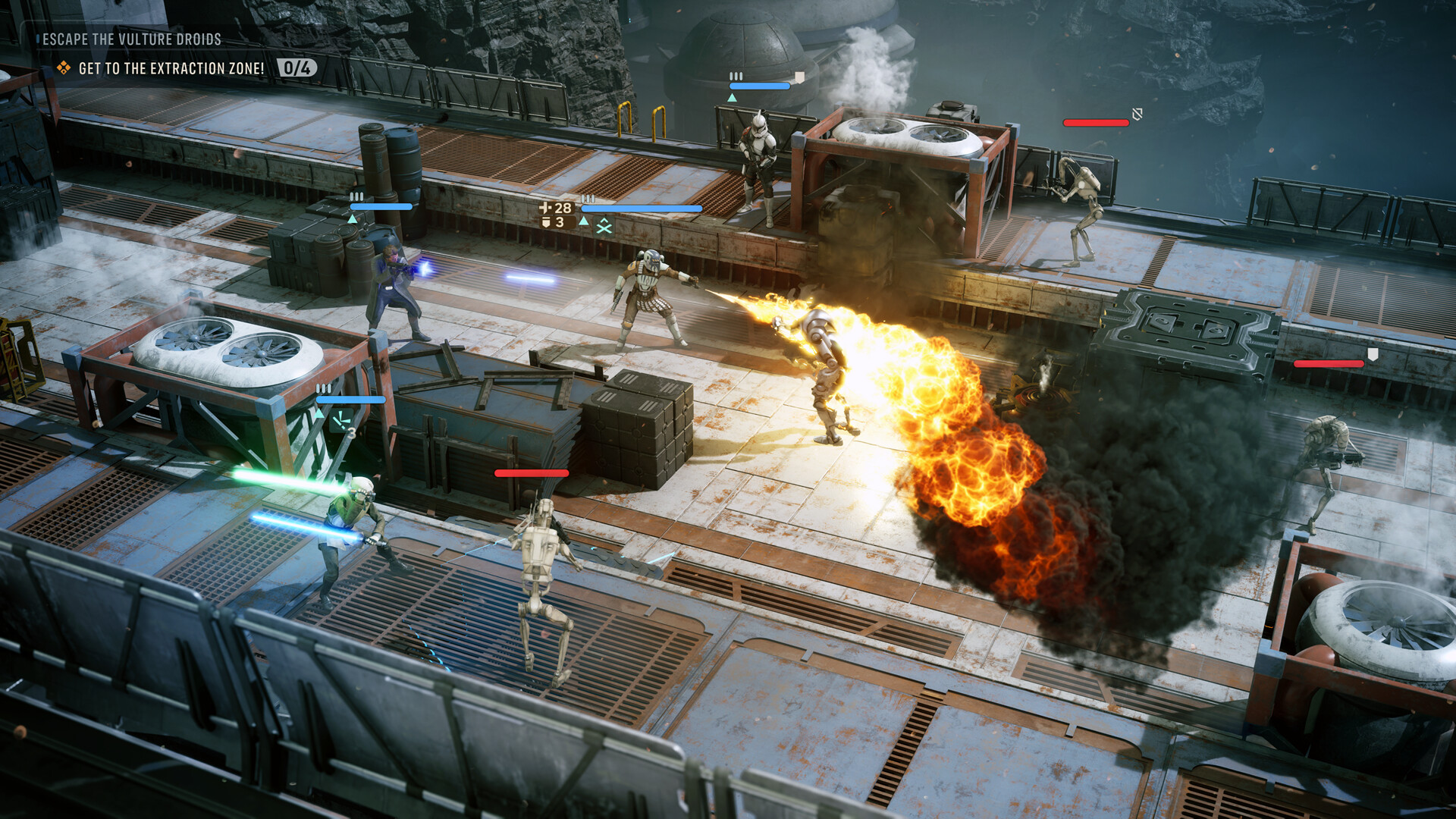
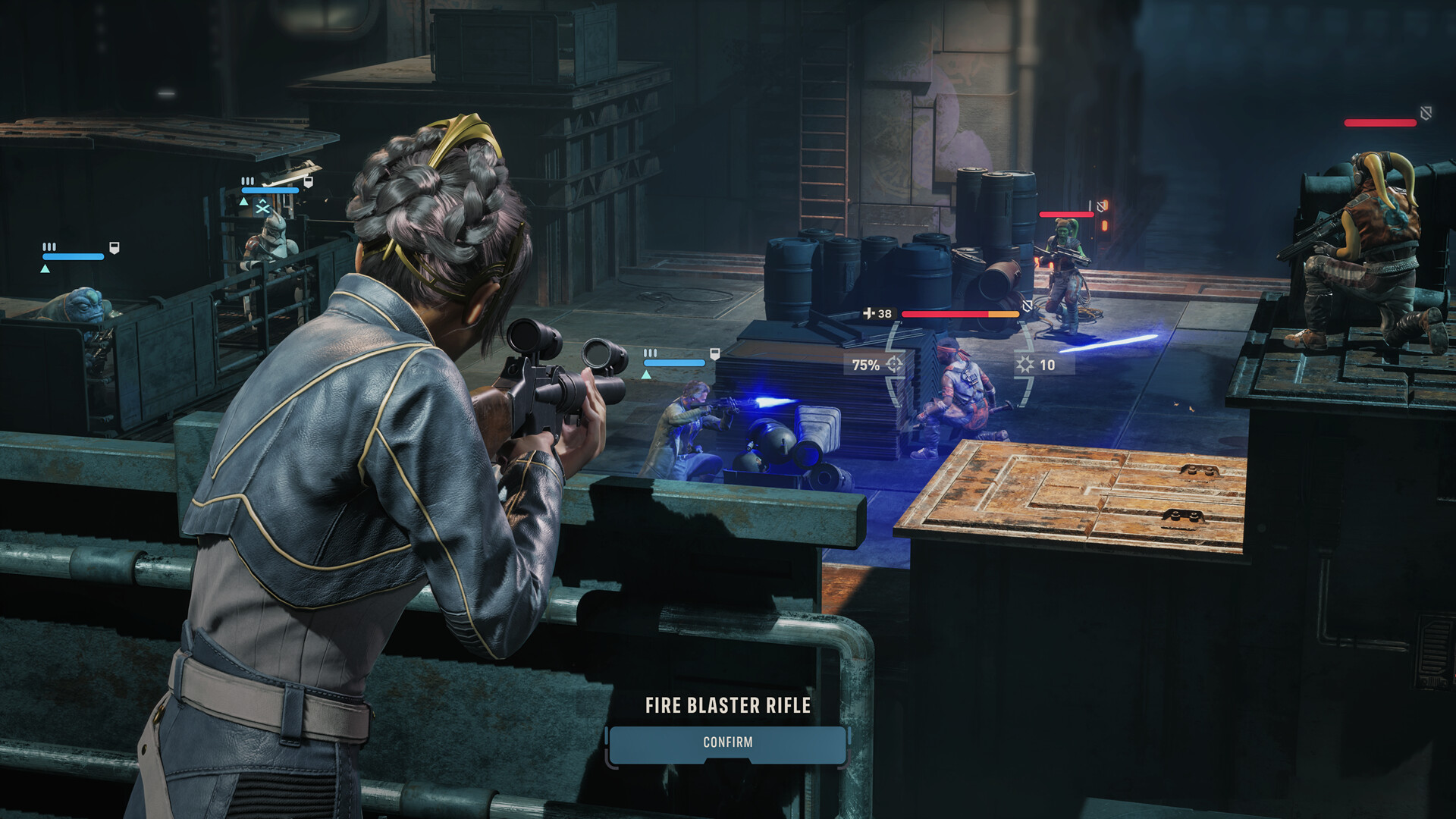
It plays very much like XCOM. You’ll take a small squad into each battle, with each character having their own unique set of skills and weapon loadout (assuming you’ve been developing them well with their experience levels between missions). Then you need to bring the full breadth of those capabilities together to overcome combat challenges where the enemy will almost always outgun and outnumber you, and be in strategically beneficial locations, like attacking from higher ground, or pincer-attacking you.

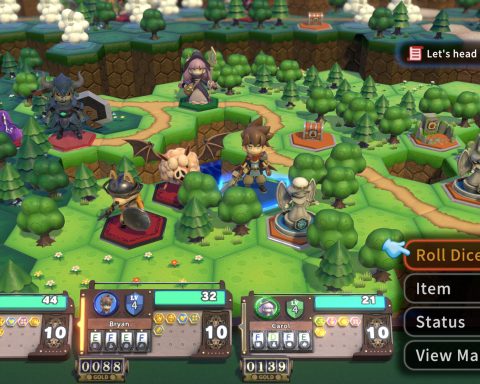
What impressed me was how fast-paced the action was. The user interface feature you’ll be looking at the most is a simple wheel that has all your available actions available with it, making it a snap to not only quickly choose the action that you want to use, but also to remind you of the full breadth of what you have available to you. More than a few times I remembered certain abilities or items within my toolkit when I was initially planning to simply fire my blaster weapon, and that often saved my skin in a tough scrap.
Not only is it quick to roll through turns, but the design of each level in Zero Company encourages you to move aggressively and proactively. There’s no hiding behind cover and waiting for attrition to wear down the opponent in Zero Company. Your characters will be dropped almost shockingly quickly if you’re not actively sprinting them around and looking for every small advantage with every turn. At the same time, there is permadeath (which you can choose to turn off, but I strongly recommend you don’t). That tension that you really need to push your units to take risks, knowing that it could result in losing them, gives the game an appropriately gritty atmosphere, which the developers clearly wanted to convey.
This is thematically appropriate given that the game takes place towards the end of the Clone Wars, when the Star Wars universe is on the precipice of entering a particularly dark era. It’s been a long while since I watched the prequels and events surrounding the Clone Wars, on account of finding those things to be almost unwatchably bad, so I won’t dare make statements about how well the game handles the nuances of the story beats. What I will say is that it aims to be a largely self-contained story about dealing with a cult, rather than try to heavily participate in the existing canon.
What I will say is that given that there is an increasing body of literature that argues that the Star Wars prequels are “the most politically relevant thing in the Trump era,” I do understand why a developer might want to situate their story within that period, with its own things to say.
There are some good moments of tension between the Republic and what it represents, and the Separatist-aligned cult that you’re fighting against. Just like the Clone Wars and prequels, how you’re meant to feel about the sides that characters line up on and the actions they take is at times ambivalent (if not confusing) given what we know happens in later Star Wars chapters, so Zero Company does do a good job of capturing that.
On top of all that, the overarching narrative has a lot of intrigue and mystery to help keep you playing. Not only are the separatist cult themselves mysterious, but they’re both carrying and inflicting on society a plague that itself is mysterious and the “why?” and the “what for?” questions are genuinely appealing.
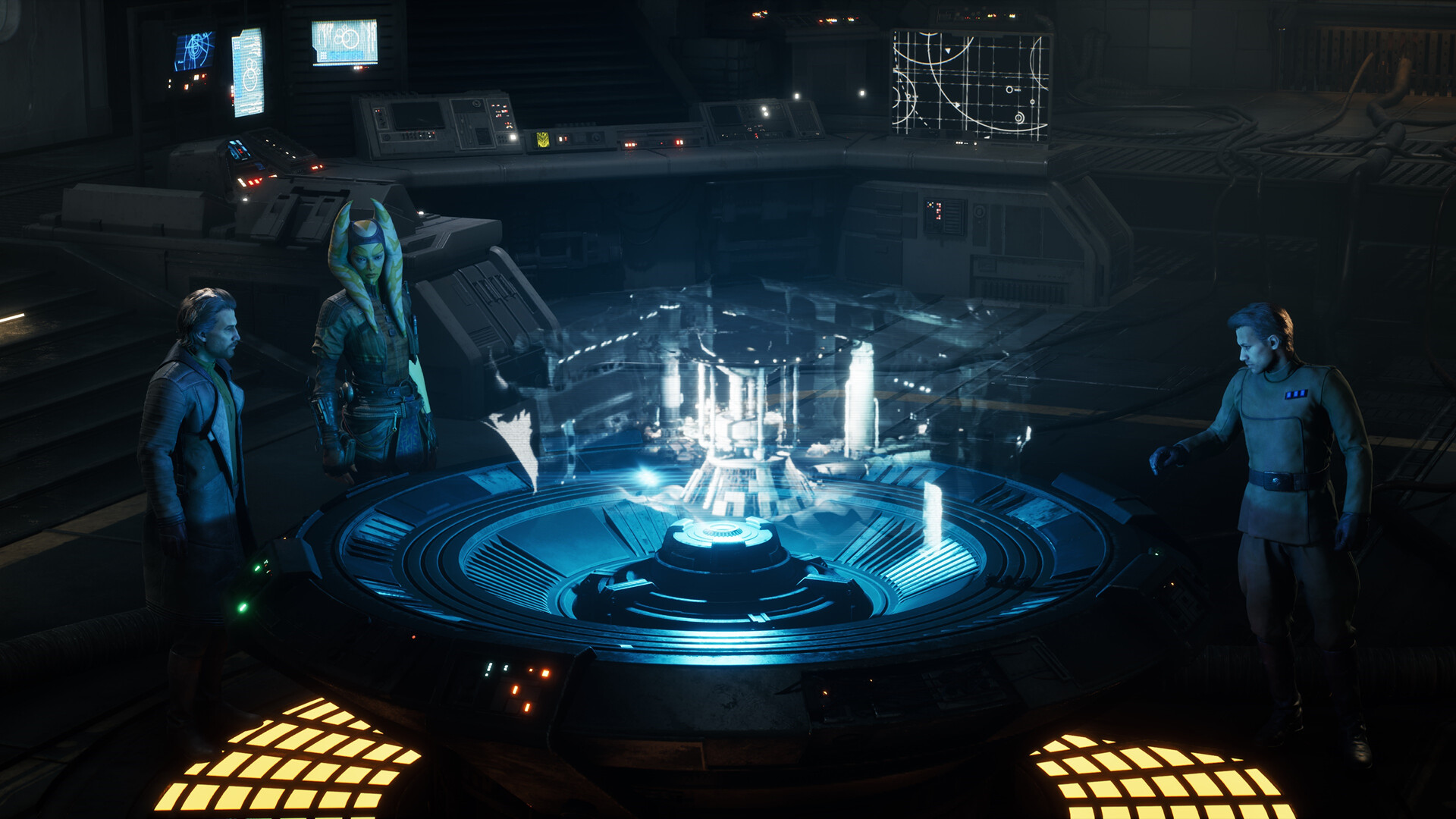
However, the aesthetics are all way off. The characters might be dressed to look the part, but the way the story is told, right down to the dialogue beats are, tonally much more like Mass Effect than Star Wars. Outside of combat, you’re free to walk around from a behind-the-back third-person view, and I swear the gait of your protagonist is so similar I kept being surprised by the name “Hawkes” popping up because in my head I was looking at Shepard.
It doesn’t help that so many of the environments lack for anything identifiably Star Wars in design. The game is highly detailed and technically proficient, and the characters are, again, skinned in Star Wars fare, but far too often the art direction is “yet more generic Western art design,” so that the game feels more like a community mod to an XCOM 3 than a built-from-the-ground Star Wars game. I realise that this is splitting fine hairs, but I really am tired of the video game industry (particularly Western game development) seeming to share the one art department across every studio and project. It’s the same character models and the same environmental aesthetics. The different skins don’t really help.
Meanwhile, on the audio side of things, the soundtrack is a passable riff on some of the Star Wars musical themes. The voice acting is painful, though. I realise that Star Wars is an American project and one of the defining charactistics of the American character is egocentricity, so it’s not surprising that the dialogue features accents, turns of phrase, and language patterns that end making the game sound like America has colonised the entire universe, but it is particularly egregious in this particular work, to the point that it broke immersion for me in a way that the films generally do a better job of masking. That being said, the inconsistency of the other aesthetics probably made me more sensitive to it too. It’s a very hit-and-miss production for understanding the particular tone of a Star Wars experience, which is what I’m getting at overall here.
But, again, I couldn’t put the controller down, in a way that hasn’t really been the case with XCOM-likes since the original XCOM itself. While some of the side missions are more generic in design, the main story missions constantly find ways to challenge you in interesting ways that aren’t simply “throw more and tougher enemies at players.” The plague introduces some really interesting mechanics, forcing you to carefully consider the order with which you defeat enemies. Meanwhile, there’s an incredibly compelling “bond” system at play, where characters that fight shoulder-to-shoulder frequently will start providing one another with perks and boosts in combat. That’s not unique to the tactics genre – Fire Emblem has been doing that for decades now – but here it’s handled in a very XCOM-like way and really makes that permadeath bite when it kicks in. Now you’re not just losing one powerful piece on the virtual chess board. You’re losing a core member to the entire team.
With eight standard classes and a few exotic extras, the fact that you can only take four into any given battle also turns party construction into a significant strategic challenge. Every class is valid and valuable, and choosing the group that lacks a particular skill for a situation can massively increase the challenge of a given skirmish. I feel like the developers could have done a little more to give players the ability to “scout ahead” and figure out what might help them dominate the battlefield, but still, I found myself spending a lot of time in the many menus outside of combat tweaking my teams, and when I do that I know a game has really got its claws into me.
Star Wars Zero Company really is great, and after a long absence from the forefront, it’s good to see the XCOM formula make a return. I don’t think it adds anything particularly valuable to the Star Wars franchise, and indeed seems to struggle to properly understand the qualities of Star Wars at times… but then again, Disney itself has been doing that to the films for years now, so it seems silly to be precious about purity when the property owners clearly no longer care about that. Ultimately, it is nice to have a blockbuster game that respects the player’s intelligence, and if nothing else, that is what Zero Company does.



I’m surprised not one site has mentioned SA. I will not give one cent to those who would imprison me & sentence me to death just for existing. If I find this game at a garage sale, I’ll pick it up; otherwise, I’ll just skip it.
Just to clarify this for you, as it’s a totally fair question and you’re right to raise it – as a rule of thumb, we’re not particularly interested in reviewing EA titles following the acquisition by Saudi Arabia; we’re not touching Battlefield or this year’s rollout of the sports games, for example.
Zero Company is actually developed by an entirely separate and independent studio, Bit Reactor, and is only being published by EA. That is right up against the line, I know, as EA and, now, Saudi Arabia benefit financially from it, but as always my main focus is on the creative work, and ultimately the people that did the creative work are not employed by Saudi Arabia or EA.
Totally appreciate that you, that’s still be crossing the line, but this is where I make my own distinction (and incidentally it’s also why I didn’t mention the acquisition in relation to this review, as EA was not really involved in what was on the screen).
Thank you for taking the time to reply. Since reading this morning that roughly 80% of Bit Reactor were “furloughed” just weeks before the game’s release, I’m doubly glad I’m not buying it.
I don’t agree but understand & respect your position on the subject.
That news I hadn’t seen. Yet another example of criminal mismanagement in this industry. Sigh.