

Viractal: Will You Trust Your Party? Has been kicking around in obscurity on Steam for some time. Thankfully, the developer/publisher, Steam, decided to dust it off for a second shot on console. I think it’ll have a better shot on Switch. Especially since the Square Enix Voice of Cards series seemed to go down pretty well with console owners, and Viractal is very similar in style and aesthetic.
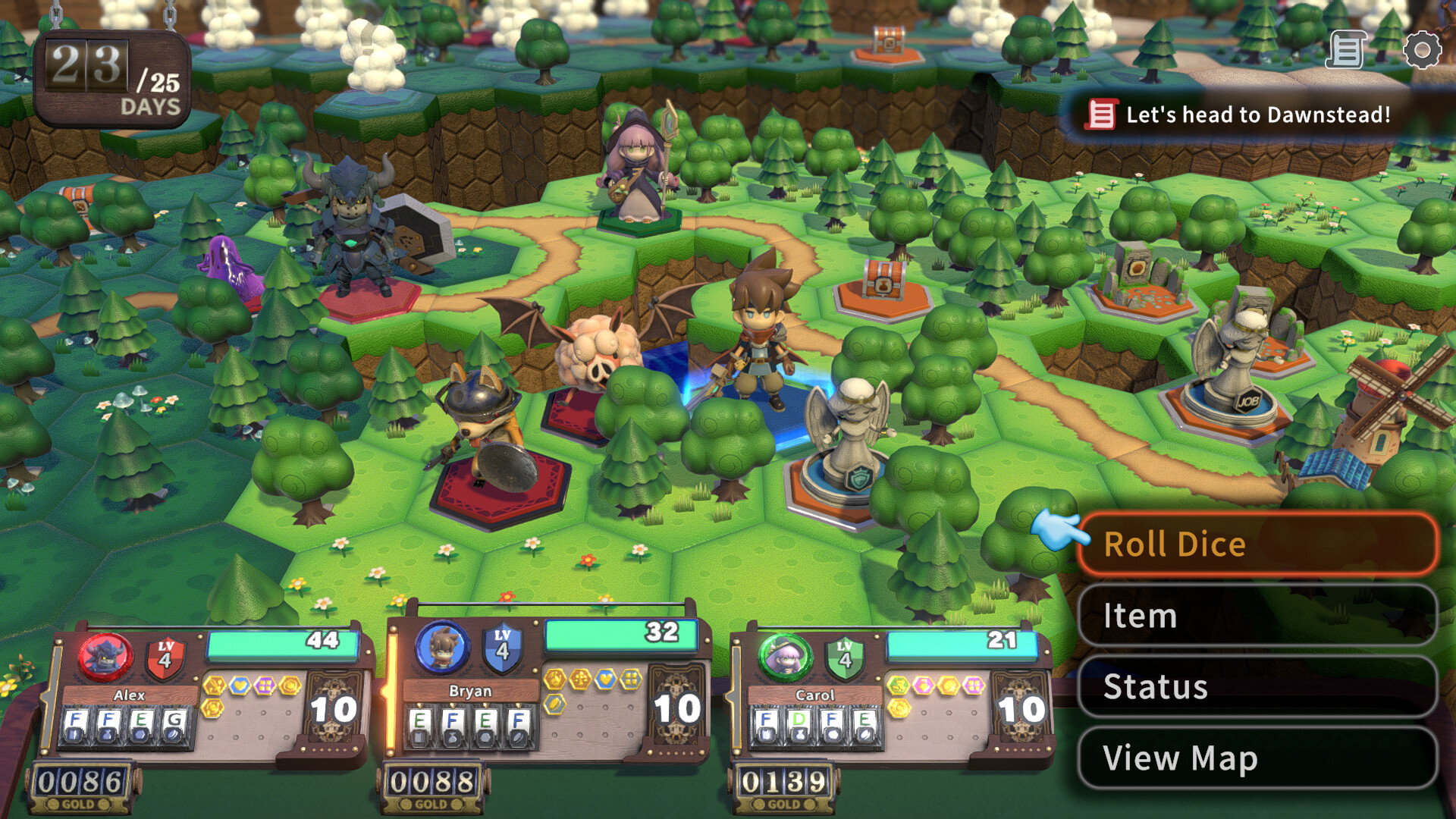
The basic idea of the game is that it’s Final Fantasy meets board game. At the start of any of the maps (you start with just the one beginner map but will quickly unlock some more), your party of three heroes is given an objective and a huge board to explore. Then you need to roll dice, move the heroes to places of interest like shrines, towns and monsters, do battle to level up and generally prepare yourself for the map’s endgame. In the first, beginner’s map, that’s a dragon. It gets tougher from there.
When battle is joined, it plays out in turn-based fashion. Each character has a deck of cards that they’ll build up over the adventure through levelling up and acquiring items. Deck development will be familiar to anyone who has played a turn-based deck-building roguelike, with simple abilities at first that eventually get replaced by more powerful effects, albeit often more difficult ones to execute. The main resource in combat is a type of gemstone, which is created every time a character uses a basic ability, and is consumed to use the more powerful attacks. Each character requires a different colour of gemstone, and you’re only allowed to hold so many in reserve, so making sure that you’re able to use your best abilities when you need them is a key resource management exercise, and critical to the success of the party on their quest.

When you play for the first time, you’ve only got three hero classes to choose between – Hero, Warrior, and Mage. These are basic (and effective!), but unlockable characters like the Merchant, Sniper, and Seeler add interesting dynamics to the party and, used well together, can make the more difficult maps much more manageable.
Which brings me to the most important point to make here: Viractal is best played in multiplayer. Contrary to the title, you’re never really at risk of your party members going rogue and ruining the game for you. There are options to “backstab” your teammates, and that results in you getting some bonuses or gold. The screenshot below highlights an example of what these backstabs look like. Because other players won’t know who has what contracts (the agreements you form with the game to backstab your allies), the system is designed in such a way that you’re not going to end up with grievances against one another for them taking specific actions, and ultimately the point will be to work together on the common main goal because the game is, ultimately, co-operative. At the same time, there is the shared pool of resources, and many of the special features like shrines that are scattered around the map can only be visited once, so there is a lot of negotiation that happens in the typical Viractal adventure that, say, a Demeo doesn’t have. In Demeo, which is also brilliant, the party all works together – a rising tide lifts all boats and all that. In Viractal, there is a small tension between individual and party gain, but it’s 1) never mean-spirited about it (which Sting’s other board game, Dokapon Kingdom, often feels like) and 2) ultimately success is going to come down to the party working together cohesively, which every player will know.
The point is that the social side of Viractal is rich and will result in good memories, good laughs, and many beers shared over many Friday night gaming sessions (online – there’s no local multiplayer because the backstab system necessitates that players can’t see everything that the other players see). It is a digital board game, beautifully designed, and while you can play it single-player (one person controlling all three characters), I really recommend approaching it as a group game and roping two friends in to enjoy the experience of unlocking everything together. If nothing else, the blend of humour and intrigue that comes from the backstab mechanic is lost if you’re just choosing whether to backstab your own characters, as you would when you’re controlling all the characters yourself.
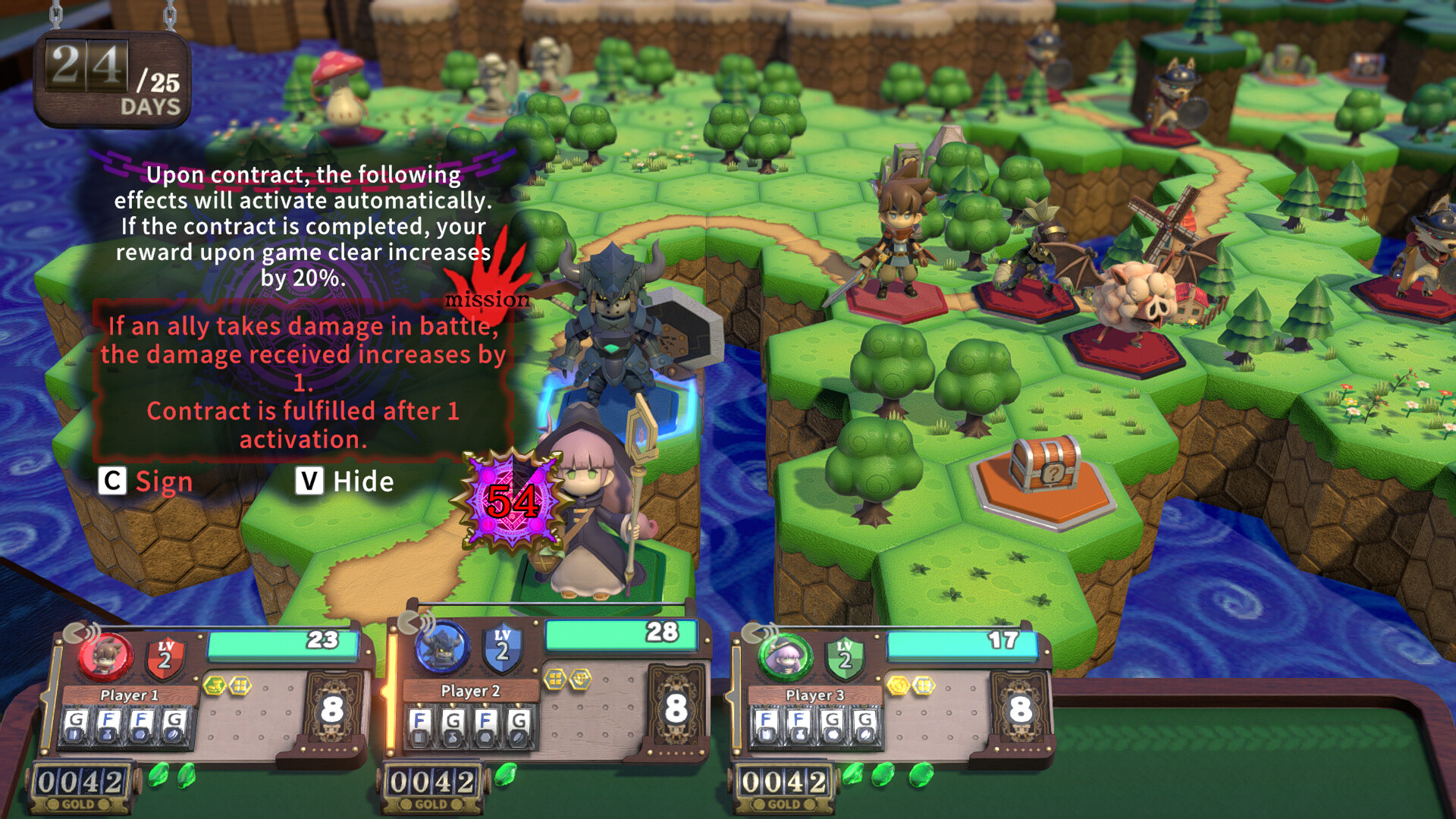
Aesthetically, Viractal is delightful. Where Sting’s Dokapon Kingdom leaned more heavily into RPG aesthetics, with dots on the ground being the only real concession that you’re playing a board game, Viractal fully embraces the tabletop. The board is made of hexagons, and each hero is a piece that is picked up and moved from space to space. Where combat is joined, the perspective shifts to a Final Fantasy-like view, but characters still shuffle around like board game pieces. The cards are perhaps a little mundane when you’re going to be investing so much energy into building those decks, but that’s splitting hairs. This game does look like an anime tabletop game, and it is nice to have that as a contrast to the many digital adaptations of Western-themed tabletop experiences (Demeo, Gloomhaven, Talisman) that we have, where the developers have specifically tried to recreate the visual effect of playing at a table.
It’s hard to fault Viractal: Will You Trust Your Party? It’s accessible to players who don’t have a lot of experience with board games, with a set of rules that are straightforward, yet rich enough to last the 50 or so hours it’ll take to see and play around with absolutely everything. It understands that social interaction is the point of a board game while still allowing players to enjoy themselves within the game. And it’s a truly charming celebration of the tabletop aesthetic. PC players may have overlooked this, and at time of writing it looks like I’ll be the first one with a Metacritic review on any platform, but please don’t let it skip notice a second time. Sting deserves more than this to be a deeply buried hidden gem.