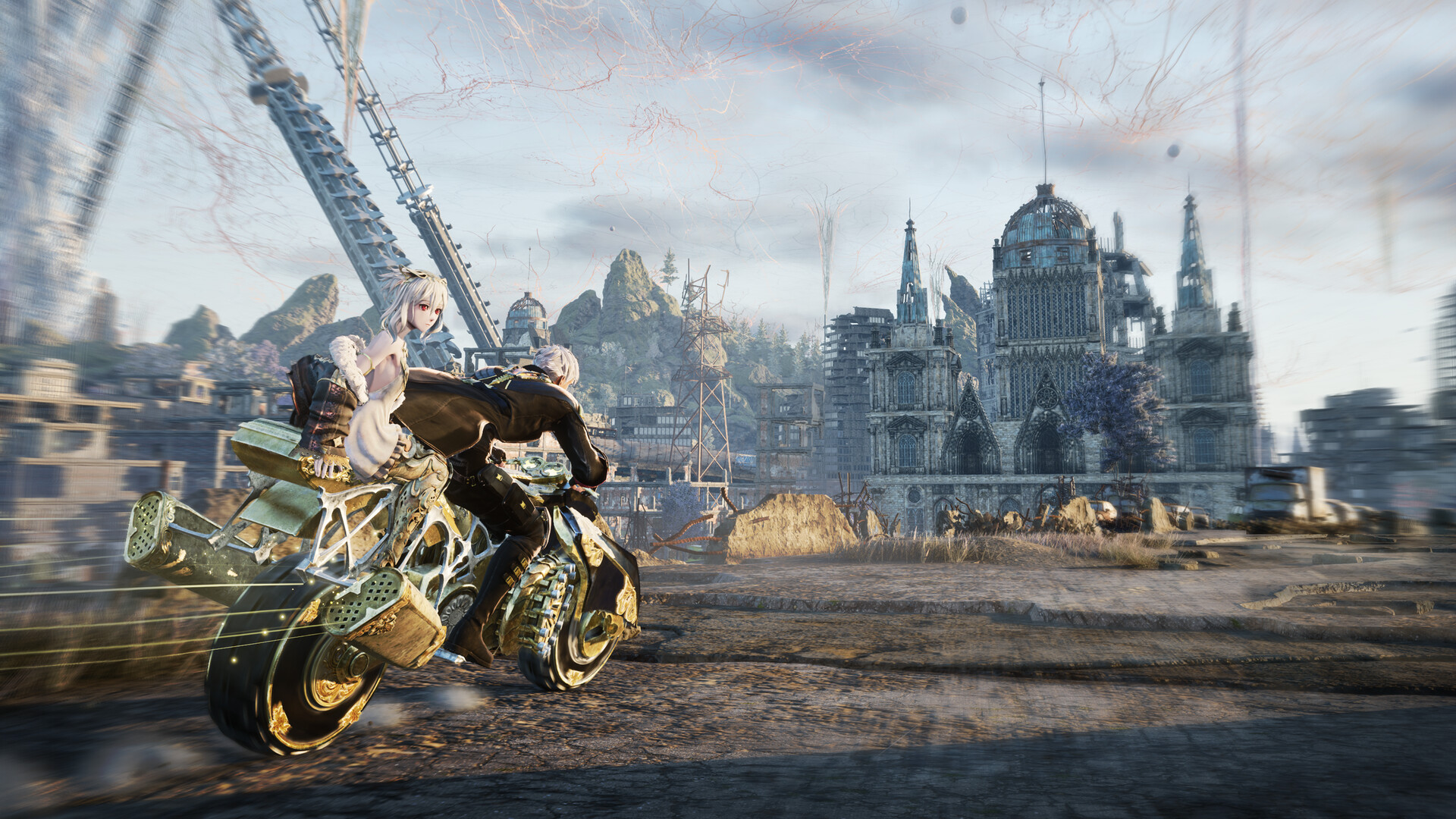


Having not played the original Code Vein, I have no idea whether Code Vein II is effective in building on it, or whether the two games are related at all. What I do know is that Code Vein II is an excellent soulslike. One that starts quite slowly, but has an odd way of getting its hooks deep into you.
One of the main vehicles of this is the overarching sense of mystery to the plot. Code Vein II takes place in two timelines: In the “present,” the world has been overcome by an apocalypse. Your job is to travel between the present and the past to figure out how to prevent that from happening. Though at first you’ll be trying to figure out why it really happened in the first place, what the machinations behind it are, and whose stories and instructions you can trust. It does seem that the development team closely studied how From Software keeps its audiences engaged in its games, and while Code Vein doesn’t feature a patchwork of lore to piece together by item descriptions and fragmentary conversations, it does drip-feed a mystery narrative at an intensely slow pace.
More immediately, though, you’ll be asked to make some pretty challenging decisions. The first big one is when you’re told to leave an ally in the past to fight (and die) against a powerful enemy. This is because of that old philosophical theory that, if you mess with the past, you can change the future in massive and unpredictable ways. On the other hand, the ally is a good bloke and very useful in a scrap. So naturally,y I ignored the command to stay out of it and went and helped the guy out. No spoilers from here, but the way it all plays out is satisfying as the digital equivalent of a page turner.

I did like how non-linear the narrative of Code Vein II is, and I’ll likely play it again to get a sense of what the other set of decisions might do to the story. That, plus the generally interesting cast of characters and heavier reliance on cut scenes, also gives the game a stronger JRPG quality than, say, Elden Ring, and it’s nice to see that the developers didn’t feel obligated to shamelessly try to copy the typical expectations of this genre.
Initially, the combat feels more like a JRPG than a soulslike, too. The first couple of boss monsters are almost shockingly easy to overcome, and there aren’t too many traps in the exploration that can result in a deadly mistake. On top of that, your arsenal of weaponry is powerful, and your ally is very competent. With those early bosses, you can largely focus on staying out of the way and watch as the AI whittles the health down on your behalf.
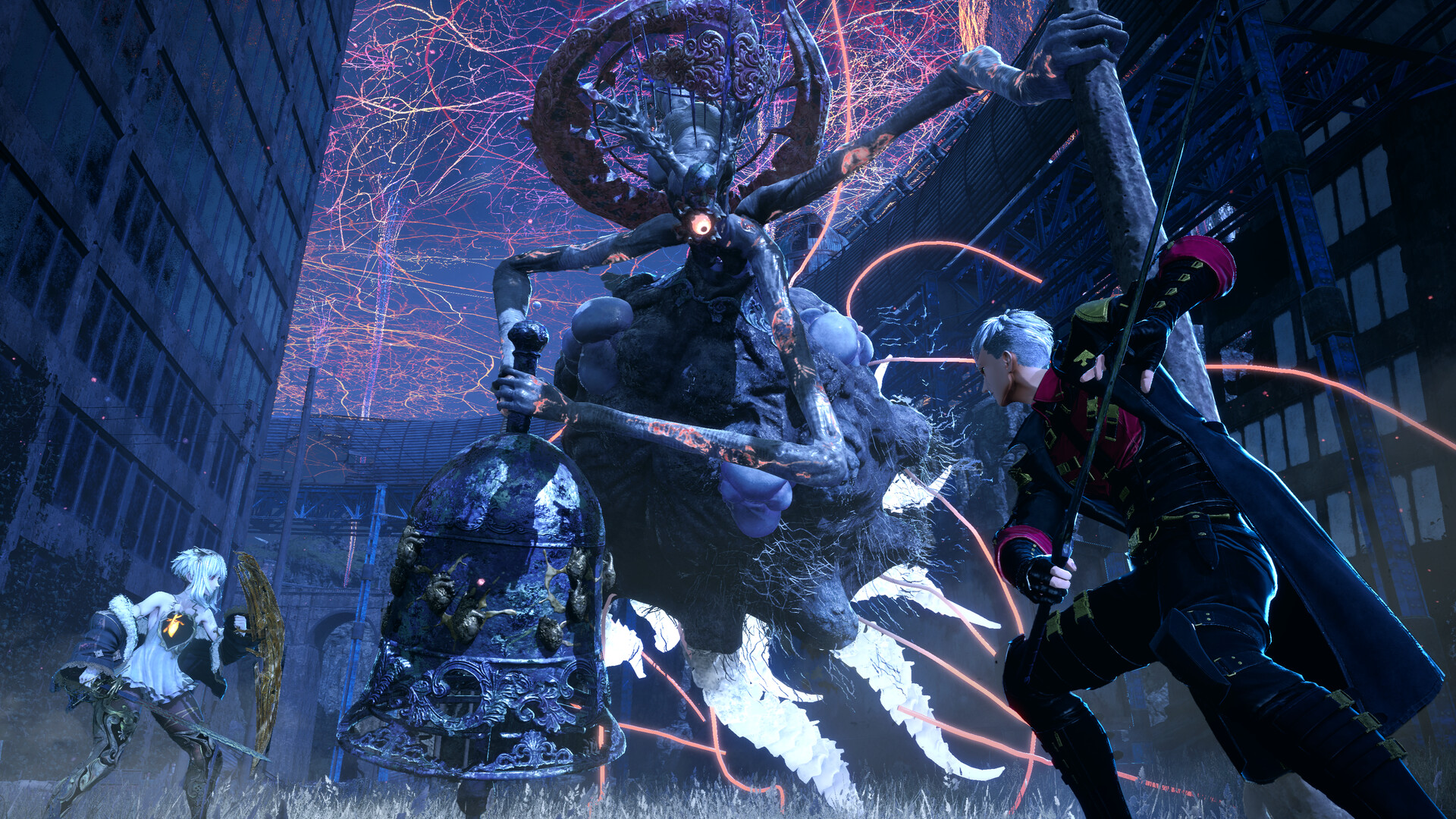
By the time you get to the third boss, however, the fangs start to show, and that boss is faster, has more interesting attack patterns (to handle people in both melee and ranged combat), and you’ll need to start playing in the same way you might approach other soulslikes.
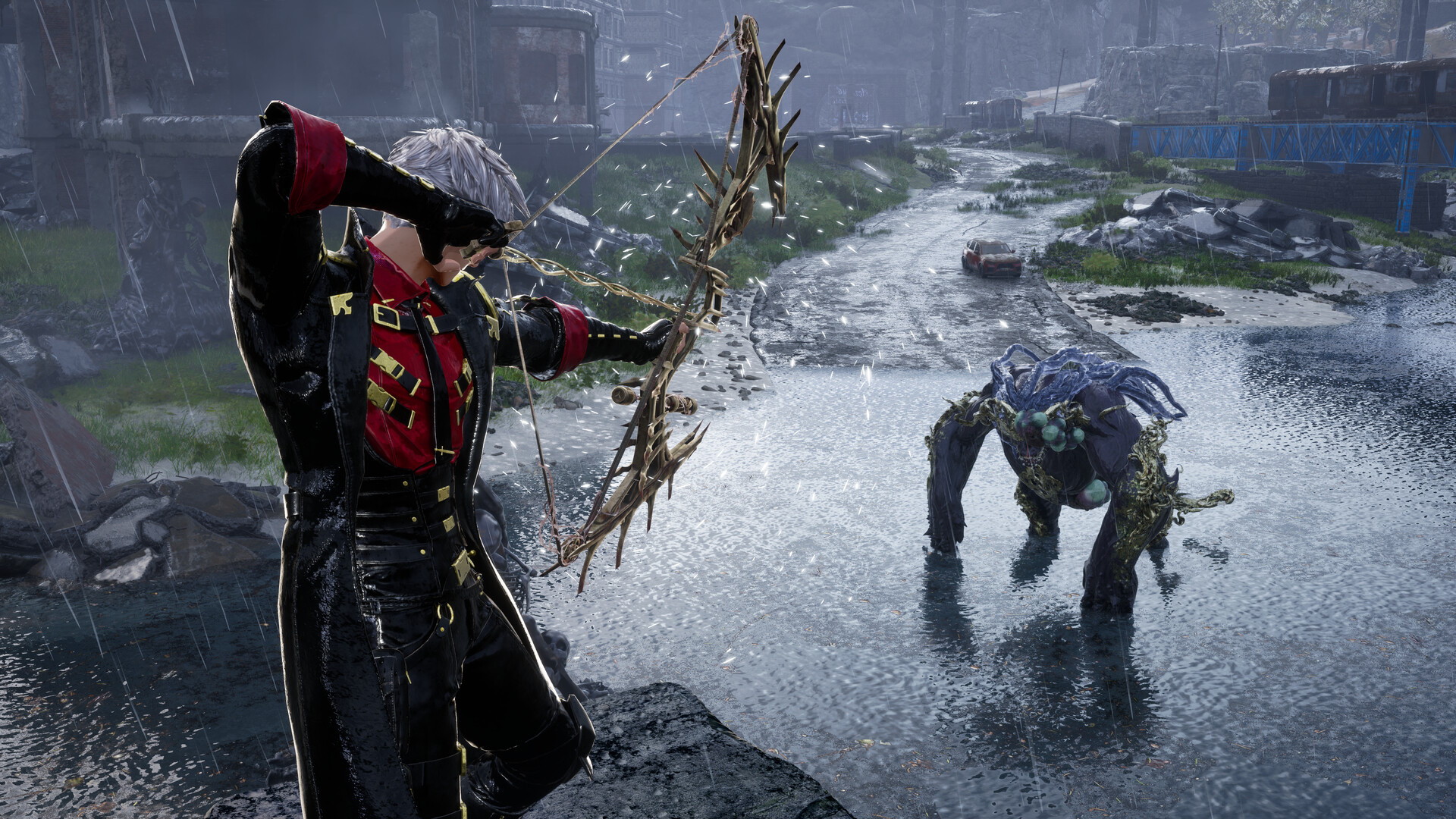
One relatively unique mechanic that I quite liked was the much-touted vampire system, which is very simply executed, but adds another layer of quick decision-making and skill to the gameplay. Your character’s most versatile and powerful abilities – both in terms of attack and defence – use a special type of energy that, to replenish, you need to draw out of the enemies you encounter with a special attack. So, during those protracted boss battles in particular, in addition to the fight itself, you’ll need to activate these slow and somewhat clumsy vampiric attacks to restore the energy for the special abilities. This forces you to really learn enemy patterns and establishes a different rhythm and to-and-fro with those enemies than I’ve seen in other soulslikes.
Like just about every other major game these days, Code Vein has a large world. Unfortunately its not as fundamentally interesting as Elden Ring, which was positively dripping with a sense of legendarium with every blade of grass or crumbling wall you came across. It’s not that there aren’t interesting areas to visit, because the world is definitely visually impressive. It’s just that it’s a fairly standard fantasy universe to explore.
The same goes for the aesthetics and art direction. We’ve seen ruined cities and wastelands like this before (hello NieR Automata and Stellar Blade). The combat is high-energy and flashy, and the role of the partner in combat has whiffs of something like Astral Chain, but that’s kind of the point there. We’ve seen that before. We’ve also seen this approach to anime character design plenty of times. It’s good, don’t get me wrong – I absolutely love the protagonist I was able to create in the character builder in particular – but Code Vein II doesn’t do quite enough to establish its own aesthetic voice in a very noisy industry in terms of what you’re looking at.
What saves it and gives it its identity is that time travel mechanic, which is the most ambitious effort at it we’ve seen since Ocarina of Time. Needing to jump back and forth between the time periods to gain access to new areas and make progress, combined with the narrative angle and the way the game builds moral decision-making into it, is genuinely well-designed. There are other soulslikes that have a dual-world mechanic – such as Lords of the Fallen – but never handled with the intricacy of this, and the 100-year gap between the two time periods allows for the developers to give you two different looks at the same world.
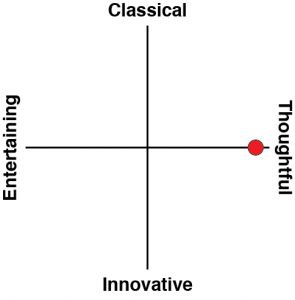
Code Vein II is very, very close to joining From Software’s games and the Nioh series in the upper echelons of soulslikes. A quality narrative, fluid combat and an excellent, Ocarina of Time-like approach to progression combine in a way that makes it very hard to put the controller down. It does feel like it’s in search of an identity of its own at times, and it’s unlikely to develop the reputation that Ocarina of Time has for that reason, but Code Vein II has a lot going for it.





You guys gave this 4 out of 5 stars and it listed as 100/100 at metacritic’s score, what’s going here? Is it a paid review or something?
Nope, not paid review. Just an error on the Metacritic listing. Thanks for flagging it.