

Hidden object games are a dime a dozen. Hidden Around the World is one of many I have received news about, and I wanted to review it because I adored its predecessor, Hidden in my Paradise. It’s similar but larger, if that makes sense. The levels are much larger, with many more things to find in many more places. But the gameplay elements of finding objects, taking photographs of little digital dioramas, and searching for fairies remain. There is one big question on my mind while I write this: how can the same thing become worse the second time around?
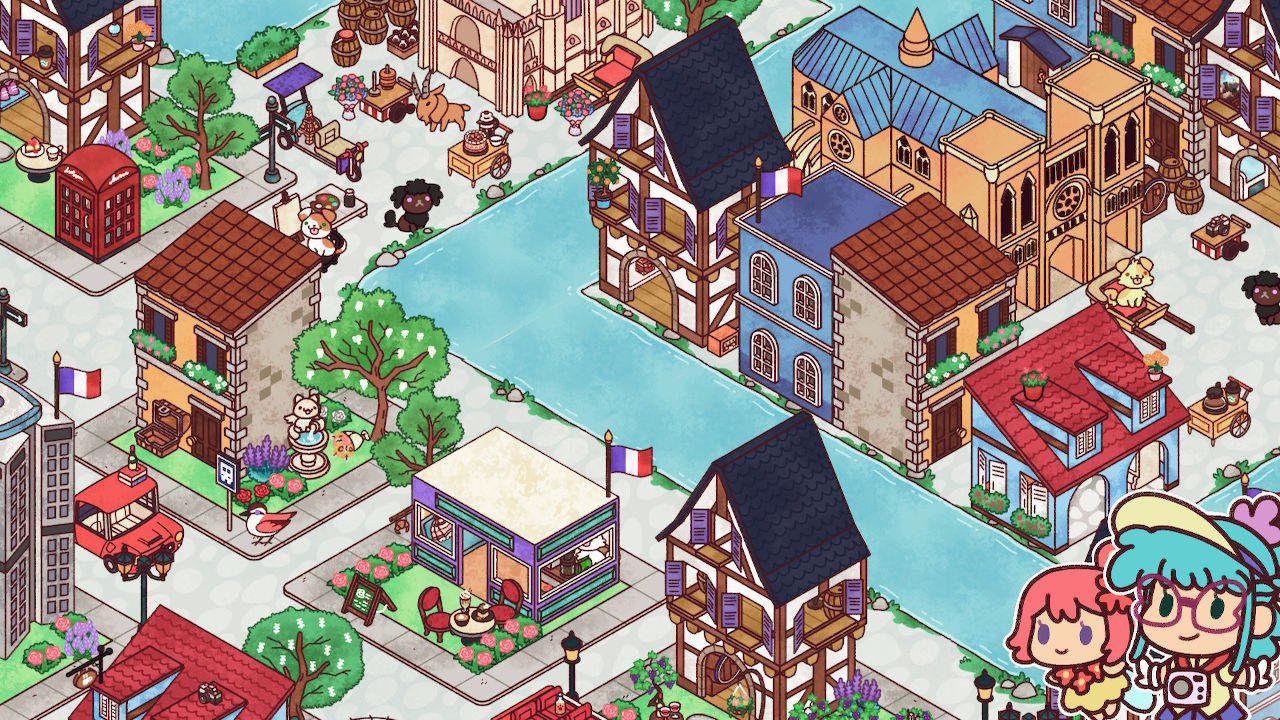
Just like in Hidden in my Paradise, there is no deep narrative in Hidden Around the World. In fact, you wouldn’t know it at all unless you read the game’s description: Travel the globe alongside Laly, a curious photography apprentice, and her fairy companion Coronya. Together, they’ll visit hand-drawn cities like Paris, Tokyo, New York, Venice, and Mexico City, uncovering hidden objects and capturing snapshots of cozy moments along the way.
Both characters are from the previous title, and they remain incredibly shallow. There are no backstories. There is no narrative. You can find hidden objects, and that’s it.

In Hidden Around the World, the levels are large cities with hundreds of objects carefully placed inside. The amount of work this must take is staggering, as I’ve learned in the game’s sandbox mode, where you can build your own levels. The layers and details of each level are astonishing. Sometimes items are small, found in something large, which is found inside a house. Sometimes you need to find animals, which are the citizens of this world.
To progress through the levels, you must earn enough paws. Per level, you can earn one by finding all the hidden objects, one by completing all the hidden photographs (or “snaps”), and one by finding all the fairies. Each new level requires two more paws than the last, so the cities are staggered.
When you enter a level, there is a long list of items to scroll through at the bottom of the screen. These are the items that you need to find. This list can be collapsed if you’ve completed it or aren’t using it, and collapsing UI is just the thing needed in this game. When you get stuck, click the item and the game will give you a hint. It’s simple, and it’s effective.
On the surface, and in practice, adding photography to a hidden object game is brilliant. You’re already looking for objects, so why not take some and make little scenes with them? Each level has multiple example photos, and the goal is to complete them all. Some are easy, with just a handful of items. Others are more complicated, requiring duplicates or many more items. This part of the game really allows my brain to chill, which I always appreciate. (It’s awfully noisy in there.)
There are a couple of different ways that I build my snaps. One: I take everything I need from the city to an empty space and build the whole thing there. Two: I identify the biggest object required in the scene (for example, a bridge) and build around it more organically. Either way works, and nothing needs to match perfectly as long as everything is there. If you’re missing something, you get a warning when you try to take a photo.
There is one glaring issue with the hidden photography: getting help finding the objects. Being brought to the object you need seems like chance or luck. Sure, you could zoom right to it. But it’s much more likely you’re shown an object you don’t need from another photographer. There seems to be no rhyme or reason or order to it.
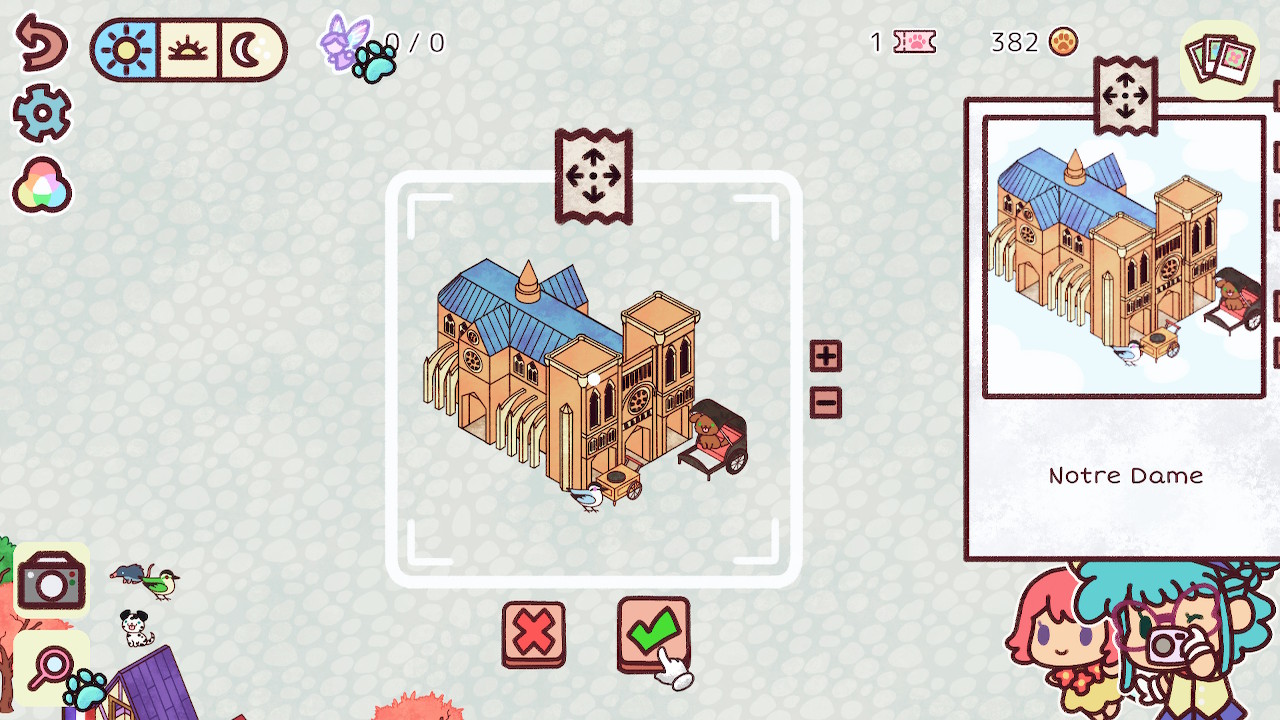
Aside from hidden objects and photography, there are two more aspects to each level: fairies and treasure chests. Well, right off the bat, I can tell you fairies are bugged and not working at all, making it more difficult to move on to new levels. For example, outside of the first level, it tells me there are four fairies in there. When I enter the level, it says I’ve found zero of zero. They don’t even appear.
I assume fairies work the same way as in Hidden in my Paradise, just like everything else does. They’ll sparkle behind items, and you have to move the item to unlock them. Changing the game’s visuals to night can really help with that, as everything darkens but the sparkles.
As for the treasure chests, they were tracked in the level’s info pop-up in Hidden in my Paradise, but in Hidden Around the World, there is no information on how many you can find in each level. The treasure chests contain bonus cash, and there are at least several scattered around each city.
There are some options available that can give your game a cool look or help you find items. You can switch between day/evening/night, which changes the level’s brightness and colour tone. This is especially helpful if a level starts up during the night, which makes it harder to find objects. There are also filters you can apply. I don’t use them much, but they can make things look different — saturated, greyscale, added special effects, etc.
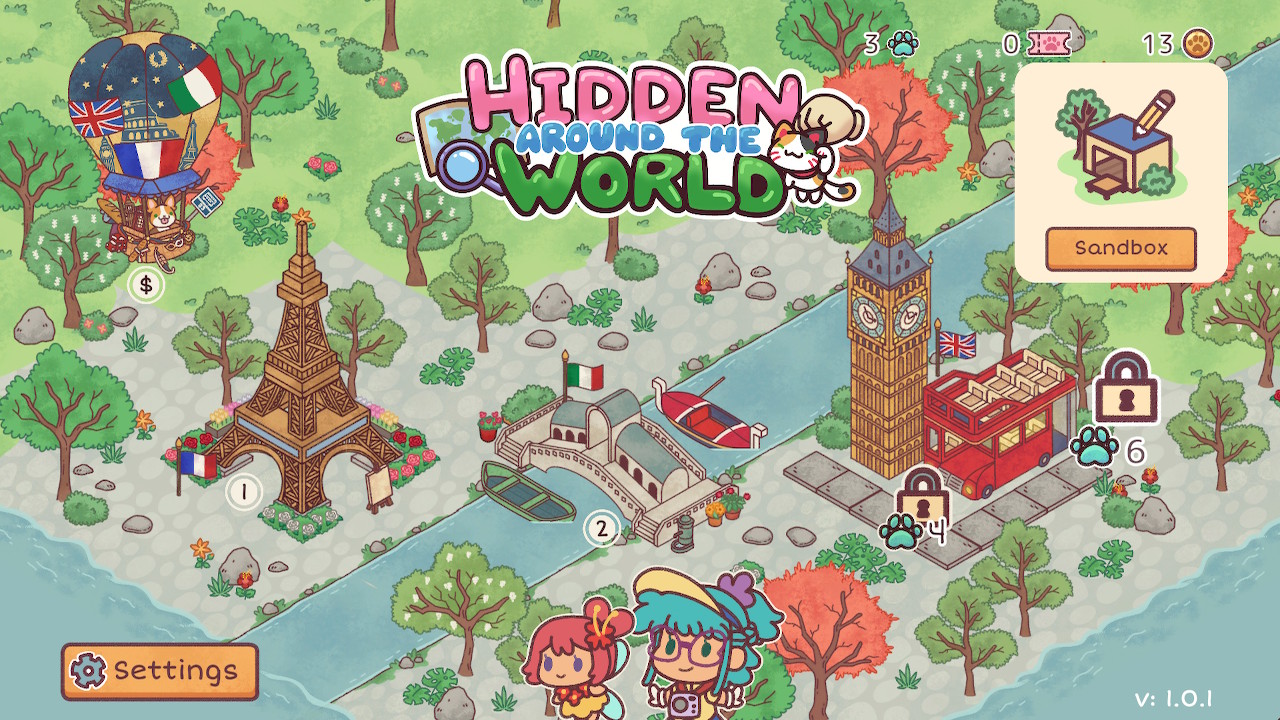
Clicking on every animal per level each time you enter will earn you coins, as will simply playing through and finding treasure chests. You can also earn tickets. Spend coins and tickets on items to use in sandbox mode. There are themed shops containing bundles of items, and you can also purchase tickets. With tickers, you head to the gacha machine and use a ticket per pull, unlocking multiple items. You can’t get duplicates, so nothing is wasted. It’s just a bit tedious to earn everything. That being said, it’s also worth it to have everything at your fingertips in sandbox mode.
Controller optimization remains lacking at best. The game is obviously made for PC and touch screens, and the controller doesn’t do the UI justice. Just like I said last time, triggers and bumpers are underutilized, making the experience feel clunky. You don’t need both a trigger and a bumper to zoom in; one would suffice, and the other could be used for something else. Zooming in and out is also quite clunky and doesn’t move as smoothly as I would like. The right joystick is used exclusively to make the map shift in different directions.
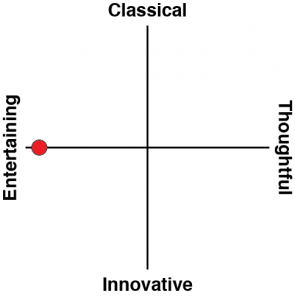
It is worth noting that I gave Hidden Around the World’s predecessor, Hidden in my Paradise, a great score. But for some reason, Hidden Around the World resonates less with me. It’s cute. It’s fun while it lasts. But with the frustrating bugs and very little narrative, it is also easily forgettable. One major problem I’d like to forget is that the game didn’t improve on Hidden in my Paradise: the same issues persist, which were easier to overlook the first time around. When there are already problems, don’t just copy and paste them into another game. It’s just the same, and that doesn’t cut it for me.

Buy the hottest games with Amazon.
By purchasing from this link, you support DDNet.
Each sale earns us a small commission.