

Look, the Nippon Professional Baseball league – the NPB – is just better than the MLB. I don’t mind if you disagree, but you’re wrong. From the personality of the teams to the quality of the games, the way the league is organised, and the atmosphere when you’re actually there, the NPB represents the finest side of baseball. The fact that it backs a Japanese national team that is the team to beat at any given international competition (regardless of their ranking) speaks to how effective it is in supporting Japan’s favourite sport.
A big part of the reason why the NPB has never received the attention or respect that it deserves outside of its home country is that it has been so difficult to follow. The organisation that runs the NPB has been enormously protective of licensing outside of Japan, and perhaps as a consequence of that Konami, which has owned the license to the NPB forever and a day, has not been able to localise the series into English.
But something somehow changed. eBaseball: Pro Spirit 2026 actually got localised into English. It is the first proper console game in the entire series to get an English localisation. And so I can finally play the better digital adaptation of baseball while also enjoying the better baseball league. Sorry, MLB The Show. It was fun while it lasted, but now I’m moving on.

eBaseball is a comprehensive, fully featured baseball simulation (despite being significantly less expensive than Sony’s take, which is the joy of Konami being the challenger brand, I guess), that is fully licensed to the NPB. You’ve got the full bevy of options that you’d expect from a top-flight sporting title, including team management mode, star player, and the “Grand Prix,” where you’ll be building your dream team. I particularly appreciated the management mode, as I have issues with how my beloved Tokyo Giants are being managed and am determined to do better. It’s been 14 years since they last won the thing! I’m here to fix that!
Most intriguing of all, though, is the Hakkyu no Kiseki mode, which is deeply cultural to Japanese baseball and what distinguishes eBaseball from MLB. See, in Japan, high school baseball is a really, really big deal. I suppose the closest parallel is college sports in America, but in Japan there aren’t the same vile associations running the leagues as profit-making ventures, exploiting amateur athletes without properly compensating them for their skills (I honestly don’t know how anyone can watch college sports and not need to scrub themselves clean with a whole bar of soap afterwards). The Japan High School Baseball Federation, by contrast, is a Public Interest Incorporated Foundation that, yes, has commercial interests, but is a non-profit in structure, and reinvests what it does have directly into youth sport. It’s not perfect (in fact, the competition can be criticised for all the same reasons that most elite youth sports are, in that they’re not as protective of the athlete’s bodies as they should be), but it is a proven positive force in the sport overall. And it’s nowhere near such a brazen, crass example of late-stage capitalism that John Oliver made an entire episode about it.
It’s a little unfortunate that the appeal of this mode will be lost on most players, because, again, high school baseball means a LOT to the Japanese, and this feature is every bit as important to the overall package as the NPB mode itself. As they say over there, a professional baseball player has many years to build their career and win trophies. High school is just three years, so kids are almost certainly only going to get one or two shots at being part of a winning team, even if they’re from one of the stronger baseball schools. As someone who’s been in Japan to witness it, emotions run high in the finals for both the winners and losers, and the management mode in eBaseball does a really nice job of capturing the appeal of taking a high school team to glory.
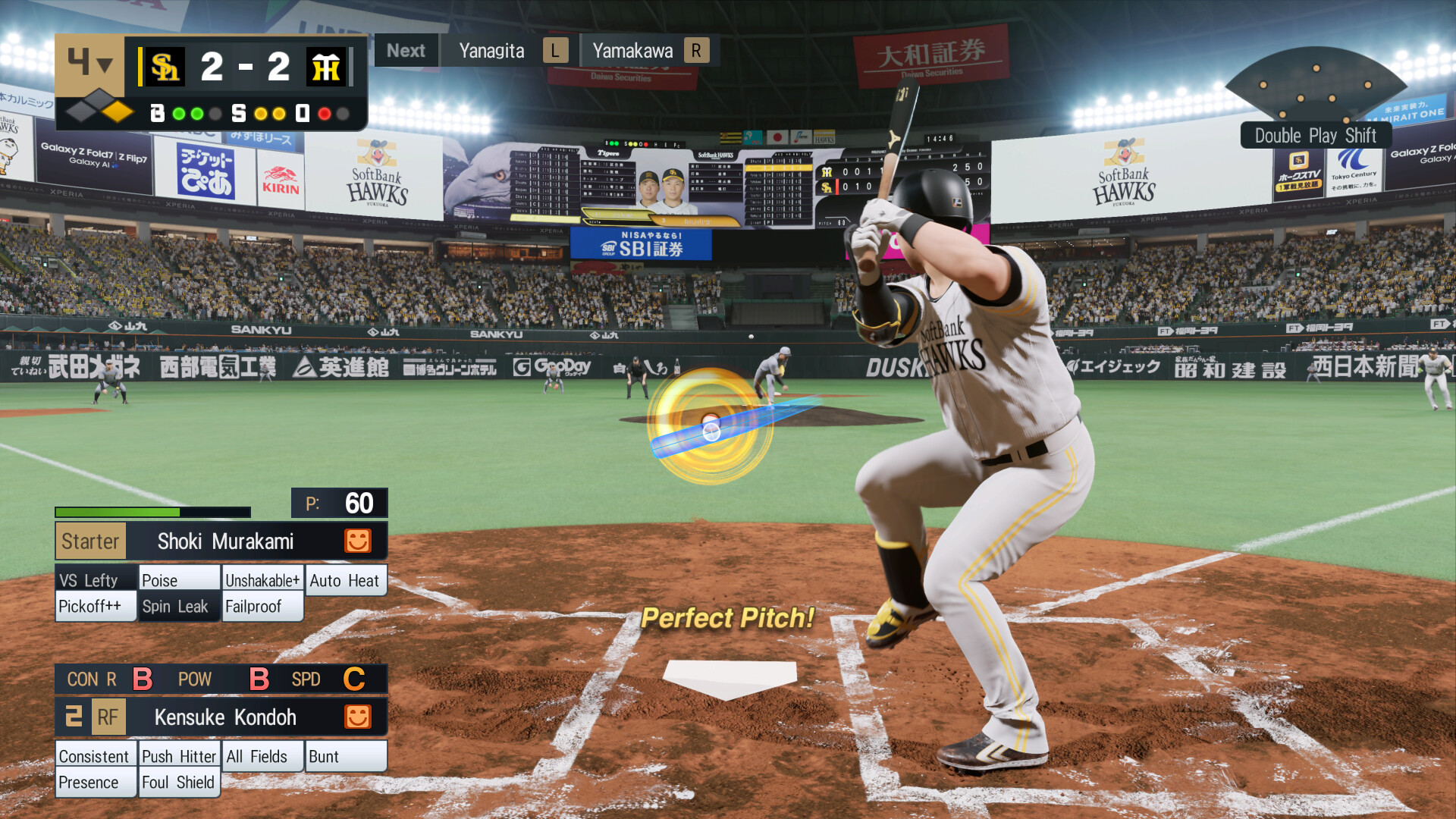
Of course, while managing a team budget, scouting for local and international players, organising trades and managing rosters, fatigue and injuries are all rewarding in their own right, and when the results start rolling in, the real reason to play eBaseball is for the on-field action, and Konami’s game fully shows the nearly two decades of heritage behind it.
Both pitching and batting offer simple yet elegant systems. With batting, you have an icon that represents your batter’s bat. “All” you need to do is line it up with the pitch as it comes in and press the swing button at the right time. Hit it in the sweet spot, and you’ll see the ball fly off the bat and into a gap to get your batter on base. Then, of course, there’s the option to go for a high-risk big swing, where the “sweet spot” becomes tiny, but a well-timed hit will net you a home run.
I will say that initially the perspective doesn’t allow for great timing of the swings. This is a problem with MLB The Show as well, but tracking a baseball pitch in the real world is a three-dimensional activity that doesn’t translate neatly to a flat screen. Thankfully, you can, over time, learn the timing and how to “read” the game, and while you’re learning, there are plenty of in-game assists that you can turn on. It will take you longer if you’ve been weaned on Sony’s series, as Konami’s is different. But for what it’s worth, as someone who has spent dozens of hours playing eBaseball and hundreds playing MLB, I much prefer Konami’s gamefeel.
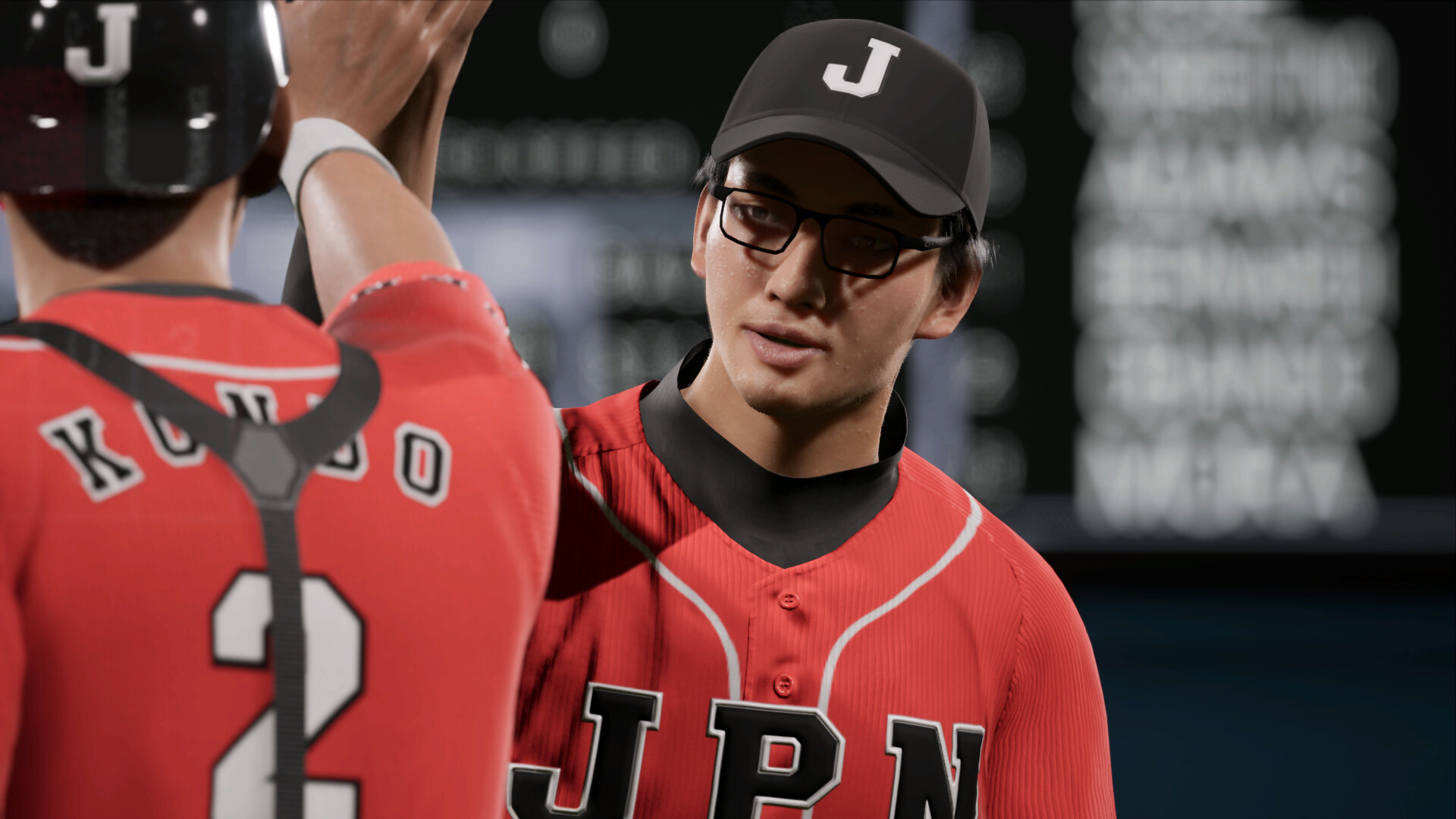
Pitching is even simpler. You select a pitch from the pitcher’s repertoire, then place it inside (or outside) of the batter’s zone (represented as a square on the screen). Then you need to press the button one more time at just the right time to determine the quality of the pitch. Pitches that the pitcher is better at are easier to time. Finally, you need to account for the batter getting used to pitches of different velocities and make sure that you’re mixing up fastballs through to the slowest curveballs to disrupt their rhythm (and occasionally throwing the pitch outside on purpose to encourage them to go hunting).
As mechanically simple as the pitching is, it’s enormously tactical, and the AI is very good at punishing uninspiring, overly safe, or loose pitching, even at a lower difficulty level. Again, in comparison to MLB The Show, which tries to make the pitching process more active, this almost “turn-based” approach appeals to me so much more. It’s challenging, especially if you turn on the scaling difficulty, which does a good job of keeping the AI relative to your own skill level (making a win earned without the game being frustrating). It’s also so rewarding.
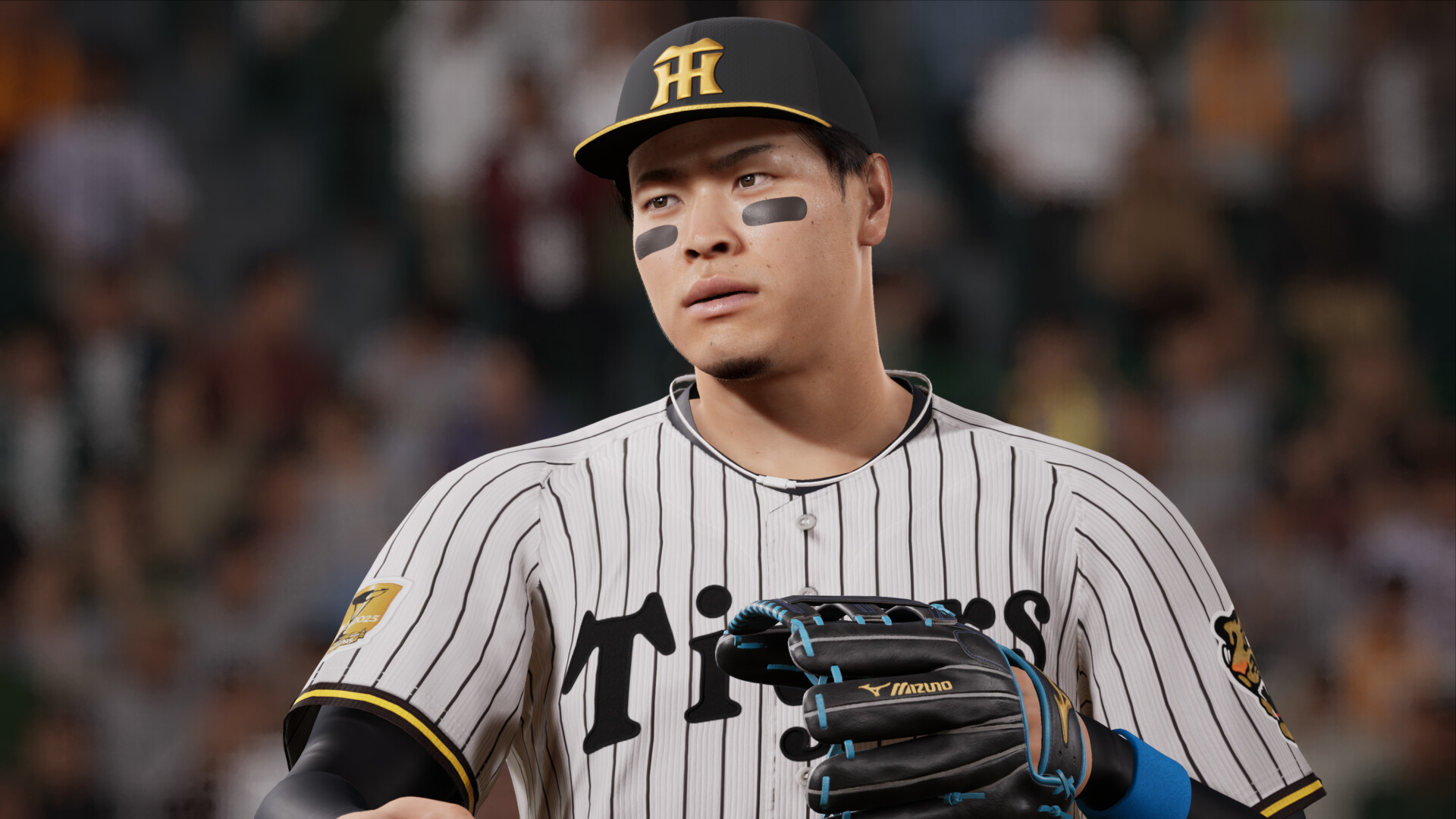
Konami’s more modest budget compared to what Sony can invest is most apparent in the presentation. The stadia look gorgeous (it’s just like how I imagined it would be to stand at the plate in Tokyo Dome, the best baseball stadium in the world), but the players are a touch stiff in animation and not quite as detailed as we see in the big AAA sports titles. The English commentary, recorded specifically for the localisation, is abysmal, but just turn the Japanese commentary on instead, as it’s there in full. You might not understand it, but it adds to the atmosphere so much more, and brings the game a broadcast quality and timbre which is, really, all you actually want from a commentary track in a sports game. It’s the aesthetic, not the information that you’re after with it.
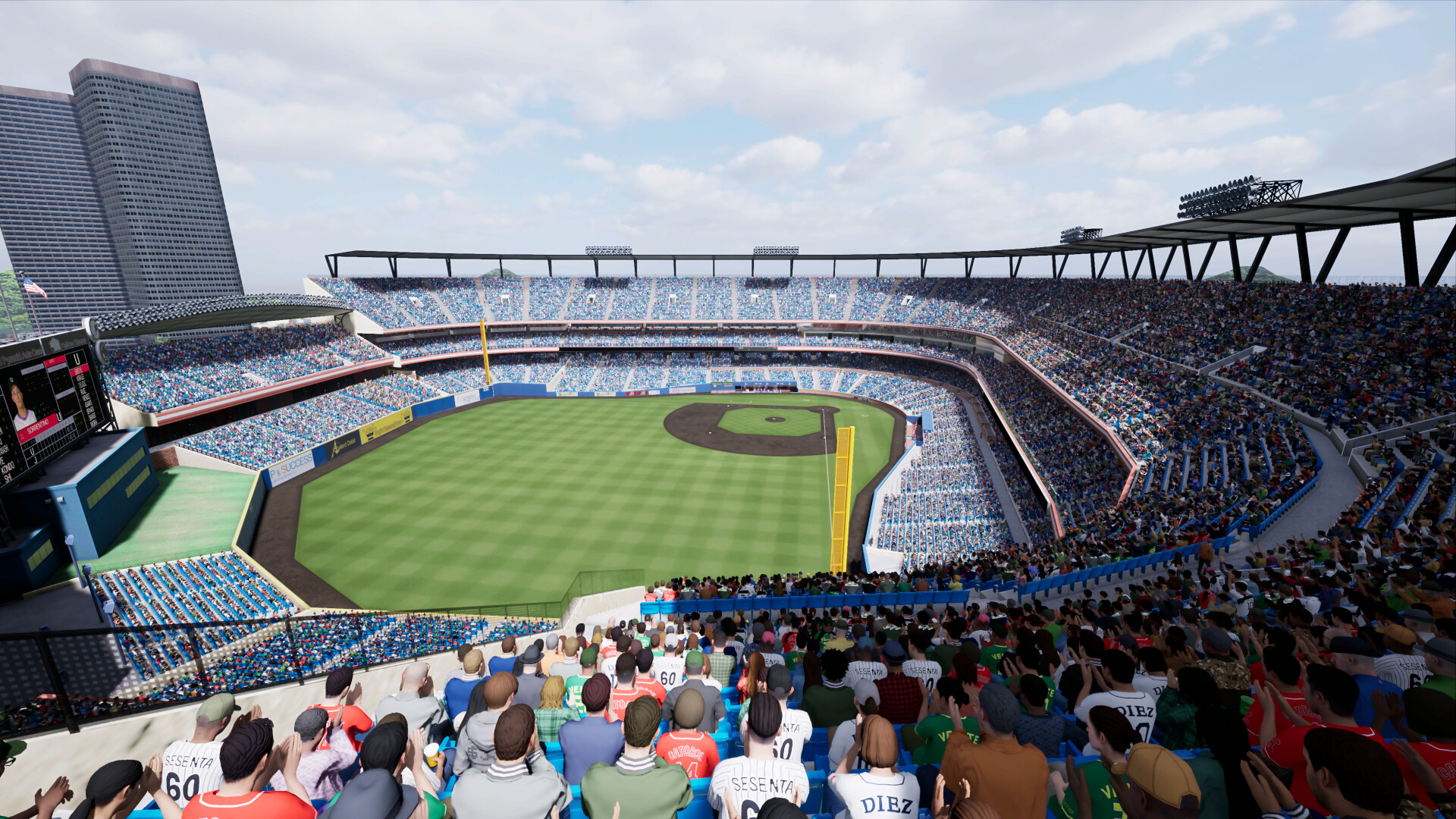
Just as one other small disappointment: Konami does have a world baseball mode, allowing you to play as your favourite international teams. It’s something I’ve been begging for from MLB for years now, so its mere existence makes me happy. Unfortunately, the only single-player option in this mode is to play an exhibition match. And the teams aren’t licensed. By default, the game has all the national flags that competed in the recent world championships, but the players in all the teams (including Japan’s) are randomly generated, and make no sense whatsoever. By default, Australia’s team has a better batting rating than Japan’s (?). There is a full edit suite so you can fix that, but it’s a lot of work to go through just to play single matches (side note this is particularly frustrating because a full licensed mode does exist in the Japanese and Asian releases of the game).
And actually, one other disappointment: Where’s the Switch 2 port, Konami? I have a previous eBaseball on Switch (the one with the Olympic Games mode) in Japanese, so it’s not like Konami has an issue with publishing on Nintendo devices like, say, EA tends to. And Konami did previously localise one of the games in their OTHER baseball properties into English on Switch (the cartoon series with the bobble-headed characters). Perhaps a port of eBaseball is coming down the track? I hope so. I want to play this on the go. I hope Konami puts the proper world licenses in with that version.
Obviously, I’m square in the target market for eBaseball, but I’m over the moon with the quality and depth of eBaseball 2026, and I’m so glad that Konami is finally recognising that there are fans of Japanese baseball outside of Japan. If Konami being able to take its license global is a sign that the NPB itself is looking to bring the league to global audiences too, then so much the better. Lord knows this is one sport and one example of a sporting league where American dominance might finally be challenged, and that would be for the good of the global sport.