

A persistent issue I have with video game adaptations of stories from other mediums is that the developers might latch on to the characters and setting of the base material, but almost inevitably the game lacks any understanding of the themes and depth of meaning that made the original work noteworthy in the first place. Like that Dune one I just reviewed. Great game in its own way, and admittedly the textual depth of Dune is notoriously difficult and nuanced, but whoo boy did they largely miss the boat there. Or Dynasty Warriors. Don’t get me wrong, I have an obsession with Dynasty Warriors that extends more than a decade at this point, but it’s based on one of China’s greatest cultural products that scholars spend their entire lives studying.
And don’t get me started on all the “Lovecraftian” horror games that miss the entire point of the mythos to instead throw squid monsters at players.
Anyhow, the point to all that is I was very concerned going into Clive Barker’s Hellraiser: Revival. Hellraiser is complex, elevated horror. So complex that there are like 11 Hellraiser films, and every time Barker hasn’t been directly involved in them, they’ve totally and utterly missed the point. Imagine my sheer excitement to find that Revival GETS IT. Like, really, truly gets Barker’s themes and darkly majestic, philosophical vision for horror.

Poor adaptations of Clive Barker’s vision interpret Hellraiser as “Teeth Chattering Demon, Pinhead Demon, Chains and Blood.” Barker was, in fact, capturing something much more philosophically nuanced in his vision. Yes, it’s sadomasochism, yet it’s explicit, and yes it is deeply, fundamentally erotic (which lesser adaptations always seem to miss), and it’s all those things because it’s Barker’s take on the philosophy of the Marquis de Sade.
Let’s take a deep breath, because I’m about to dump a brief glance at an entire field of literary study on transgression.
To start, I want to highlight both Sade and a story written by Georges Bataille titled Story of the Eye. Story of the Eye is a landmark piece of literature in transgressive art (as in it breaks just about every single taboo that you could imagine), and, just like Sade’s writing before it, speaks specifically to an idea that another philosopher, Michel Foucault, would later refer to as the “Limit-Experience.”
To Foucault, the Story of the Eye, and the writings of Sade that it followed on from, are intense, boundary-breaking moments that “shatter” the normal ways of thinking, living, and perceiving reality. The extreme experiences depicted in these stories, and indeed the very experience of being exposed to them, open the mind to new understandings and challenge us to see things differently. These stories all explore the thin lines that exist between eroticism, violence, “madness” and death, and they’re all fascinating in the way that they also act to reject concepts of conventional morality and bourgeois order. Debate rages around just which political ideology these people (particularly Sade) belong to, but insofar as you can make an argument for them being progressive and Marxist, it’s here – the villains to Sade, Bataille, and Foucault’s analysis of these stories, are those that are not willing to have the limit experience and challenge the established order of things.
I can’t do this entire argument justice in the context of a game review. I present the above here just to highlight that there is a lot of context that Hellraiser exists within. I highly recommend reading Foucault’s A Preface to Transgression, Bataille’s Story of the Eye itself, and some of Sade’s works to get started down the rabbit hole in studies of transgression, because as you do, Barker’s one writing becomes that much more profound.
It should be clear that Barker’s Hellraiser exists firmly within the same traditions of Bataille and Sade. The tearing of flesh with chains and various other examples of sadomasochism is presented in the same way as the classics, and the examination of the intersections of transgression, death, and eroticism is handled in much the same way. Going into Clive Barker’s Hellraiser: Revival and its story of a biker and his girlfriend who accidentally open a gate to the Cenobites’ hell (or heaven?) after finding the Genesis Configuration puzzle box, I just assumed that the developers would barely touch any of this (because, in part, I couldn’t conceive the developer and publisher being able to talk the platform holders into allowing it), but I sure got that wrong. The opening 15 minutes of Revival is an utterly magnificent example of the exquisite transgression of these writers. Easily the best effort to do any of this in video games to date.
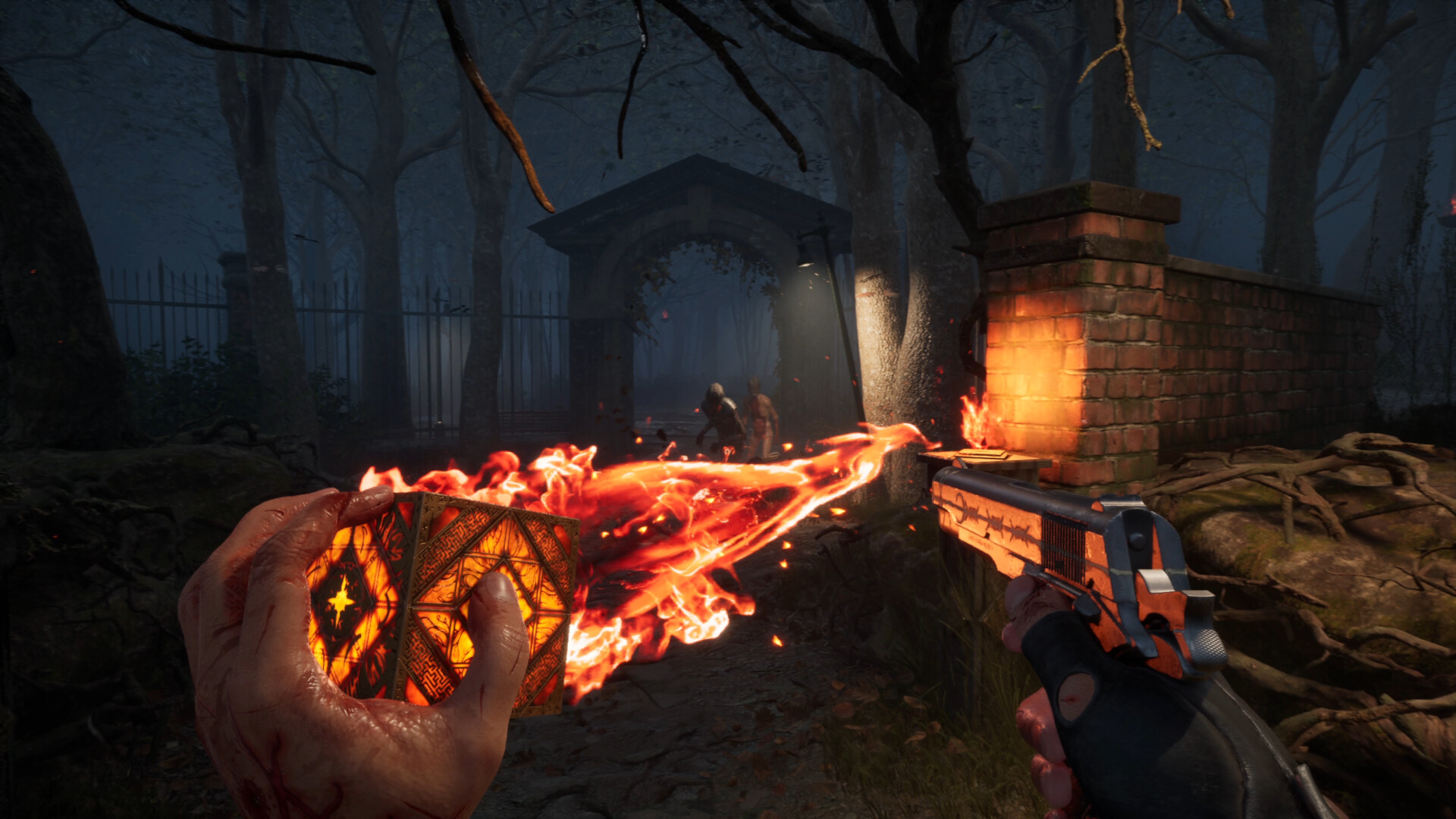
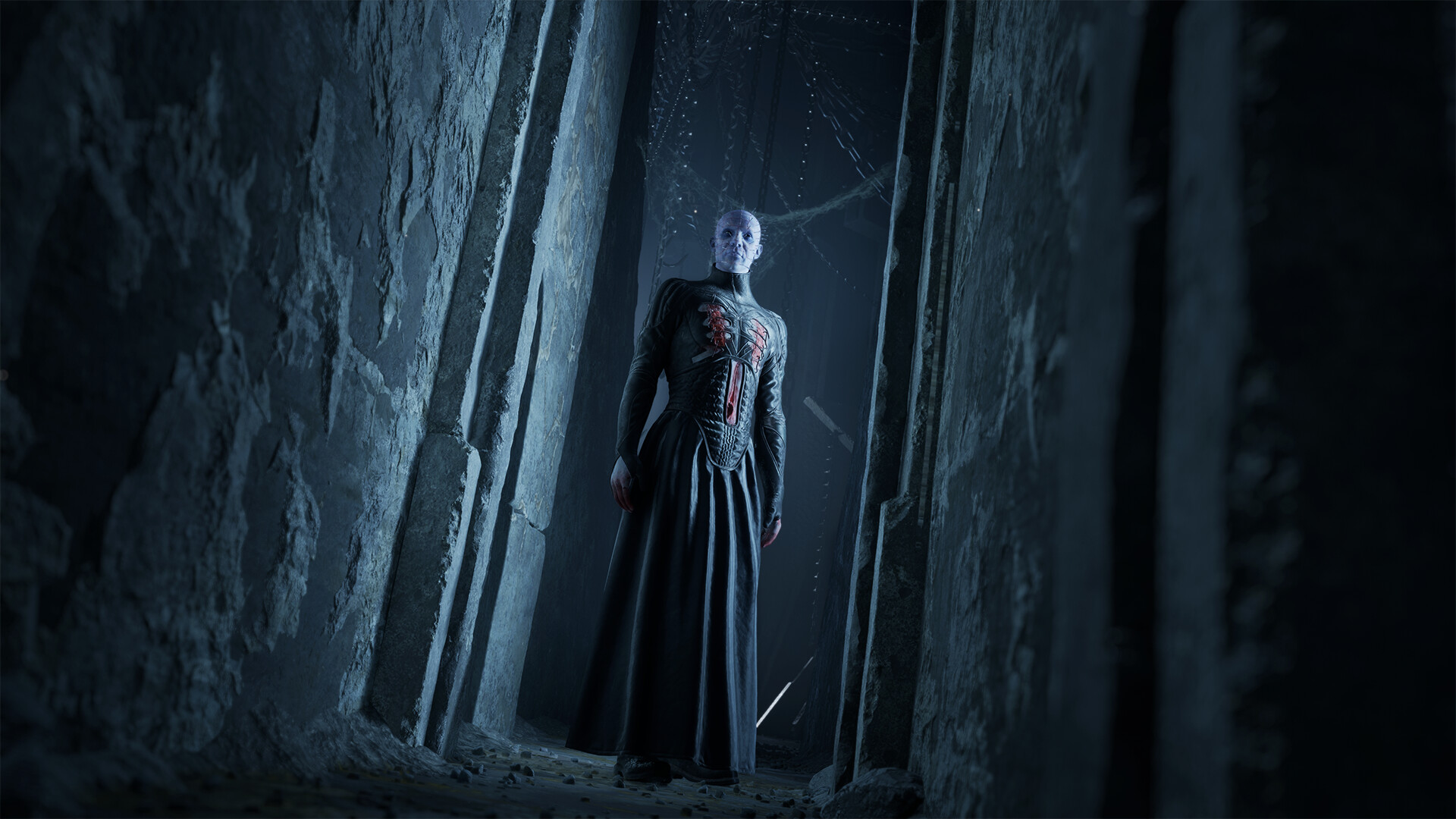
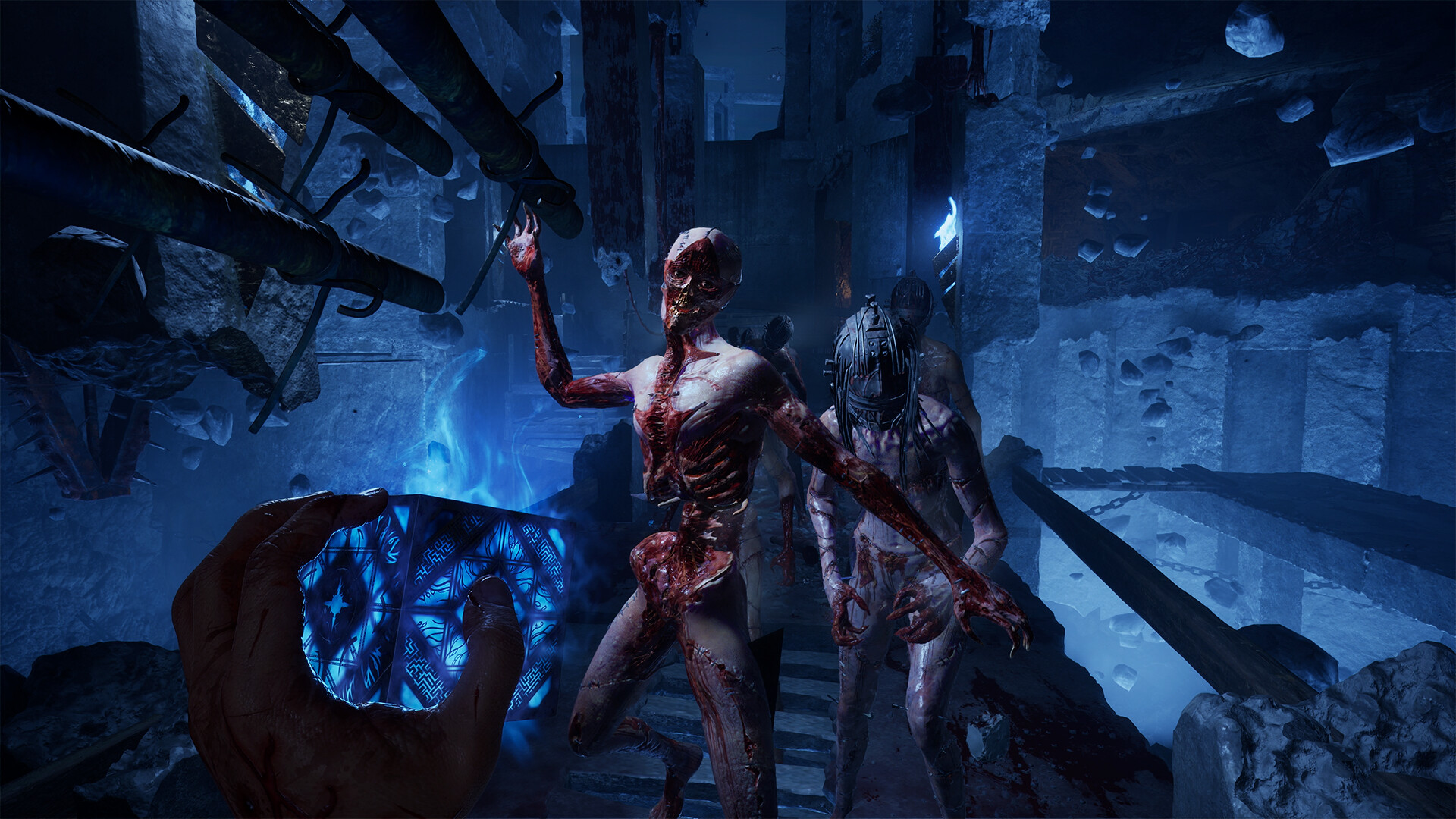
From the end of that sequence and a cut scene you won’t soon forget, the game “settles” into a more conventional survival horror rhythm. It’s generally action-based, like a Resident Evil title, though the early part of it in particular front-ends stealth that will occasionally pop up too. You’ll have enemies you need to sneak around, followed by action sequences and moments where you need to run like crazy. You’ll be travelling between the “real world” and the brutalist-inspired maze that Pinhead (sorry, Mr. Barker, I know you’re not a fan, but Pinhead is Pinhead) and his fellow demon-likes occupy.
The developers have been clearly inspired by Capcom’s Resident Evil series, and have built an action system that does that inspiration proud, by playing well and having the requisite set-pieces along the way. Though truth be told, I found the action sequences to be the game’s least interesting moments. I know I’ve argued this many times over at this point, but horror is at its best where it disempowers the player, and the Resident Evil series – and Hellraiser’s more action parts – are more accurately described as “gory action” at these points. Moreover, in this particular game the horror atmosphere is driven home most effectively during the quieter moments, such as early on when you need to slowly sneak past a cultist doing things to a woman that would make the Saw film series blush. The moans of agony and the squelching of the experiments on the body are exactly the kind of Sadean scene that makes this game’s action sequences seem mundane by comparison.
However, they do work as the threat that brings the rest of the game together and allows Barker’s vision to be turned into an interactive experience.

This is achieved through the use of the in-universe Genesis Configuration. The iconic box from the film series combines with a “suffering” meter, which provides you with a limited resource to use powerful abilities, all tied in with the BDSM themes of the Hellraiser series. The game’s puzzles, meanwhile, are fairly standard for the survival horror genre, but frequently have an erotic tone to them. It’s perhaps a little heavy-handed and on the nose compared to the better films in the series, but no one ever accused the video game medium of being a subtle art form.
In short, Hellraiser: Revival does enough to use the gameplay systems to support the very Barker-like themes, narrative and aesthetics. And that’s all it really needed to do given that your focus in this game should be the exquisite transgressiveness of it all. Over and over again, as I played, I was reminded of Lust for Darkness – a horror game that aimed to meld eroticism with Lovecraftian horror. I loved that game in its own way, but Revival here plays much better even if it is a “by the numbers” survival horror game, and the aesthetics and themes are much more coherent than that effort to bring sex to a notoriously sexless writer.
Hellraiser has always been a niche horror series because the transgressive nature of it means that, almost by definition, it’s only going to appeal to a fringe sort. I happen to fall into that target audience, and Hellraiser: Revival does hit all the right notes for me. I am a very big fan of this game. But then I’m also a fan of Story of the Eye and Marquis de Sade’s philosophy (albeit less so his writing style), so the fact that I would rather play something like this than, say, a Resident Evil game, should come with a solid, pin-shaped disclaimer asterisk.