

For some time, Konami has followed the trend with its Castlevania series, working with developers to apply other popular formulas to the whip-and-vampire action. And in a way that has been the case for decades. The entire reason we use the “Metroidvania” label is that, in that particular instance, Konami was able to iterate on Metroid in a way that carved out a future for the “genre”. In the PS2 era, Konami was “inspired” by Devil May Cry, and in the PS3 era it farmed the license out to MercurySteam and chased after God of War. This has not always been successful, but Konami has demonstrated that it sees Castlevania as something eminently flexible and is willing to apply the franchise to anything that might make it popular.
It’s refreshing that Konami has found something of the “core” Castlevania experience to go back to with Castlevania: Belmont’s Curse (the first new and properly in-canon Castlevania production in 13 years), and a developer with almost the right pedigree to work on the “Metroidvania” formula. Evil Empire is, after all, the developer of Dead Cells DLC and from almost the day that game came out (including a Castlevania tie-in to Dead Cells), fans have been asking for Konami to tap “the Dead Cells developer” on the shoulder. However, I don’t think Konami realised that people probably meant Motion Twin, the developer of Dead Cells itself, and while Evil Empire has given it a red-hot go as the lead developer this time around, it’s likely that Belmont’s Curse is going to prove to be very divisive.
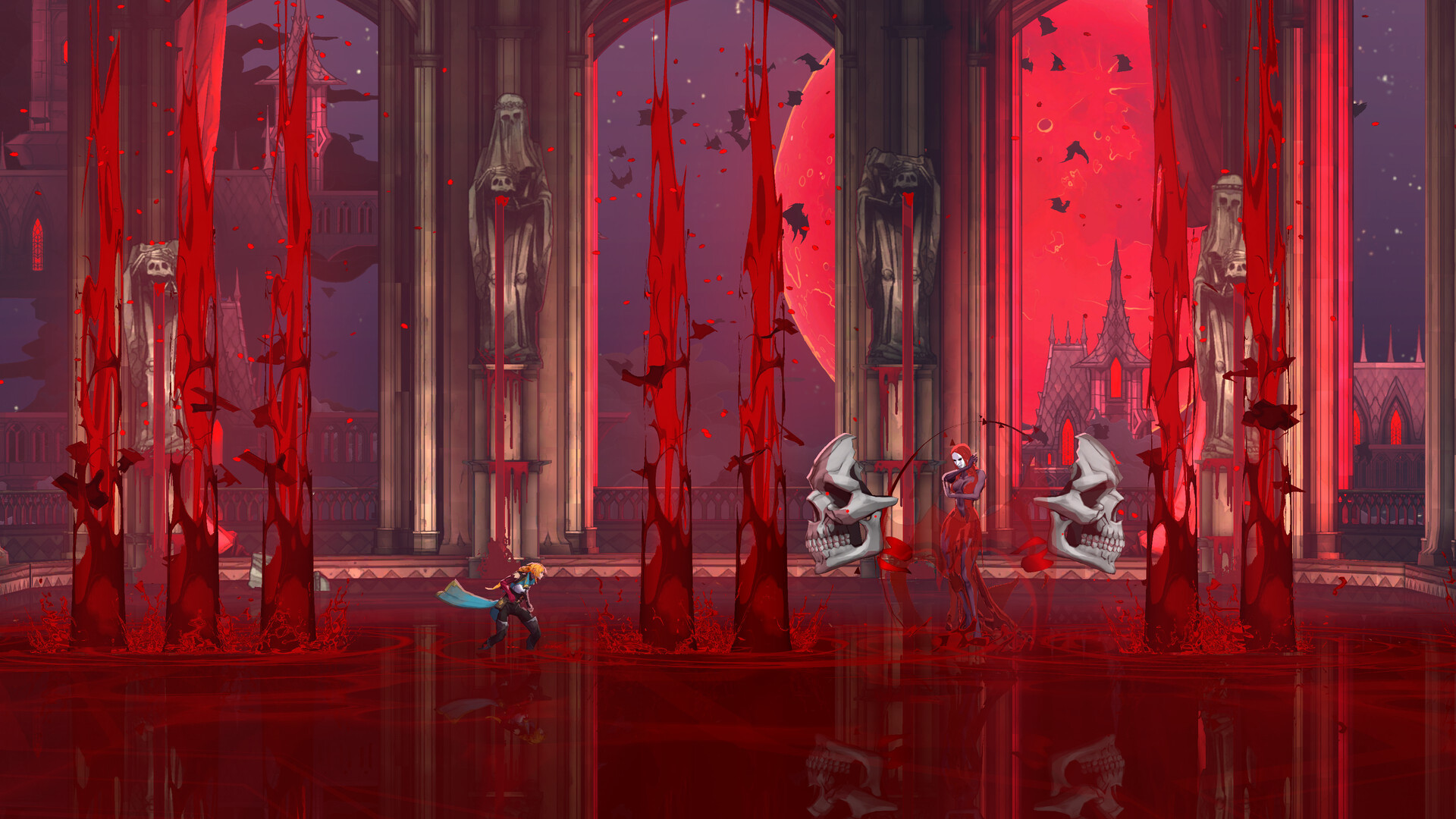
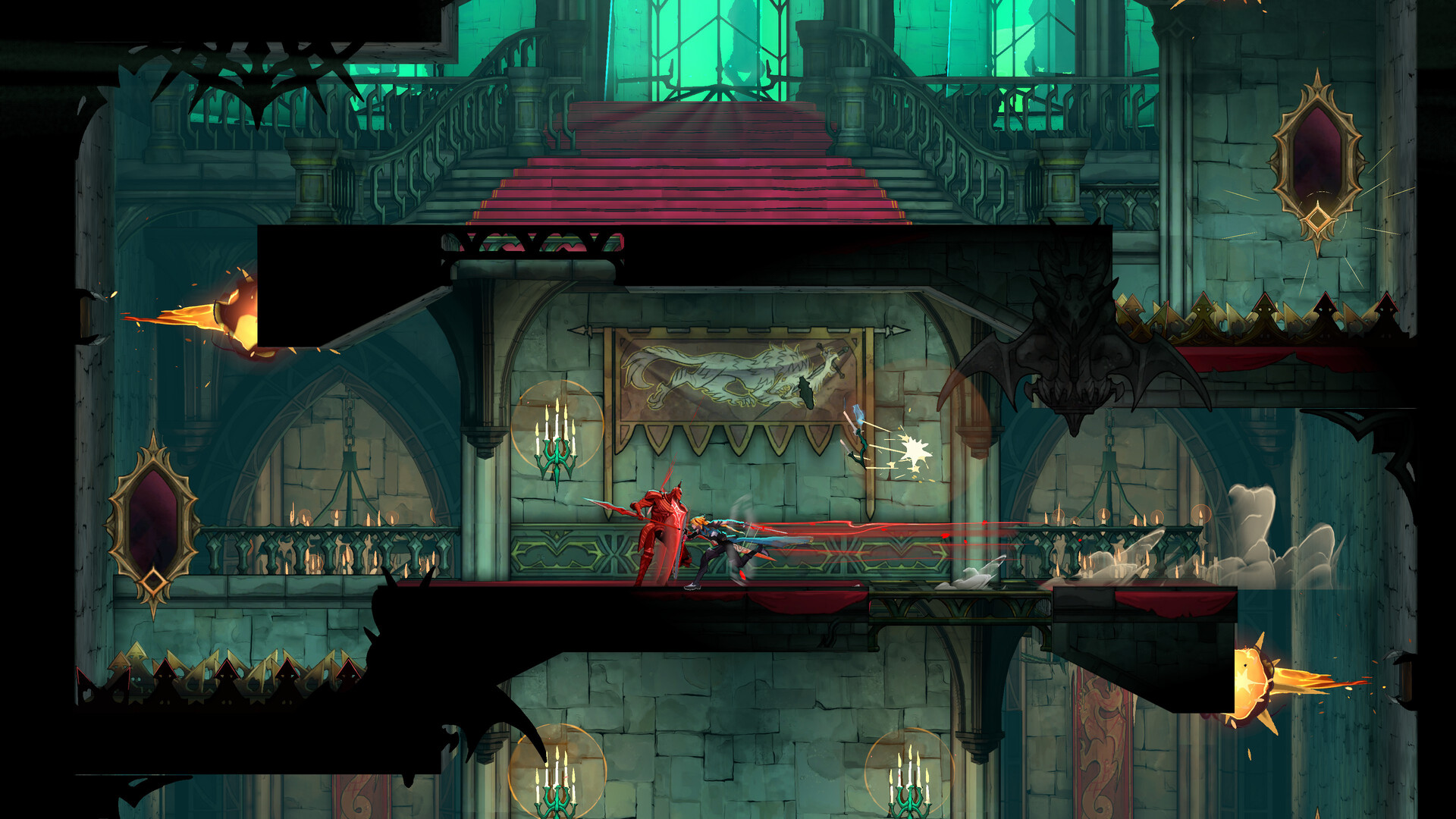
I’ll start with the aesthetics, because when you’re talking about anything to do with gothic fantasy, aesthetics actually matter, and it also happens to be the thing Evil Empire has done best. Belmont’s Curse drips with atmosphere. Admittedly, I found it to be, overall, a little too rote for “video game aesthetic design best practices” with the way the environments have been designed. Game development schools are clearly teaching students a particular style at this point, and that’s almost global across Western game design. I don’t want to be the one to take a swing at naming it, but we’re at the point where, just like art movements like Surrealism, Impressionism, Realism and so on in classical painting, we do now have a defined “Game Development” art style with characteristics that are shared across so many games now, and distinct to just about everything else happening in the art world.

Applied to Belmont’s Curse, this art style uses very bold colours, which are perhaps a little too comically colourful for my personal preference with gothic fantasy, but undoubtedly eye-catching. Enemies have plenty of detail, though perhaps lack the grotesque quality of the gothic at its best. The end result is more akin to a general dark fantasy than any specific effort to make something gothic (and this is despite having the magnificent medieval France as the setting to work with), but I do say that with the disclaimer that I am a purist when it comes to the gothic and I don’t want to take away from what the team has achieved with Belmont’s Curse. It IS striking to look at.
While we’re talking about aesthetics, both the music and voice acting are beautifully produced, though for different reasons. The voice acting is so hammy it could only possibly be a homage to the notorious voice acting of the classic Symphony of the Night. That, like so much else of the game, is going to polarise fans who, in the decades since the PlayStation 1, have come to expect cinematic-quality voice acting, but I found it to be a rather sweet piece of self-aware nostalgia for the roots of the series. The music, meanwhile, has that operatic quality we expect from Castlevania. I won’t necessarily be buying the soundtrack to listen to separately, and it’s not, say, of the standards of NieR or Clair Obscur, but it does fit both with the series tradition and on-screen action.
But it’s how Belmont’s Curse plays that is going to be the really polarising part. On the one hand, this is designed right out of the Metroidvania playbook. Almost immediately you’ll be noticing exits and areas on the 2D map that you can’t access with your current skillset, knowing full well that you’re going to have to return at some point. The map is a well-designed one for that structure, though I do think it’s unfortunate on the part of the developers that this game comes after Metroid Dread, which did set a new standard for how “Metroidvania” maps can be designed to be intricate mazes of puzzles and discovery. What we have here is something more standard. Incredibly competent, but standard.
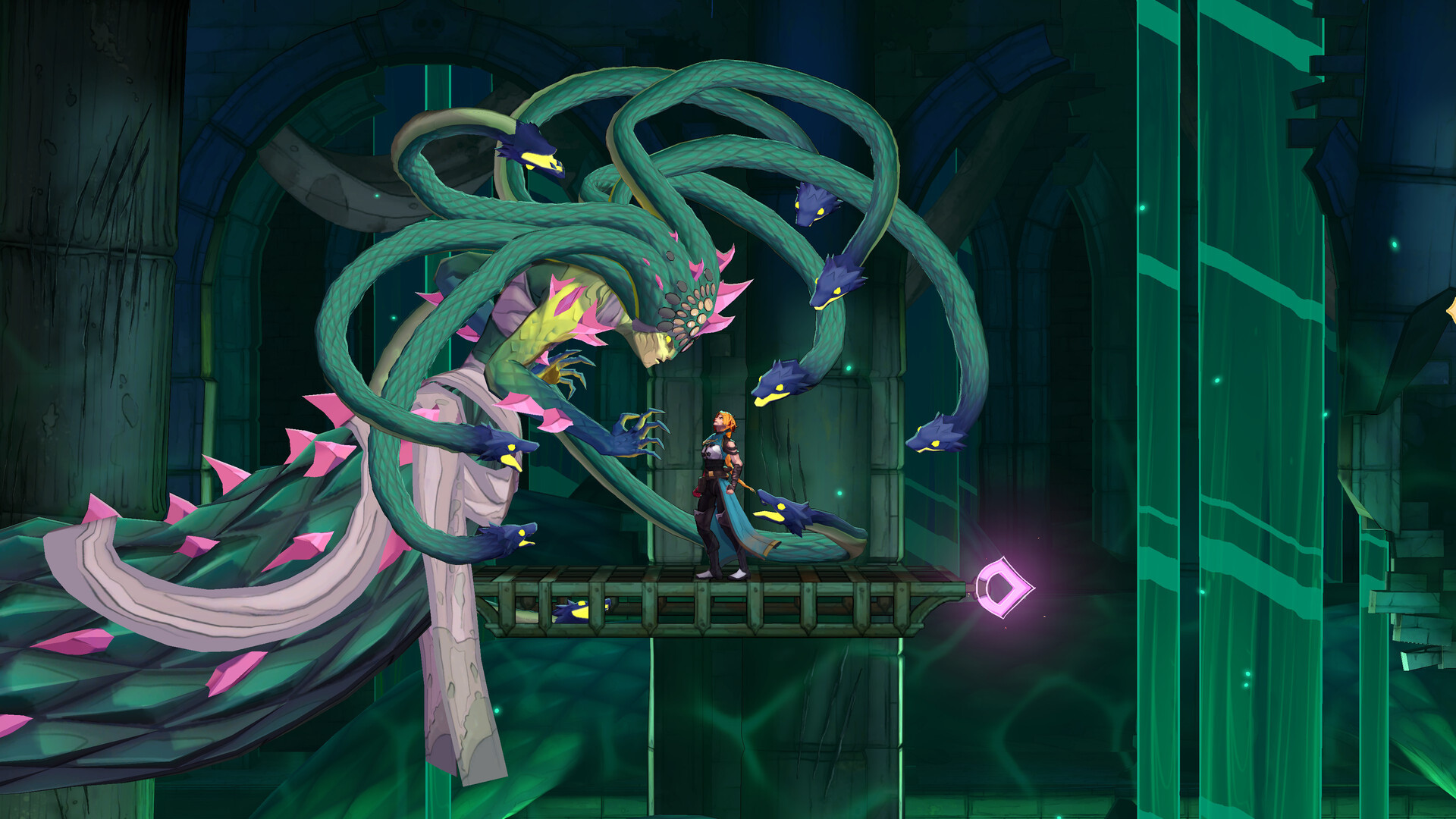
Exploration does have one fun little quirk, in that every so often you’ll come across a ghost who will give you a hint, and that hint is linked to either making progress (generally finding a hidden secret), or effectively fighting a boss. These hints are never too obscure, so I didn’t find myself stuck wondering where to go too often, though it should be noted that when it does happen, progress can stall in an enormously frustrating manner, as there’s no way to get additional hints to unstick you.
Combat can become very challenging (though the back half of the game gets significantly easier thanks to some overpowered weaponry that you’ll pick up), and I suppose that’s just something we need to expect in a post-Souls world for any action game that wants to be taken seriously. I am perfectly fine with difficulty, though I do have certain expectations on how that difficulty is achieved and I don’t think Belmont’s Curse and I always saw eye to eye on what good difficulty looks like. The bosses were excellent. They can easily put you down if you play without patience, and it’s very likely that any given boss will win the first or second time effortlessly. With patience and practice (and the aforementioned hints), the attack patterns become clearer, and the advantage in battle turns around. Belmont’s Curse is very Soulslike in that regard.
What amused me less was the layout of normal enemies. The team at Evil Empire, perhaps living up to the company’s name, seems to have delighted in placing enemies – particularly with attacks that are ranged or otherwise need to be dodged, in the perfect place to take shots at you while you’re otherwise occupied with melee enemies or jumps, while also making it impossible to reach those threats until they’re all that’s left in an area. The game wants you to make heavy use of the dodge and parry buttons to avoid these attacks, but the smallest sluggishness in response to a “dodge” button press, combined with the very short window between attack projection and missile hurtling into your avatar’s face, makes dodging damage overly difficult, right from the outset. Parrying becomes the only real option, and I’ve never been a fan of mastering parry windows, let alone when the screen is busy enough that I can’t specifically focus on the timing for those.
It means that legs between save points and, often, the areas you need to clear between a save point and a boss battle, become a war of attrition as you watch your health whittle down due to the slightest of mistimes. With relatively limited health restoratives available, this whole thing can become an example of what I would argue is a bad approach to difficulty.
With all of that being said, these issues all speak to a disappointing first impression rather than a long-term problem, and if you can give yourself the bandwidth to learn its rhythms and learn how to both manage that pesky little delay in the dodge action and grit and bear the parrying mechanic, Belmont’s Curse opens up as an action game. It has a satisfying combination of toys and abilities to play with (the tarot card system is an inspired way of adding depth to the character and moveset), memorable set pieces to work through, and some excellent locations to explore. It might be a game for the series fans, in that it does assume that you’ve ingested all the Castlevania lore and are sufficiently invested to understand who the protagonist, Rose, is and why it’s exciting to play as her, and also why 1499 matters in the Castlevania legend and where it fits in with the series as a whole. You can play this as your first Castlevania and all the above means nothing to you, but it’ll mean more if it’s your latest.
Konami has been on a roll in recent years, with Silent Hill in particular returning to the gaming lexicon in a spectacular fashion. Castlevania: Belmont’s Curse is a far more modest effort to kickstart interest in the series again, and I do think opinions on it will be divided. But I also think that Evil Empire was a far better pick for the series than MercurySteam and Belmont’s Curse is, thematically and stylistically, on the right track. In theory, if the stars align, Evil Empire could continue to build on this work and really make Castlevania their own.