

Here’s the problem with playing a single-player spinoff from a multiplayer property: If you don’t particularly care about the multiplayer that the franchise is built on, the single player, where developers will almost always double down on the various in-fanbase jokes, aesthetics, characters and themes, is really not going to go down well with you.
Enter Splatoon and… well, me.
To be abundantly clear in a review where I’m already preparing the comment moderation tool, I respect Splatoon enough for what it is. Nintendo recognised a demographic and, in chasing after it, delivered something the demographic clearly liked. We know it landed well because this is now the fourth Splatoon game. That exceedingly colourful blend of Nintendo’s approach to anime and Gen Alpha-friendly urban aesthetics has become one of Nintendo’s more popular properties, and at some point I realised that I needed to simply recognise that I’m not the target audience and not expect the game to be something that it isn’t. However, what I will say is that unlike many of the other properties that I have minimal interest in (hello, Call of Duty, Fortnite, League of Legends), I do genuinely respect Splatoon. So many people derive so much true joy from Splatoon, and where so many fan bases are so toxic, Nintendo has done something truly impressive in bucking the trend with this one (at least, as far as I’ve seen).

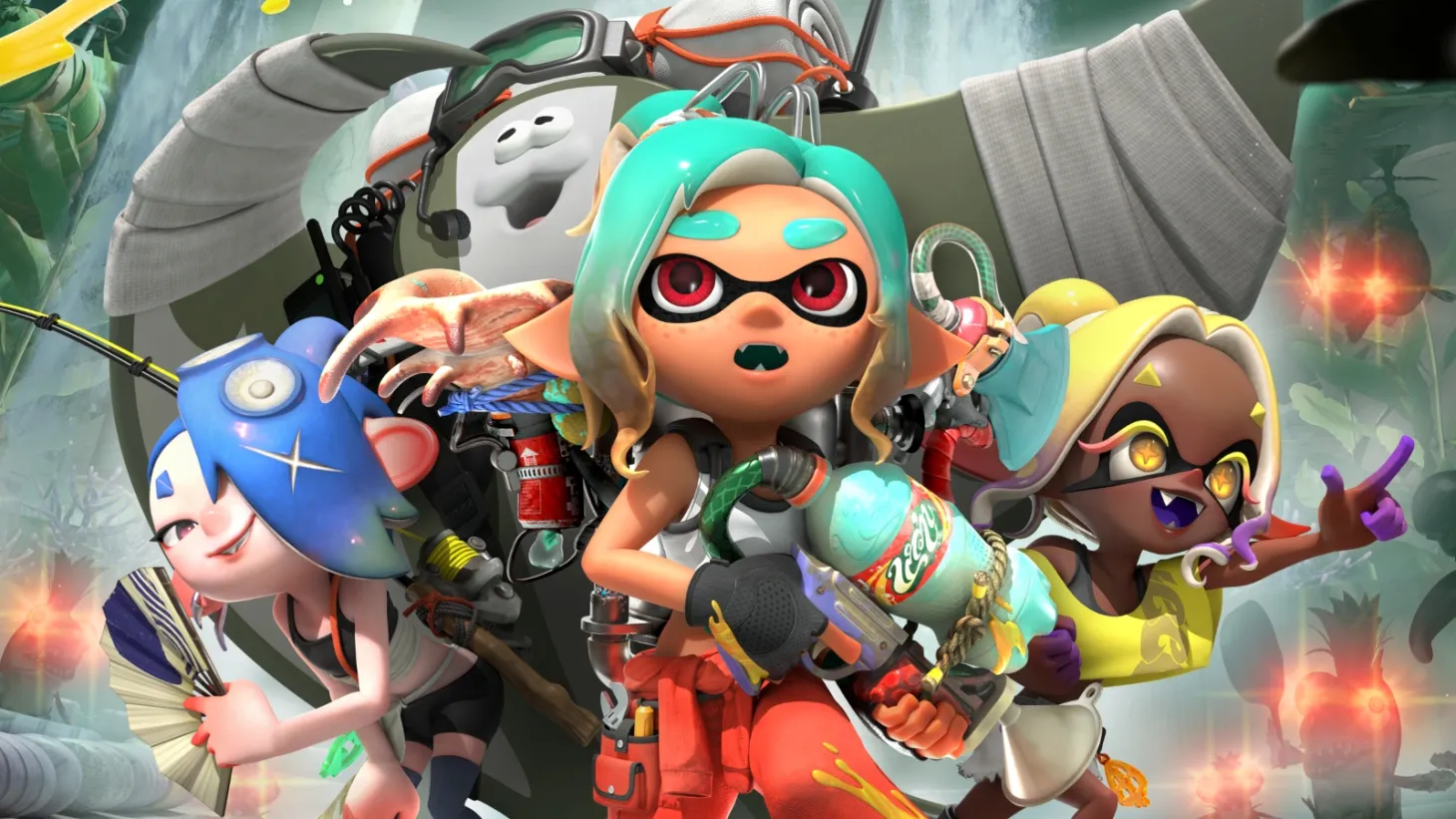
At a mechanical level, Splatoon Raiders plays like the previous titles in the series. It is, basically, a non-violent shooter, where you play as a squid thing, running through levels and taking down hordes of enemies by shooting ink at them until they disappear from being over-splatted. And rather than picking up ammo, you instead cover the ground around you with ink and then take a swim in it to replenish your ammunition. It’s basically a video game adaptation of water gun battles, and has the same sort of playful energy about it.
All three previous Splatoon titles were arena-based shooters that were incredibly fast and dynamic, designed to be played over and over again with incredibly short time limits per match. This one captures the quick play structure, but applies it to running through a level and mowing down hordes of enemies instead. And then you’ll face a tough boss enemy, and should you be successful in taking him down, you’ll earn a pile of loot. It’s Nintendo’s spin on the looter shooter, basically, and it’s undeniably moreish. Even though I personally can’t stand the aesthetics, hyperactive energy of the presentation, or any of the characters, I couldn’t help but find myself playing through one level after another. It does feel that good in the hands.
Additionally, in Splatoon Raiders’ benefit, there is a mountain of depth that will surprise many who see the screenshots and think that it must be something simple for kids. The extent of weapon choices and loadout customisations rivals the biggest games in the genre. That’s no exaggeration, as there’s some 100 weapon variations alone, gadgets and ink types to consider, so whatever kind of shooter character you might like does have multiple parallels to choose between in the game.
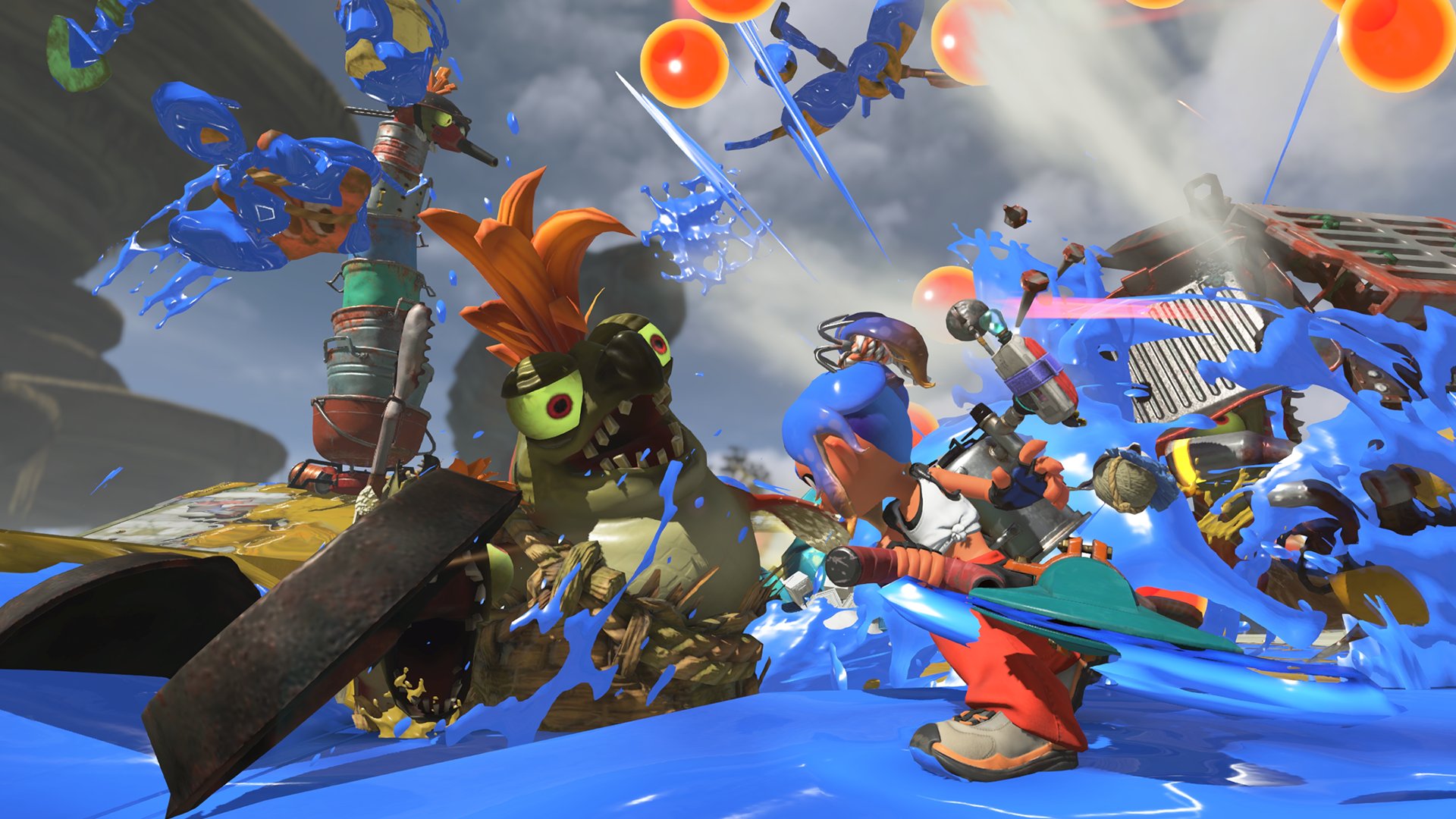
Meanwhile, the game frequently hits a level of difficulty that makes its cartoon vibes seem decidedly like bait-and-switch tactics. Anyone who remembers the singleplayer mode of the previous Splatoon games will be comfortable with all that, and in many ways Splatoon Raiders does feel like it’s Nintendo’s answer to the popularity of Salmon Run. You can just see the creative team at Nintendo sitting around their boardroom table: “People liked that side mode so much, let’s build an entire game out of it,” one says. “Sure, that works,” says another. Easiest game pitch ever.
Nintendo leaned so far into the popularity of the single-player mode in Splatoon Raiders that they forgot to put the multiplayer in there. Okay, that’s an exaggeration, but previous Splatoon titles have been all about the competitive PvP modes. Raiders has none of that. It does have a co-op mode for up to four players, with the difficulty of any given level scaling in kind with the size of the group. Without a doubt, this is entertaining, for the same reason that MMOs are entertaining when you go dungeon crawling with buddies, or teaming up for a tower defence game can be fun.
It is, however, potentially going to be intimidating for more junior or less experienced players because everyone shares a life pool in multiplayer, and so if one player gets splattered a lot it’s game over for everyone. I’ve had experience in “letting the team down” in these kinds of things (people used to hate dungeon delving with me in Final Fantasy XIV because my character always wore the bikini armour, which didn’t exactly give her a great stat boost, and so she tended to be quite squishable). I can’t help but think that Nintendo would have been better served to find a way that won’t potentially result in an accountability blame game in the co-op mode.
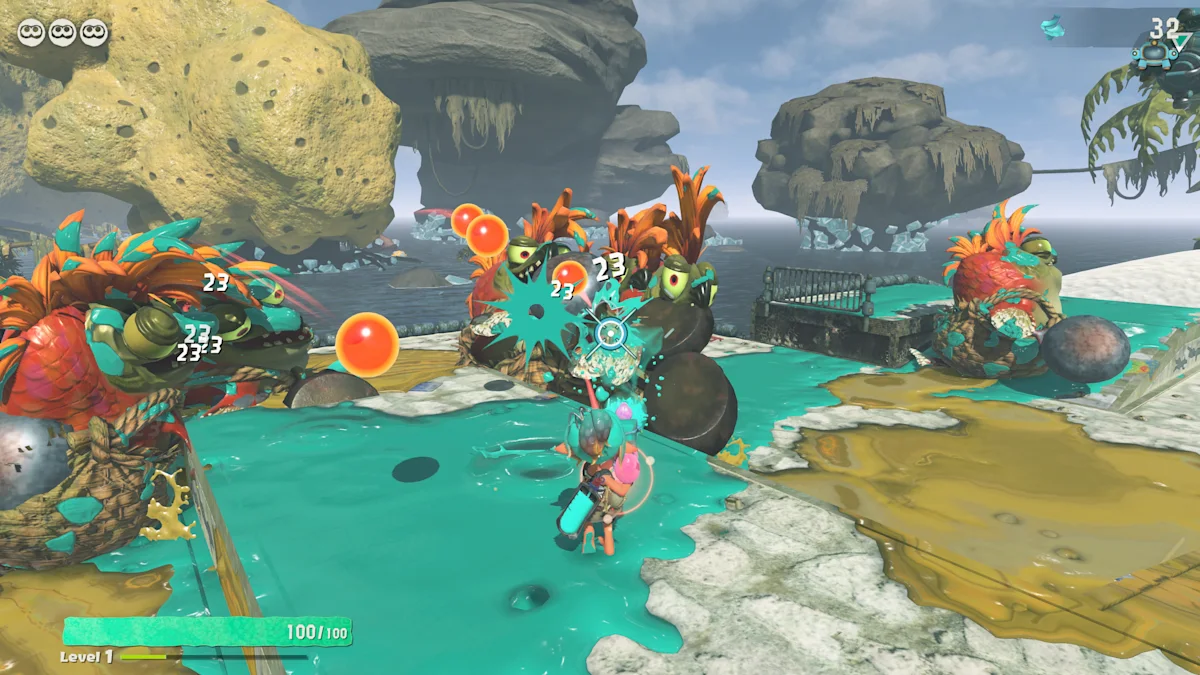
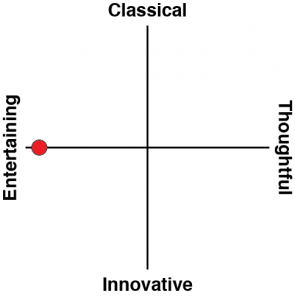
That’s a relatively minor issue though. Really, my biggest concern with Splatoon Raiders is that it really is just another (well-made) mechanics-heavy looter shooter. Fans will find the story elements fun, and the narrative carries the same attitude as the previous Splatoon titles, but there’s still so little of substance there. It’s all energy and vibes (and if I was being cynical would argue that this is sadly reflective of entertainment for Gen Alpha in general). Nintendo had a chance to make a single-player Splatoon, and instead made something that treads water until the inevitable announcement of Splatoon 4.
So, again, I realise that I’m not the target audience for Splatoon Raiders, and I’m sure those that are the target audience will get a great deal of value out of the depth of its systems. And from Nintendo’s point of view, it’s a relatively low-cost project to fill the release schedule until the next big thing (Fire Emblem) comes along. I do, however, suspect that just about everyone, from the diehard fans to me on the spectrum of Splatoon advocacy, will ultimately wish that the first proper single-player outing for the franchise were a bit more than it turned out to be.