

I’ll admit that I’m not the world’s biggest fan of mecha games. I appreciate their appeal, but spending hours tinkering around with mech builds simply isn’t something I’m overly fond of – I’ve never been a min-max statistician when it comes to my beloved JRPGs either. So I missed the original Daemon X Machina. Based on my time with Daemon X Machina: Titanic Scion, I think I’ll go back and try that original, too.
Titanic Scion kicks off with a bang, with your protagonist and an ally being attacked while on a giant spaceship in space. Somehow, you escape (the ally’s fate unknown), and wind up on a sprawling planet with people who are hostile to the aliens in the spaceships above. But they make quick friends with you and then you set out to help them out, with a long-term view of heading back into space for some vengeance and rescue.
Or at least I think that’s how things went. To be entirely honest, I wasn’t really paying attention. Whether this game requires that you have the backstory from its predecessor, or I was just not that engaged with it, the plot of Titanic Scion is not what will hook you in. I actually found myself responding to it in a similar way to Xenoblade Chronicles X in that regard. They’re very different experiences, but the aesthetic similarities in the open worlds and character designs and the inconsequential narratives left me drawing the parallel.

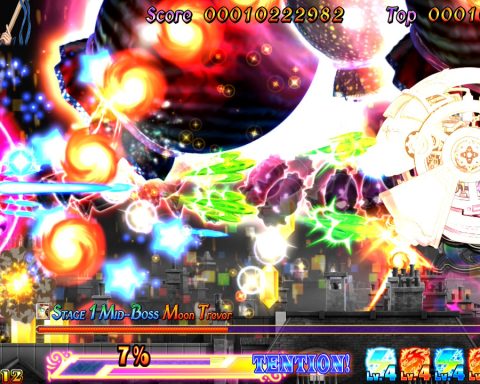
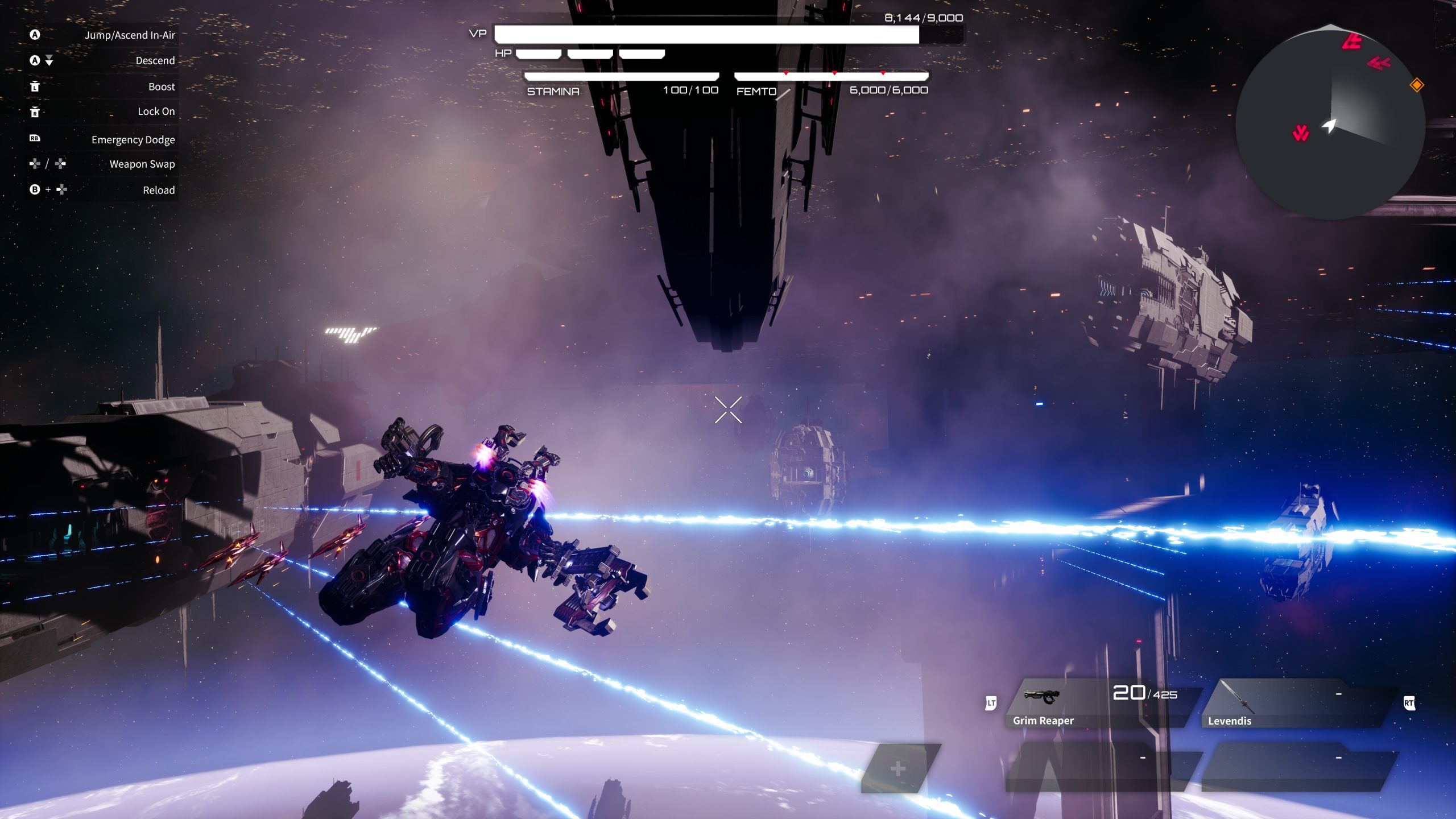
Also much like with Xenoblade Chronicles X, what really hooked me in with Titanic Scion was the moment-to-moment gameplay. The combat system, for a start, is incredibly snappy and fluid. As a mech you’re able to bring a wide variety of weapons into battle, and those battles play out both on the ground and in the sky. In almost no time you’ll be dodging around enemies, looking for opportunities to counter-attack, and seamlessly blending ranged combat and melee. If I had a fault with all of this it’s that the mobility and agility doesn’t really sell the idea that you’re piloting massive armoured machines, but then I guess a more realistic range of movement would make for something ponderous and dull.
Another positive in Titanic Scion’s favour is the loot system, which is particularly well organised. You’ll be getting a LOT of loot, to be clear. Every enemy drops something, and something useful is guaranteed to land every few drops. You can swap equipment on the fly, with handy red and green arrows giving you an immediate understanding of the quality of the equipment. Or you can send it back to the bunker, where it’s stored for a closer examination back at base. While I said I’m not much of a min-maxer when it comes to character stats, the streamlined interface and organisation features make Titanic Scion one of the most seamless “loot-heavy” games I’ve played, and I ended up having a lot of fun engaging with its systems.
That focus on the player experience flows through to the world design, too. I’m also not the biggest fan of open world games, as I find they tend to drag and be content for the sake of content. Generous fast travel options and a good pace of combat and discovery along the way help to make this open world feel more directed right throughout.
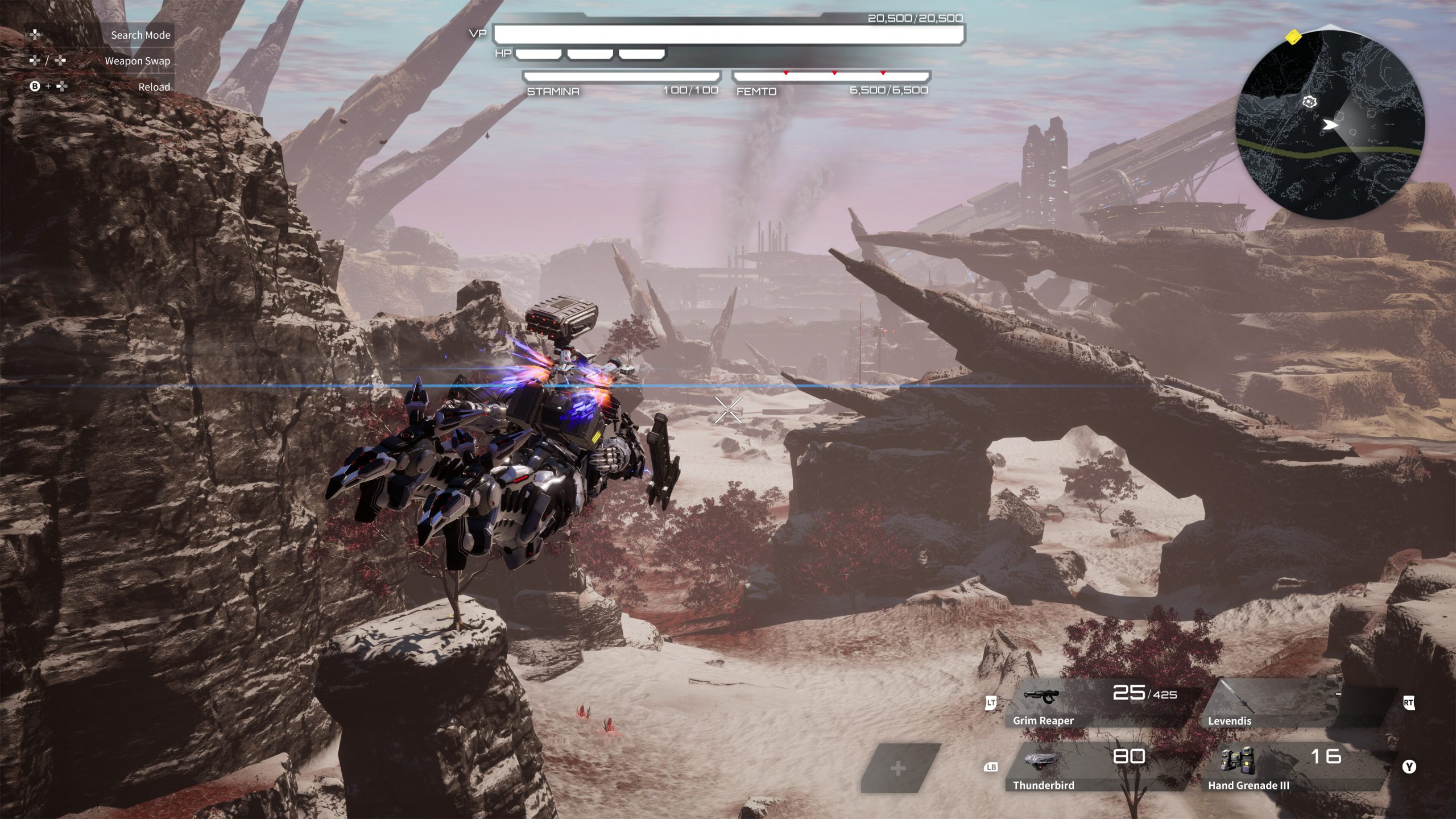
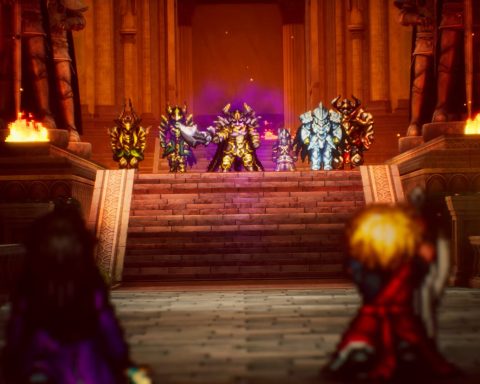
It’s also an open world that has some gorgeous art direction. The Nintendo Switch 2 version of Titanic Scion might suffer from some extended load times and framerate inconsistency, but with a taste for epic sci-fi scope and flashy worldbuilding art, I was more than willing to forgive it for that. Boss battles are suitably intimidating, the transitions between environments make every opportunity to explore further a case of wonder, and the flashy combat all make for the kind of immersive combat that will leave your hands sweating.
The biggest problem that Titanic Scion has is that it’s such an extended game. Ostensibly, this is because it has all this storytelling, and I do feel like I should have cared more about that than I did. It had evil corporations and class warfare in it! I feel like I should check out the user reviews to see just how mad people are at how “woke” it is. But I just couldn’t connect with it on that level, which did mean the overall experience was a slog, especially in the last third of the game, where it throws the open world stuff out the window and instead drags you through a gauntlet of Really Important Enemies and Battles. Without that context, it was one heck of a grind.
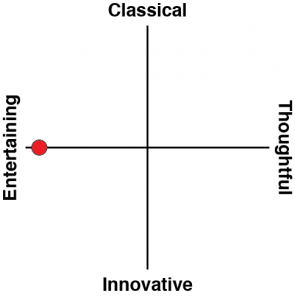
I don’t know if Daemon X Machina: Titanic Scion is going to turn me into a fan of these mecha games, but I certainly enjoyed the combat and design enough that I’m keen to check out some more to see if I do like something about the genre after all. Just be aware that the performance is pretty suspect at times. If you can handle that, then this is certainly an ambitious and entertaining sci-fi game for on the go.