 Opinion by Shaan J.
I love dying in games.
It’s tough to nail down the exact reason though. I didn’t grow up spending much time on the 8 and 16-bit consoles, so the term “NES-hard” never really resonated with me. Those games that I did play were games where death was a minimal part of the experience, a (somewhat) ineffective deterrent to poor play. And then in modern games death is typically a minor part of the experience indeed; sure, while running out of lives might have carried some weight in the old-school Mario games, lives are virtually meaningless in Mario’s modern exploits, and they often feel included for the sake of tradition.
But there’s been a bit of a resistance to this trend for games to become “easier.” Turning the difficulty up to Veteran in a typical shooter might still not mean that much, but we only need to point to the resurgence of the roguelike genre amongst certain circles to see that there’s an appetite still for truly difficult games.
Artificial Stupidity
As sad as it may be, a large majority of mainstream games handle difficulty in the same way. For games where you choose a preset difficulty when you start playing, most of the challenge (if we want to call it that) comes from artificially making the game harder by making the most minor of changes. From increasing enemy health, accuracy, or damage, to limiting the actions of the player, this is the most simple form of ratcheting up the difficulty, and in almost all cases, these changes end up ruining the game.
This should come as no surprise of course, since you’ve probably played a game that has pulled this exact same trick before. I don’t mean to rag on the genre as a whole (I’m actually a fan of it), but shooters tend to fall back on this more often than not. And some of the best games out there are guilty of this as well. Both GoldenEye and Perfect Dark (which are widely regarded as some of the best games of all time) fall prey to this; sure, the game throws more objectives at you on higher difficulty settings and this is a nice touch, but the unfair increase in enemy power nearly ruins the game as a whole.
And as sad as it is, this still happens to date. I just worked my way through two different military blockbuster shooters (Battlefield 4 and Call of Duty: Ghosts), and while the single-players campaigns were enjoyable enough on a moderate difficulty, the highest settings completely changed the way I played, and for the worse. Instead of actively trying to strategise and flank my enemy, I was forced to hide behind cover, wait until the opposing forces were reloading, and then pop off a few shots of my own before hunkering back down. Rinse and repeat.
You might be thinking that I’m overexaggerating, especially when these two games mainly focus on their multiplayer modes, but it’s a shame to see games that fail to capitalise on their potential. Take Battlefield for example, a game that prides itself on its highly destructible environments. Instead of simply making bullets more deadly, the developers could make changes to the AI – maybe have enemies focus on destroying my cover more often, forcing me to constantly move and not stay crouched in one position. But, like with most big-budget titles, the game is designed around catering to the widest audience possible, and adaptive AI is hardly the priority for most developers. Luckily, we have indie and niche games to fill that role.
 Doing Things Right
While we’ve all played through our fair share of titles that are downright cheap or unfair, there are plenty of games out there that put an emphasis on designed difficulty; that is to say that the idea of providing players with a challenge is itself part of the game and its mechanics, rather than an afterthought that was brought about by fiddling with a few lines of code.
There are plenty of ways to accomplish this of course, and each game does it differently. Entire genres, like the roguelike, are focused with providing the player with extremely difficult and deadly environments to navigate, and enemies to defeat. Death is to be embraced from the get go, and while players will die often, a good roguelike (or a good game for that matter) doesn’t rob players of their progress without providing a lesson, or some knowledge on how to better tackle things in the future.
Still, there will always be games that derive their difficulty from demanding a high level of skill from the player, and these games can be divisive to say the least. While this doesn’t apply to every game out there, most games either require the player to employ and develop strategy in order to advance, or have a high level of raw skill to overcome an obstacle (twitch gameplay in shooters, for example). Everybody has their limitations of course, but when taking into account factors such as age and experience with gaming, its often more effective to ask a player to evolve their thought process, rather than simply “get better” at playing a game through sheer dexterity.
Finding Your Style
If you’ve typically shied away from games that are known for being challenging or difficult, I can’t entirely blame you. After all, people play games for different reasons, and sometimes, challenging or complex gameplay isn’t necessarily everyone’s cup of tea.
Still, if you’re looking to diversify your gaming portfolio, or if you’re just in the mood for a game that’s challenging, but fair, check out the list below. There are plenty of different genres and styles of games represented, so chances are you’ll find something up your alley.
 Bastion – An isometric action RPG from indie developer Supergiant Games, I’ve played through this one more times than I would like to admit, but it’s not without good reason. Aside from an excellent combat system, which is both flexible and varied in what weapons and buffs you can equip, the game implements an optional difficulty system. By invoking the power of different gods, the player can choose to make the game more difficult by increasing the overall strength and power of the world’s enemies. By making the game more difficult, the player in turn receives more XP and currency, creating an entirely optional risk/reward system that can add an entirely new level of challenge and depth to the game.
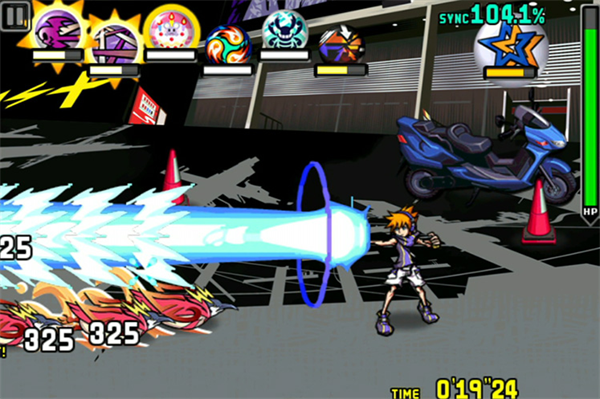 The World Ends With You – Unsurprisingly, Bastion isn’t the only game to effectively use an optional difficulty system. In The World Ends With You (which is easily one of Square’s best JRPGs from recent years), you can elect to up the difficulty level, which in turn improves the enemy’s drop table. Those who are really daring could even elect to lower your character’s max health to increase the item drop rate. Not only does the sliding difficulty scale cater to a wide range of skill levels, but it solves the problem of overleveling in JRPGs.
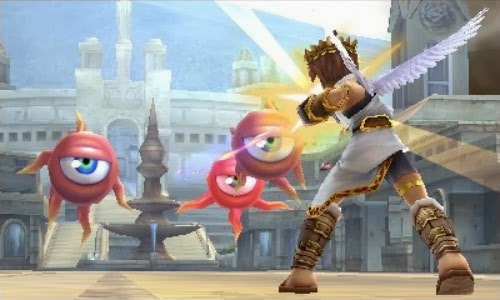 Kid Icarus: Uprising – I never thought I would be including a Nintendo game on this list (what are you talking about? So many Nintendo games have brilliant approaches to difficulty? – See, Fire Emblem – ed), but Kid Icarus: Uprising takes some much needed strides in giving players control over how challenging each individual level is. Difficulty can be adjusted on a sliding scale from 0.0 to 9.0, and this affects enemy count, health, damage, attack speed, and frequency. Playing on higher difficulties yields more rewards, but by the same token, you have to wager hearts (which in this game is your currency), betting more or less money, depending on what difficulty setting you think you can clear.
 Super Meat Boy – While this retro-style platformer is well-known for being difficult, the game does everything in its power to make the challenge feel completely fair. Aside from a properly designed difficulty curve, you’re given very accurate and precise controls, which means the challenge comes from learning environmental patterns, and then simply executing moves correctly. With small levels and instant respawns, it’s the best option out there for those who are looking to hone their platforming skills.
 Spelunky – And here come the roguelikes. Spelunky is no slouch; it’s very unforgiving and it’s all too easy to die, but after an initial period of learning the game’s ins and outs, and memorising what traps will instantly kill you, a sense of progress slowly begins to develop. Dedicated players will balance quick platforming with exploration, as collecting gold is almost necessary to make it to later levels, especially since power-ups and items don’t carry over from playthrough to playthrough. It’s tough to say the least, but there’s something to be learned from Spelunky’s unforgiving ways. (For the record, I still hate this game’s approach to difficulty – ed)
 Demon’s/ Dark Souls – Speaking of unforgiving games, there’s the ever popular Dark Souls, and its slightly lesser known predecessor, Demon’s Souls. These games are relentless in their difficulty; the game offers very little guidance in what to do, with a tutorial that barely covers the combat, leaving many of the game’s systems unexplained. Where the series succeeds however is balancing player skill with learning. Dark Souls is one of those game’s where even the most skilled players will continuously die, because there are plenty of traps and hazards that you’ll have to fall victim to in order to (eventually) learn how to conquer them. What’s important though, is that the gameplay loop is focused on difficulty and dying, and each death will serve its purpose in one way or another.
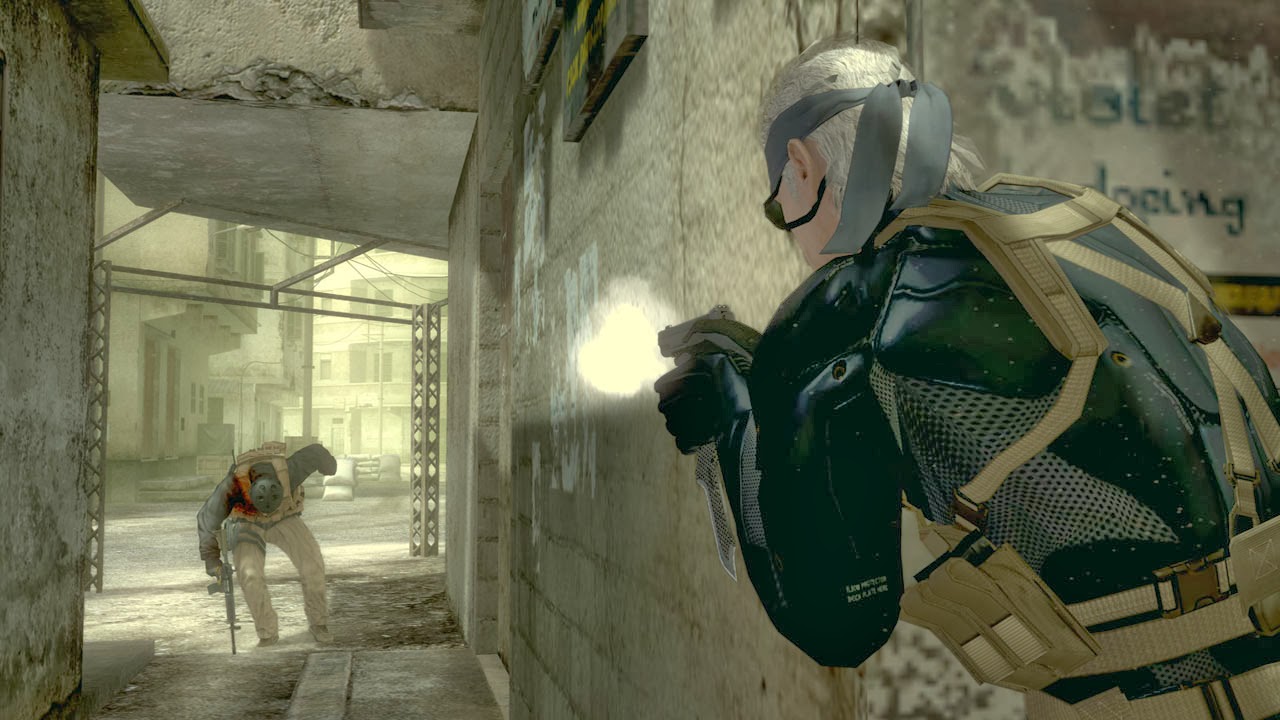 Metal Gear Series – Rather than stripping away your abilities, or making enemies stronger, the Metal Gear series derives its difficulty by slowly removing handholds and other useful gadgets (like your radar), and by increasing the enemy AI. On harder difficulties, enemies are more intelligent, and will be able to smoke you out of your hiding places more easily. And of course, the higher the difficulty, the less forgiving the game is in terms of how easily the enemies will spot you.
 Halo Series – While I can’t comment on the newer titles, the first few titles in Microsoft’s long-running series did an excellent job of changing enemy behavior and attack patterns on higher difficulties. Where grunts and jackals used to be rather docile and cowardly, on higher difficulties, these enemy types would often resort to drastic and sometimes dastardly attacks, suicide bombing not excluded. While the single-player campaigns can often be a cakewalk on normal difficulties, find a friend to co-op with you, and up the difficulty level for some frantic and challenging fun.
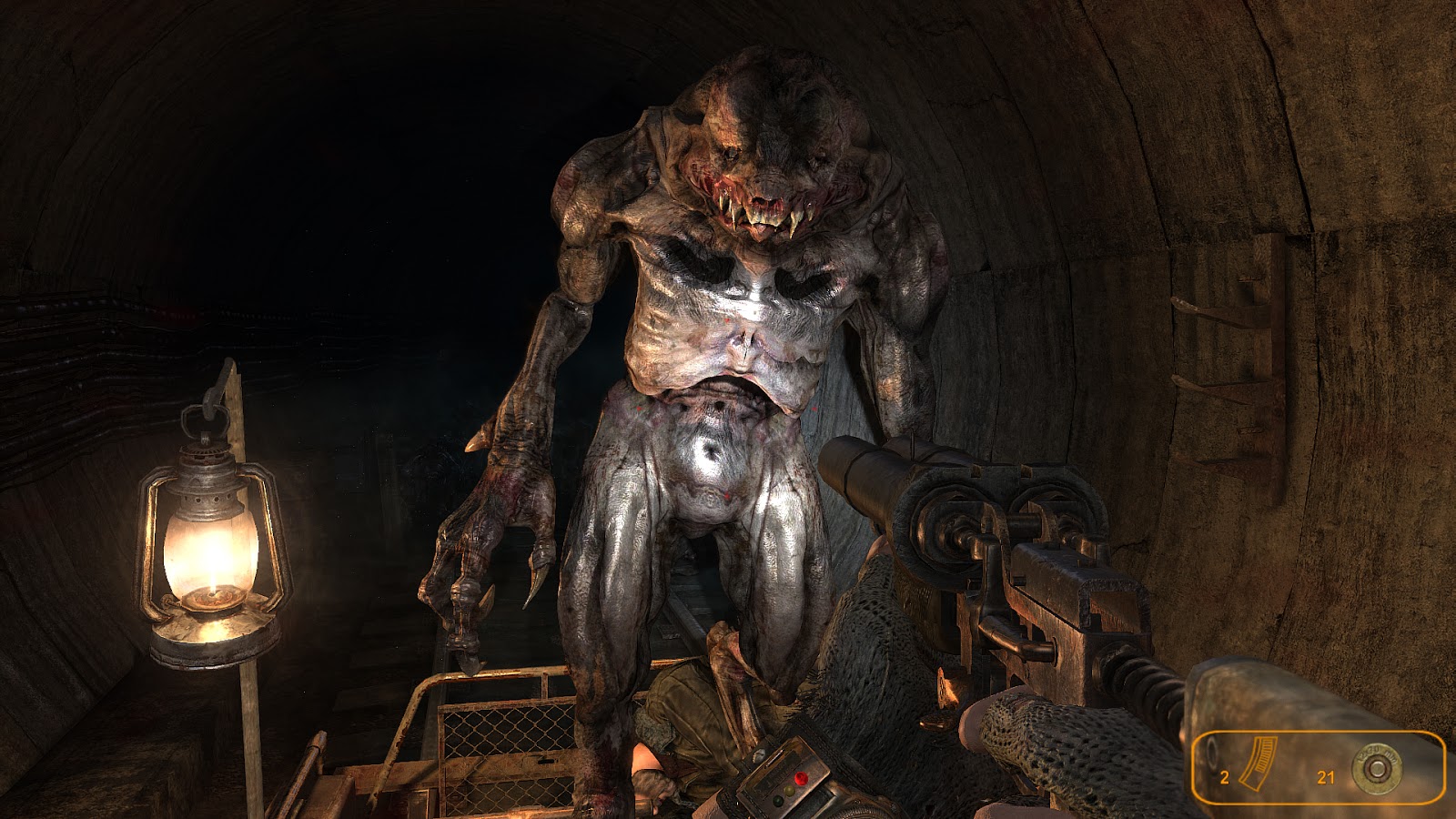 Metro 2033 – If you’re tired of your typical macho bro shooters, give this distinctly European shooter a try. Enabling Ranger mode is where the real challenge lies, as the game not only removes a majority of the HUD (including crosshairs), but makes bullets deadly, with both you and your enemies going down with a stray bullet or two. Ammo pickups are also scarce, meaning you’ll have to make each shot count.
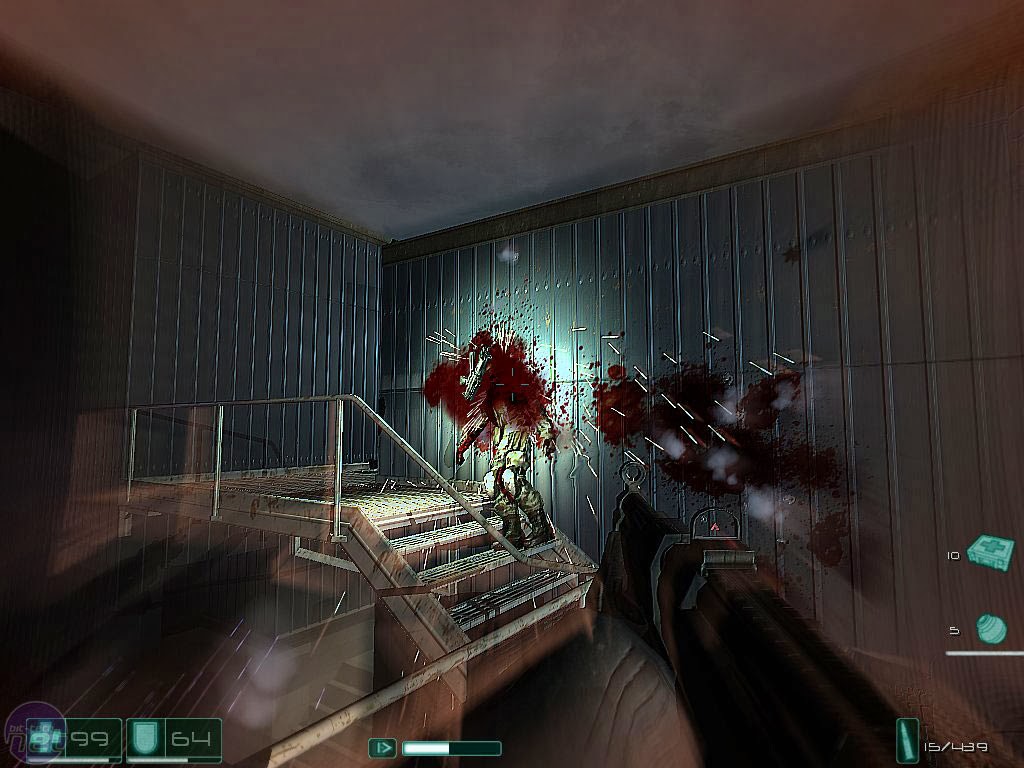 F.E.A.R.: First Encounter Assault Recon – Featuring what might be the best AI in any FPS I’ve ever played, the developers behind F.E.A.R. utilised a robust planning and scripting system to ensure that players were constantly kept on their toes, as enemies would take cover, blind fire, dive through windows, flank players, and communicate amongst each other to flush you out of hiding. It’s truly a shame that developers don’t focus on these kind of experiences anymore.
Those are just a handful of games that provide a genuine level of challenge. What are some other games that you can think of that come to your mind?
– Shaan J.
Contributor
Follow me on Twitter @KneehighPark