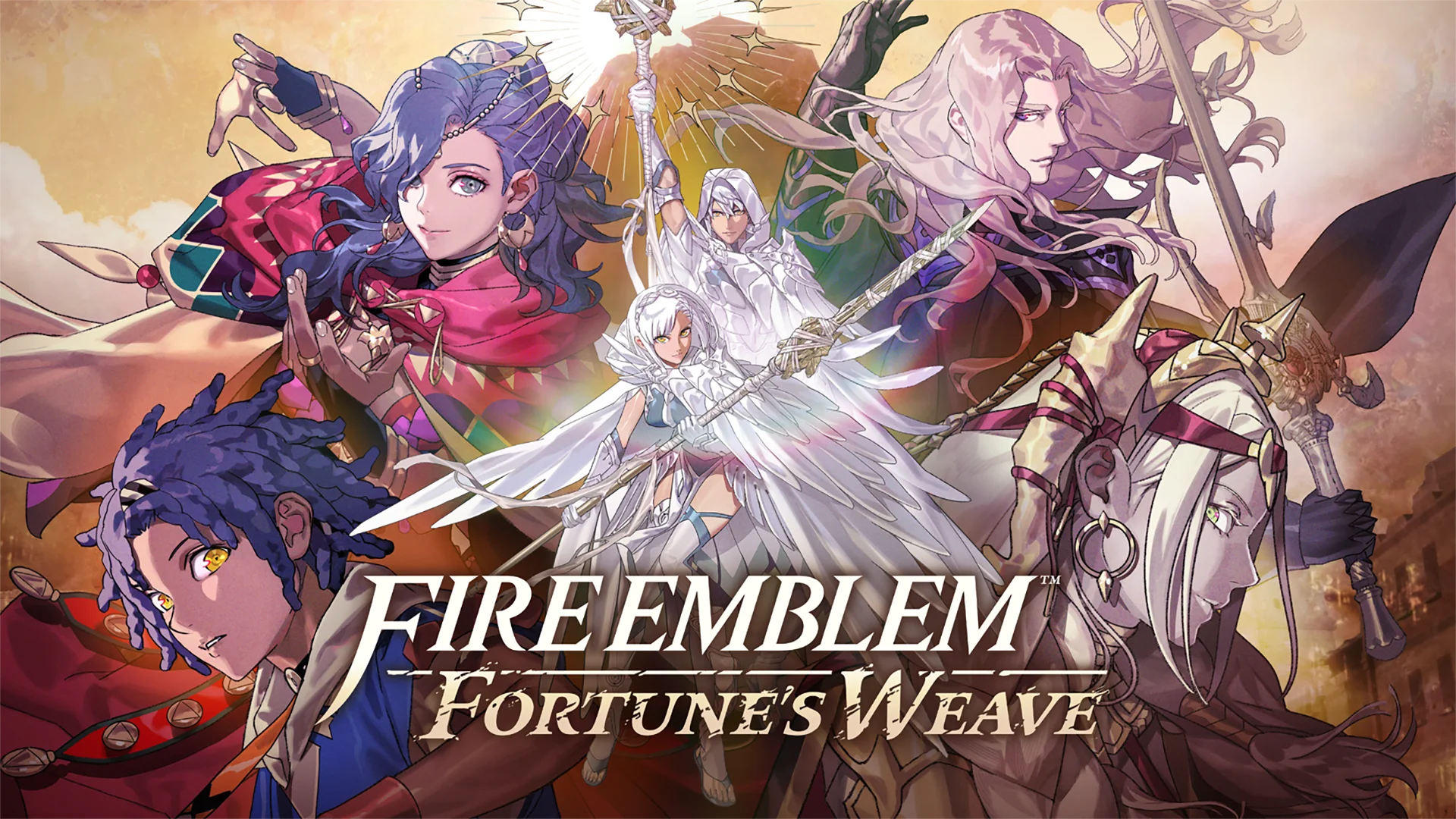


Fire Emblem: Fortune’s Weave is nothing if not ambitious, with multiple stories that converge and diverge in support of an almost breathtakingly epic-in-scope narrative. Meanwhile, the game works hard to connect you to a huge range of characters while throwing system after system at you. You’ve got Atelier-like map exploration and time management, traditional JRPG dungeon crawling and combat, and then the tactical action that we all know from the overall Fire Emblem series. It would have been so easy for the wheels to fall right off this train. Thankfully that doesn’t happen. In fact, this might well be the best Fire Emblem we’ve seen yet.
The game uses a clever framing system to set the setting and scene; it opens with the climactic end of the story, a little like Shakespeare’s Romeo and Juliet, before shifting to telling the story of how events lead to that climax – or in this case, your efforts to prevent that ending from coming to pass.
I have always loved the prologue as a narrative device – when I do finally release The Last Waltz, you’ll see just how much I love the prologue as a narrative device. Foreshadowing, when it’s done poorly, is little more than a way of spoiling the entire narrative before it’s started. When it’s done well, like in Romeo and Juliet and The Last Waltz (how modest am I?) creates intrigue. You don’t need to know how the story plays out now, but suddenly each event within the story carries additional weight as a connection driving towards that conclusion. It helps focus the attention on every line of dialogue and event, because suddenly they all have portent and gravitas.

Fortune’s Weave takes full advantage of the interactive nature of video games to also give you the impression that you’re able to change the tragedy. You’re not really changing the direction of the story because you’re following a linear narrative that was written to have the direction of the story change – that nightmare ending in the opening is not the proper ending to the narrative – but you’ll find yourself deeply involved with it, as you try to piece together every plot point and how that’s connected to the endgame.
All this is particularly important because Fortune’s Weave is a particularly expansive, lengthy story, and you’ll be crossing over from one character to another, one plot threat to the next, throughout the play. The stories eventually converge, but for so much of the game, having that foreshadowing set things up ensures that it all seems cohesive and coherent; otherwise, without it, it would be difficult to connect each story’s threats for far (far) too long.
That’s the overarching narrative and, as with any Fire Emblem, as exceptional as it is, it’s also probably the lesser side of the storytelling. Fire Emblem has always been character-driven, and Fortune’s Weave is no different. How much you love this game will depend entirely on whether you find characters to connect with. I don’t think there will be too many players who find a drought of interesting characters in Fortune’s Weave. What I think is most impressive is how the writers clearly balanced two things: firstly, the way they’ve stuck to tradition in how characters are presented. As anyone who has played a Fire Emblem title knows, characters are types. Almost always well-written types, but you’ve always – always! – got the noble one, the horny one (usually my favourite), the vaguely sinister one. The Lyn one (always my favourite).
Back when Fire Emblem cutscenes needed to squeeze a dozen characters into each one and only give them a line or two, this was essential to ensure that the game had personality and allowed the patchwork of types to bounce off one another in a way that created humour, drama, excitement, romance and, ultimately, favourite characters.
Things are a bit different now that cutscenes can be longer and there can be more of them, spread over longer games. And this is where the second side to the writer’s genius comes in. More recent Fire Emblem titles have been generally good at this, but Fortune’s Weave is a particular standout here; characters still have their types, but there’s depth and purpose to it now. The horny guy beds every woman he can but has a noble streak and loyalty to his group. The woman who’s on a quest for revenge does some outright horrific things to her targets, but also shows her softer side, almost from the outset. There is a strong “core” of these across each major storyline that are just really, really well-written characters that are given plenty of time to breathe. There are many other secondary characters that are more typically “Fire Emblem” style characters, but the “core” cast alone is almost as big as a typical Fire Emblem. The long and short of it is that there is just so much gorgeous storytelling in Fire Emblem: Fortune’s Weave that it could have been a totally non-interactive visual novel and it would have still been utterly compelling.
But it’s not a visual novel and, as I mentioned at the top of the review, there is a richness of interlocking systems that also help this game really stand out. This isn’t the first Fire Emblem that has had a dungeon-crawling component, for example. One of the 3DS titles was more memorable for the dungeons than the title, because as I write this I genuinely cannot remember the name of it, despite loving those crawl moments. Anyway, the point is that Fortune’s Weave isn’t the first to have you at points wandering around in third-person view like you’re playing a Final Fantasy or Dragon Quest game, but it is the first, as far as I can remember, to have combat that looks like that too.
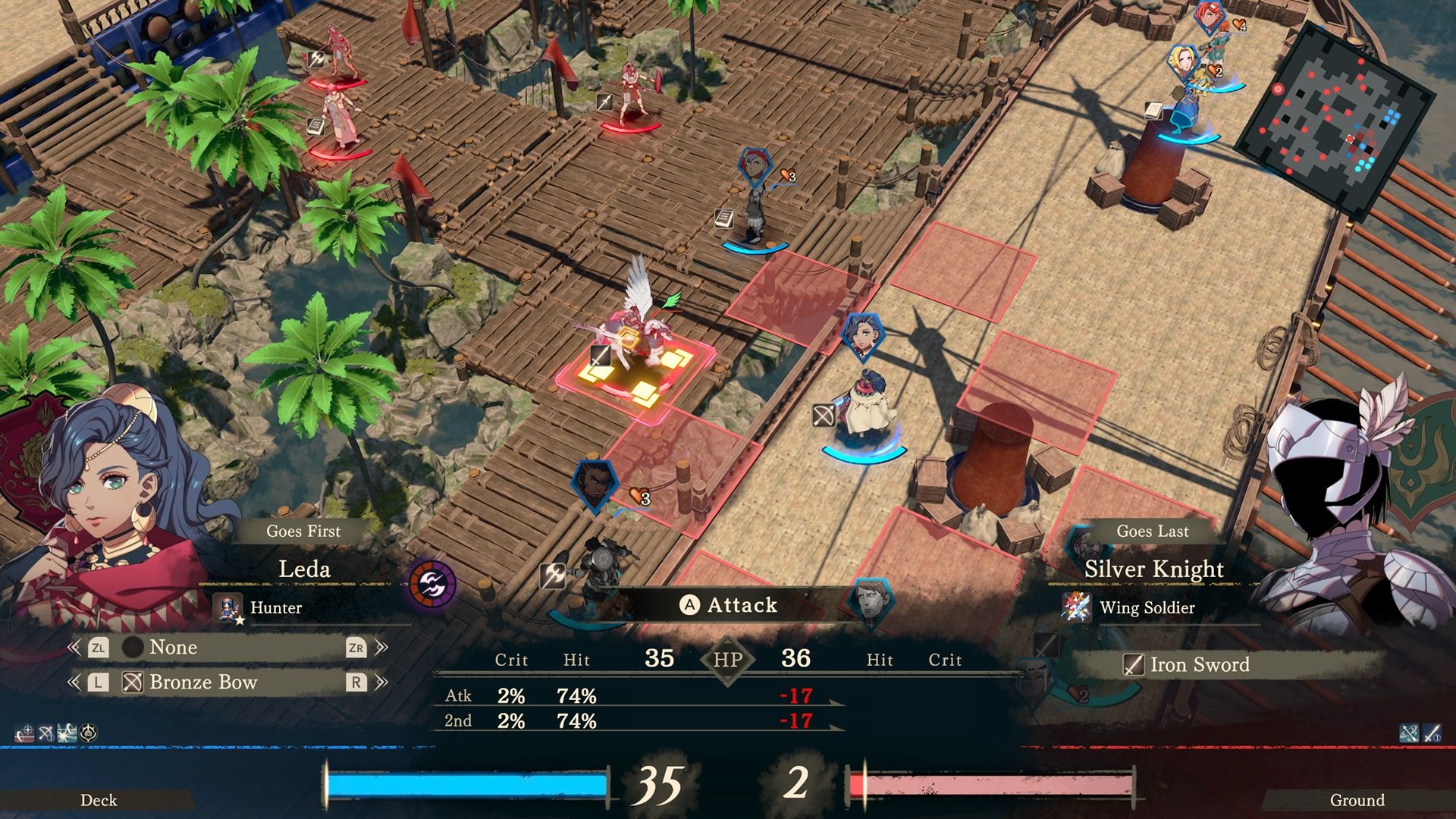
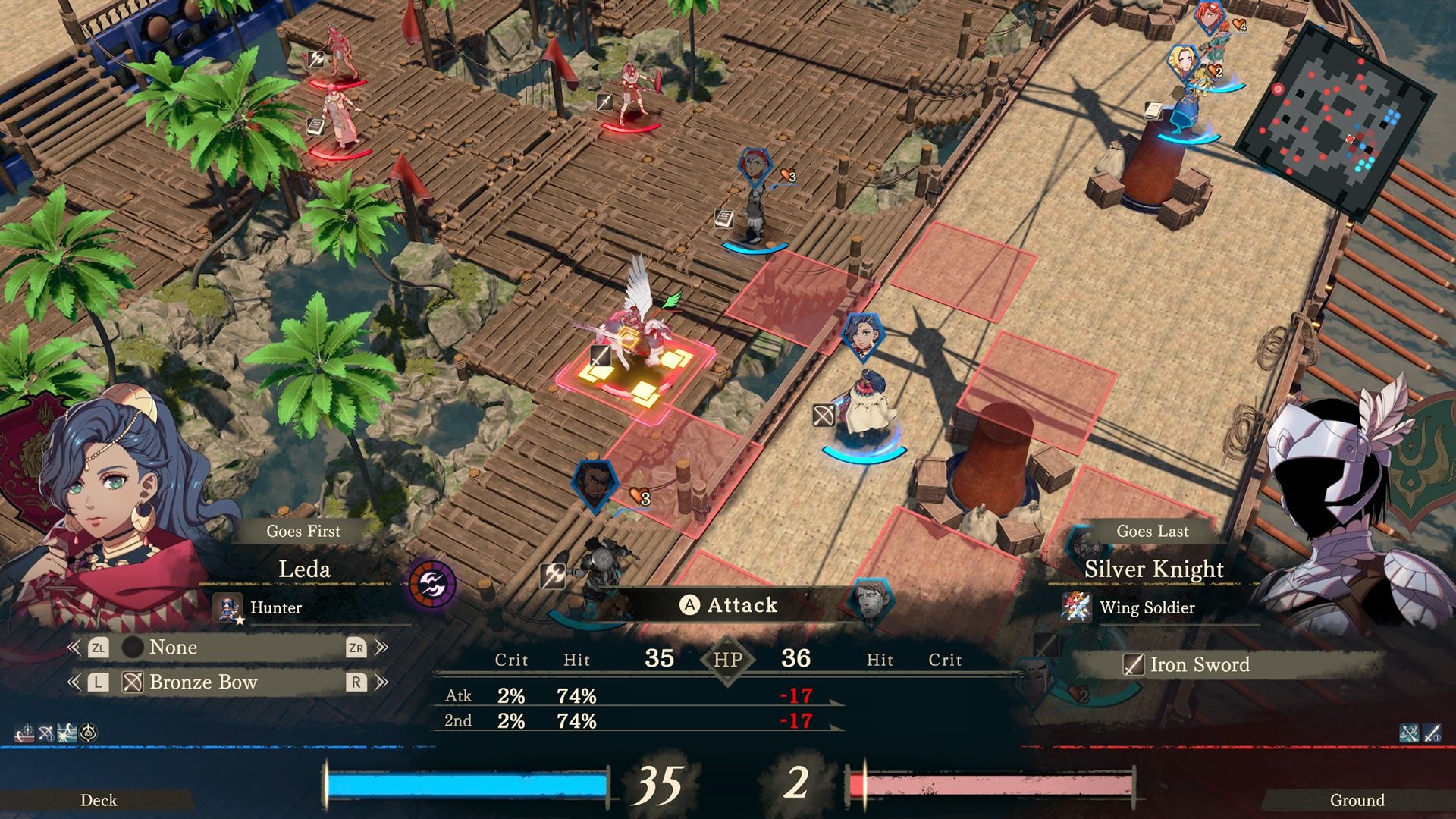
With Fire Emblem Echoes: Shadows of Valentia (I can use Google), a dungeon encounter meant a standard Fire Emblem tactical battle. Here, you square off against a few enemies with your core party of heroes. On your turn, you choose which attack you want to use, and then the enemy gets their turn. There’s plenty of depth in this combat, as each character has a wide range of attacks thanks to the skill system, and you can choose allies to support an attack, with differing effects and damage levels, but you’ll also want to spread the love around as the characters that participate in combat get extra experience points, and these dungeon crawls are a critical source of experience.
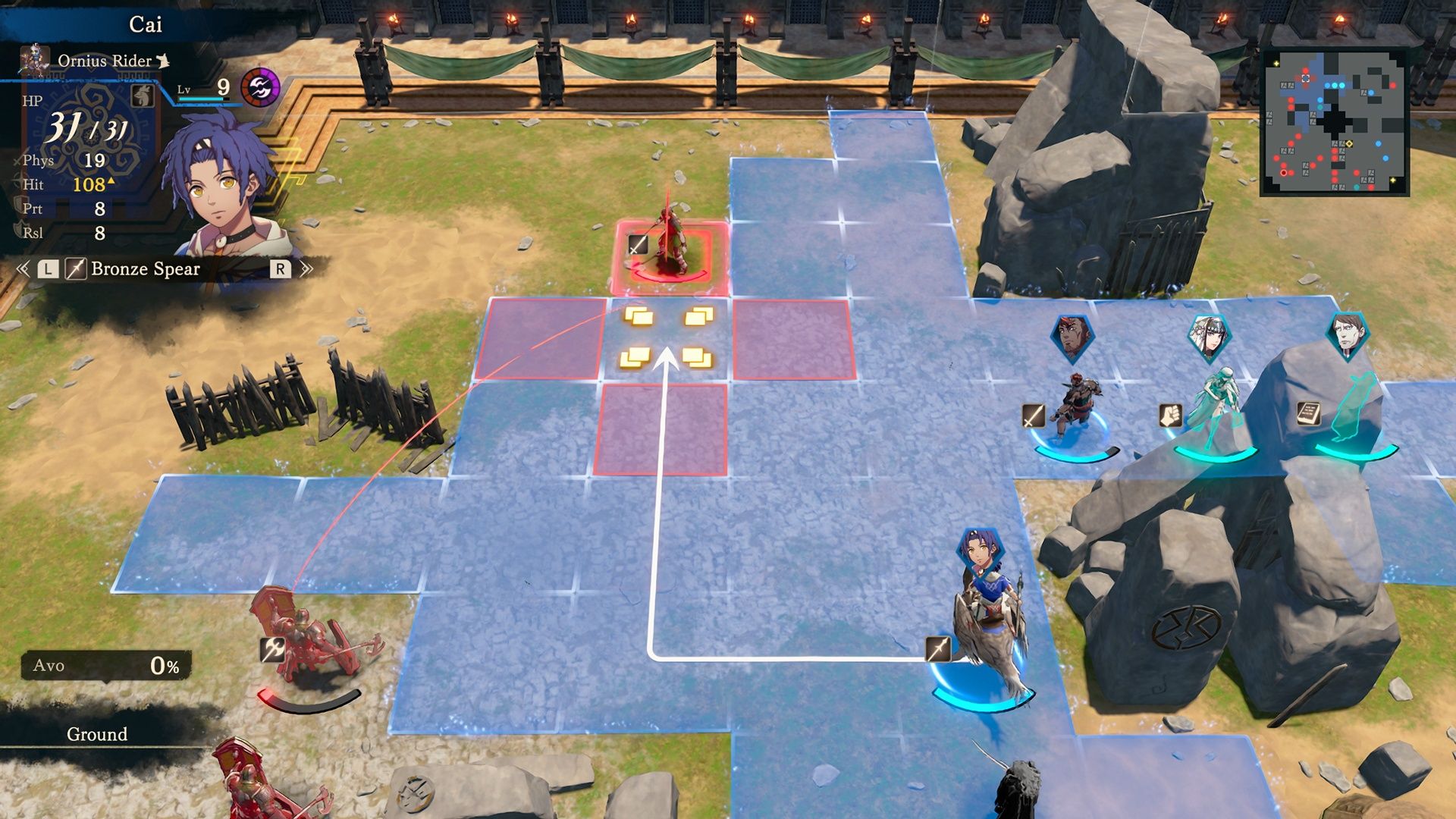
I would play a traditional JRPG that used this as its combat system. It’s a good one. Of course, it’s only a small part of the whole, as there are the traditional Fire Emblem-style battles for all major conflicts, and they are as good as ever. You’ll need to carefully tactically move your way across the giant chessboards, slowly whittling away the enemy numbers on the way to the boss. Play with permadeath on (the only way to play Fire Emblem), and every decision has additional weight because you’re not going to want to lose any of your heroes, both because you like them and because they’re just too valuable.
The third big feature in this Fire Emblem is the map, which is laid out like the older Atelier titles used to do it, and just like those older Atelier titles, wandering around the map chews up time, meaning you’re going to need to think about where you can explore and what you can achieve in the time that you have.

I’m always surprised when a developer does this – and I know that previous Fire Emblems have had passages of time leading up to major events, but it feels more significantly implemented in this game. I’m surprised, because as far as I’m aware, the Atelier developers moved away from it in more recent titles because the feedback was that watching a clock tick down while trying to work towards a set of objectives was stressful for some players. I wouldn’t necessarily characterise the time limits as “stressful” in Fortune’s Weave, but I’m sure some will, and I did find that the fact that the clock ticked by in real time in places meant that I didn’t feel I had the time to enjoy the remarkable art direction as much as I would have liked. I always had to be on the move and maximising the time I had, basically.
There are only really two contentious elements about Fortune’s Weave as far as I’m concerned; one is those time limits, though they do play well against the “race against the clock” theme of the overarching narrative. The other is that it is inevitable that some people are going to find at least some of the characters and situations confronting and even affronting, and the discussion around the game is going to turn to crap pretty quickly. That’s what happened with Three Houses and all its characters that are problematic for one reason or another (depending on who you ask), and I’m not allowed to like Hilda any more, apparently. As I was playing Fortune’s Weave, I did find myself mentally noting characters and moments that are likely to cause some grumbles, but then I also believe that this is what good writing looks like. A story that hasn’t generated commentary is a story that’s played it entirely too safe.
Speaking of the difference between playing it safe and not…
Jokes (or am I) aside, Fire Emblem: Fortune’s Weave is a massively intelligent experience, with deep and rich themes, characters, and gameplay systems. In the same month that Wolverine came out, it is nice to see that one of the three big console manufacturers/publishers still respects the player’s intelligence and is out there trying to do more than endlessly iterate on the same “best practice” game-development-by-numbers slop.