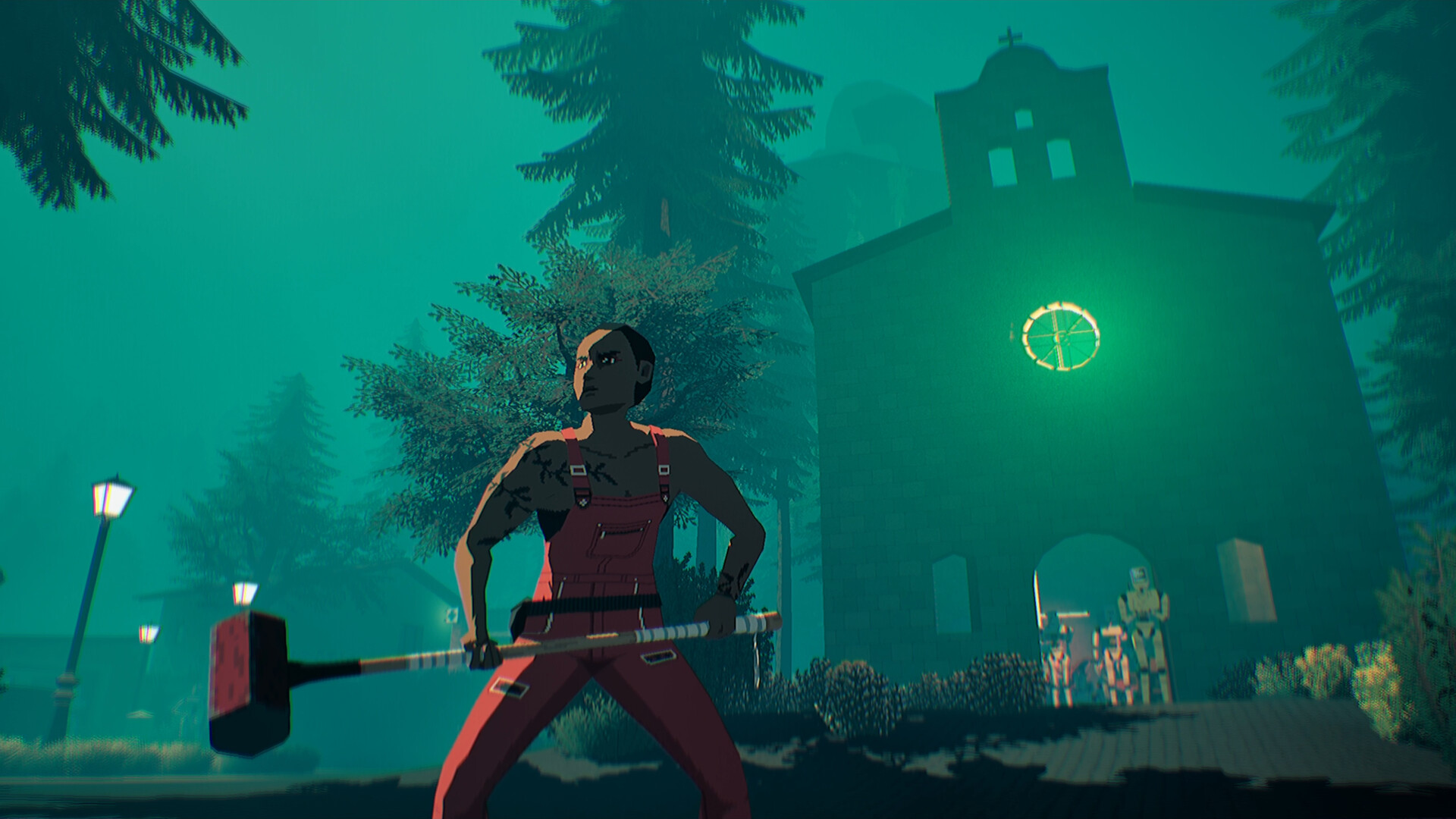


There are several grand ideas that Silicon Valley has championed as the holy grail of technology innovation. Self-aware AI and the ability to colonise space are two of the most well-known examples that tend to occupy the headlines. But another one is the idea of immortality, granted by being able to upload the intellect and soul – whatever you believe that to be – to a robot and live forever by transcending the limitations of flesh and blood. That’s an idea that Virtue and a Sledgehammer loathes, and the title is pretty self-explanatory as far as the answer that it has to this idea of “innovation.”
There was a time when such visions seemed to come from a benign earnestness to further humanity and improve lives. After all, if there was an option to be spared the pain of the death of a loved one, who wouldn’t take that? I lost my father this year, and it hits me, hard, every time I find myself in a situation where I’d want to call him up to discuss an idea or get his thoughts on something. In theory, being able to speak to him again would be… well, I don’t really have words for what that would mean to me.
But in recent years the tech industry has made it clear that the utopia they claimed to be striving for is anything but. Technology – and the tech industry – is now the tool of modern fascism (I know, I know, citation needed. So here’s an essential piece of journalism that breaks that argument down: The Nerd Reich). That alone should make you question the motivations of the leadership and whether they really do have our best interests at heart. Even if it wasn’t so blatantly fascist in tone, I would hope that the direction that “innovation” has taken over the last few years has given us all pause to consider the assumption that Silicon Valley would like us to have: the idea that advancing technology is an inherent good no longer seems to be true. That is, ultimately, what the development teams at Deconstructeam and Selkie Harbour want you to be asking yourself by the time you’ve finished their latest four-hour piece of genius.

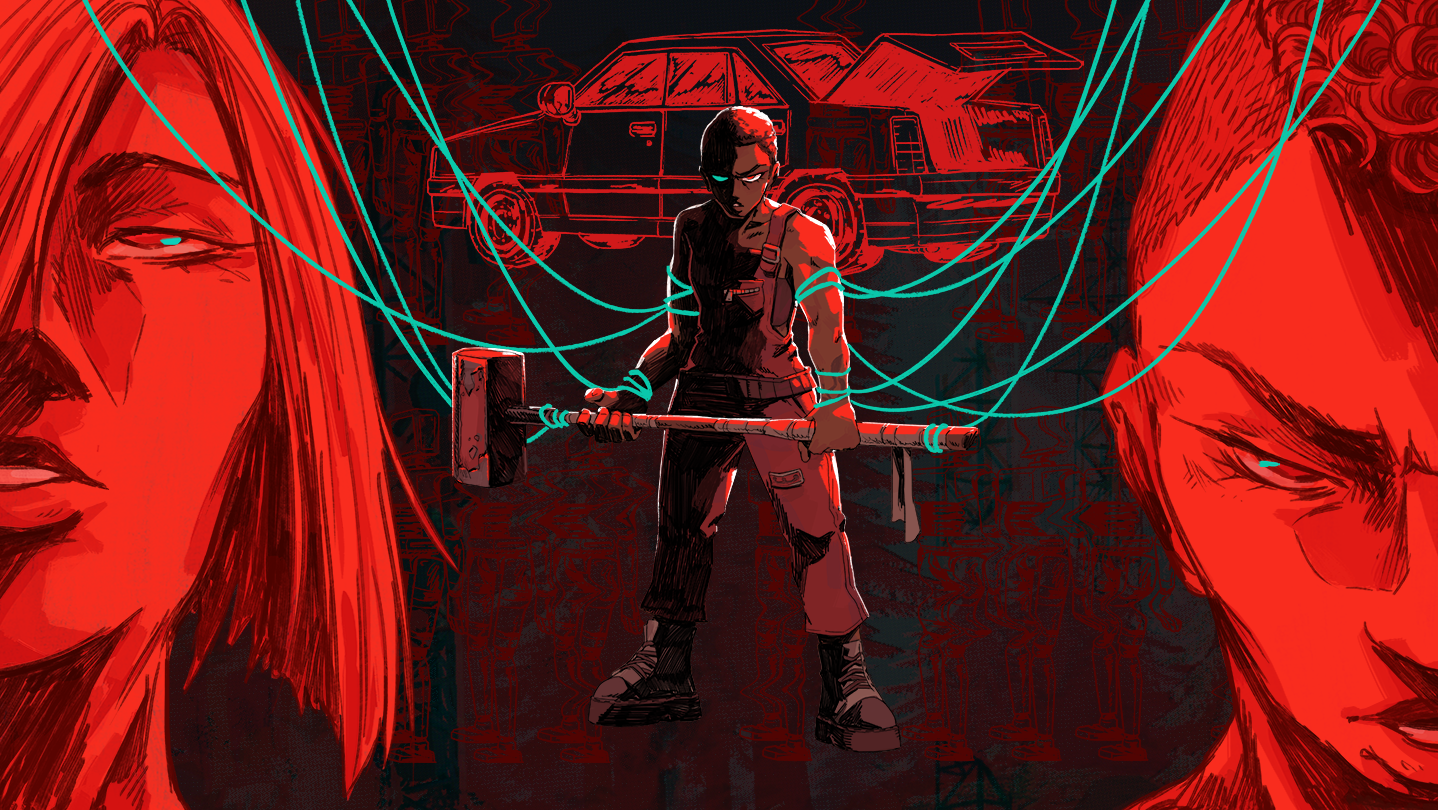
In Virtue and a Sledgehammer, you play as a grieving woman who seems to have lost both her mother and sister, though we’re not immediately certain of the story behind that. And indeed, we’re not initially sure that this woman hasn’t had some kind of psychotic break. Her mother’s body is in the trunk of her car, and she’s picked up a sledgehammer and is using it to smash up robots all over town. There is an almost overpowering whiff of the unreliable narrator about what we see through her eyes at first, especially considering that these robots are not just mindless automatons. They’re not even AI-powered. As we quickly learn, they are the “bodies” of human minds that have transcended death by transferring their consciousness to a robot form, and consequently we are meant to feel conflicted about this woman taking a sledgehammer to them.
In other words, on the surface of things, smashing these robots up and winking their existences out would seem to be a, well, murderous thing to do, no? It’s made even more complicated by the fact that many of the robots won’t fight back, and some even beg you not to destroy them. And indeed, you do have the option to leave those pacifist robots alone.
And yet I found myself smashing as many of them as I could as I play, and I strongly suspect most other people will play this way because the developers clearly want us to. Does that make me genocidal? I would argue not, and I believe the game agrees with me, because many of the other bots recognise that they have lost their humanity, in one (if not multiple) ways. And the ones that are begging you to leave them alone are doing so for the same reasons that people with terminal diseases might beg whichever deity they worship for more time. Death is a deeply human experience, and of course it is a traumatic one, but it’s also critical to understanding the value of life and the time that we do have. Resisting death by uploading your brain to a computer is playing God in a deeply questionable manner, no different to the point Mary Shelley was making when she wrote Frankenstein those many years ago.
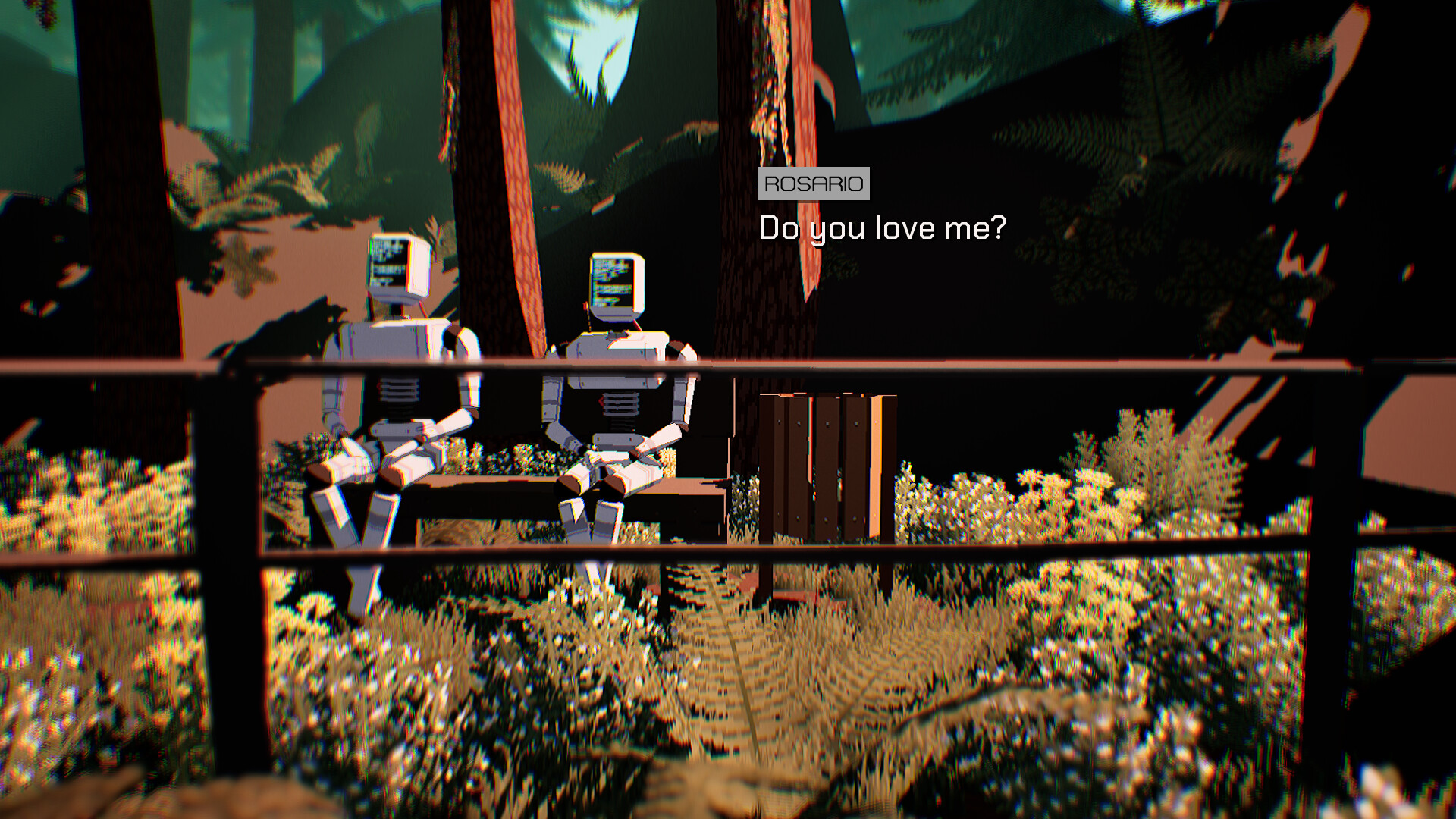
Virtue and a Sledgehammer is angry with it the way that technologists and technology feel entitled to take ownership over human experiences; it needs to be clear. There is a truly visceral power in the way you swing that sledgehammer, and the way that everything around the protagonist explodes as she does so. It is a firm rejection of the lies that Silicon Valley tells in order to manufacture consent for its projects, all of which are ultimately designed to control the world around the desires of the few people at the top. It is a clarion call for us to take a moment to rediscover… or at least reconsider… what it means to be human and what is important in life.
It’s also a painfully emotional game in places. As you explore the world, smashing everything (or as little as possible, I guess) in your path, you’ll come across memories of the protagonist’s time with her sister and mother. The relationships that Virtue and a Sledgehammer depict are enormously complex and not always positive, and yet there is a wellspring of love at the heart of these dynamics that transcends the frequent conflicts. The script avoids being bittersweet or sentimental by focusing on the brutal honesty of relationships, and it’s in that authenticity that it’s so meaningful – everyone has their moments with loved ones, family and friends, and their traumas from childhood. That doesn’t mean that the absence of these people is any less painful. That, too, is a very human complexity that can’t be synthesised away.
Virtue and a Sledgehammer’s narrative hits hard (like… a sledgehammer, hah), in other words. To go into deeper specifics than this would be to undermine the emotional impact that comes from playing it for yourself, so I won’t do that. I think it’s a marvellous thing that the runtime is “only” four or so hours long, too, because it is best played in one sitting, so the full weight of its emotions and intellect can be considered without a pause to break its rhythms up.
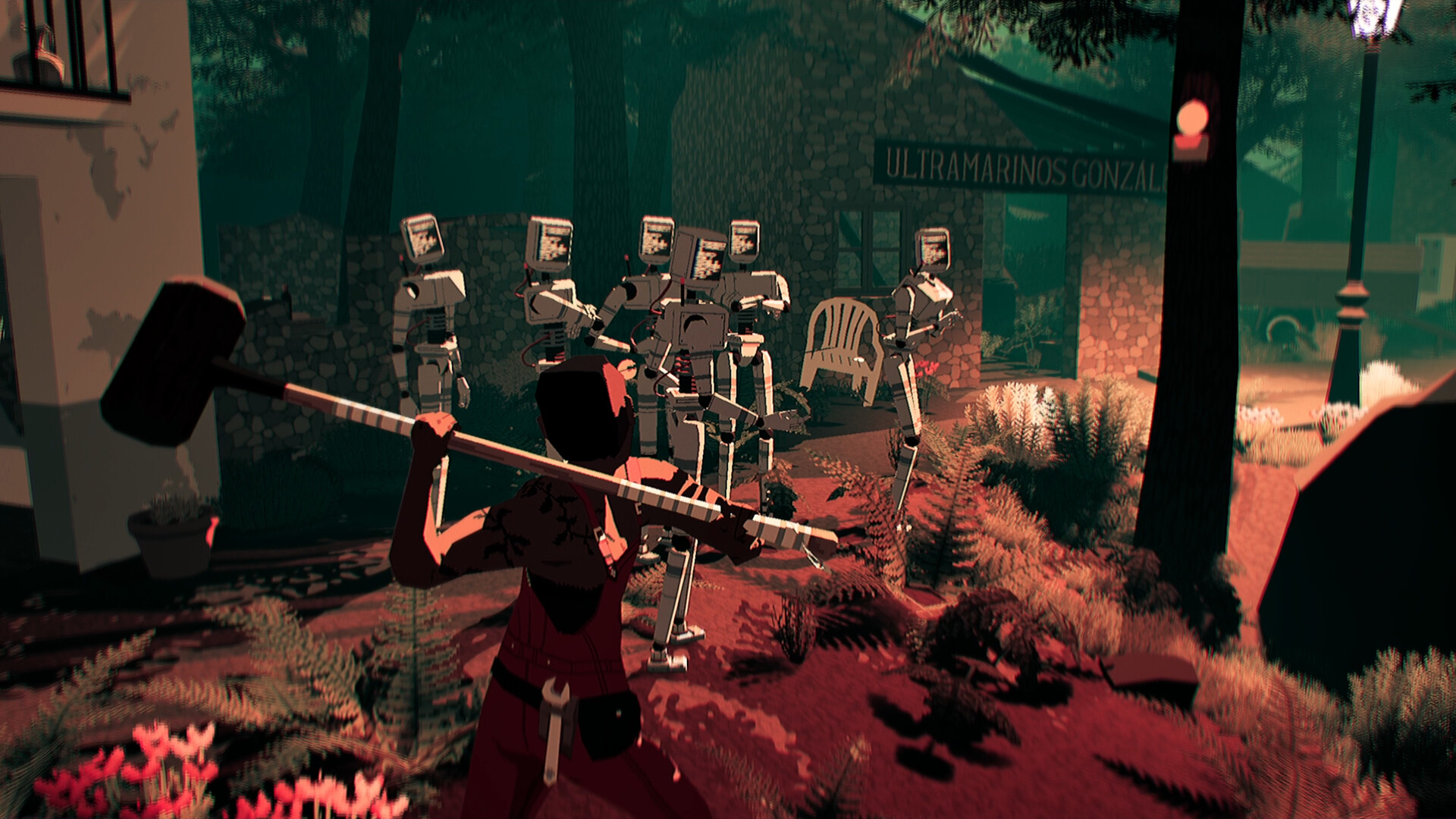
I’d be remiss if I didn’t say that, as a game, it’s not all that special. As cathartic as it is to lumber through its world and swing that sledgehammer, the controls are (deliberately) weighty, and there are only three types of enemies and no genuine example of a “boss” fight. The only skill involved in defeating the enemies is knowing how to give yourself the room and time to perform a big swing of the hammer (essential for defeating two of the three enemy types), and there’s no mechanical progress in the game, meaning no skill trees or alternative weapons. What you do in the opening minutes is, largely, what you’ll do in the last ten.
Meanwhile, the lo-fi visuals are striking, and several of the locations that you visit are evocative, but the game does a terrible job of wayfinding, and there were a few occasions where I got lost, doubled back, and generally confused about where to go next. There’s a junkyard midway through that is particularly chaotic and easy to get lost within, and that stands out as a real low point as far as the game’s journey is concerned. This, more than the relative simplicity of the combat, was an issue for me because spending ten minutes or so wandering around aimlessly with nothing to do but try to find the path forward did undermine the otherwise careful pacing that the developers were clearly aiming for.
But I would also say that these issues also don’t dampen my overall view of the game, precisely because in this kind of project I’m not exactly looking for Dynasty Warriors. The interactivity of Virtue and a Sledgehammer is just the scaffolding that allows it to deliver a powerful, provocative, and, through the interactivity, intimate experience that has dwelled with me for weeks after finishing the game, and I suspect will continue to come to mind every time I look for a good example of its themes across all artistic media.
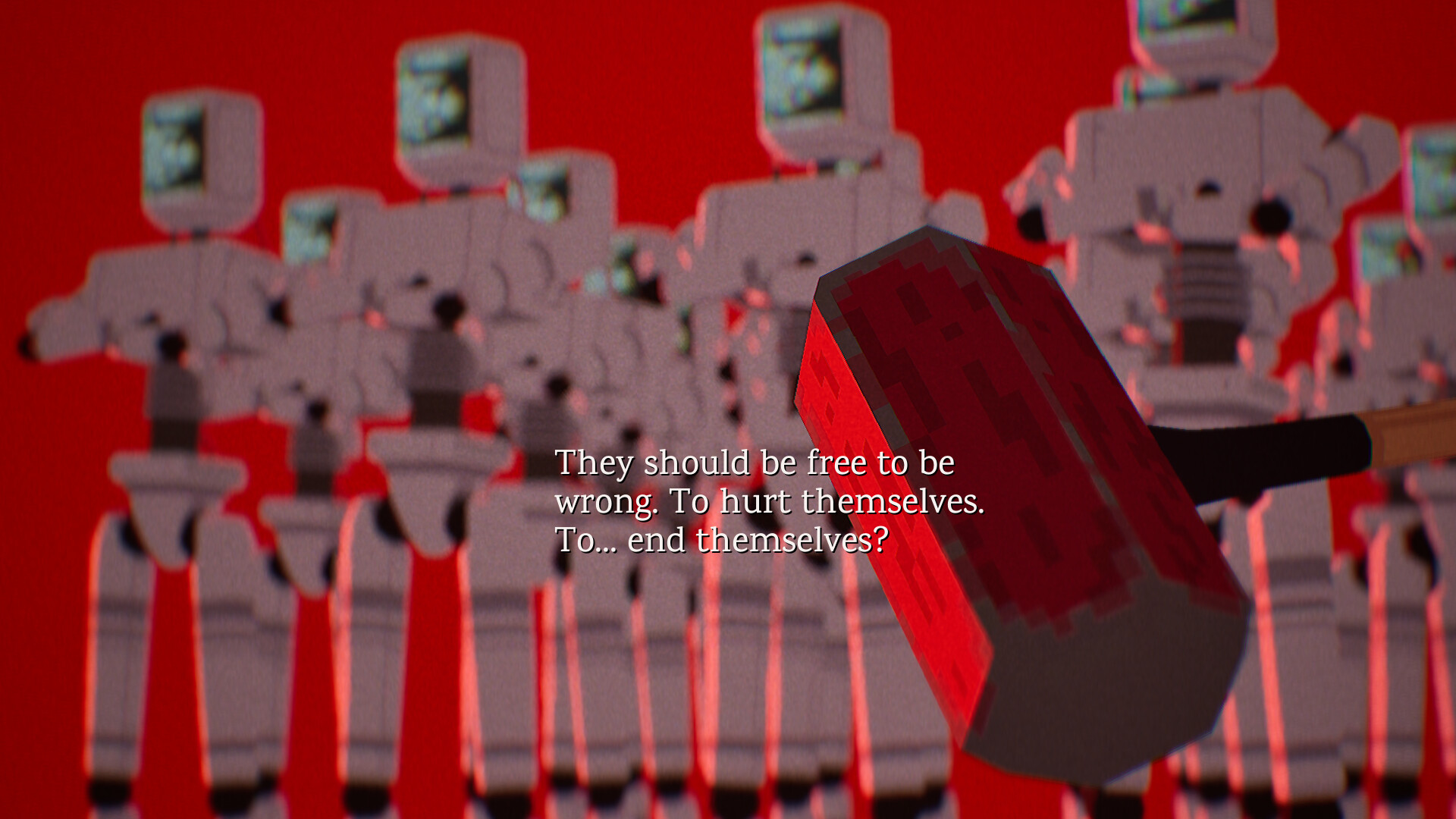
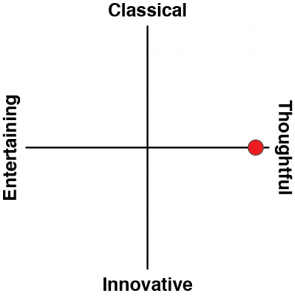
It’s good art, in other words. Virtue and a Sledgehammer is not a pleasant nor comfortable game. It’s not entertainment in the traditional sense. People looking for a button-mashing power fantasy are not likely to come away from the game with an overly positive impression of it. But for the more reflective type, and anyone who has had reason to be angry at technology “innovation” of late, Deconstructeam and Selkie Harbour have produced something truly poignant, and given voice to concerns that, I think, a lot of us share with an increasing sense of alarm.