

There was a time when Capcom was the most experimental game publisher, by a long way. Those of us who had PS2s and GameCubes at the time will remember that alongside the likes of Resident Evil 4, Capcom developed highly experimental stuff like P.N.03 and published Killer7, which was the first game to establish Goichi Suda’s presence as an auteur. Then, on the PS2, Capcom went absolutely nuts with mainstream hits like Devil May Cry being supported by cult classics like Chaos Legion, Clock Tower 3, and Gregory Horror Show. Capcom has since become a publisher that has focuses exclusively on big games, with all that sadly entails, but Pragmata is an echo of that era of experimentation, and it’s a gem.
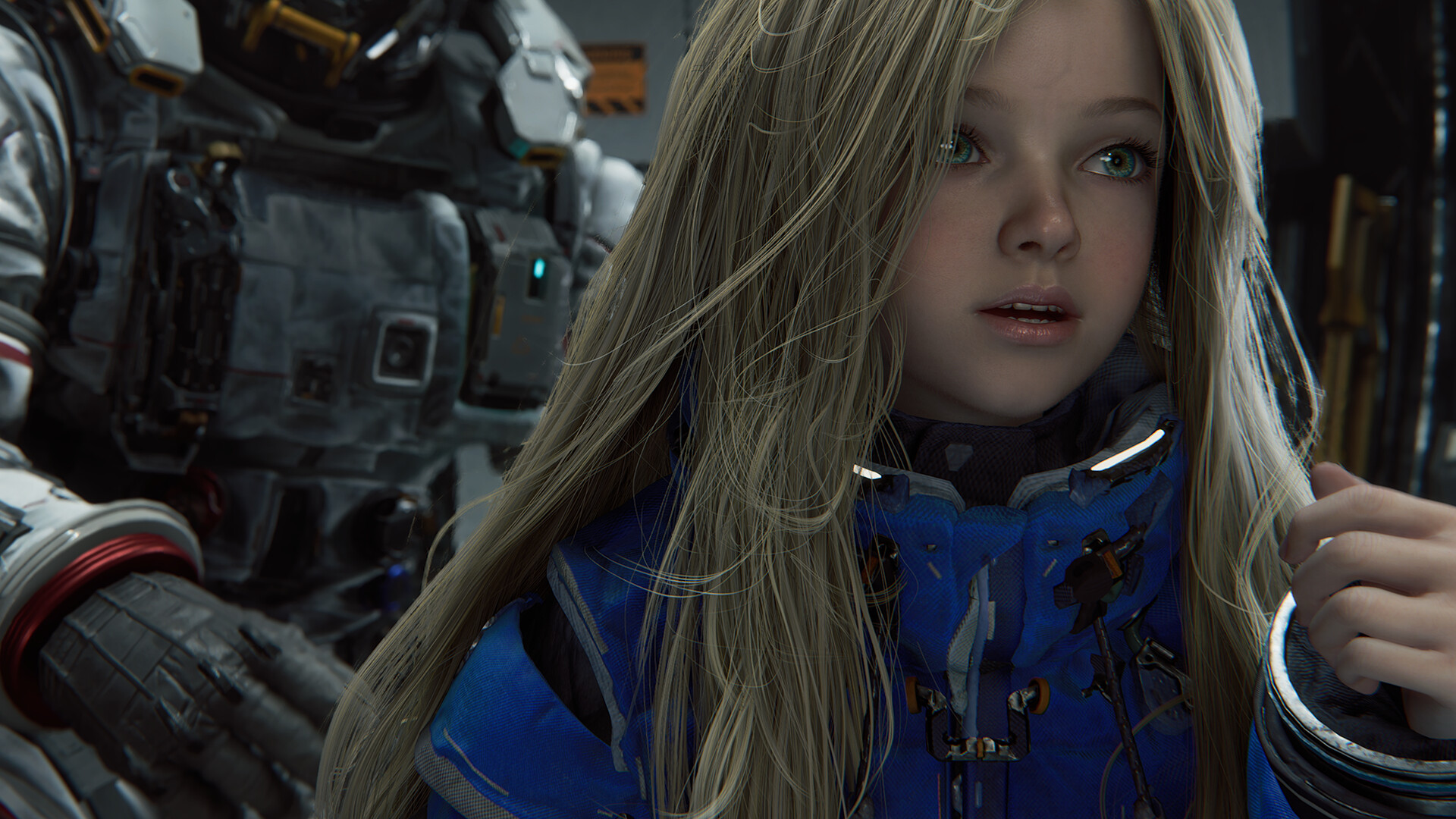
To get the elephant in the room out of the way upfront, the emotional core of Pragmata is the relationship between Space-Daddy Hugh and Robot-Daughter Diana. It’s not the first surrogate father-daughter relationship we’ve had in big-budget video games (The Last of Us et al), but it’s a rare case of one half of the partnership being an outright child. In looks and mannerisms, at least. Diana might look like a little girl, but she is a devastatingly powerful AI robot and proves herself to be every bit as capable as big teen Ellie or Kratos’ Legolas-Boy soon enough.
I wasn’t sure how I’d get along with this dynamic at first. Being entirely blunt here, I find children to be right up there with the most irritating things a person needs to tolerate. Sorry-not-sorry, but they’re loud disease magnets, and frankly, they’re not interesting either. Yes, I’m well aware of what’s about to happen in the comments from the parents reading this, but it is what it is. I don’t have children for a reason, and for that same reason, when Pragmata’s Diana started checking off all the behavioural quirks of a little girl, I thought two things: Firstly, the lead writer is definitely the father of a daughter. Secondly, I was sure I would be reaching for the “delete game” option sooner rather than later.

Thankfully, I didn’t! Right from the start, the gameplay is compelling, and I decided I was willing to wear the “heartwarming” interactions between Space-Daddy and Robot-Daughter because I was enjoying the action. And then, soon enough, I found myself starting to care about the two of them and fully investing in their dynamic despite myself. Diana is just enough of a robot while also being just human-like enough to fall into a weird uncanny valley that comes across as, ultimately, charming and sincere rather than uncomfortable, and Hugh’s interactions with her have a texture that suggests that he, too, is slowly being disarmed by the “girl” and his need to both rely on her and protect her.
Of course, with that deepening and growing relationship comes an emotional connection, and I ended up caring about Diana and Space-Daddy so much more than I thought I would, given the relatively cold Sci-Fi aesthetics and character design in the early part of the game. Without slipping into spoilers, Capcom’s writers did a magnificent job of the same kind of emotional manipulation that the developers of The Last of Us and God of War tried with their respective relationship-driven narratives – i.e. they make you care what happens to, say, Diana, because Hugh is so clearly invested in protecting her. Just like with The Last of Us and God of War this emotional manipulation isn’t particularly subtle or intelligent, but it’ll still win you over anyway for the way that it hits every note it needs to with just the right velocity and timbre.
Elsewhere, the game does have smarts. For example, it does a brilliant job of being a top-to-bottom warning about humanity’s increasing reliance on technology. First, Hugh and his team land on a moon base that is being constructed by 3D-printed materials that, we are told, are “brittle” and prone to breaking. Sounds like a terrible idea for materials for use in a base surrounded by the vacuum of space that people are meant to live on, but we’re told, through Hugh’s eyes, to “relax”, and trust that the boss-men of the corporations behind this space base are using superior materials and would never cut corners or risk lives, right?
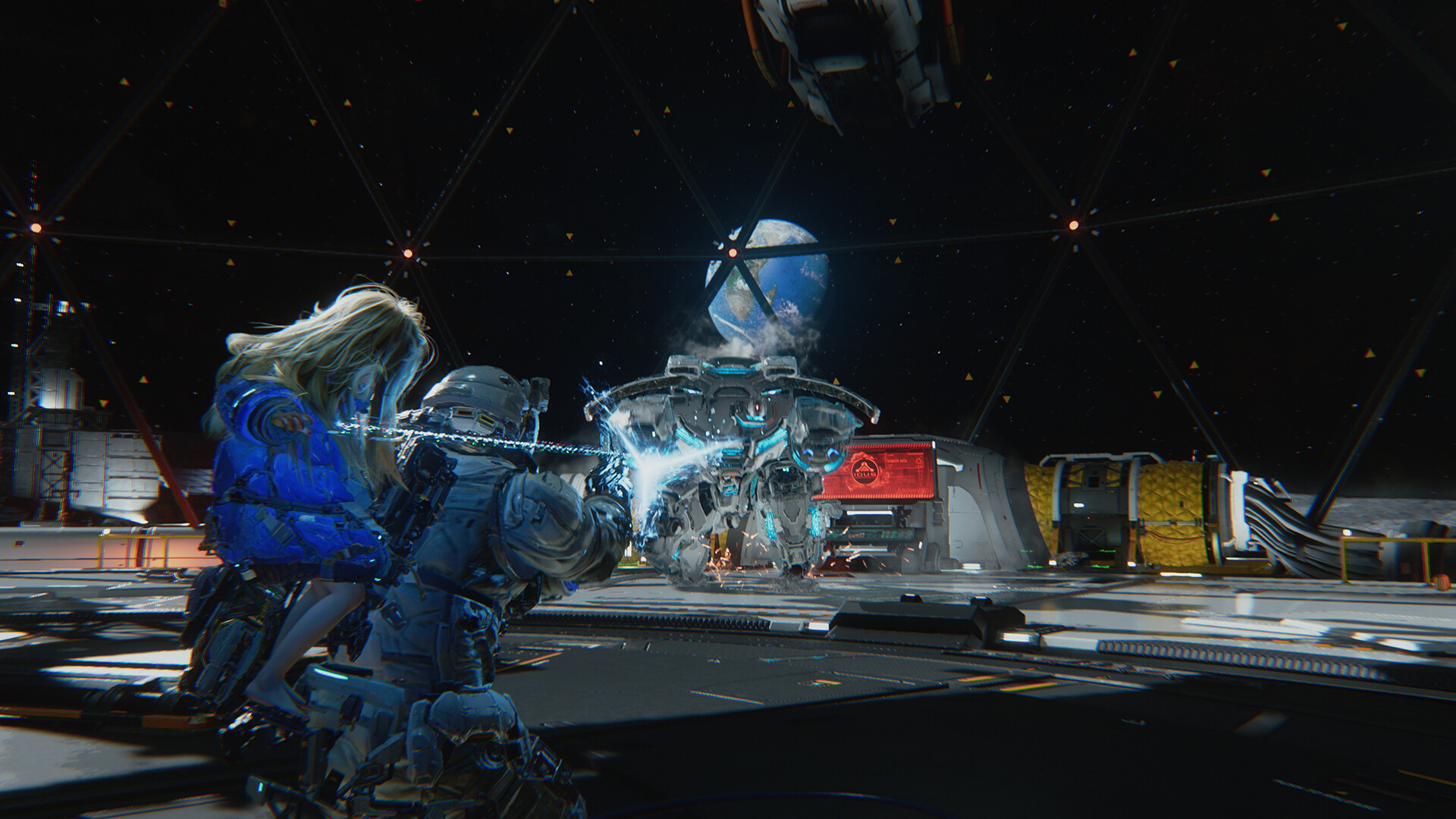
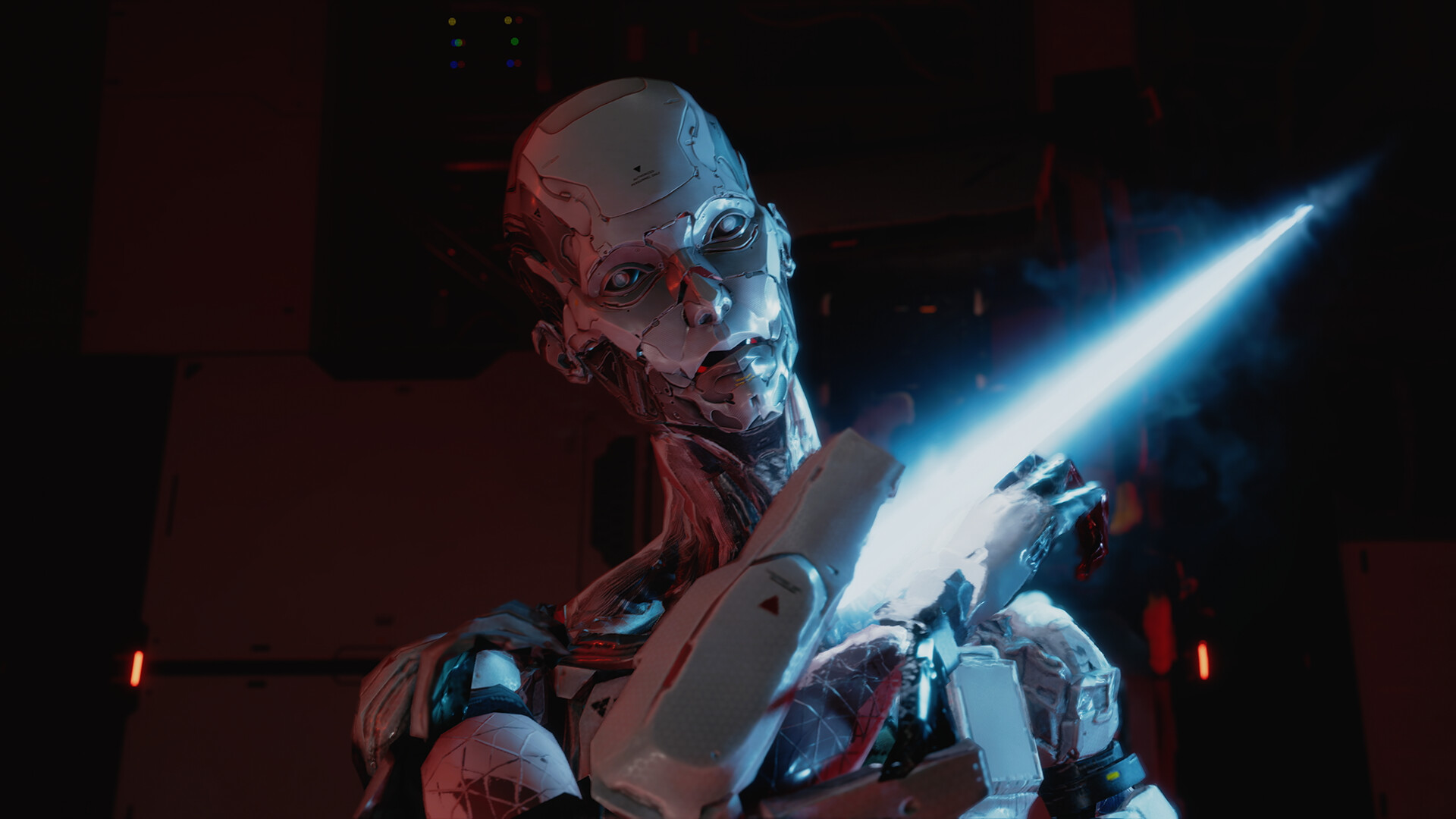
About 22 seconds later, after so confidently proclaiming that, the team of four is reduced to one as some kind of earthquake hits and the base falls to pieces around them. Then the moon base’s AI tells the robots around the survivor (Hugh) to kill him. Which, given the direction of real-world AI companies, isn’t even a science fiction stretch so much as a Torment Nexus moment that, for some reason, the bulk of humanity is passively watching happen.
Meanwhile, aesthetically, Capcom’s art team went out of their way to create environments that looked like they were AI-generated slop. These environments are not slop (Pragmata, as far as any of us know, has no gen AI assets in it), but do a very convincing job of making you feel that same uncomfortable sense of corporate artificiality that comes from looking at actual AI slop. It is the artistic tool of modern fascists, propagandists, and anti-human corporate decision makers, and that’s exactly the sense you’ll get from witnessing these “AI slop” areas. It looks eerie, sinister, and inhuman.
If I were a betting man, I would bet on there being essays on how Pragmata is the Torment Nexus tweet turned into a video game thematic core. It’s not anti-technology, as such, but certainly a warning against the assumptions that Silicon Valley and other such “hubs” around the world are acting in humanity’s best interests. Perhaps somewhat ironically, but a game whose core emotional beat is the relationship between a human and a piece of technology is one of the loudest clarion calls for us to remember that we shouldn’t be leaving the human out of technology like the Altmans, Musks, and Ellisons of the world would like us to.
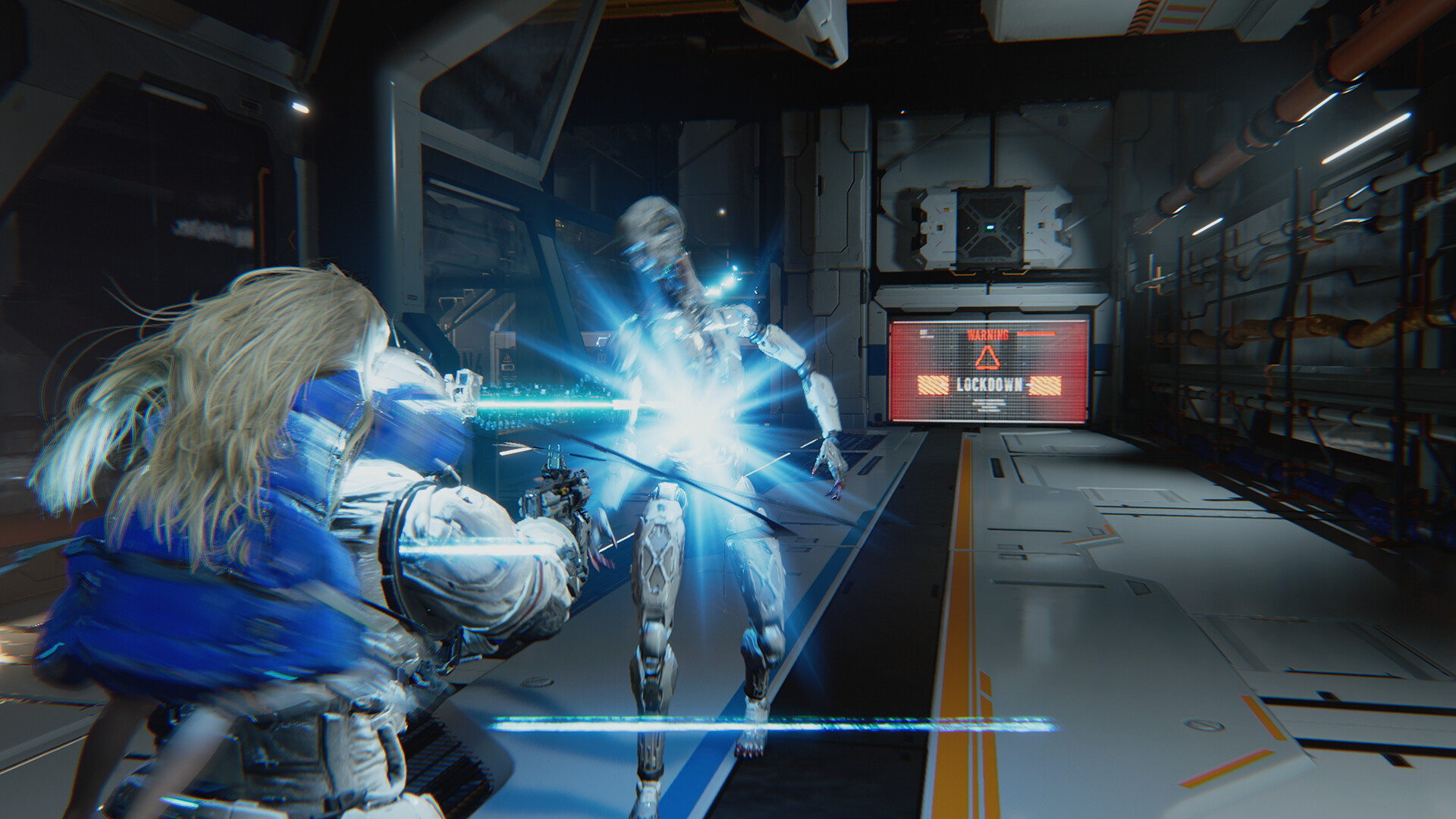
On the gameplay side of things, Pragmata really is compelling. It is, in simple terms, a third-person shooter, but it has several “phases” that give it a texture all of its own. At the start of any combat, you’re going to want to have Diana “hack” the oncoming enemies. To do this, a grid pops up, and you need to travel a line through a series of “nodes” to reach an exit point. You want to do that quickly since the enemies are advancing (and more difficult enemies have grids that are more difficult to navigate around), but if you do manage to complete a grid, Diana puts the enemy in a vulnerable, shieldless state that allows Hugh’s weaponry to do far more damage than he would have been able to by himself. In fact, even the earliest encounters are effectively impossible without using Diana’s ability.
Soon enough, more complex enemies with more difficult grids start showing up, and an increasing array of abilities for Hugh to avoid while Diana does her work. Meanwhile, Hugh gets access to a broader range of weapons that can stun, cause massive damage at close range, and otherwise incapacitate enemies, allowing him to strategically deal with multiple enemies at once.
Pragmata’s “puzzle-shooter” combination is challenging, particularly with the boss battles, which add the need to fully utilise the environment around Hugh and Diana. Hugh has a booster ability, allowing him to float around for a while, and that becomes as critical as the dodge move on the defensive side of the action. Monitoring the need to switch to defence, while playing Diana’s rapid-fire hacking minigame, and then going on the attack with Hugh is a frantic and unforgiving process, and I found myself having to retry encounters from a fairly early point in the game, but it is also so very rewarding when everything clicked, and I overcame those tough encounters.
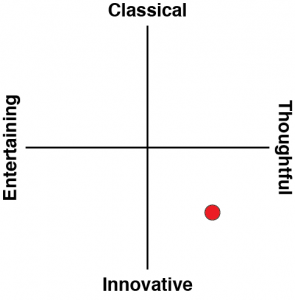
Pragmata is Capcom at its best. As good as this company can be with its established franchises, it’s when it tries to do something different that we get the real gold. As far as “big budget” games go, Pragmata is the most different and thought-provoking game I’ve played since Death Stranding, and I love it almost as much as Kojima’s masterpiece. If only Capcom did this more often. Like they used to.