

When Tales of Arise was released back in 2021, it was a pretty pointed and interesting essay on oppression, revolution, and what comes after. You can probably see where this review of the new Switch 2 complete release, coming in 2026, is going.
As I noted in my review of the original Tales of Arise: Revolution isn’t an easy topic to deal with. By its very nature it’s politically loaded, inspires people towards polarised thinking, and involves wide-ranging social and cultural change. Revolutions are always motivated by a good cause – the rising up of the oppressed and downtrodden – but what comes after the revolution isn’t always a positive outcome (and whether it is a positive outcome or not depends on your worldview across a whole lot of things). In most cases, when popular entertainment deals with revolution as a subject, it simply focuses on the fight for freedom. It will barely touch on the personal, cultural and political tensions that lead to it, and it rarely deals with the subsequent consequences that come from a successful revolution. That simplistic and naïve understanding of revolution does people no favours, and when I first realised that this would be the dominant theme of Tales of Arise, I was more than a little concerned.
I need not have been, because Tails of Arise handles it magnificently. Arguably as well as I’ve ever seen in popular entertainment. The game casts you in the role of a group of heroes working to liberate communities from a colonial power, and while its not certainly not relativist in its treatment of the subject (liberating an oppressed people from a colonial power is a righteous cause), the game does a remarkable job of highlighting the internal conflict of the characters and some of the things they need to do in chasing the objective, and – most critically – actually asking the question “what’s next?” After you expel the imperialists, life doesn’t immediately revert to a utopic freedom. What you do with your freedom and the society you form around it matters and Tales of Arise recognises this. There are twists and turns through the narrative, as you would expect (and it would be unfair of me to delve into spoilers here, so I won’t), but the game never loses sight of these thematic foundations, and continues to work hard to do them justice throughout.

That was written back in 2021. That was before Russia invaded Ukraine, and, more to the point, that I’m about to make here, before Israel started inflicting the most heinous of crimes of oppression on the Palestinian people in a blatant attempt to commit genocide and then colonise Gaza.
Our impressions of any artwork are informed by the context of the world around us, and Tales of Arise has a new level of poignancy to it. We live in a world of increasingly oppressed, desperate people, and as a society, we are doing an incredibly poor job of grappling with what comes after all this (assuming we can even get to that point, which seems increasingly unlikely given how incapable of holding the oppressors to account our leadership is proving). This makes the many conversations that go on between characters about their situation feel all the more urgent. Tales of Arise wasn’t written for the world we live in, and it is both overlong while not handling the subject as deeply as it really needs to (and it really veers into some odd spaces in the second half of the main narrative), but it’s important to parse in this context as a conversation that we should all be having.
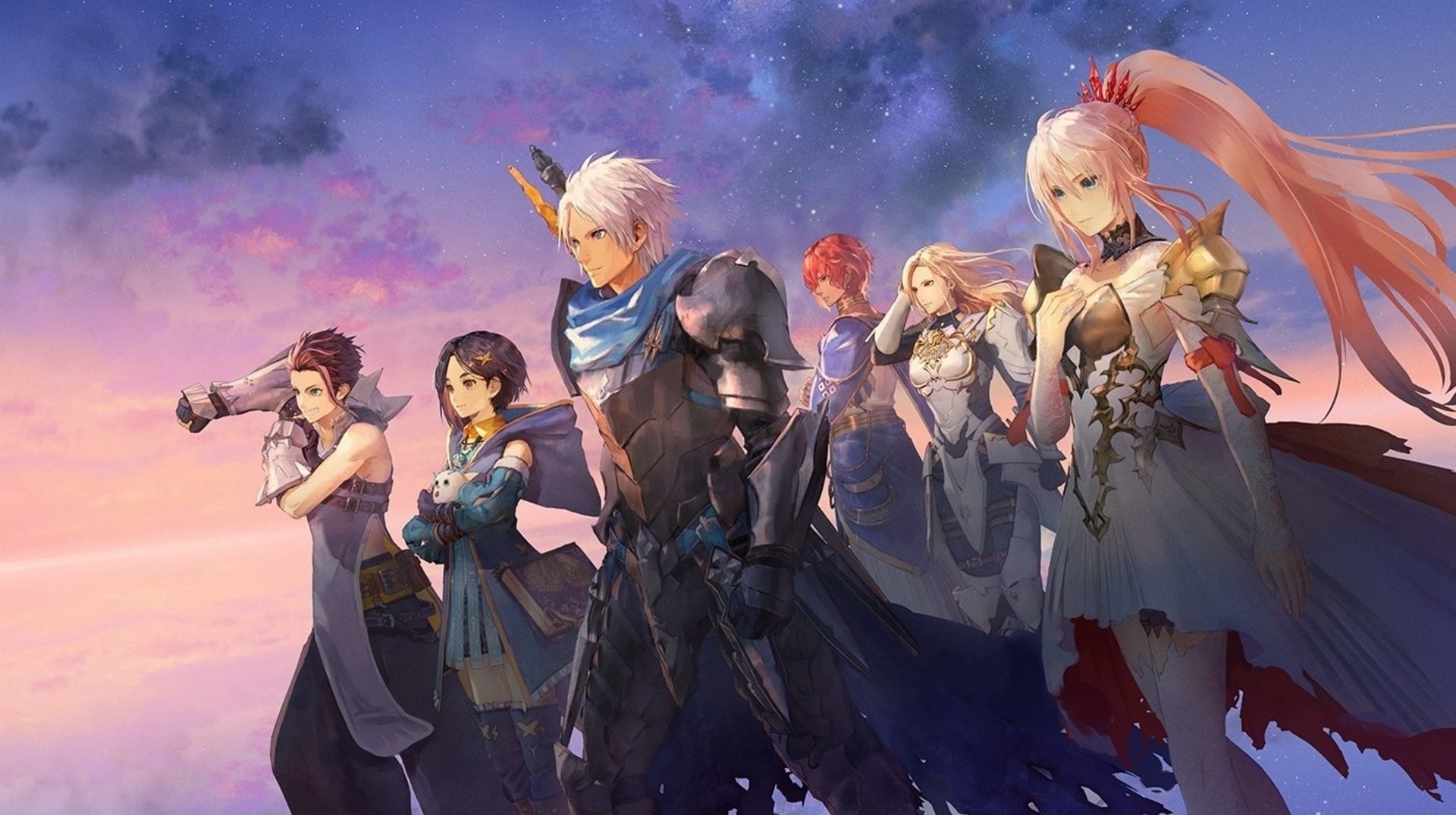
Of course, there’s more to Tales of Arise than its narrative thesis, and as a game it’s spectacular and entertaining, with big action set pieces, a gorgeous world to explore, and stunning character and enemy design. Where the Tales series has always been colourful and bright with the anime aesthetic, and Tales of Arise is also obviously anime, there was clearly a significantly larger budget put into this one to try and push it up into competition with the Final Fantasies and Monster Hunters in terms of production values, and it largely gets there. This comes through nicely on the Switch, with it being a particularly luxurious experience when playing in handheld mode. The game looks gorgeous on that screen, with the anime aesthetic arguably better suited than the more realistic palette of, say, Final Fantasy VII Remake.
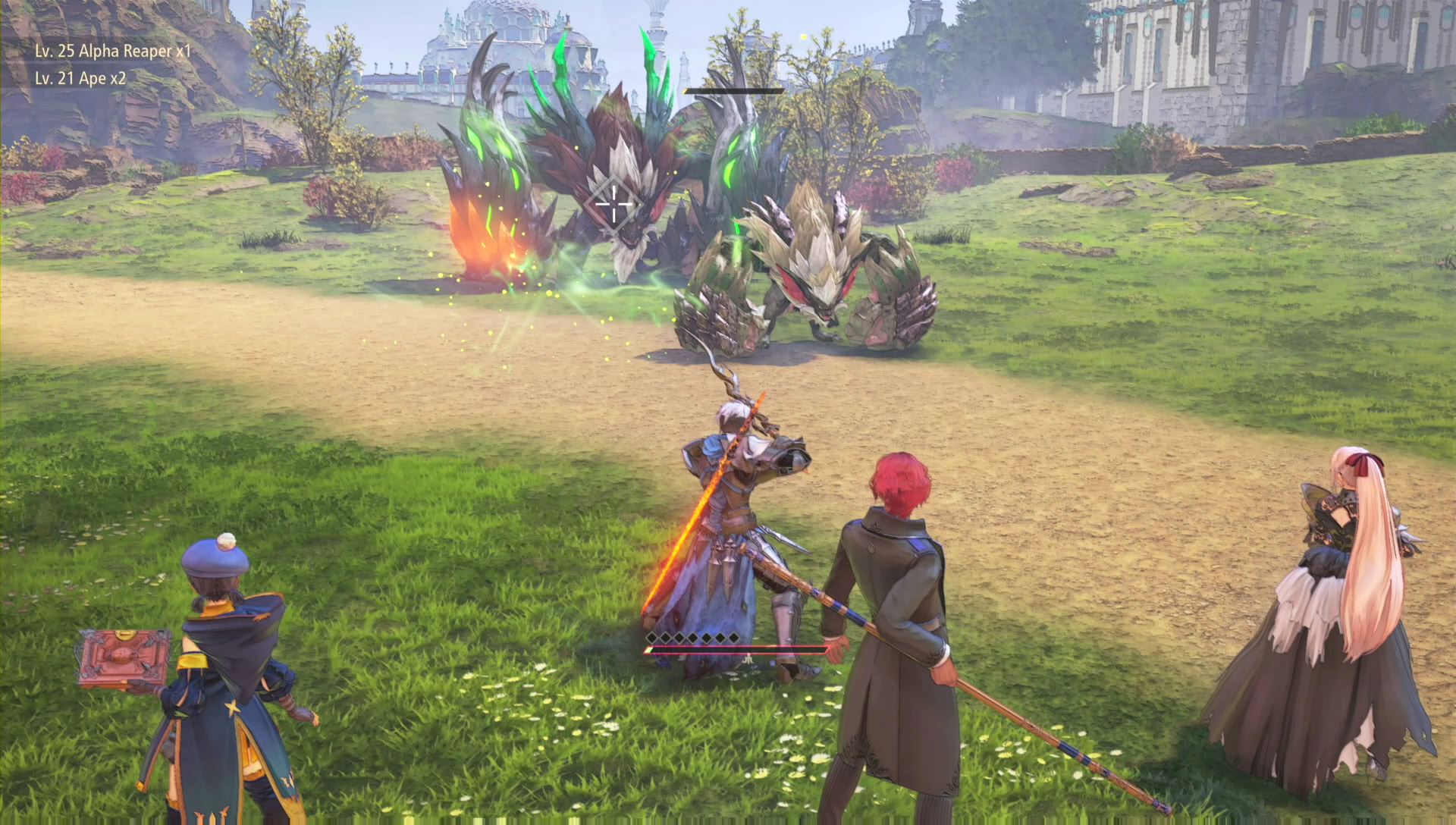
The framerate is locked in at 30fps, which I know will upset some people, though I didn’t find that it bothered play at any stage with my playthrough. Though that being said, you can choose which of the characters you control in battle, and I play as Rinwell, who is a distance spellcaster and requires less twitch reflexes than the melee-heavy characters.
Otherwise, this is an excellent port of an essential, thought-provoking JRPG. Tales of Arise’s ambitions to deal with a weighty, pressing theme slightly outpace execution, particularly in the latter half of the story, but the effort is noble, and the game is certainly capable of generating thought and discussion like a great work of art should. Also, Rinwell’s just the best.