

The Two Point series has a lot to answer for. Yes, SEGA’s brand of casual business simulations is silly and charming, and it’s fun to see what whacky schools, hospitals and museums you can cobble together. But in their desperate effort to be feel-good fun times, the Two Point series also forgot about something: businesses can go bankrupt. In fact, the entire reason to play a simulation is (or at least was) to prove that you can indulge all those creative whims and generate a profit while doing so. Now, it seems that Two Point’s style is infecting other developers, because here we have Under Par: Golf Architect, and it has exactly the same problems.
Aesthetically, the game borrows heavily from the same playbook as the Two Point series too. Characters have big bobble heads and walk with a comedic exaggeration. They also natter away and say some silly things as they play. The golf courses themselves look lovely, with lush green tones for the fairways and… greens, and the water looking so inviting that you’d want to dunk your golf ball in one (that’s always my excuse when I play). It’s a wholesome, twee, charming-looking game, and just like with the Two Point titles, it’s the kind of thing that you’ll be immediately enamoured with.
Just like in the Two Point series, you’ll be travelling around an overworld map, creating golf courses in all kinds of funny locations as you do – this is all smoke and mirrors to hide that the career mode is about creating courses in different locations, each of which offers up to three stars, and you’ll need a certain number of stars to unlock later levels. Back in the old days, playing Rollercoaster Tycoon, this was all handled through a simple menu off the main screen, but games need that extra context these days. Never mind that the overworld map doesn’t actually add anything to the experience. It’s just necessary for reasons.

I digress a bit. You’ll realise that Under Par is drastically short of substance within the first course that you design. You’ll tell yourself that it’s just the “easy” one because it’s the first, and later levels offer more challenge, but Under Par never quite gets there. The objectives might seem more onerous later on down the track, but success in Under Par comes down to having the same kind of patience that you need for the actual game of golf. You will eventually get the ball in that little cup on the green.
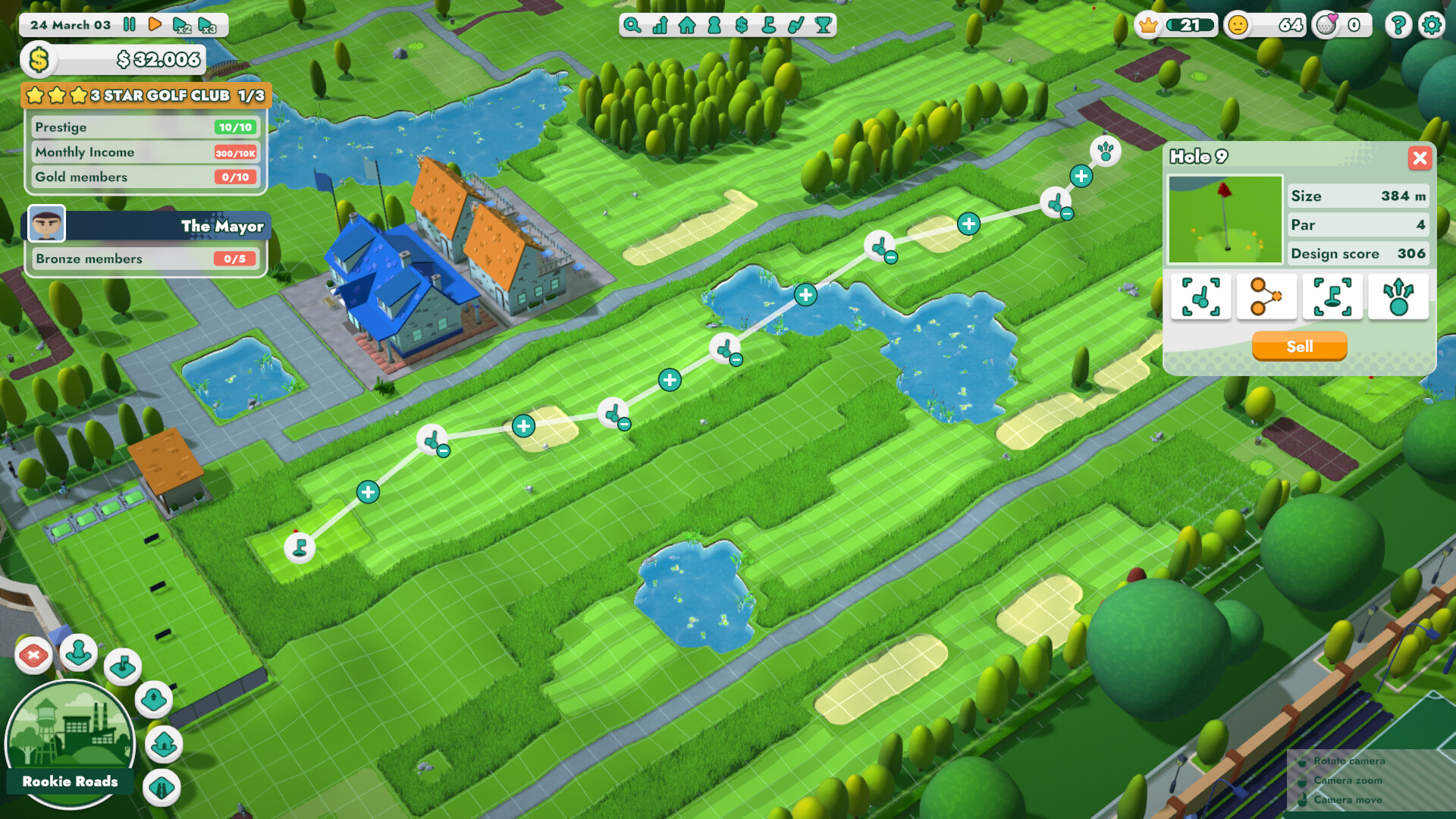
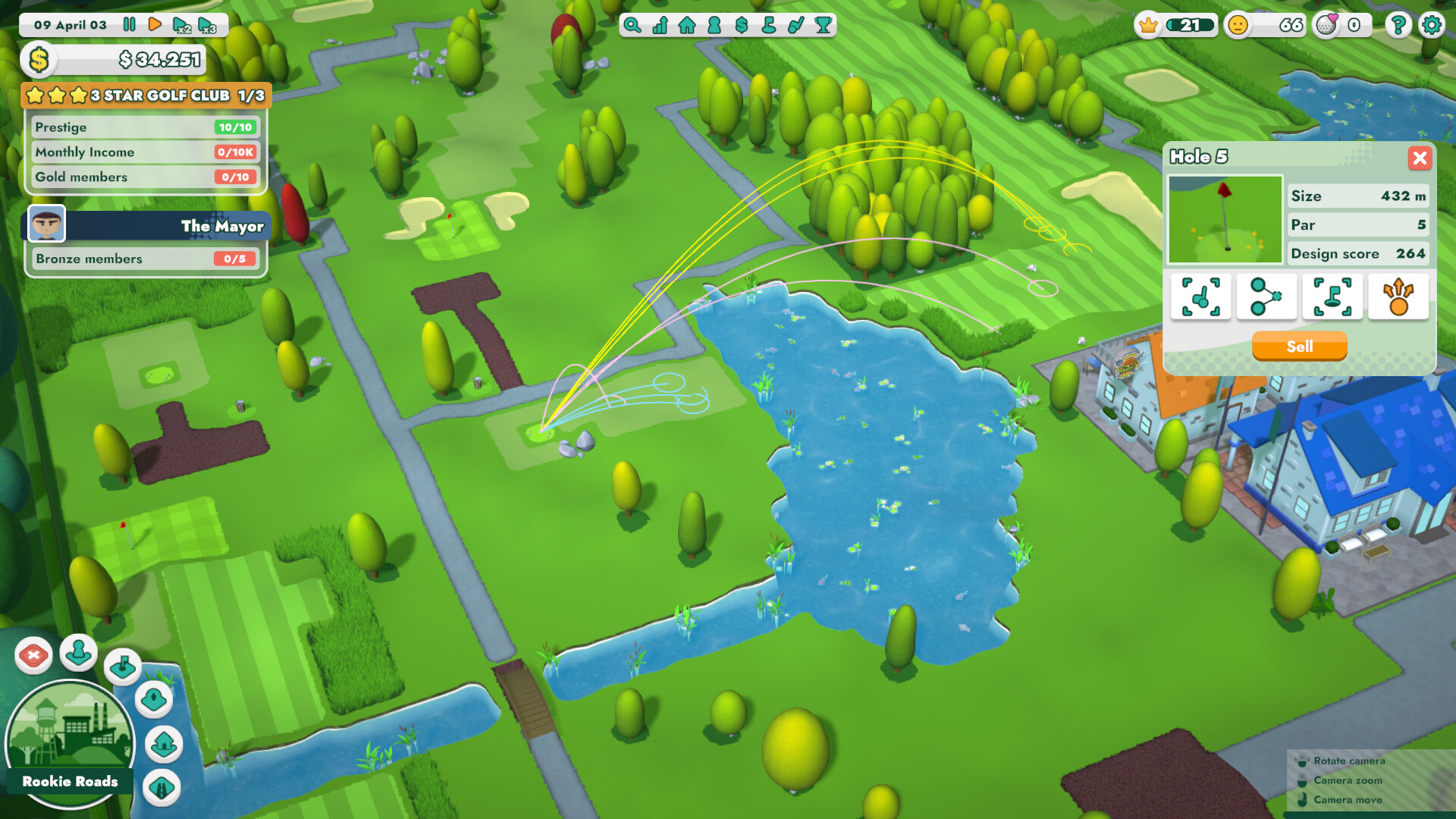
Designing each course requires the same set of decisions that will be familiar to you if you’ve played any other business simulation. The core requirement is, of course, the holes themselves, and you’ve got some simple, but effective tools to terraform, add water and sand hazards, and shape each hole to offer an interesting challenge to your players.
For the most part, though, the Under Par golfers are not a demanding bunch, and you can essentially get away with laying down 18 holes of perfectly straight fairways if you’d like. The game scores the quality of each hole according to the quality of the green, the hazards and so on, but that quality is determined by quantity, so as long as the green is big enough, and the fairway is lined with rough, you’re going to get an A+ score for the hole. Any additional shaping of fairways is purely a visual and creative touch for you to indulge your inner designer.
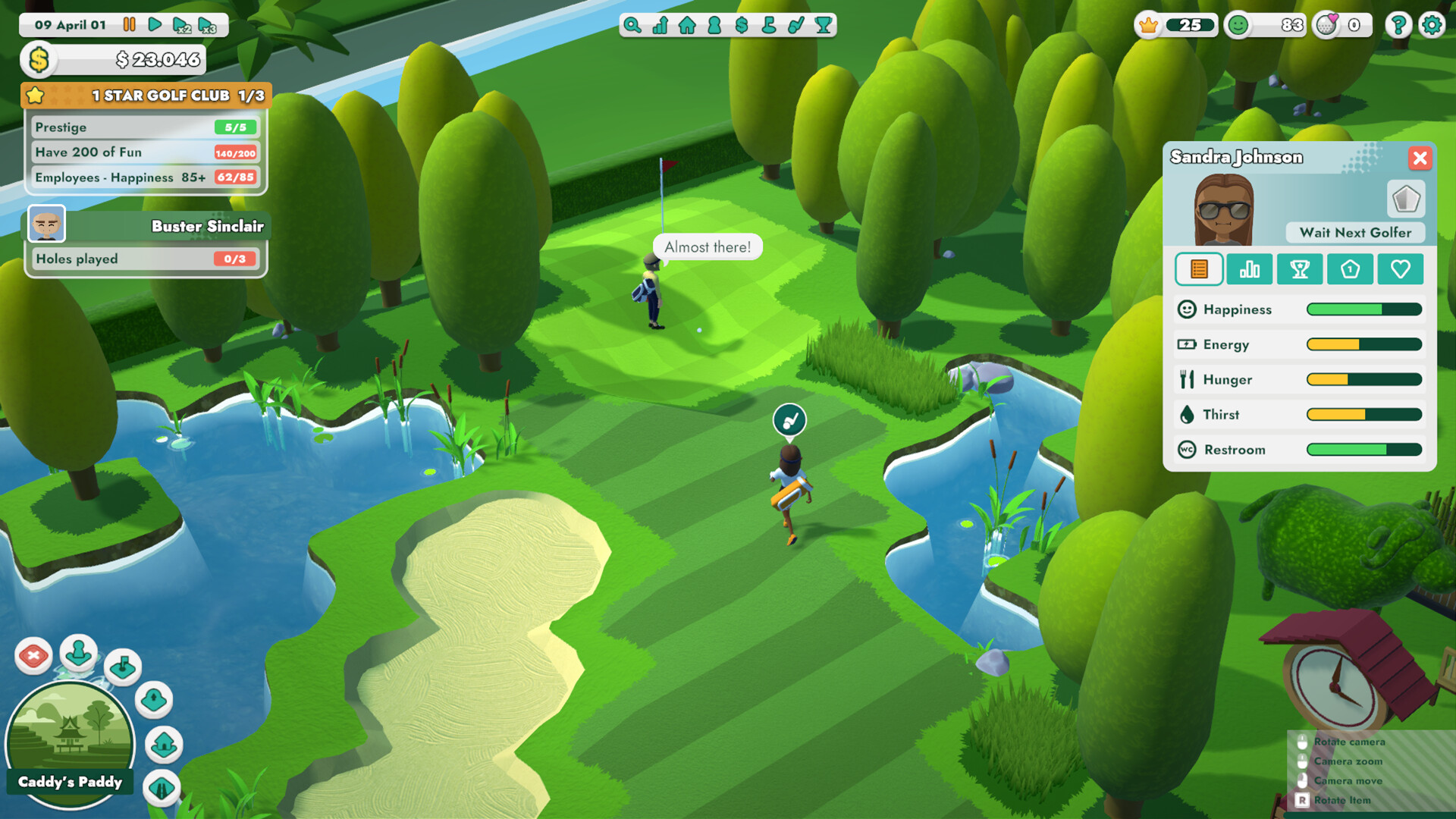
In addition to the holes, you need to make sure the needs of your players are being met with facilities, including seats, drinking fountains, toilets, restaurants and snack locations. Then you need to make sure the golf course is properly staffed with assistants, gardeners, repairers, and golf pros to train the players. All of these things add to the overall happiness of the players, which results in them taking out higher “tiers” of membership (meaning more revenue for you).
The problem is that it is almost impossible to spend more than you earn. There’s the ability to take out loans and end up owing debt, but the value of the players accelerates far more quickly than the expenses grow, and adding additional expenses (more facilities, more holes) just results in even more and happier players. I can’t imagine ever needing that loan function, and the only way I can imagine it would be possible to bankrupt the course is to hire massive numbers of staff (while not adding facilities or holes).
The other big issue is that it’s almost impossible to annoy the players, short of setting up a nice course only to then deliberately make changes that lower their “rating,” like pulling up the green or removing all the rough hazards. That’s not how simulations should work. It needs to be possible to make poor decisions, and then there are consequences for that. It shouldn’t rely on you running a rug pull scheme just to see some numbers go down.
All of this is… Fine, if the game were just honest about it all. If the developers just wanted to make a little sandbox diorama experience for players to mess around with as a boredom killer or no-stakes way to unwind, that would be a perfectly legitimate decision. But why then dress it up as a tycoon simulator?
I have this same issue with the Two Point people – if you’re going to make a simulator, make an actual simulator. The game in this genre that I’ve been coming back to for years now is Project Highrise, precisely because it both allows me to be creative and have fun with the design of the skyscrapers it tasks me to build… while being willing to absolutely ruin me if I’m not prudent with expenses or do things that upset the residents. Project Highrise is an actual game with depth, and it requires strategy. Stuff like Under Par: Golf Architect is a glorified Zen garden.
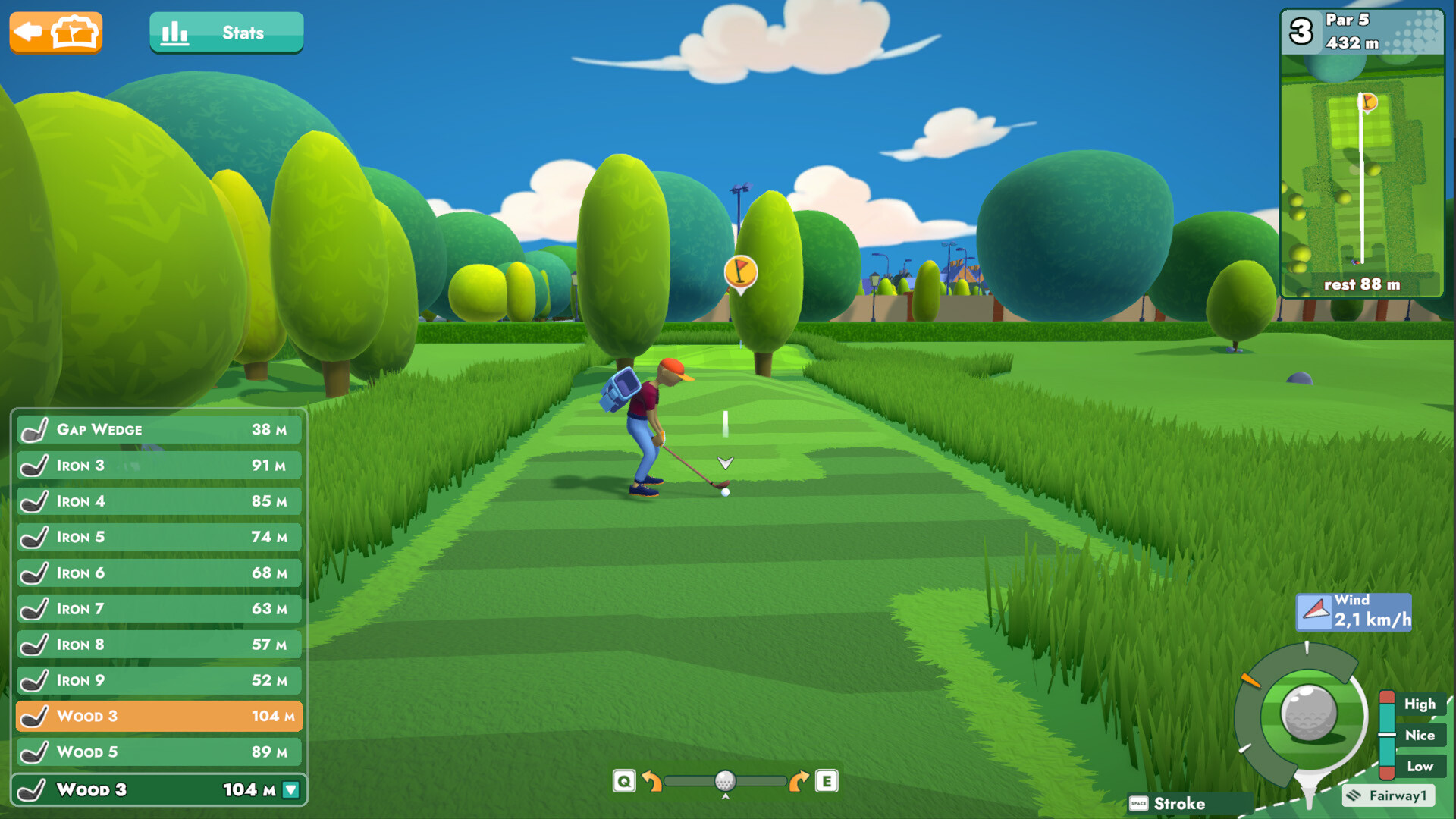
The final insult is that it is possible to play your course after you’ve created it, but the golfing mechanics are barely usable, and the physics are all kinds of broken. Putting the ball up a tiny incline is like trying to put up a mountain, for example. I wasn’t expecting Under Par: Golf Architect to play as well as something by Clap Handz, of course, but something that could hold my attention for more than one hole would have been nice.
Under Par: Golf Architect is charming and very welcoming, and that first golf course you create will be a truly fun process. After that, though, you’ll realise that Under Par has nothing else to offer and is such a disappointing missed opportunity. It’s all the more strange that the developers would do this because the same team previously created Hundred Days, a vineyard business simulation, and that one was genuinely interesting and engaging, and had proper tycoon simulation challenges built into it.