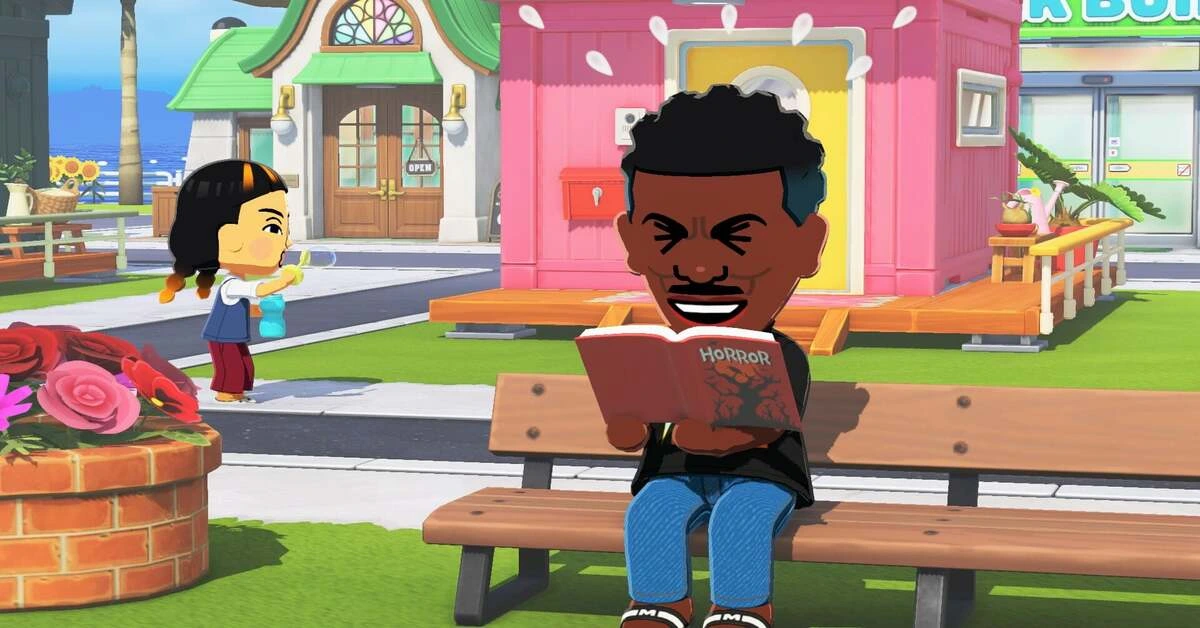


I went into Tomodachi Life: Living The Dream, having not played the original, and not really followed it. That is to say, I went in entirely unprepared for the utterly surreal experience that awaited me.
I started by making myself, as is fairly standard for “life sim” games like these. I was the first resident of a tiny island with nothing on it! Hooray! A few seconds later, I was told to make some more residents for “me” to hang out with, though, so I wasn’t going to be lonely for long.
After thinking for a few seconds, I decided that the next residents of the island would be the DigitallyDownloaded.net mascots. I’ve spent so much money getting art of Dee Dee, Amelia, Micah and the rest done, and spent so much time writing hundreds of thousands of words about them for The Last Waltz, that I figured I would take the opportunity to actually hang out with these “people” that I have become altogether too attached to.

And that’s when things started to get really surreal. Within a few days of playing, Dee Dee fell head over heels in love with “me,” and then “I” rejected her outright because “I” had a thing for Amelia, which resulted in Dee Dee sulking in her home and downing the vibe around town for days. But Amelia had a thing for Micah and started spending a lot of time hanging out with him in the new diner/dating hot spot I set up, so that sucked for “me”.
Lorin, meanwhile, shacked up with Nettie, and Nettie started running around town trying to talk to everyone about sex. Which, when I do finally release The Last Waltz, and you all get the chance to read it, you’ll realise it is… well, let’s just say that I am now ceding the writing of Nettie’s character to Tomodachi Life. I am quite genuinely looking to replace some lines in the VN with stuff that Nettie has come out with in this game.
Every day I log into this Animal Crossing-meets-Salvador Dali experience it somehow becomes more and more nuts, and, therefore, increasingly entertaining. But it’s at this point that I should probably pull back and explain what actually goes on in this game for people who haven’t played it.
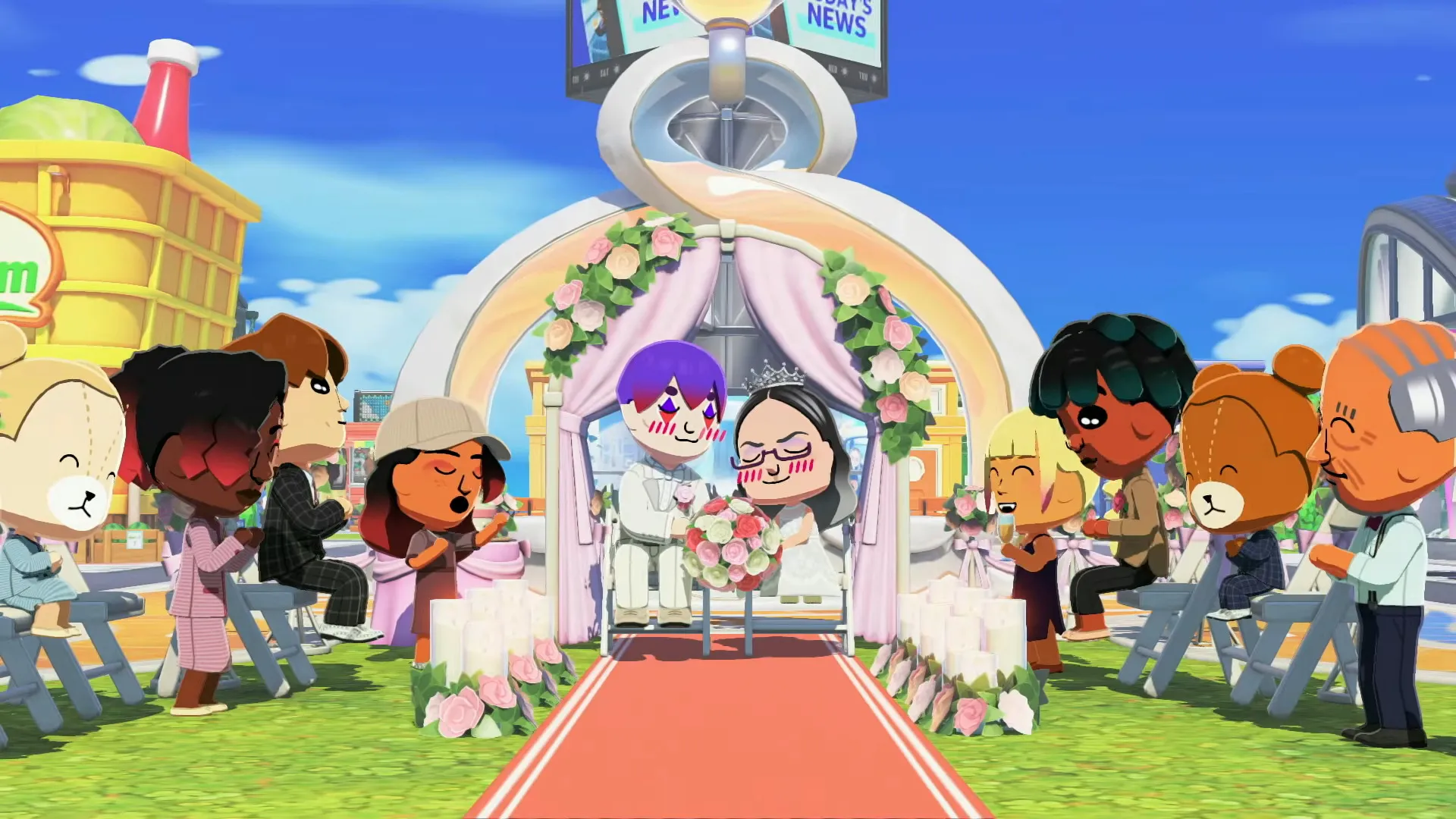
At a very basic level, it is like Animal Crossing, only you don’t directly control a single character. Instead, you sit back and largely watch all the characters go about their lives, though they will frequently try and grab your attention to ask you questions about things that they should do. For a really common example – one character might want to be friends with another… or profess their love for another. And you have to tell them what to say to break the ice and get the conversation.
So to go back to my own example: Dee Dee decided she was in love with “me” so she asked me what to talk to “me” about. I said “Ana De Armas,” which is a topic that “I” should be interested in, so imagine my surprise when “I” turned down Dee?
As the game goes on, you’re encouraged to create more and more people to bring into your town, which will grow in size and fill with facilities that let you change the décor of people’s houses, give them all kinds of clothes to wear, by food to keep them happy (or at least fed – so many romances in this town go so sour), and so on. The number of links between the characters grows, the social dynamics of the village explode in a very weird kind of complexity, and suddenly you realise that you’re in one of the most incredible emergent narrative experiences that has ever been developed.
Every time you log in, you’re going to be hit by interactions happening in every corner of town. Lorin’s going to be talking about her porn collection with some random. Elsewhere, two of your characters are going to bond over a shared passion for burritos. Because you’re free to give your characters literally any subject to talk about, it’s very easy to create some incredibly funny scenarios. Or, at least, scenarios that you find to be very funny. The fact that you’re essentially providing every keyword that powers the Tomodachi Life interactions means that they’re entirely bespoke to you and your interests. No two games will be the same, and I’m quite sure no one would want to play anyone else’s game.
Because you can’t directly control the characters, and interactions are limited to giving them gifts, telling them what to say, and playing some very basic minigames with them, mechanically, Tomodachi Life is exceedingly limited. Unlike in The Sims, you’re not carefully monitoring a half dozen stat bars and carefully guiding your characters through their jobs and the like. Unlike Pokopia, you’re not inundated with tasks that give you a seemingly endless trail of breadcrumbs to follow. Were its appeal to rely purely on the “gameplay” and giving things to do, Tomodachi Life would lose steam quickly.
But no other game lets me hang out with my website’s mascot and then get drawn into a ridiculous soap opera where somehow there are four separate love triangles all tangled up in one. No other game lets me tell my characters to have serious discussions about the best female actor of her generation. Or burritos. Or adult movie collections (actually, that’s a lie since I’m pretty sure all those are actually in my visual novel).
Tomodachi Life: Living The Dream is somehow both a satire of all these life simulator games and also the most wildly entertaining one that I actually want to keep coming back and playing. It’s truly madcap, chaotic fun, and every second of it is a delight. I wish I could share screenshots of just how silly the relationship between Dee Dee and “me” really got. Unfortunately, though perhaps wisely, Nintendo’s made it very hard to get screenshots off the Switch 2 for sharing with Tomodachi Life. Nintendo knew exactly what direction many people’s little communities of Miis were going to go. Nintendo knows us all too well.