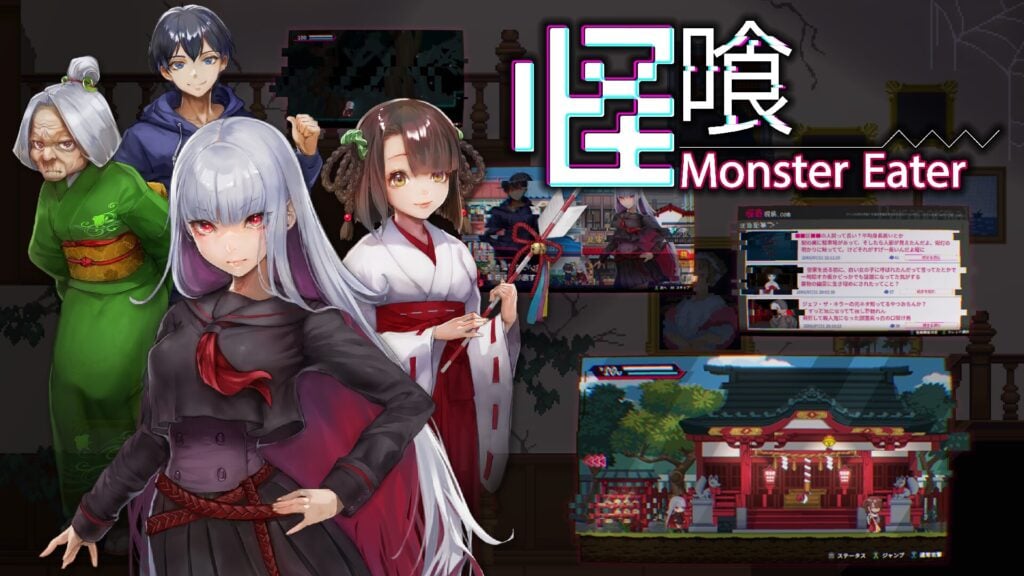


The creative team at Acquire has always had a knack for blending traditional Japanese storytelling with experimental gameplay structures and, in recent years, a particular flair for 2D art. Its upcoming title, Monster Eater, being published by Red Dunes Games, continues that tradition. At its heart is a striking idea: what if the strange fragments of online folklore that circulate on forums and message boards could become real, and then confront us as enemies?
For Akie Nakao, Project Manager in Acquire’s Production Department, the project represents both a professional challenge and a personal vision. By marrying the investigative elements of a visual novel with the action-driven mechanics of a Metroidvania, she aims to create a game that is at once approachable, strategic, and rooted in a uniquely modern mythology.
“I wanted to combine the slower, story-driven investigation of a visual novel with the excitement of action,” she explained. “You start by investigating an internet forum, and then those fragments of stories you find come to life as enemies you have to fight. It’s the combination of discovery and action that I was aiming for.”

Visual Novel and Metroidvania: An Odd Combo, Fascinating Result
Nakao is aware of how different the two genres can feel. “Visual novels are easy to get into. You don’t need gaming skill to enjoy them. Metroidvanias are the opposite—they demand technical skill, and often people just give up,” she said. “I wanted Monster Eater to be a bridge. Something friendly, an entry point, where people can enjoy the genre without getting shut out by difficulty.”
Her vision is rooted in empathy for the player. “I’ve seen so many people try a Metroidvania, find it too hard, and stop. But when you get to the fun part, it’s so satisfying. I wanted to create a game that gets people to that point.”
Meanwhile, the spark for Monster Eater’s narrative came not from games but from internet culture. “I was inspired by Japanese forums where people post short stories,” Nakao said. “Some are only a few lines long, but they capture people’s imagination. They spread, they become bigger than the original post. Something written online can become so vivid that it feels real.”
That idea is central to the game. “In Monster Eater, the posts actually become enemies. You’re fighting something that was born on the Internet. I thought it would be fun, and a little unsettling, to turn those stories into real opponents.”
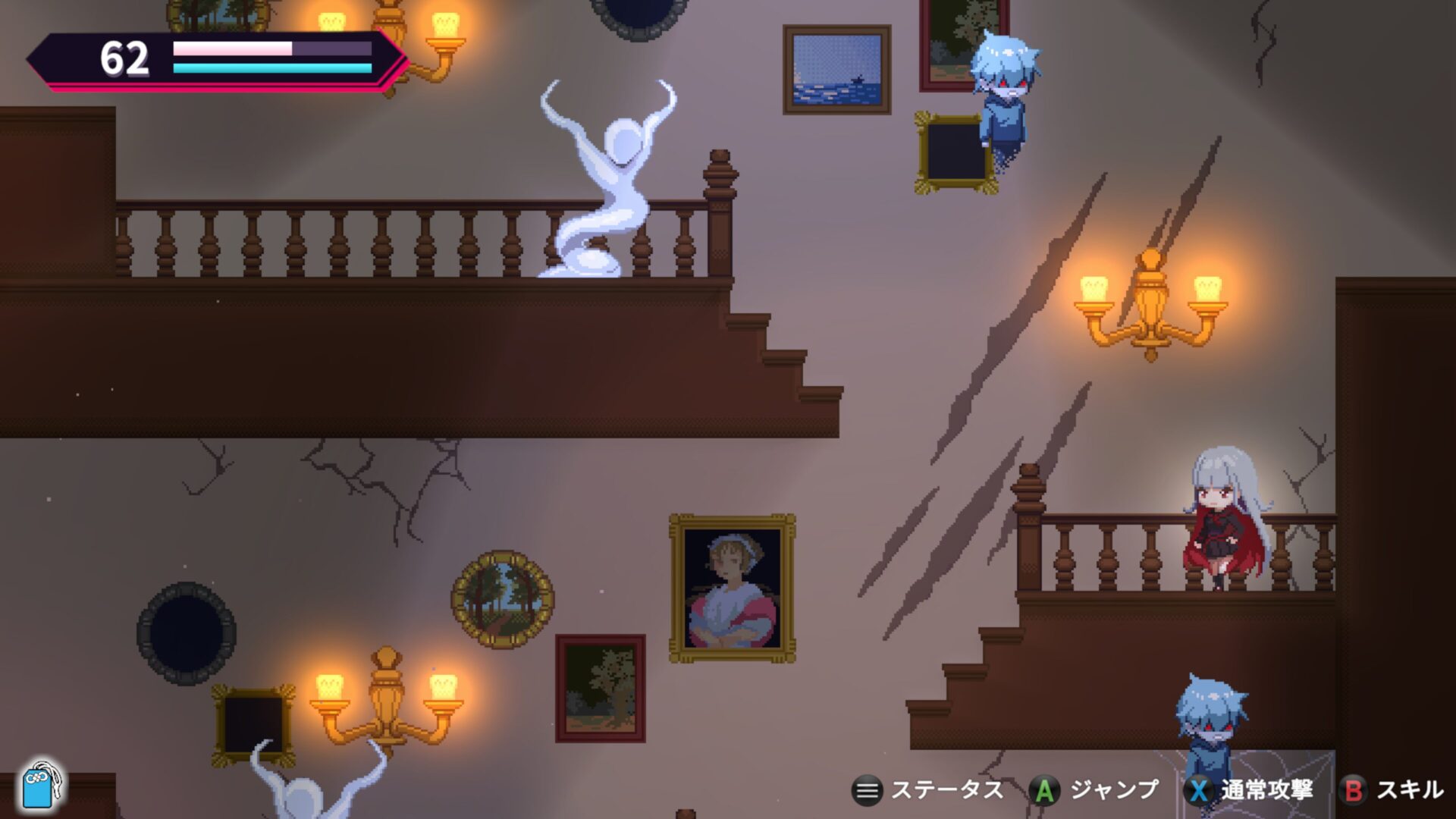
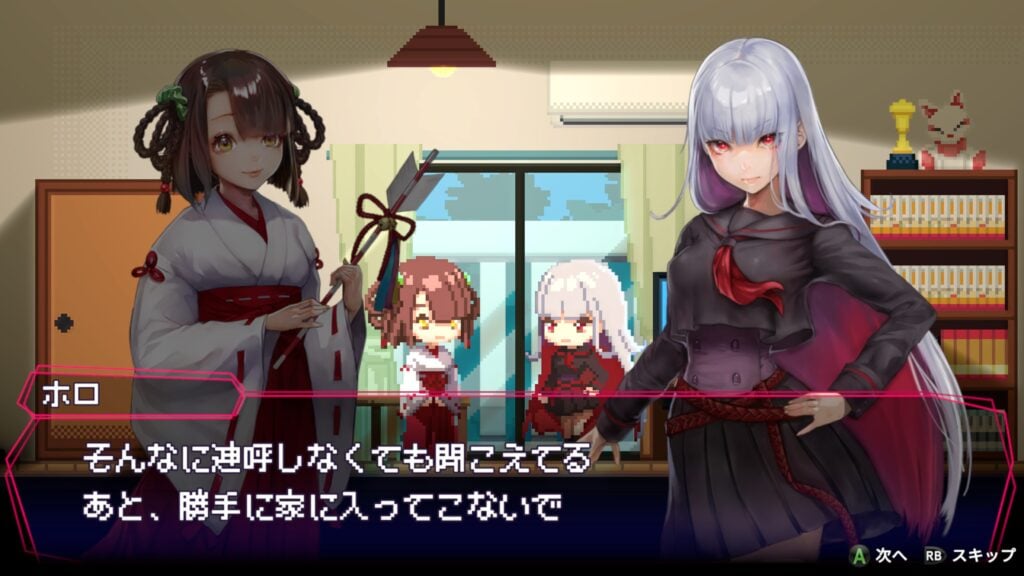
The protagonist herself is caught between states of being. “She’s not human at the beginning,” Nakao explained. “Depending on your choices, she can become human, she can stay as an anomaly, or she can live alongside people in another form. I wanted players to feel that the character’s fate is theirs to shape.”
A Unique Source of Inspiration
Nakao also sees the game as part of a wider cultural trend. “Right now in Japan, supernatural stories are everywhere, be that anime, manga, films, even on YouTube,” she said. “It felt like the perfect timing to create something that connects with that interest.”
Her long-time design ambition fit neatly with that moment. “I always wanted to make a game where you can gain the powers of your enemies,” she said. “When I combined that with the current boom in supernatural stories, it just clicked. That’s how Monster Eater was born.”
The collaboration with Red Dunes Games helped give shape to that ambition. “When I explained the idea to them, they loved it. They wanted to expand on it with me, and that gave me confidence that we could really make it work.”
For Nakao, Monster Eater also carries echoes of the games that shaped her as a player. “I’m not especially into Metroidvanias overall,” she admitted, “but Castlevania: Dawn of Sorrow really left an impression on me.”
She lit up when talking about why. “At first, the enemies felt impossible. But then, as you gained experience points and new skills, you could finally beat them. That’s what I love: The sense of growth, of strategy. You become stronger, and suddenly what once seemed impossible is achievable.”
That same rhythm of progress is what she wants players to feel in Monster Eater. “It’s not about punishing difficulty. It’s about giving you that experience of becoming stronger, of realising you can do something you couldn’t before.”
Looking Ahead
There’s no fixed release date yet, but Nakao is determined to bring the game to market while supernatural themes remain culturally resonant. “We don’t want a long development cycle,” she said. “We want to release while people are still excited about these kinds of stories.”
And ultimately, she hopes Monster Eater will broaden the audience for the genre. “Even if you’ve never played a Metroidvania before, you’ll be able to enjoy it,” she said. “I want people to have fun. I want them to feel that sense of discovery, and that satisfaction of progression. That’s what games are about.
“Basically. I thought it would be fun to take those little posts people share and make them real,” she said. “To let players fight them, beat them, and even gain their powers. That’s the heart of Monster Eater.”