

If you were to ask me what genres I think developers should take a very long break from, most days I would respond “Metroidvania” or “Roguelike.” It’s not that I have an inherent distaste for either, but did you know that overexposure to something can result in you acquiring an allergy to it? Right. Ariana and the Elder Codex is… wait for it… a Metroidvania.
But it’s one I’m willing to risk anaphylaxis for.
When I think about what sets a good Metroidvania apart, inevitably, the ones that I end up enjoying have great fluidity. No matter what I’m doing, be that exploration, platforming or combat, my little on-screen avatar has to be moving smoothly, and their jumps, slices, spells and audio grunts have to feel good and rhythmical in the hand through the controller.

Ariana does have that. It’s a very busy game that isn’t interested in having you dwell on things for too long. Instead, it throws well-worn level design and enemies at you with a good sense of pyrotechnics and relentless urgency to continue to push forward. Ariana is a nimble and powerful individual, and much of the best loot sits behind spaces that require extreme speed and precision.
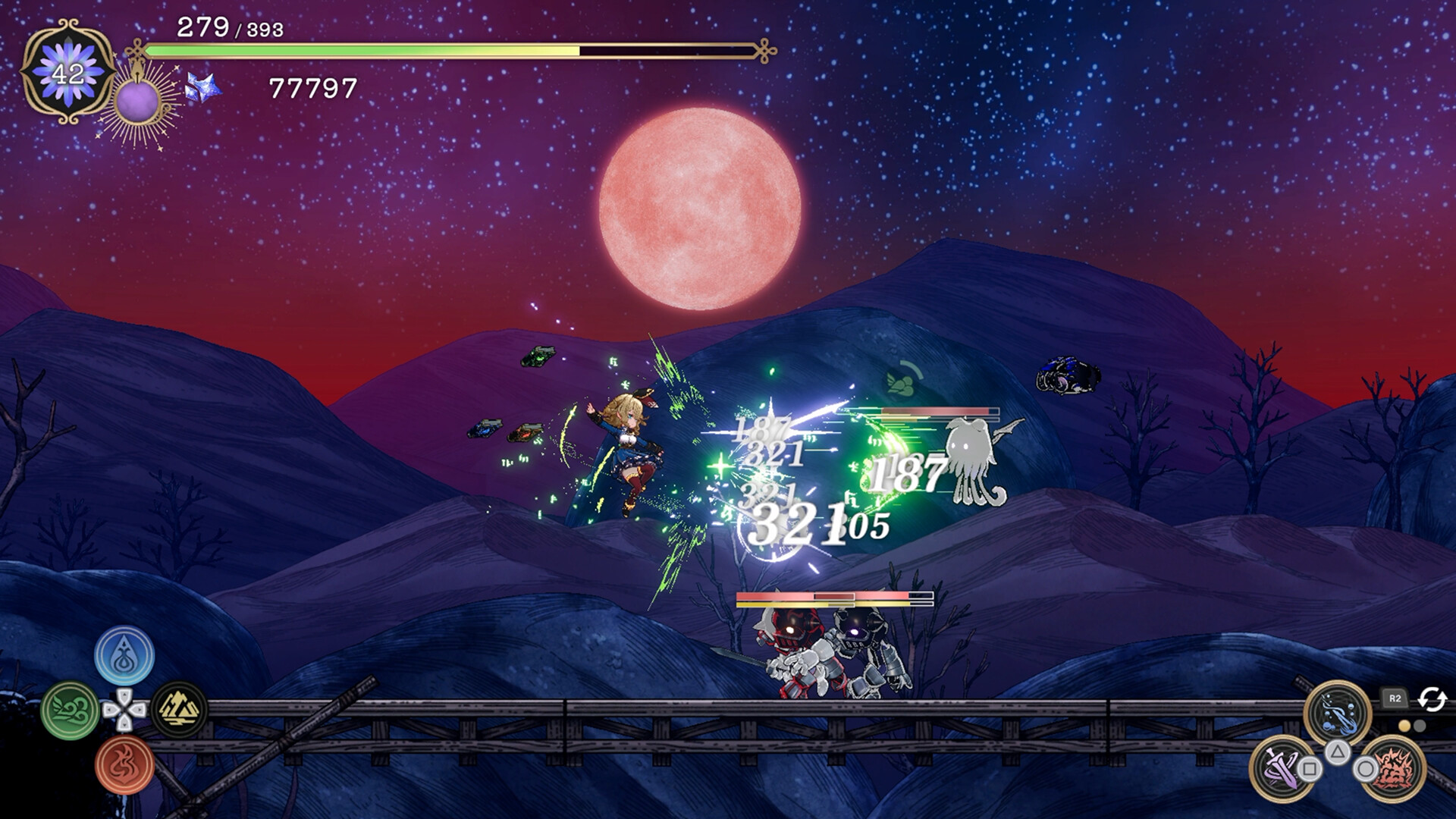
There is a fair amount to track on-screen, as Ariana can have multiple different abilities equipped at any one time, and each of these has its own cooldowns and cast times. What’s more, you can layer on elemental effects on enemies and stun them when you overload them just enough. The more interesting enemy encounters also tend to happen in specific arenas, with exits on either side of the screen blocked off until you’ve cleared the area. This allows the developers to design each area to test different platforming and movement skills while also throwing enemies at you.
With all of that being said, Ariana looks impressive with the fireworks, and at a casual glance, you might assume that it was a real skill-tester. It’s not really. Or at least I didn’t tend to find it difficult enough to become patience-testing, as long as you play it the way it’s intended. Keep mobile, keep dodging and try to avoid enemies surrounding you, and you should be able to push through the encounters without too much trouble. The game also does a good job of easing players in, and for all the numbers that end up flying around, the enemies are not that challenging. Really, the biggest skill tester ends up being able to follow everything going on, because it is possible to lose Ariana within the light show, but that’s rarely a game-over threat.
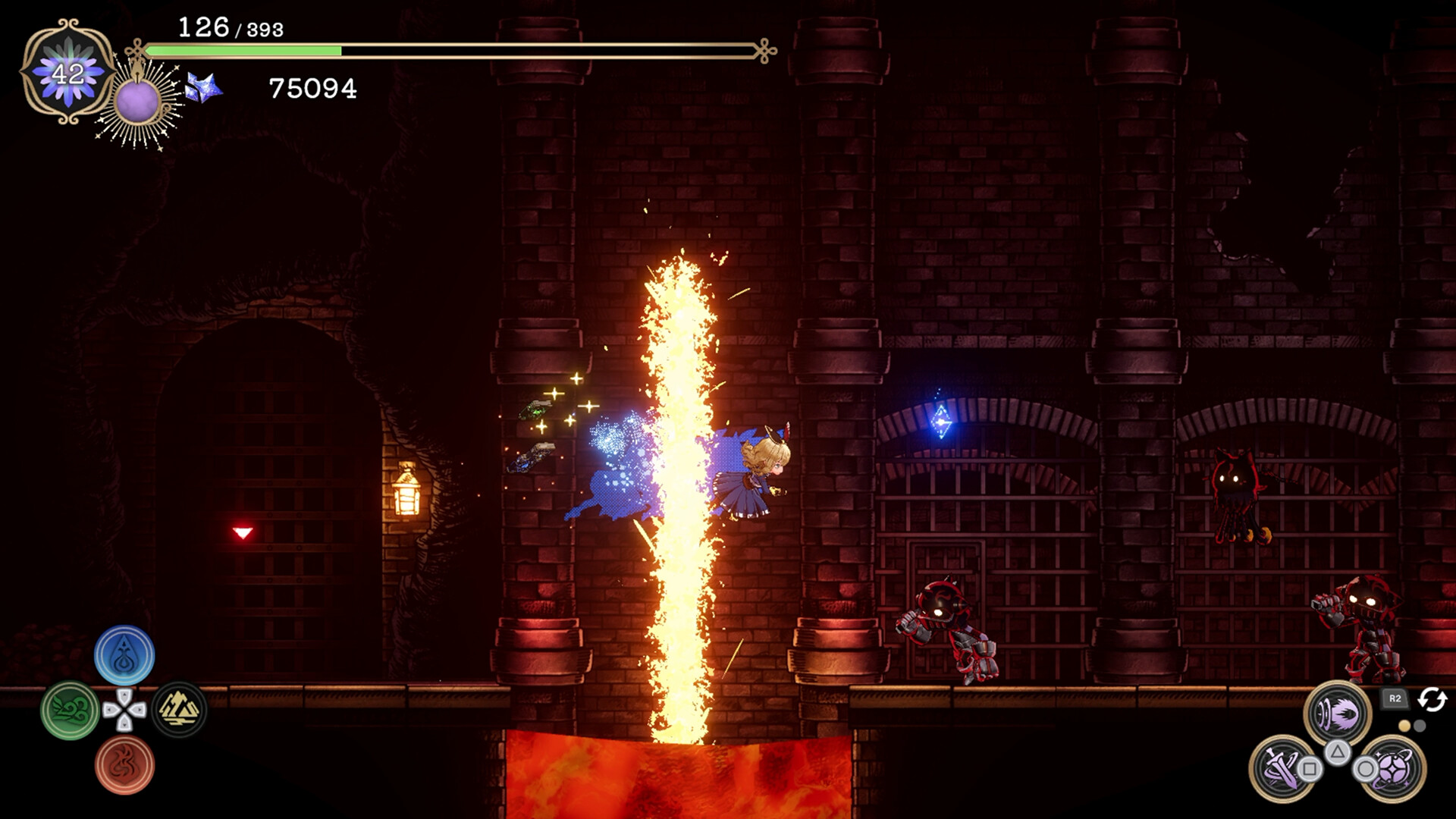
The other thing that Ariana has going for it is the aesthetic. The central theme of the narrative is that you play as a librarian who is adventuring though a world of lost magic for books that can restore the equilibrium. The early cut scene introduces these books as almost like a Lord of the Rings ring scenario, but doesn’t end up doing too much with that concept. What it does do, however, is present the world with a picture book-like texture. Rifts in the world that need to be repaired (by entering them and fighting off the enemies within) are little tears in the “paper”. The backgrounds and environments have a painterly quality, too, which is very appealing. It’s a little disappointing that more wasn’t done to make the action itself look like it belongs within a book, but then that might have become a visual overload for some players.
It’s interesting, given the theme, that not much has been done with the narrative. I certainly wanted more out of Ariana, in particular, who is a really nicely designed character. Alas, that was not to be, and what narrative is there is really just to stitch together the different worlds and give the thumbs an occasional break.
Ariana might not have the intricate level design of a Metroid. Nor does it have the precision combat systems of the many games inspired by the Souls games. And it doesn’t have the raw artistic beauty of something like Neva or Gris. But it is greater than the sum of its individual parts, and there’s a cohesive quality to the project’s vision that makes it very moreish. Every time I sat down to play, I’d tell myself I was going to just knock off a little more before doing something else, and every time I found myself playing well past what I intended.
It’s just a really nicely designed and executed game. I don’t think Ariana and the Elder Codex will be the kind of experience that sits in people’s memories for months and years after finishing it. I also don’t think that it’ll be something people are recommending and writing essays on a decade from now. It’s a bright, charming game made for easy consumption right now, and sometimes that’s all you need.