

Football Manager is in a fortunate position of having no meaningful competition. Most other sports properties have at least one contender tilting at the windmills, but for Football Manager, the biggest risk has always been that people simply get bored with it. And given that this is a series that tends to occupy hundreds, if not thousands of hours of time among fans, that risk has always been minimal.
You could argue that this has resulted in a kind of hubris where, for way too long, Football Manager’s developers seemed completely unconcerned that their game looked worse than the typical Excel spreadsheet, and the “match day highlights” had all the excitement of a croquet competition. The manager-guy from Moneyball had the right idea; pay attention to the results and statistics, but don’t put yourself through actually watching matches.
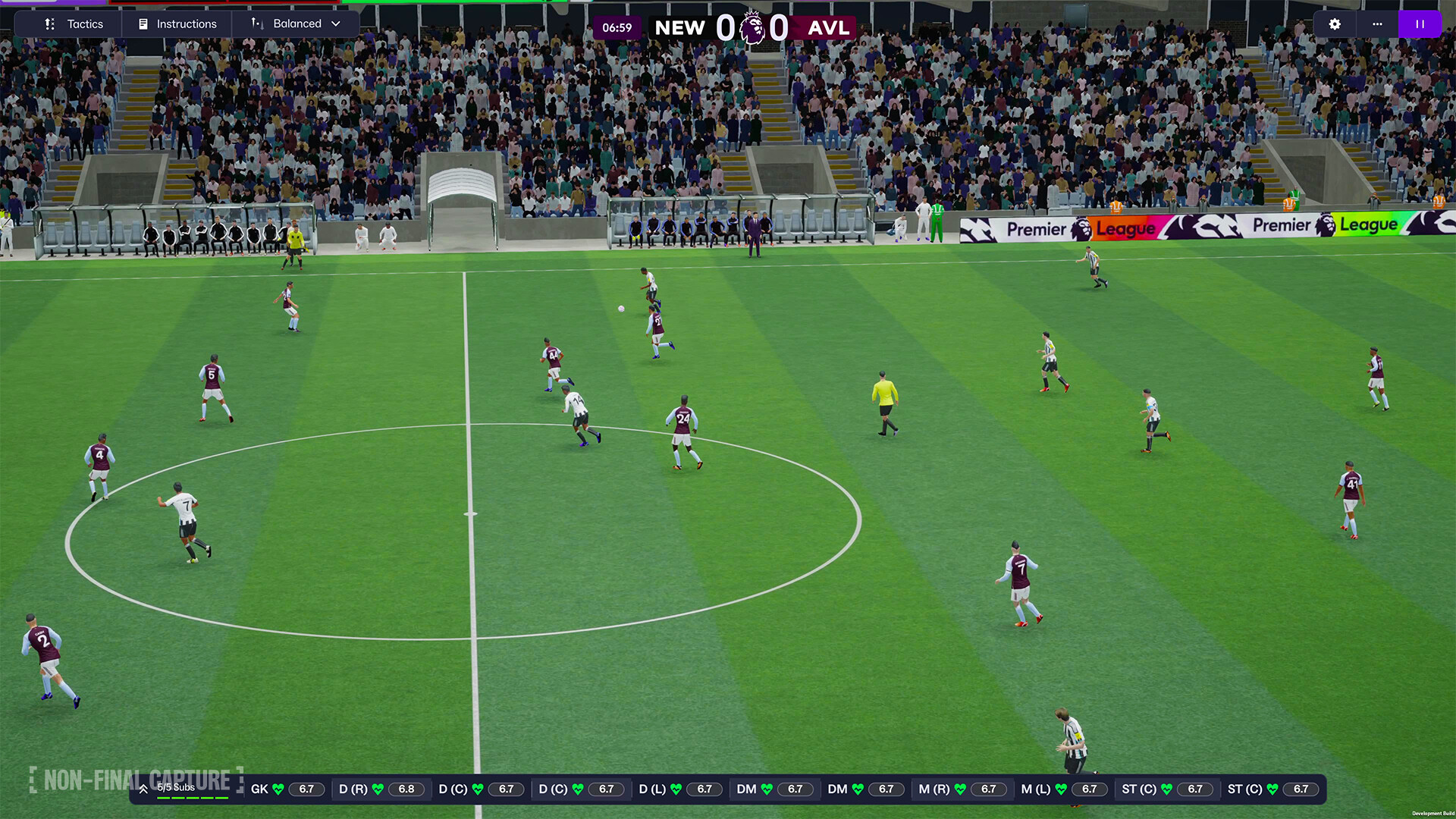
All of this is leading up to me saying that Football Manager 26 is arguably the furthest step forward the developers have ever taken. By shifting the engine from whatever bespoke one they used to Unity, they now have been able to build some atmosphere into matches. Stadia and players actually look kind of good now. Not EA Football standard, certainly, but enough of a step forward that your enthusiasm for your favourite team can extend past the abstract numbers you’re going to be manipulating.

There is also a major change to the management side of things. Every Football Manager has its own tweaks, but Football Manager 26 finally allows you to have separate sets of tactics – including formations and player positions – depending on whether you have the ball or not. This is how the real sport flows, or course, so it’s nice to finally be able to manage that rather than rely on the same formation and shifting between “aggressive or defensive” profiles as your major tool to instruct your team from the sidelines.
There’s also more of an effort to accurately reflect your own personality through the manager profile. When you set up a new game you’ll be asked a set of questions, which will affect your manager’s mentality and that will flow into how effective your leadership is in certain areas. So, for example, when I filled out my little profile I ended up being told I was heavily weighted towards defensive play… which suited me just fine because my team in the EPL is Crystal Palace (who at this time of writing are third in the EPL on goals against – that team is a wall) and also explains why I’m hopeless at managing my J-League team, Kawasaki Frontale, who are very heavily weighted towards goal scoring (or at least that’s my excuse for how I managed to lead one of Japan’s finest teams into relegation).
Speaking of leagues, the third big change is the addition of women’s football, and it’s not a trivial effort by the licensing team. There are 14 women’s leagues across 11 countries, and the developer claims to have some 40 or so researchers who are dedicated to just making sure that the women’s game’s statistics are authentic. Given that Sports Interactive has minnow male leagues like the Singapore League in there, it’s a genuinely good thing that they’ve finally acknowledged the fact that women can kick a ball around a park too.
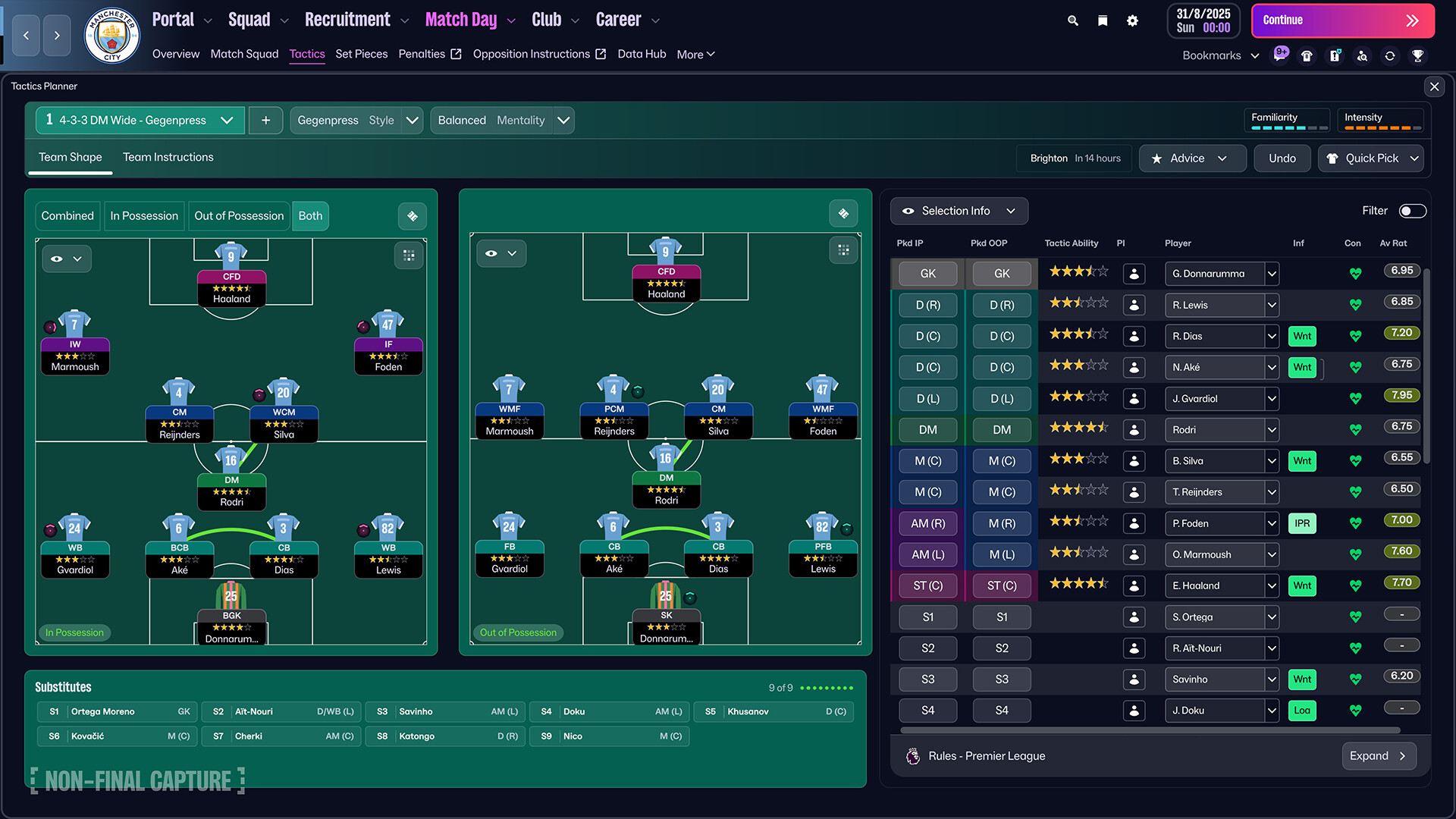
However, while there is a lot of good done with Football Manager 26, and it is a strong and clear step forward for the series, the developers have also made some truly stupid decisions. A lot of the interface has been changed around, and the only reason I can believe they’ve done this is to prove just how new and improved this game is by forcing you to re-learn how to navigate around the reams of data and spreadsheets that you need to manage. I hate to sound like one of those traditionalists who resist change, but Football Manager’s interface and UI were fine. It didn’t need changing, and it’s needlessly frustrating to re-learn how to do some real basics with your players and team.
Of course, if this is how the screens and data will be arranged in Football Manager going forward, it’s something that we’re all going to need to simply get used to. And perhaps the developers themselves realised that this year was the opportunity to just break everything and go to town on bugs and UI design elements, blaming the transition to Unity in the process. I imagine Football Manager fans are a loyal lot, and the developers have certainly earned a lot of goodwill and capital over the years. They can have one bad launch, and from next year we’ll start to see the payoff in full.
Football Manager 26 is for the diehards alone for this reason. It’s frustrating to deal with the bugs and UI changes, even if the core game remains basically the same. If you were to imagine this game without those issues, however, the new ideas and enhancements that are in the game are universally good and, whether it is just a matter of patches or waiting for Football Manager 27, there are very good reasons to get very enthusiastic about this series again.





3 out of 5 for the 7th worst reviewed game ever on steam, how much is SI paying you?
See all those funny letters above the score, that are arranged in order? Those are called “words,” and I recommend you read them. They explain the score.