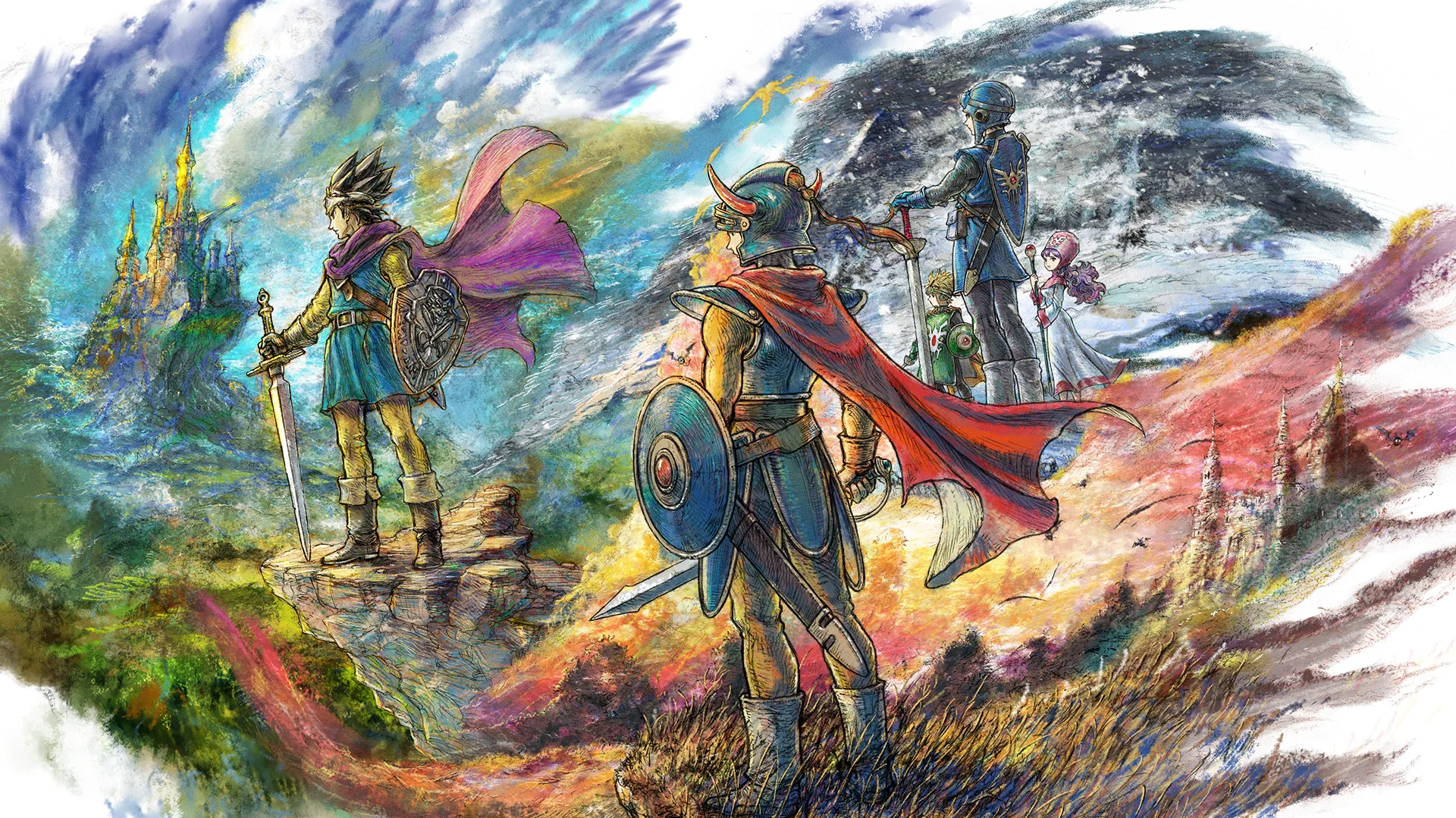


When Square Enix revealed the Dragon Quest III HD-2D Remake, there was always the sense that they weren’t going to be done with this, and so it wasn’t totally surprising when it was announced that the first two games in the legendary “Erdrick Trilogy” would get the same treatment.
Related reading: Read our review of the remakes here.
Now, Producer, Masaaki Hayasaka, confirmed that Dragon Quest I & II HD-2D Remake isn’t just a nostalgia play. He and his team actively looked for ways to bring the magic of the originals to modern audiences without losing the warmth and wonder that has made them timeless icons of the JRPG genre.
“The main objective to achieve this was to increase the volume of the games to bring them up to modern standards,” Hayasaka said.
The original Dragon Quest I and II were compact adventures. Memorable, to be sure, but brief by today’s genre benchmarks. And as anyone knows, if a game is too “brief” now, it’s just not good “value for money” to the modern audience. For Hayasaka’s team, the challenge was therefore to find ways to enrich them without altering their core DNA.
“All the original characters, towns, dungeons, and the main story remain intact,” he said. “We just wanted to add more flesh to the game overall by adding more positive elements.”
That meant expanding narrative threads, creating new opportunities for the heroes to meet people and experience side story arcs (a good example of that is the bard that the hero of Dragon Quest bumps into from time to time), and introducing new areas such as an all-new ocean zone in Dragon Quest II. These are all additive to the main quest and indeed provide a richer sense of worldbuilding and lore, without ever distracting from the main objectives in each title.

The Lone Hero Returns
In other areas, the developers insisted on retaining tradition, even if it wouldn’t fit the definition of “best practice” in 2025 terms. For instance, in Dragon Quest I, the player still embarks on a solo journey. As later titles in the series popularised party-based combat, the remake team briefly considered allowing multiple playable characters in the first adventure.
“It was an idea we discussed,” Hayasaka said. “But Yuji Horii (the series creator) said Dragon Quest I needs to be a single-person adventure. That’s its identity.”
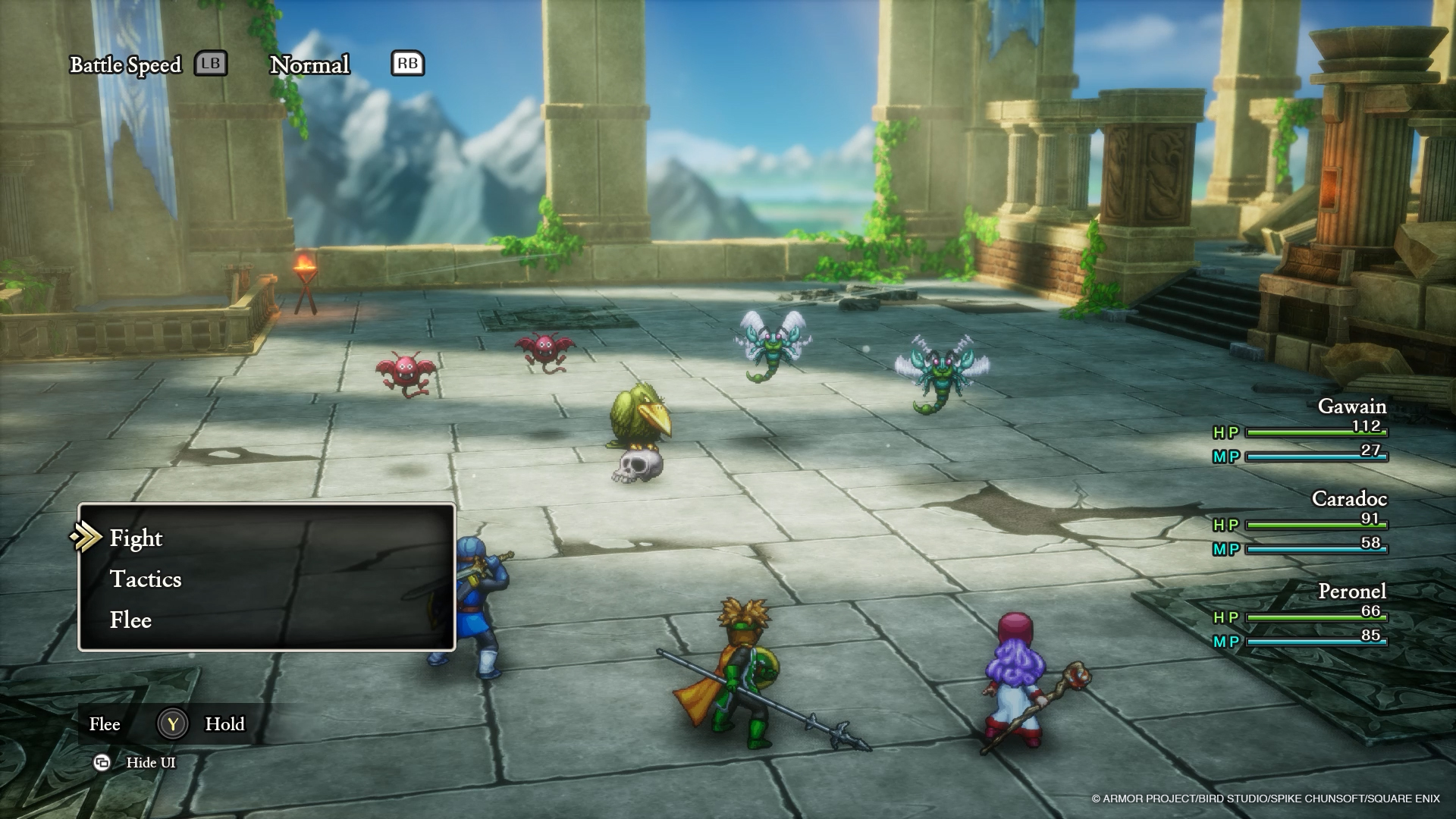
Instead, the team focused on enhancing the experience within that limitation, by introducing multi-enemy battles and new skills and spells to give players more tactical depth. “The battle system was remade from scratch,” Hayasaka said. “Having multiple enemies and more abilities meant we needed to rebalance everything.”
The Value Of HD-2D
While Dragon Quest III was originally announced as a single project, Hayasaka said the decision to present the trilogy in the HD-2D style was made early.
“The HD-2D style really makes older titles shine,” he said. “The more retro they are, the more beautiful they look in this format. Since Dragon Quest I and II are the oldest in the series, there was no option but to remake them this way.”
That approach goes beyond nostalgia. Hand-animated monster sprites, soft lighting, and parallax depth breathe new life into once-flat environments. “All the monster sprites were made by hand,” Hayasaka said. “The unique lighting and animation effects make the world feel fresh again.”
There were other benefits of utilising this engine, too. For Dragon Quest II, those animation upgrades gave the team a chance to deepen the personalities of the party members—something that wasn’t possible in the minimalist original.
“With II, every character has a unique backstory,” Hayasaka notes. “We added more dialogue and expressive animations to make them feel alive. That allowed us to make each character more charming and distinctive.”
It’s a subtle change that helps the remakes connect emotionally with players who have grown accustomed to richer storytelling in modern RPGs.
Designed for Old Fans and New Adventurers
Then I asked Hayasaka what inspired him to take on this project. As he was born in 1990, he personally had never experienced the originals at launch. That distance meant that he was well-placed to look at the games as most would, because with the series – and Dragon Quest 1 – turning 40 next year, the number of newer players to Dragon Quest dwarfs those that remember playing the original. “I wanted to remake these games for people like me,” he said, simply.
The inclusion of quality-of-life features, such as updated interfaces and clearer progression cues, reflects that vision. “It’s really aimed at people playing Dragon Quest for the first time or who don’t usually play JRPGs,” he said. “People who played the originals already know where to go, but new players need a bit more guidance.”
“We know, of course, that a remake has to appeal to fans of the original, or it doesn’t serve its purpose. But we also saw this as a perfect entry point for newcomers who are perhaps unsure of where to step into such a long-running series. With this, they can start from the beginning.”
So why start with III, then circle back to I and II? According to Hayasaka, it was Horii’s idea. “He said Dragon Quest III would be the easiest one for new players to start with, as it was that particular game that made the series a social phenomenon in Japan,” he said. “Once we began with III, we knew we had to remake the entire Erdrick trilogy.”
As for Dragon Quest IV–VI (which I personally thought would be better HD-2D bait as they are SNES JRPGs, a cohesive and clear trilogy, and more complex, “modern” games than the original trilogy), Hayasaka hasn’t ruled it out. “If these remakes sell very well, that’s definitely a possibility,” he said with a smile. “We’d be very grateful for everyone’s support.”
That being said, with the additions to Dragon Quest I and II for this remake, they’re now much closer to that SNES trilogy.
“We’ve given these worlds and characters a second chance to shine, and I hope people discover, or rediscover, why Dragon Quest began such a beloved legacy,” Hayasaka said.