


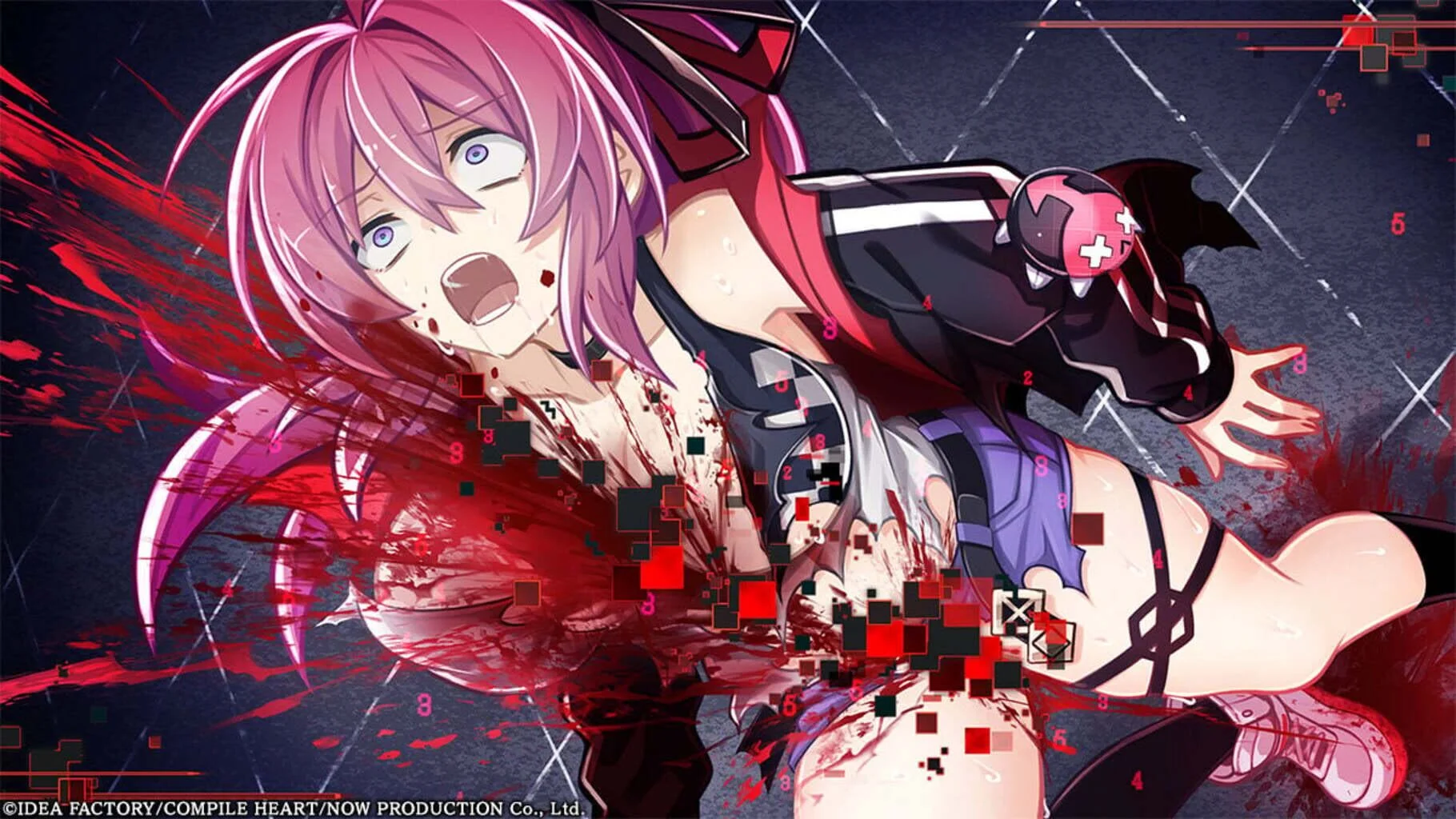
Like its predecessors, Death end re;Quest: Code Z looks like it should be a pretty standard Idea Factory JRPG. You’ve got cute anime girls, most of them with very large assets, and magical girl-style transformation screens that make full use of those assets for maximum impact. Then you have long visual novel-style sequences where these characters chatter with one another over colourful backgrounds. But then something weird happens. One character of another is exposed to some truly extreme, eye-opening violence, and suddenly, you’re playing a horror game.
We’re three entries into this truly unique blend of moe and slasher gore, and while I suppose most of the people that will pick up Death end re;Quest will know what to expect by this point, it’s still kind of impressive just how eye-opening it can be. Not least because the violence is usually accompanied by highly fanserviced imagery and definitely seems to be making a point about that. In fact, this time around, the blood spatters and other such violent imagery is typically used to obscure the more explicit sexualisation, and is very clearly a case of the creative team making a very blatant point about how the respective “nasties” are viewed by the games industry as a whole.
It’s not the only area where Code Z can be both clever and sharp in its observations. The plot is, initially, obtuse, even if you have played the two predecessors (and you do need to have played the two predecessors to understand the characters and their situation here). But ultimately, what you’ll realise is that it’s a fairly nuanced thesis on the nature of reality as we increasingly absorb ourselves in virtual worlds. Furthermore, what if we then lose control over our own creations? Where, exactly, does that leave us (and our agency)? Again, it might seem off that something that otherwise looks so blissfully fanservicey to be asking us to think of deeper themes, but then the narrative does come from the mind of Makoto Kedouin of Corpse Party fame, so it is worth actually paying attention to what’s being said and going on, and not simply cycling through to “the gameplay bits.”
I love those “gameplay bits” though. Previous Death end titles had a unique combat system that was a blend of turn-based JRPG and Crokinole. For this one, the developers have opted to go with a more traditional roguelike. Not the action roguelikes that are in vogue now, though. Oh no. This is Shiren the Wanderer or Chocobo’s Mystery Dungeon-style roguelike, and I miss when these were more common.
You’ll be running around randomly generated labyrinths, fighting with enemies that are randomly generated and picking up randomly generated items. Other roguelikes typically have a “hunger” meter that slowly ticks down and starts affecting your health if you don’t find food to eat. Code Z has a “sanity” meter that basically does the same thing, but has a darker theme befitting the horror genre that the game half plays in. If that drops too low, the protagonist starts doing damage to herself, so it’s the same punishment as the more traditional hunger system. It’s just now accompanied by creepy imagery.
What’s interesting is that you’ll actually need to lose health and have your character die to the various enemies you’ll encounter along the way. All roguelikes have a “grind” and loop that will require multiple replays. Code Z actually gives you skill points to use upon death, meaning that the next replay will be slightly easier time of it. We’ve seen JRPGs with far deeper skill trees than this one, but it’s functional for what the developers wanted to deliver, and the gameplay loops they wanted players to get themselves into.
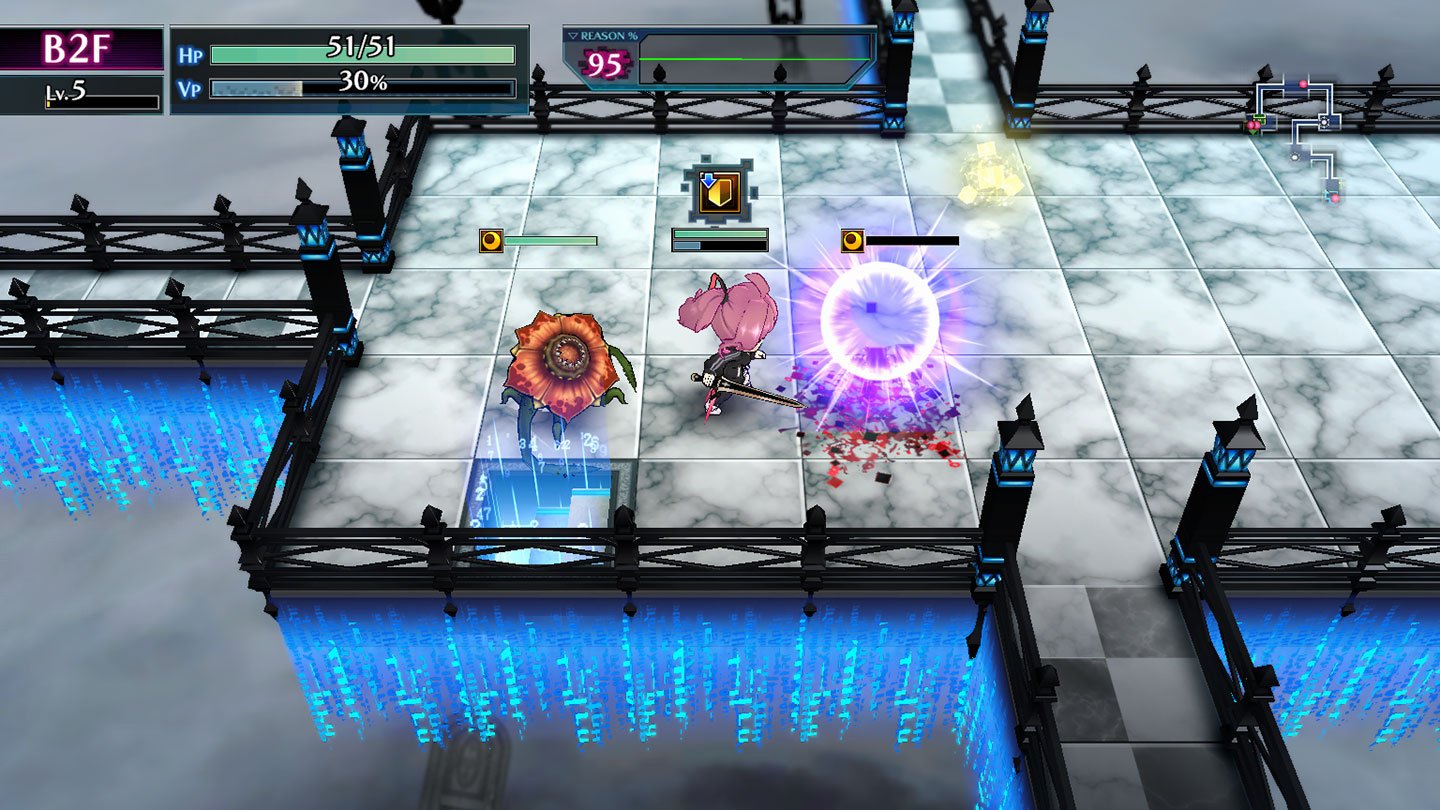
Putting aside the hook that you need to actively go and seek out death, Code Z plays like a very traditional, classical roguelike. There isn’t even an equipment system, though you do get delivered new weapons as part of story beats. The stuff you pick up in dungeons is limited to curative items or stat manipulation items, which does limit character customisation a little. And, frankly, I miss taking a chance and equipping an item only to find that it’s cursed, and now you’re actually weaker. At least Code Z does have the traps that other roguelikes have, and they can be heinous.
Death end re;Quest: Code Z ends up being something of an archetypical JRPG for Idea Factory in one way, while the opposite of what we expect in the other. It’s far sharper and smarter than the over-the-top fan service suggests it will be. That’s the archetypical half. Meanwhile, the JRPG mechanics are competent and enjoyable, but very standard with little experimentation. That’s categorically not what we expect from Idea Factory. It’s usually a company that experiments with combat systems to its detriment. That being said, I’m not disappointed by this at all. We haven’t had a proper “Chocobo Dungeon” style roguelike in a long time. This scratches the itch and then, thanks to the exquisite horror art and theme, leaves a bloody scar behind.





Wow. They sure dialled up the gore factor on this one, huh?! The previous two certainly had violent moments, but there was a lot of “implied violence” rather than things getting explicitly bloody on screen — a lot of stuff done with voice acting and black/red screens, much like Corpse Party, as it happens. Interesting to see this one being much more in-your-face with the violence, but it’s in keeping with the overall premise.
Looking forward to exploring this one when the physical versions go out in June. I love the first two games, and while it’s a shame to see the back of pinballing enemies around the arena and switching “genres” for special attacks, you’re right — it is nice to see a game like this again.
Thanks for clarifying that I need to play the two predecessors, I’ll play the other previous ones while I wait for the sale.