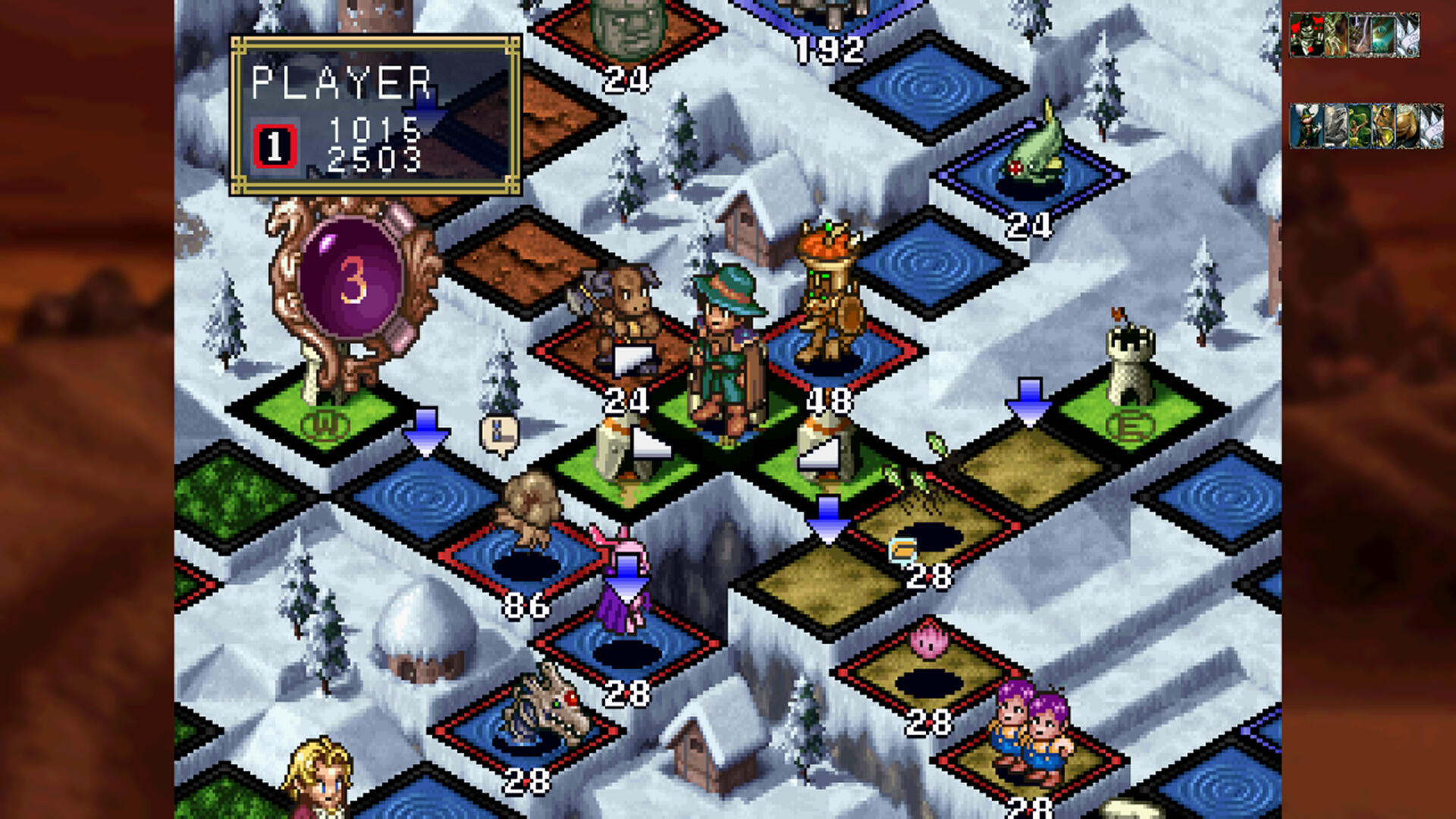


Brigandine is one of those cult franchises that you don’t really expect to be on any development radar, but every so often someone dusts it off because there is a tiny core out there and there’s not much else really scratching the itch. The original Brigandine was a PlayStation 1 release, and then in 2020 there was the excellent Brigandine: The Legend of Runersia, which combined some truly gorgeous art with a clever combination of strategy and tactical gameplay. Now we have Brigandine Abyss, which clearly aims to be a more accessible entry point, and largely succeeds.
To be clear, while I’m largely warm on the decisions that the developers made to make Brigandine Abyss a “my first Brigandine” experience, it does come at the expense of some of the depth that the aforementioned core audience loves about the mini-series.
There are fewer territories to capture in the world, and then, in the game’s main story mode, chunks of those will be blocked off from you until you hit certain story moments. I understand these decisions in the sense that the other Brigandine games can seem overwhelming in scope at first, and this way you’re able to ease yourself into it, but the flip side of that is that there’s less strategy to do.

Hero characters are less customisable. Again, it makes sense given how many of them there are and how in previous Brigandine games you would end up spending a crazy amount of time managing them. This way you’re thrown into the action more quickly. It does mean there’s less variety and tactical options available to you, however. In previous Brigandine games, you could capture enemy monsters. You can’t do that in this one.
And so on and so forth. Basically, Brigandine Abyss looks like a Brigandine title. The combat area is split up into hexes, and your leaders control a small cohort of monsters. The flow of combat is also much the same. If you eliminate the enemy leader, all their units disappear, which is tactically valuable for obvious reasons, but the flipside to that is your characters don’t get the experience from defeating the enemy’s common troops, and that can cost you down the track as the enemy starts having a level advantage. This was all true of previous Brigandine games too, but with 10-15% of the depth shaved out in favour of more streamlined play.
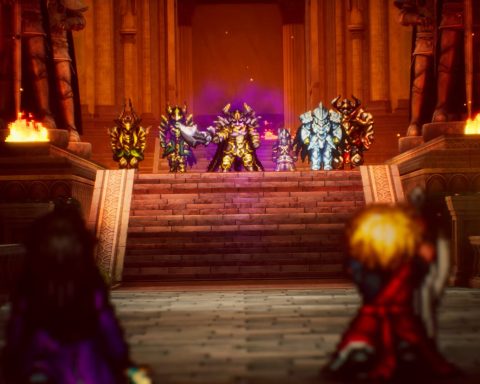
Consequently, Brigandine Abyss starts resembling a Fire Emblem or Tactics Ogre/Final Fantasy Tactics, with an additional strategic layer on top. That seems to be a deliberate effort by the developers because the cutscenes and general storytelling have more than a few shades of vintage Fire Emblem (in particular) in it. This too seems to be a deliberate effort to broaden the reach of the franchise, since Legend of Runersia was a particularly beautiful but aesthetically distinct example of art direction, while Abyss is a more traditionally anime project.

I love Fire Emblem and Tactics Ogre, so these changes upset me less than I know they’ve upset the more committed fan niche. And I appreciated how easy playing Brigandine Abyss is. It’s not the fastest-paced game on the planet because tactical battles take place on very large maps with a lot of moments (and turns) before swords start to be crossed, and there’s a lot of empire management in the strategy layer before you get to those battles, but this is the kind of game you can play while also watching a film, or unwind with before bed without needing to think too hard about what you’re doing. It can still be challenging on the higher difficulty levels, but it’s not going to require a Master’s degree and undivided focus to play.
With that being said, I don’t think Brigandine Abyss has quite the storytelling chops of a Fire Emblem, or the charm of a Final Fantasy Tactics either. I certainly wasn’t invested in any of the characters the way I’ve never been able to forget Lyn (or am currently hooked on the new Fire Emblem princess, Leda). The plots themselves are also a little too safe and standard for their own good. The first one I played saw a king’s knight turn bad, stage a coup and murder the king, and the king’s daughter then swears revenge while throwing her lot in with a mercenary group that saved her… I was left wondering just how many more Fire Emblem cliches I was in for, and the game didn’t “disappoint” from there (or with the other story arcs).
Meanwhile, while I enjoyed the ownership of building a stable of a variety of monsters to bring them into combat, the 3D models in combat are actually fairly generic and there’s a lack of fireworks in their attack animations.

There is plenty to play through with Brigandine. There are six storylines in the main narrative, and then there is the Mission mode, where you can control any of the 24 factions from the story – both major and minor factions – and there you’re given a major objective to accomplish within 99 turns. If you were to play all that, you’d be looking at well over 150 hours, but of course no one (including the developers themselves) would be expecting you to do that. I would think most people will consider themselves done with this game after one or two story arcs and then completing a couple of missions for their favourite minor factions. A heavy sense of repetition is going to set in around the 50-hour mark, and from there it’s just a matter of how much of a grind you’re up for.
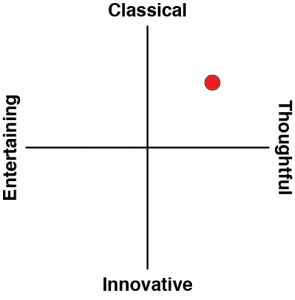
Brigandine Abyss lost some of the series identity in exchange for its efforts to try and find a broader audience. I don’t know if it will quite get there in the end. It’s easy to play and perfectly competent across both strategy and tactics, but there are so many other games out there that do that, and unlike the essential Brigandine: The Legend of Runersia, Abyss doesn’t have its own hook. With that being said, unless you are specifically comparing it to the earlier Brigandine games, the depth of characters, monsters and strategic options in Abyss is genuinely compelling so who knows- perhaps this will find a new audience after all.