

You know how the saying goes: When it rains, it pours. Somehow, after decades of Culdcept barely being acknowledged outside of Japan, we’ve now had two releases in as many months. Culdcept Begins has become an instant favourite among my online board game group, displacing even the mighty Wingspan some nights (that’s the game we’ve spent more than 2,000 hours playing). Now there’s Culdcept The First Saturn Tribute. Will it do the same?
Probably not, though that’s only because there’s Culdcept Begins, and Begins has benefited from decades of work on Culdcept. The First is a direct port of the SEGA Saturn release. The most immediate ramification of this is that Culdcept The First features over 300 cards to collect and build a deck out of. Begins, meanwhile, has more than 400 cards. As anyone who has ever played Magic: The Gathering (or any other TCG) will tell you, more options in a game like this matter.
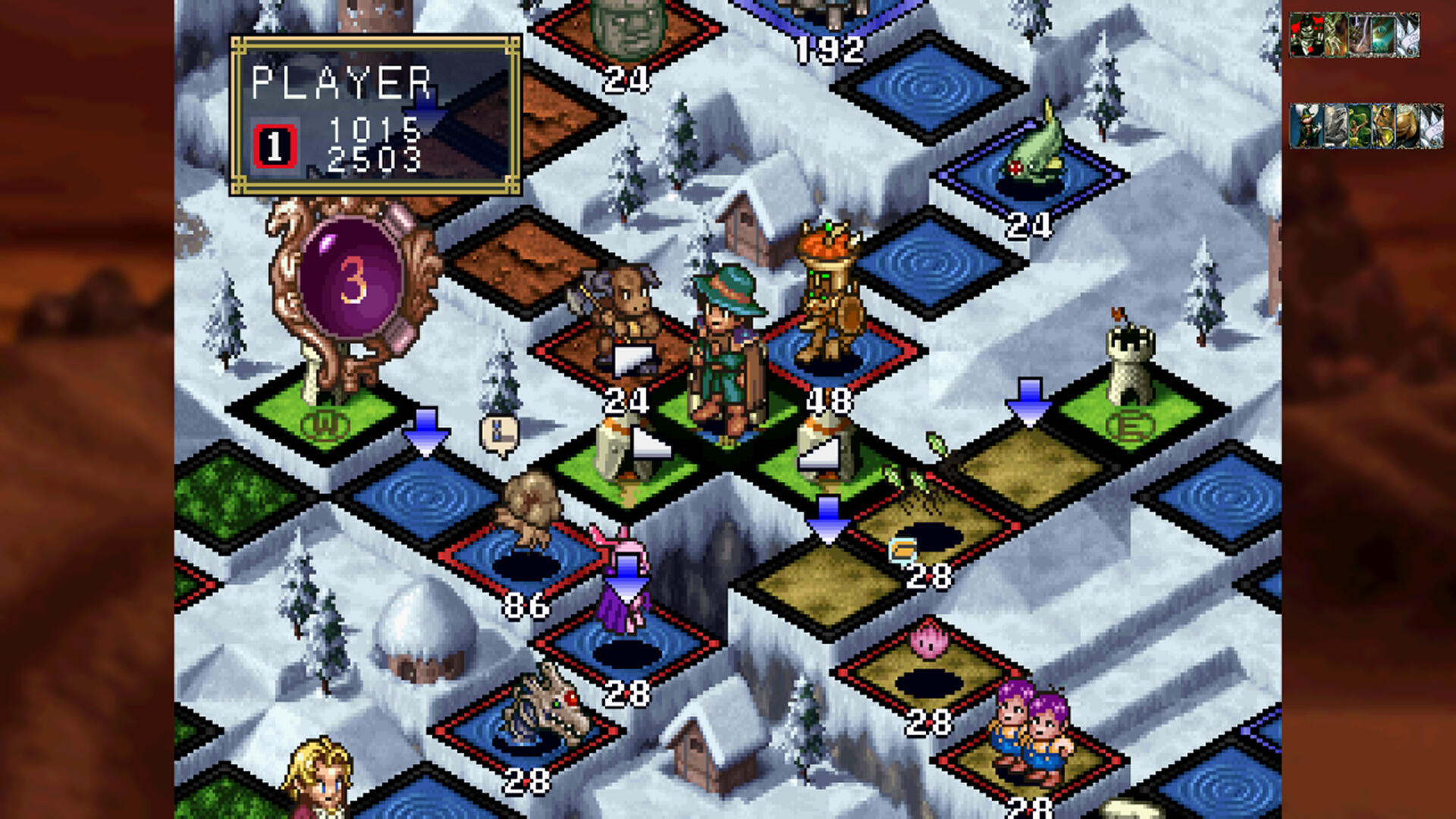
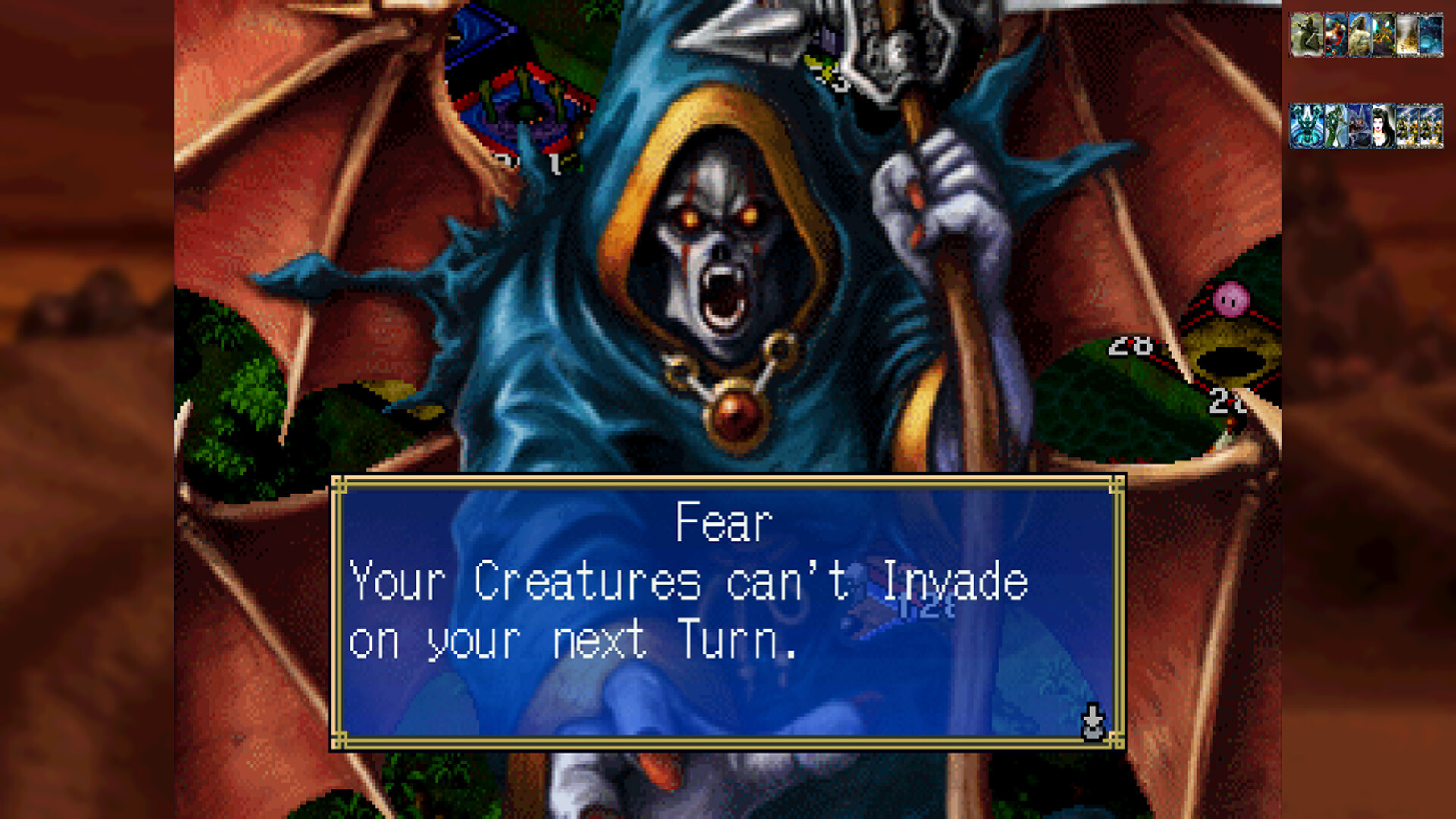
The art, meanwhile, has changed wildly from the Saturn original to what we see in Begins. Which is superior is a matter of personal preference, and of course The First does look like any other retro game in terms of detail, pixelation and the 4:3 aspect ratio, while Begins looks like a modern title. I actually prefer a lot of the designs in The First, as there’s a darker fantasy edge to them, though I also recognise that there’s a greater coherence and consistency in the art of Begins.

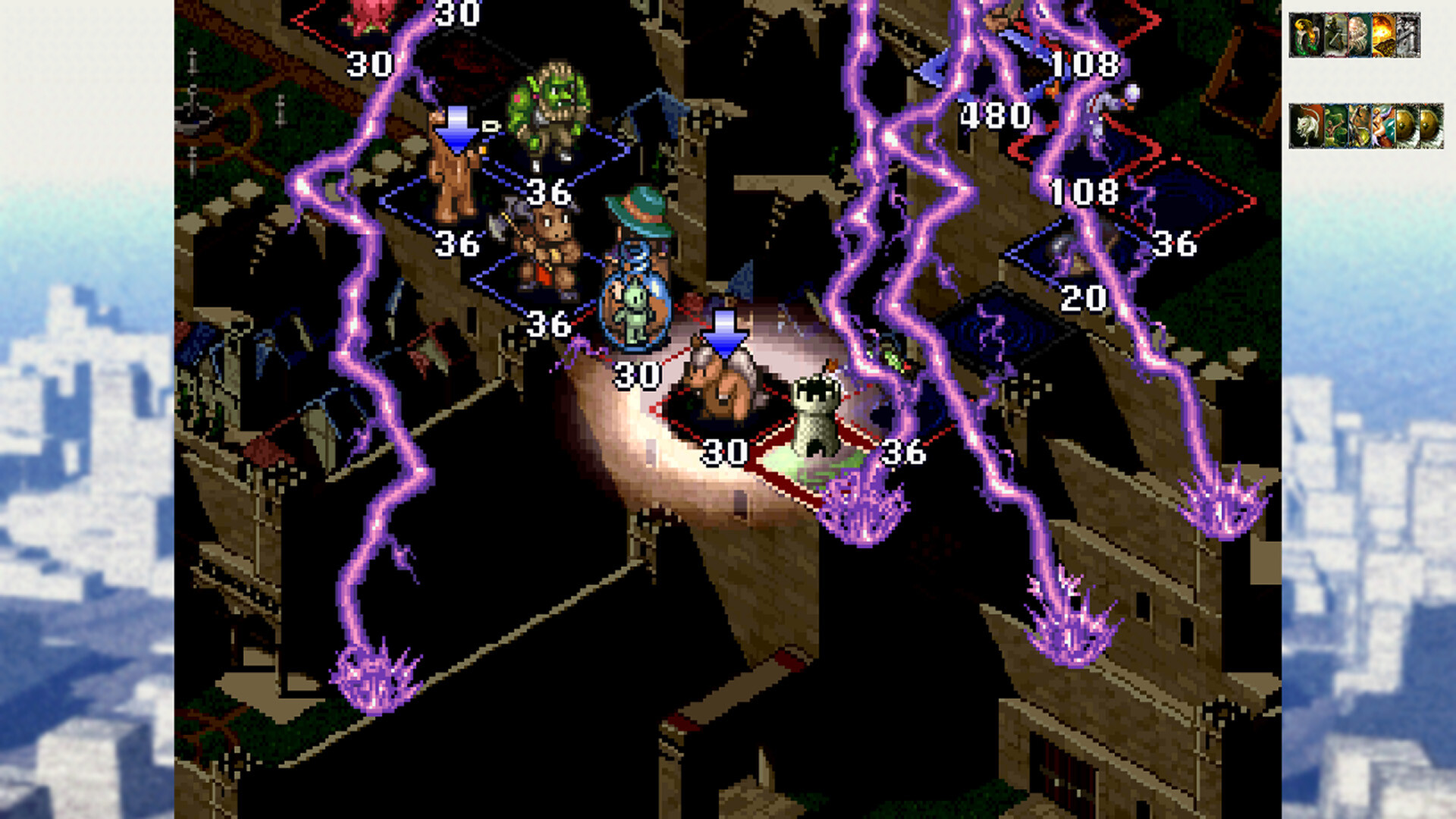
Additionally, and this is something that goes beyond mere aesthetic appeal, Culdcept’s board does get very busy towards the second half of any given game, and with the way it is designed in The First, it can become very messy and hard to get at the necessary information. For those who haven’t played, this happens because basically every square on a board can have a monster played onto it. When that happens, a number appears underneath. This number can change as the game goes on, and is critical because, like Monopoly, it represents how much you “pay” if you land on that space and it’s not one of your monsters on it. When an area ends up with a big pile of monsters in it, I found it more difficult to read which monster was owned by which player and how valuable that space is.
It’s a subtle difference, but it’s one of those UI quirks that makes you really appreciate that developers simply do these things better now.
On the flip side, The First’s narrative is so much briefer than Begins ’, and this is a massive improvement on Begins’. As much as I love Begins I found myself scrolling through the text and not paying attention to a line of the dialogue, and there was altogether too much of that in the end. The First’s storytelling is pleasantly retro in scope and really just enough to introduce the (quirky) character that you’re about to do board game battle with. For Magic: The Monopoly Gathering, that’s really all you need.
Otherwise, the Culdcept formula has been very resilient over the years, and developers have clearly approached the series with a “if it ain’t broke, don’t fix it” attitude. In Culdcept, you run around a board, summoning monsters to empty spaces. Those monsters then act as though you “own” a property like in Monopoly, and you’ll extract a toll every time an opponent lands on that space.
There is one catch: Your monsters can be fought, and you can fight your opponent’s monsters. If you don’t want to pay the toll, you can try to summon your monster to the square, which results in a duel between the two. You can then power up your monster with equipment or magic, and your opponent can do the same. If your monster ends up killing the enemy, then not only do you dodge the toll, but you actually take over the space. If you lose, however, you have to pay the toll, and will likely be one monster card down.
The game does, generally, favour the defender, but that makes the occasional Hail Mary win all the more satisfying. Other than that, your objective is to complete laps of the board because, with each lap, you earn additional resources to deploy in summoning monsters and levelling up spaces (so the toll increases). Unlike Culdcept Begins, you don’t get additional resources for passing certain gates that are dropped around a map, so you do need to be somewhat more conservative with resourcing, and the game is slightly slower-paced as a result.
It is also slightly easier to be trapped in a situation where you’re surrounded by extremely expensive spaces, and the next influx of cash (via the board lap) is a long way away. I have definitely had more games where the opponent has lost via total bankruptcy than I have in Begins. This is, of course, hilarious when it happens… until it happens to you. However, this is also offset by the boards being a little smaller, so it’s less annoying when you roll a sequence of low dice rolls – you don’t feel like the game is actively brutalising you by forcing you to turtle your way around while other players are lapping you.
I realise that this review is highly comparative to another title, but then that’s really a consequence of the game releasing so close to its predecessor (or, technically, successor). You can always read my review of Culdcept Begins because it describes an almost identical game to play as Culdcept The First. The differences are in the aesthetics and some of the finer points around design and UI.
As a direct comparison, it’s hard to recommend Culdcept The First Saturn Tribute over Begins, but then that’s like saying it’s hard to recommend the GBA Fire Emblem over the new one releasing soon. I mean, sure, technically, the new game is bigger and benefits from decades of game development experience. But if you like the new Fire Emblem enough, you’re also going to enjoy the older ones, and for that reason I’d suggest that if you do play Culdcept Begins and enjoy it then your next purchase really should be Culdcept The First Saturn Tribute.