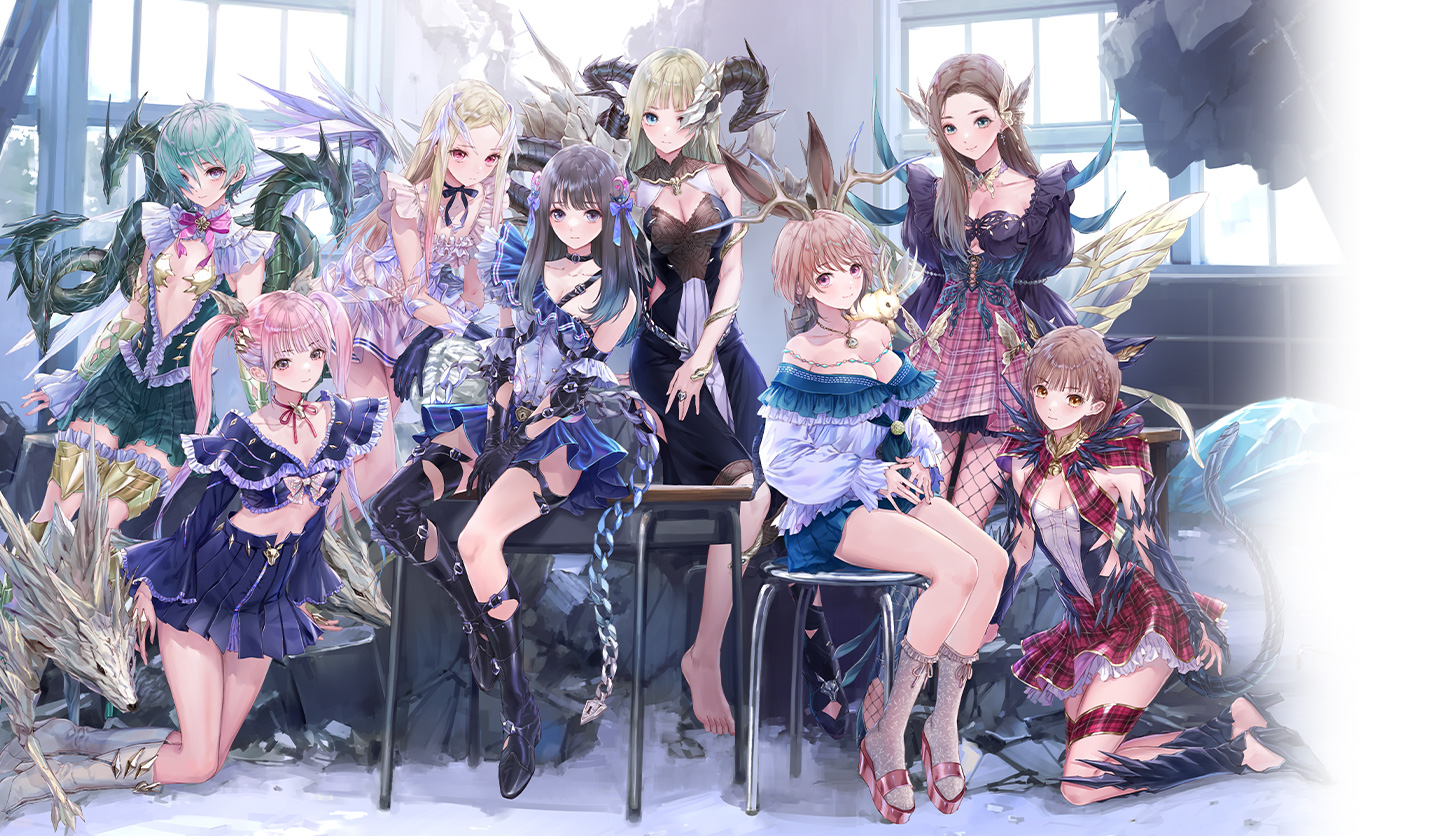


Blue Reflection has been a difficult series for Koei Tecmo to manage thanks to its enormously niche premise. Four products in, it’s also difficult to suggest that bad missteps were not made along the way. The original Blue Reflection got itself released and then un-released in parts of the world like Australia for being too much for an R-18+ rating despite really not being that kind of game. Then there was an anime that fans needed to watch before playing the sequel. You might have thought that the games industry would learn from Square Enix’s Kingdom Hearts series that demanding too much back knowledge from players was just asking for trouble, but apparently not.
And then there was Blue Reflection Sun, arguably the biggest misfire of all. Blue Reflection Sun added a male character to the series for the first time and… we’ll get to that, but it really upset fans of a male-free and overtly queer series of girls bonding. Now, in an effort to consolidate the series to date, and perhaps salvage the overall franchise so it can have a future, Koei Tecmo and Gust have brought the four titles together into Blue Reflection Quartet, while also making several adjustments to effectively set the canon and baseline for whatever might come next.
If you’ve never played Blue Reflection before, then what’s important to know is that across the series these are truly beautiful games. The original really was a vehicle for renowned character artist, Mel Kishida, to explore some of his personal creative ideas, and the game that was built around his vision was ethereally, artfully beautiful. Blue Reflection never had the budget behind it of a Final Fantasy or Persona, so the level of technical detail in the characters and environments is not quite the same, but that is also irrelevant because the art direction is impeccable.

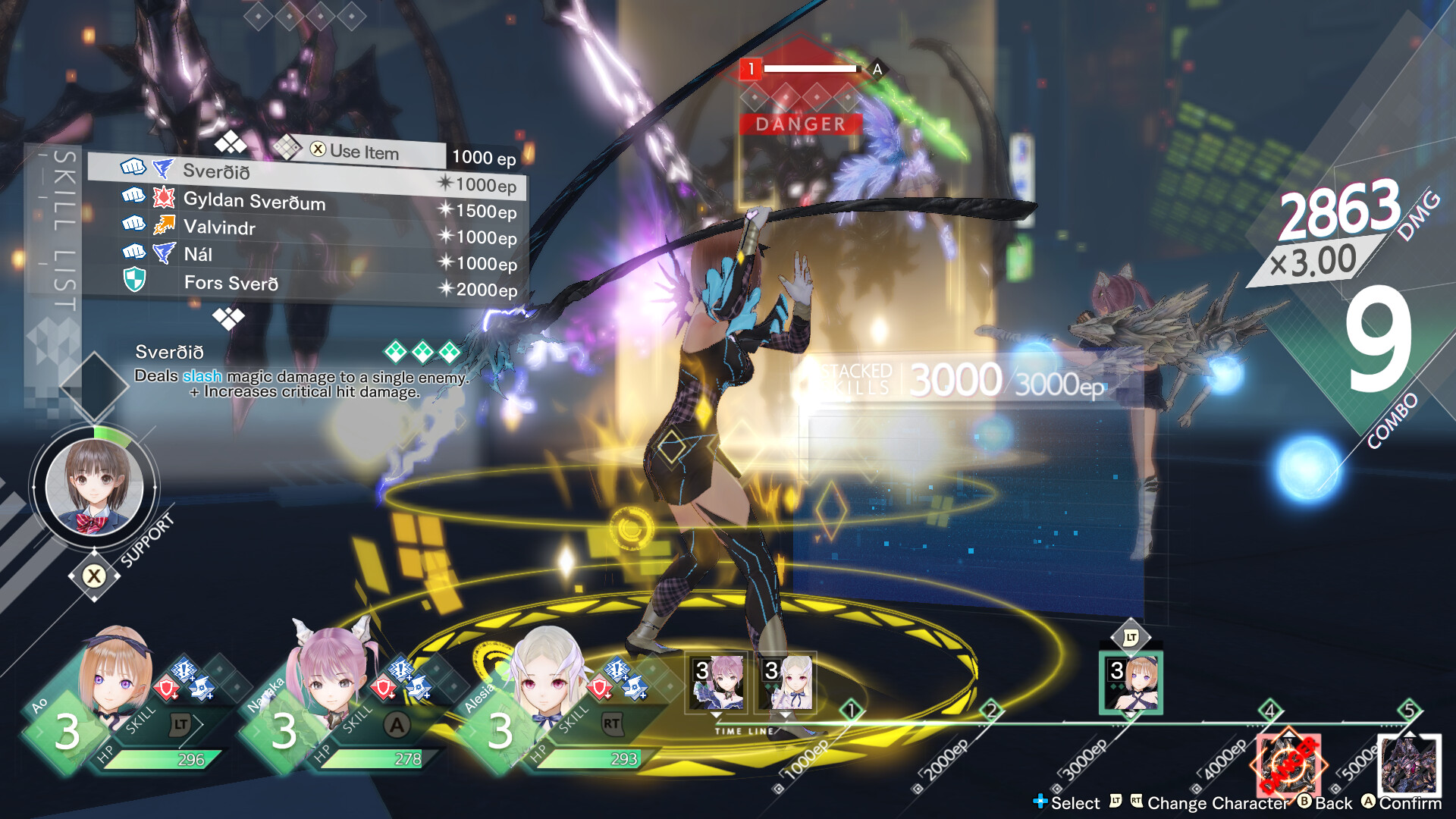
Each title follows the story of a group of magical girls as they go on adventures together, form bonds with one another, and defeat enemies through fairly standard turn-based combat. With the two “main” entries, anyone who has played previous Gust games (the Atelier series) or Persona will feel quite at home. Innovation clearly wasn’t the goal with the gameplay systems, but the combat is what you’d expect from highly experienced, confident JRPG developers, who were aiming to get you to focus on the art and stories as much as possible. In that regard, to quickly summarise the plot of the two “main” titles in the series, from DDNet’s previous reviews of both:
Blue Reflection: At the centre of Blue Reflection is Hinako Shirai, a freshman at Hoshinomiya Girls High School. Ballet is Hinako’s one passion in life, but a recent knee injury means she’ll never be able to dance again. Understandably, that’s ruined her life—”Without my ballet, I’m as good as dead”, she says early in the game—and she’s pretty much lost the will to live. On her first day at school she’s depressed and lethargic, a stark contrast to the lively, cheerful girls around her.
Then a strange incident sees her transported to a dreamlike fantasy world. Mysterious voices tell her to channel her wishes into a power, and by doing so she transforms into a sword-wielding, tutu-wearing magical girl. Most importantly, in this world her knee is in perfect shape, and she can dance. She can fight, too, which comes in handy when she gets attacked by strange demons.
Back in the real world, she soon meets the source of those mysterious voices: two of her classmates, twins by the name of Yuzu and Lime. As it turns out, the world is under threat from otherworldly demons called Sephirot, and the twins are “Reflectors”, magic-wielding heroes tasked with fending the Sephirot off. For reasons held close to their chests, they took an instant liking to Hinako and decided to make her a Reflector as well. For Hinako’s part, being a Reflector comes with not just the chance to dance freely in the dream world, but the promise of a wish once all the Sephirot are defeated. It’s the sliver of hope that she so desperately needs.
In order to defeat the Sephirot, Hinako, Yuzu, and Lime need to collect Fragments, which are intense feelings turned to crystal in that other dimension. The Common, as this plane is known, is a manifestation of the collective unconscious, and it allows Reflectors to explore and interact directly with people’s emotions. In the real world, emotions running high causes people to go “rampant”, shrouding them in a coloured aura and opening a path to the relevant zone of the Common. In the Common, the girls search for these Fragments, which offer a glimpse into the cause of the outburst and allow Hinako to find a way to calm the person in question in down. This stabilises the fragment, turning it into a gem that can be equipped to provide various combat benefits.
Blue Reflection Second Light: At its core, Second Light is the same as its predecessor: it is an often bittersweet and wholesome coming of age story for its large ensemble cast. This time around, though, it happens within the context of what can only be termed an “ethereal mystery”. See, each of the girls finds herself trapped in an otherwise deserted school that seems to exist on a different plane of existence to reality, surrounded by water, and she awakens in this world completely without her memories. By delving into special dungeons, she can remember key events and lessons that she learned in life, gain her memories back and (often) summon another girl that is important to her into the world. That girl is without her own memories, so the process starts anew. Meanwhile, as this happens, cracks appear in the sky, an “AI” application that they’re all forced to subscribe to claims to be a helper, but only deepens the mystery, and during idle moments the girls wonder about how they ended up on this island/school prison. Theories range from this space being a period of “waking up” after a long period of cryogenesis, or that they’re all dead and this is some kind of heaven.
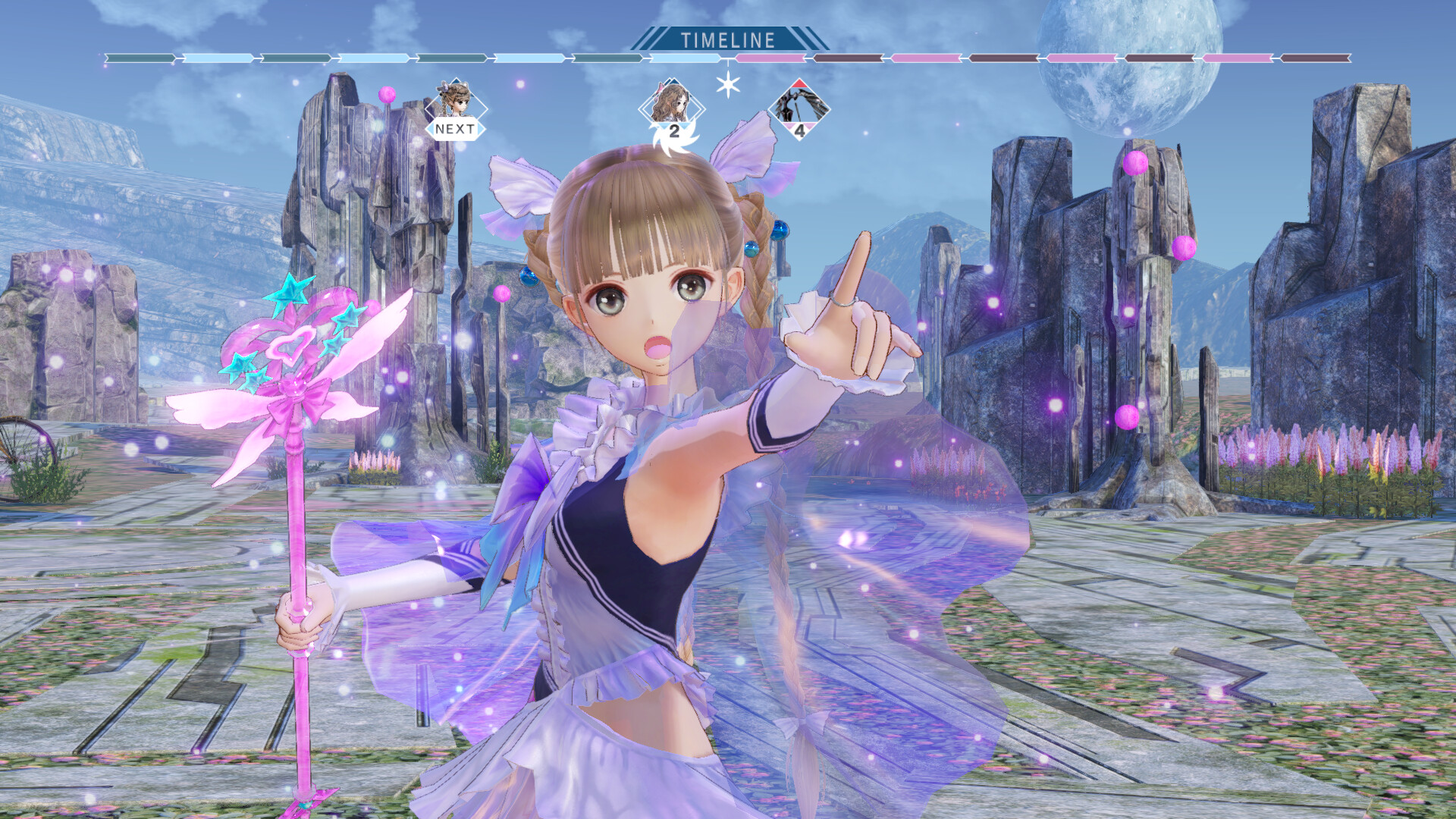
Naturally I’m not going to tell you the answers here, but the overarching narrative moves at a good pace while keeping the revelations going. It’s also not the real focus of Blue Reflection: Second Light’s storytelling. Rather, the deepening relationships between the girls it’s what the story wants you to really focus on. Much like in a Persona game, the main protagonist, Ao, can take girls on dates, and by deepening the relationship with them, she can power up the team for the dungeon delves. That’s the mechanical value of doing so. The narrative value is far more simple: these are a great bunch of girls and you’re going to want them all to hook up. Just so they can be happy.
To be clear: Second Light is very yuri and makes no pretence otherwise. It’s overt even in comparison to Blue Reflection (which itself was really not trying to hide it). While there are no sex scenes, the flirting and depth of soul-bearing during the deep-and-meaningfuls between the girls make it clear that this magical girls story is less Sailor Moon than it is what if Sailor Moon gave Tuxedo Mask the flick and hooked up with Sailor Jupiter instead? (yes, please!). What I did love about Second Light is that it really came across as being sweet and wholesome about it all. It was less a blunt and forced statement from a character to the effect of “I’m gay and now we kiss” as we’ve seen in certain big Hollywood films in recent years, as it is simply a matter of these girls naturally developing deeper relationships with one another and, yep, eventually they start holding hands and talking tenderly to one another.
The other two titles are essentially bridging and supporting these narratives. Combined, you’re looking at around 100 hours of solid magical girl warmth and good vibes in this collection, and while I wouldn’t necessarily call any of it subtle, it is almost relentlessly wholesome. From the moment that Hinako first dives into one of her classmates psyches to rescue her from distress (it makes sense when you sit down for it) in the first game, to the long walks that the girls take in the second, hand in hand, discussing their feelings and helping one another talk through their anxieties, the Blue Reflection series almost never drops its focus on solidarity between girls, and it’s so heartfelt and sweet that, even having played these games a dozen times by now, I can’t help but be invested in them as both characters and symbols for various coming of age realisations and experiences.
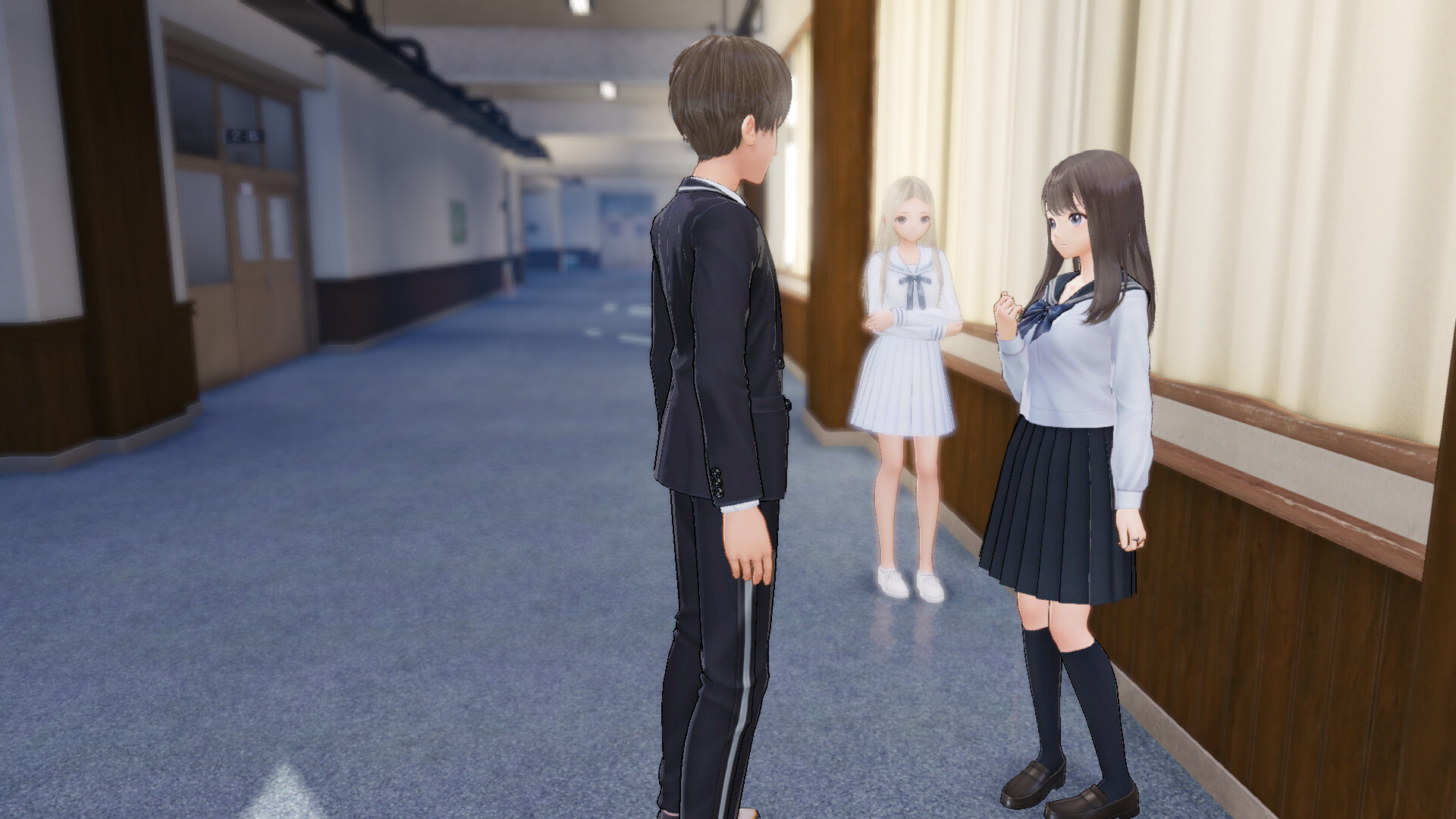
With this collection release, the narratives and gameplay of the two main games is maintained, and Koei Tecmo has worked hard to adapt the other two to fit within the collection. Ray, for example, has been turned from an anime into an interactive space to wander around, allowing you to take control of the protagonists and collect memories, which tick off the plot points of the anime. It has an additional intro and epilogue to better connect it to the rest of the series, too. Sun, meanwhile, has kept its story while being rebuilt from a mobile gatcha game into a console experience and now plays more like the other entries in the series. With that being said, there have been changes, and I do really need to address them because I’ve seen plenty of people on the Steam forums and elsewhere pre-emptively prepare themselves to get angry about those changes.
Koei Tecmo chalks it up as “scenes that have been toned down to meet modern social standards”. In practice, those scenes that have been edited are small and mostly incidental. For one of the main examples, in Blue Reflection, Hinako bathes every day. You never saw anything sensitive in the original release, of course, but it was a body in water nonetheless. Here, the water is milky (bath bombs?) with a lot of steam that now hides even the implied nudity from the carefully selected camera angles. In other examples, change room scenes have the characters wearing more; some costumes and camera angles have been edited for modesty, and when characters go out in the rain, they still end up with wet clothes, but the clothes no longer become semi-transparent. The other Blue Reflection titles have edits to similar effect.
I understand why Koei Tecmo did all this. It was just this year when certain militant and deeply puritanical groups went on a rampage and succeeded in getting the payment processors to threaten game store fronts. Those campaigns basically force the entire industry to take a big step towards adopting Saudi Arabia’s attitude towards women’s bodies. And it was relatively easy to make these decisions because, for the most part, these edits don’t change the dialogue or key narrative themes. That’s not to say there aren’t any thematic losses. One of the more complex and nuanced themes within Blue Reflection, particularly the first, is the way that the body interacts with water as both a source of comfort and vulnerability, and that is a little undermined by making edits to hide both responses. Losing that theme does suck, because it was beautifully depicted in the original Blue Reflection, but it also wasn’t the key theme here, and I choose to maintain perspective here; in a difficult creative environment, Koei Tecmo’s decisions on what to cut haven’t harmed the heart, soul, warmth or beauty of the series.
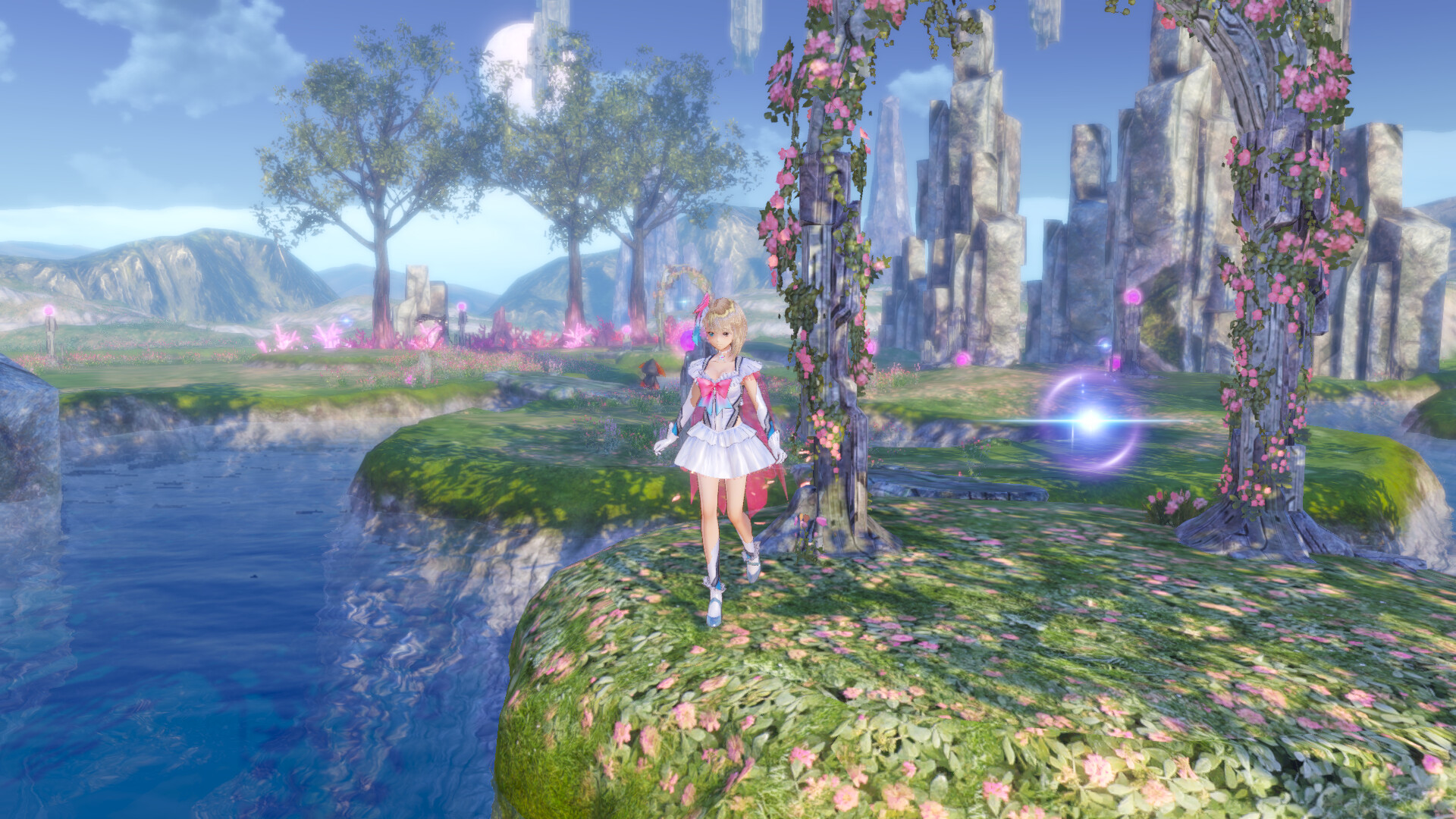
However, while I don’t blame Koei Tecmo for being risk-averse, I do want to say that it is disappointing that this has happened and reflects negatively on society more broadly that it had to happen. It’s disappointing for one specific reason: I cannot state more firmly that nothing in Blue Reflection was explicit, pornographic or fundamentally designed around sexual titillation in the first place. Nudity, sensuality, vulnerability, physical beauty and sexualisation are not interchangeable, and we should not be seeing them as so; unfortunately, the edits imply that the developers accepted the opposite to now be true. At best, the edits act like a defensive awareness by Koei Tecmo that to far too many people out there, there is something inherently sexual about the female form. To use a real-world parallel, it’s like how we as a society are increasingly being forced to listen to some people freak out at the sight of bikinis at the beach or pool.
In fact, just the other day I saw a video clip of a beautiful dancesport Rumba on Facebook, only to find the comments underneath it both offensive and aggravating because it was a flood of complaints about how “sexualised” the dance was because the dancer was wearing a standard Latin costume. This now strikes me as relevant to Blue Reflection because, remember, the protagonist of the first is herself a dancer. Leotards and dance costumes (which magical girl costumes do resemble) are targets for these same conservative histrionics. We live in a society that is being so heavily forced into an increasingly extreme religious conservatism that comes out of the US that we’re now meant to see bodies as something inherently linked to sex, and we’re told that the only response we’re allowed to that is discomfort.
Or to be blunt and repeat myself, the attitude towards women between the US and Saudi Arabia is not as far different as groups in the West like to pat themselves on the back over… and in the US in particular those attitudes are regressing fast. So, yes, while it’s not Koei Tecmo’s fault for complying with that social pressure, it does leave a particularly bad taste in the mouth when considering that Blue Reflection was too innocent and wholesome to deserve giving those clowns credibility with their complaints.
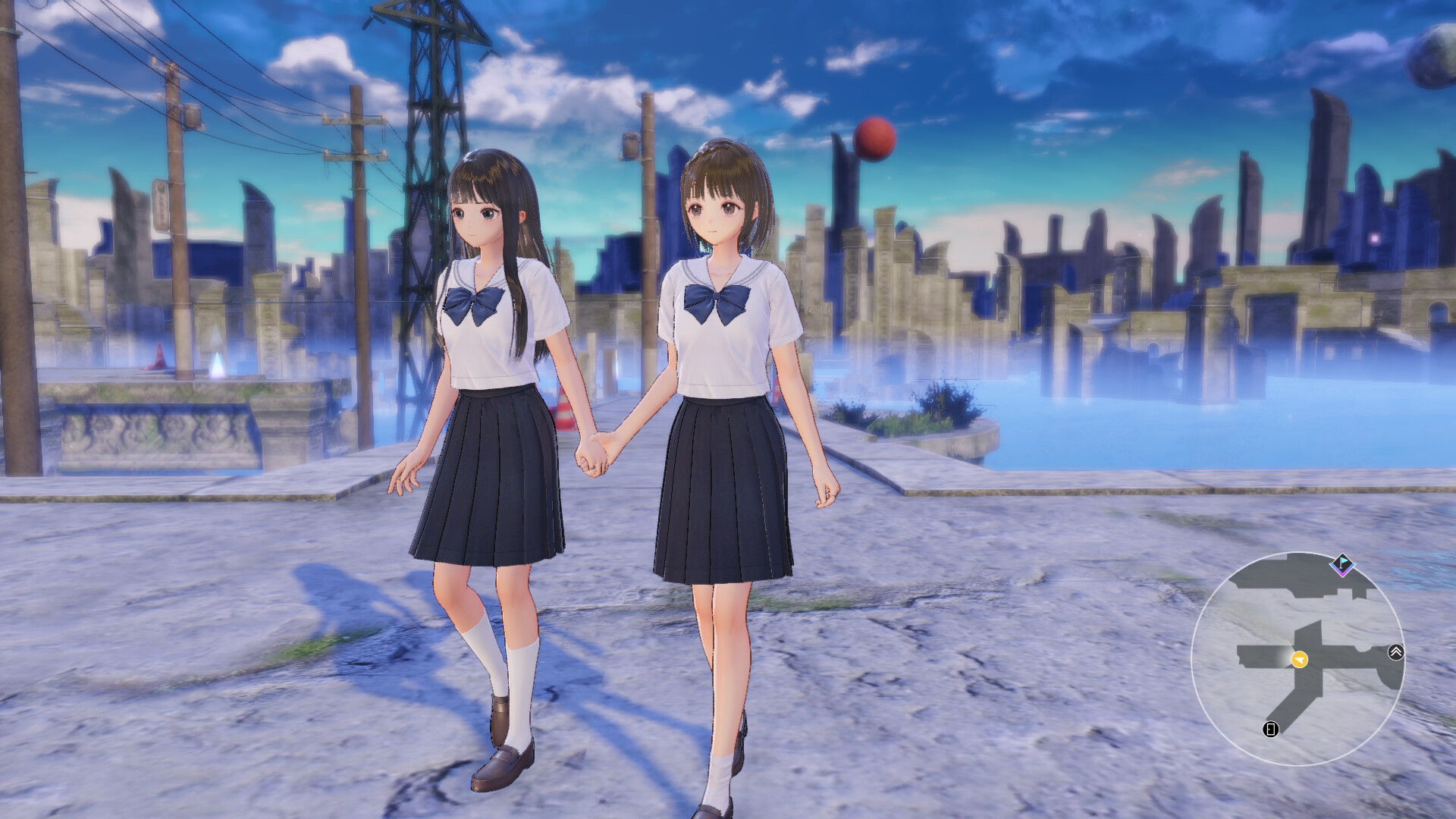
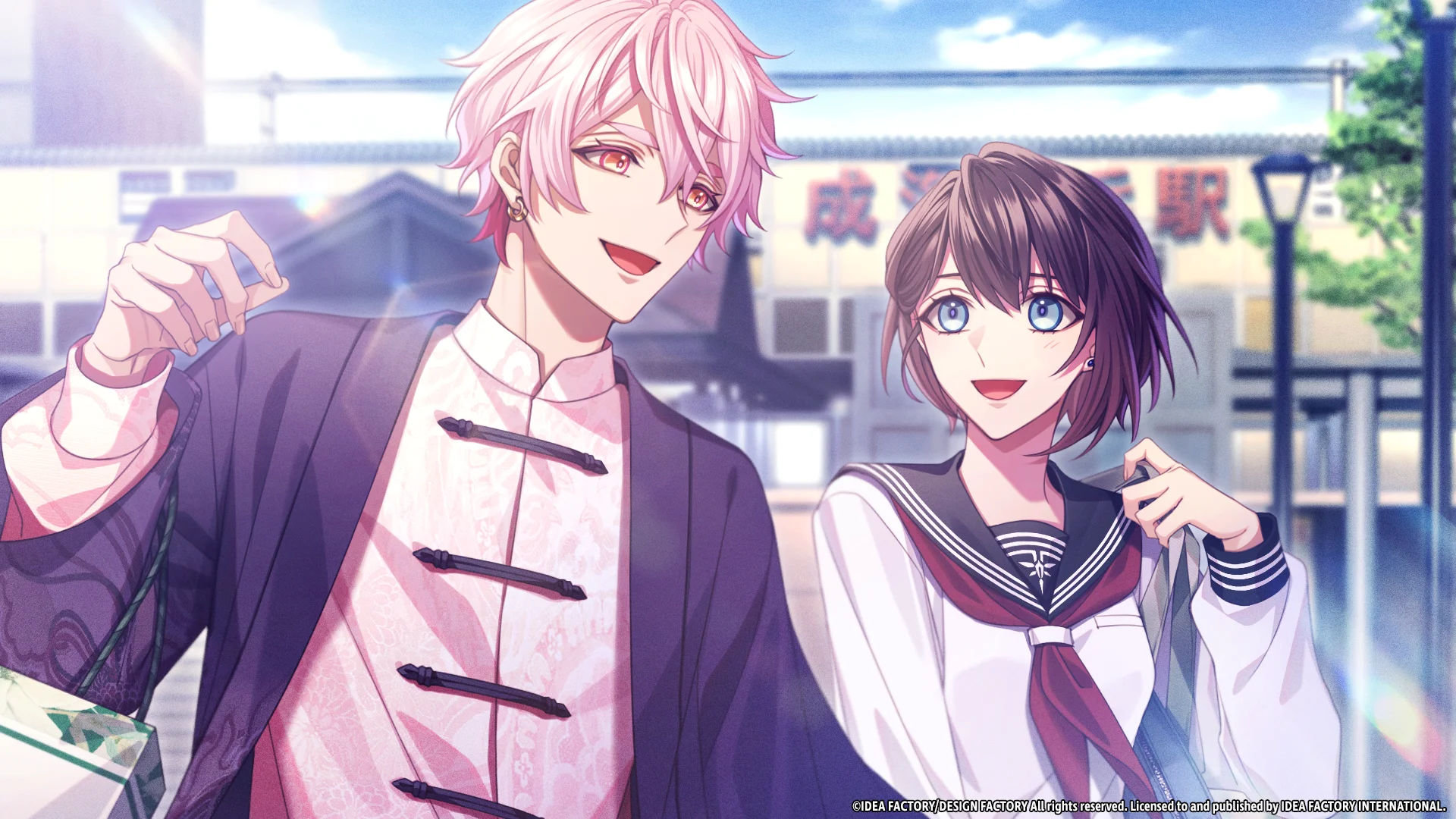
Just as a final note, the one criticism I have of this collection is the decision to retain the male character in Sun, when, with the effort that went into basically rebuilding the entire game to make it play like the other Blue Reflection titles, there was the window to rewrite that character as a girl. Part of the reason that Blue Reflection as a series is so wholesome and innocent is that it doesn’t have male dynamics complicating the interactions, and the tone could be set at a sweet and uplifting yuri and bonding between girls. Thankfully, the male protagonist’s influence is restricted to Sun, and by the time you get to that game (assuming you play them in the recommended order that is laid out for you when you first load up the game), you’ve already seen the best of the series anyway. I just really don’t understand the creative stubbornness in retaining that character. I’m usually one to defend developers and publishers for sticking to their guns when they’ve made a creative decision that the fans react poorly to, but in this case nothing about that male self-insert style character defends its existence. Sun is still disappointing, even though it’s no longer a gatcha game.
Overall, the changes made to the four stories in this Blue Reflection collection don’t compromise the central thesis of the series (even with Sun and that pesky male character): These are truly, almost painfully ethereally beautiful magical girl JRPGs with a relentlessly wholesome message behind them. I have no idea if Koei Tecmo sees a future in something this niche, but even if this collection is the grand sum of the Blue Reflection vision, it’s an enormously heartwarming 100 hours that will linger with you long after you stop playing.

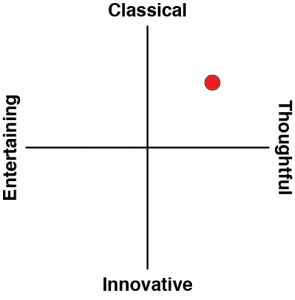




Oof, the diatribe didn’t help the review.
While the US has swung more conservative of late, it’s likely more to do with (a) the Supreme Court stacked by Trump appointees, and (b) us being tired of how trashy everything has become. Technology (ie. smart phones, social media, etc) likey has as much or more to do with, say, Gen Z engaging in less sex.
Anyway, it’s a trend, not moral back sliding. We’ll swing back the other way, in time.
As far as Koei Tecmo’s, ahem, revisions to Blue Reflection, I think it just as likely a prudent business decision to appeal to a wider audience.
Don’t mistake online troll farms from being reality. Despite your claim that the US is quickly becoming Saudi Arabia, I am just not seeing it at the pool or the beach as bikinis and barely there one pieces are still very much in fashion. Heck, my conservative Christian mother isn’t thrilled with what my niece wears, but recognizes that when she was her age she was wearing much the same.
“Oof, the diatribe didn’t help the review.” – Disagree. The cultural environment this game has been released into is relevent, especially in explaining why it was produced the way it has been.
“Anyway, it’s a trend, not moral back sliding. We’ll swing back the other way, in time.” – America has always been puritanical. It was quite literally founded by puritans. Puritans were/are (as we see with evangelicals today) no less extreme than the what you see in the more hardcore end of Islam. What has balanced it out and prevented it from becoming another Saudi Arabia is that American culture is also very individualistic, and the pendulum swings between those that would restrict individual rights in the name of religion, and those that put individual rights ahead of religion. But the puritanical culture is always there and when it can’t get its way through law and governance, it tries to via social pressure.
“I think it just as likely a prudent business decision to appeal to a wider audience.” – Nah, none of the changes made are substantial enough to have been done in an effort to broaden the appeal of the games. It was purely a decision to avoid challenges from the platform holders – probably moreso the consoles than Steam, but who knows with Valve these days.
“Don’t mistake online troll farms from being reality. Despite your claim that the US is quickly becoming Saudi Arabia, I am just not seeing it at the pool or the beach as bikinis and barely there one pieces are still very much in fashion.”
Meanwhile there’s a hardcore reactionary push against sex in media from Gen-Zs in particular: https://www.theguardian.com/culture/2023/oct/25/gen-z-less-sex-tv-movie-trend
“The cultural environment this game has been released into is relevent”
100% agree, but you took it too far and put focus on your take on your frustration with said culture. That’s better off outside of the review.
“Meanwhile there’s a hardcore reactionary push against sex in media from Gen-Zs in particular: https://www.theguardian.com/culture/2023/oct/25/gen-z-less-sex-tv-movie-trend”
“Hardcore reactionary push”? Like they’re storming porn stores and shuttering them?
That’s one interpretation of the article title, but that’s not at all what the article says.
Regardless, I said folks are tired of how trashy things have gotten. Euphoria is a trashy show. It’s basically GTA the TV show, bad satire and all.
I simply think you’re conflating social media and traditional media portrayals of the US, then turning around and telling me you know more about where I live than I do.
“100% agree, but you took it too far and put focus on your take on your frustration with said culture. That’s better off outside of the review.”
Lucky for me that you’re not my editor and I don’t need to answer to you then :-). Objection noted, and your feedback is appreciated, but I’m also not going to stop being the writer that I am.
“Regardless, I said folks are tired of how trashy things have gotten. Euphoria is a trashy show. It’s basically GTA the TV show, bad satire and all.”
Things were always trashy. You should have seen what was getting pushed out when VHS first landed on the scene and straight-to-video erotic thrillers became the biggest genre in video shops back in the 80s and 90s. “Trashy” is not a new development at all.
“I simply think you’re conflating social media and traditional media portrayals of the US, then turning around and telling me you know more about where I live than I do.”
I say this with all due respect, so please don’t take this as a swing at you, but Americans are so indoctrinated into American exceptionalism and so generally unaware of the rest of the world and the alternatives to American culture that are out there that the last person you want to ask for a considered analysis of American culture is an American. I’ve been to America often enough and spent enough time working and socialising with Americans that I’m comfortable with my read on its overall culture.
“I cannot state more firmly that nothing in Blue Reflection was explicit, pornographic or fundamentally designed around sexual titillation in the first place.”
I must say I kinda disagree with saying that nothing in original game was sexualised. There was very clear camera work to frame a lot of scenes as if someone was looking from outside, thou windows or slightly ajar doors. It was similar to how horror movies use similar camera work to create sense of discomfort and make audience know someone is watching characters.
However, in the Blue Reflection being about daily and school life of teenage girls it doesn’t create that “horror” atmosphere, but something else – it creates voyeuristic effect of feeling like voyeur that spies on teenage girls in their private moments, including places like bath or changing room. It’s deeply unsettling (especially when we remember how prevalent voyeuristic crimes are in Japan, especially against young girls) and clearly was done on purpose, this being only Gust game with that strange camera.
The difference is that the horror film uses that camera angle because the stalker-killer is actually there. It’s essentially a first-person camera angle that is used to build tension because the audience is aware that the threat is there.
In Blue Reflection, there is no one there. It’s not voyeuristic because there’s no voyeur. The camera angles are used as a way of framing events and interactions in the game in the context of everyday life – it’s an effort to draw the player into the story by making it all seem very normal.
You can argue the merits of whether it achieves that if you like, but if you find it unsettling, that’s more your personal response to it than any authorial intent. The cinema director wants to unsettle the audience, the Blue Reflection director does not. Perhaps examine why you find something with no sexual content in it to be sexualised.
Could do without the broad generalisation of “creepy Japan” too, BTW. Unless you’re arguing that the Blue Reflection artists are themselves voyeurs (in which case that’s some amazing defamation), you’re implying that the entire Japanese culture is complicit in voyeurism… and that’s just outright racist.
Ok, I seriously don’t know where to start even.
First: There is clear authorial intent to have camera be looking at girls in changing room though window or ajar doors. This is not something that was made by coincidence or is it normal framing of everyday life. Someone decided that this should be done. You missing that type of fanservice based on specific cinematic language isn’t a slight against you, but it’s clearly there as fanservice for specific group of people. There doesn’t need to be a character doing that. In this framing it’s player who is made to be voyeur.
I will note here that someone trying to spy upon girls in bath/onsen was standard comedy fanservice in tons of old anime. This isn’t something new, just framed differently.
I’m not going to publicly call someone upon that, thou I will note that there are no scenes with that camera framing in Blue Reflection Second Light, Nights of Azure or Atelier games.
Second: Your personal attacks and “no, you” suggestions are uncalled for. I’m also interested if you are going to suggest that my wife, who was just as me creeped by that voyeuristic framing, is also a pervert who should take good look at herself.
Third: No one said “creepy Japan” but you. Japan isn’t creepy, it has great and interesting culture, but as any other place has its problems. I don’t know why did you write these personal attacks against me nor if my reply will be allowed, but let me say that – I have been interested in Japanese culture and history for around 20 years and have been watching anime and reading manga for around 25. I’m not some puritan attacking Japan for being different (I’m not even from USA), I’m just not blind to its problems.
And one of the biggest ones are voyeur and groping crimes (very often happening at the same time/place) and saying that isn’t racist. Denying it is like denying that USA has gun crime problem.
If you want, you can go read some Unseen Japan articles:
https://unseen-japan.com/female-athletes-infrared-cameras-japan/
https://unseen-japan.com/nonconsensual-infrared-photo-arrest-hyogo/
https://unseen-japan.com/exam-day-groping-patrols/
https://unseen-japan.com/groping-assaults-school-attendance-japan/
https://x.com/unseenjapansite/status/1823847929372926161?s=46&t=nTymcKnZLxyMP0mqgknsYA
And one from JapanToday:
https://japantoday.com/category/crime/own-a-pair-of-secret-camera-shoes-the-police-should-be-by-shortly-for-a-visit
“First: There is clear authorial intent to have camera be looking at girls in changing room though window or ajar doors. This is not something that was made by coincidence or is it normal framing of everyday life. Someone decided that this should be done. You missing that type of fanservice based on specific cinematic language isn’t a slight against you, but it’s clearly there as fanservice for specific group of people.”
That is all your interpretation, and none of it is substantiated beyond “it’s my opinion”. Which you’re entitled to have, but I don’t have to act like it’s credible. As I said, there’s nothing sexualised about anything that happens in Blue Reflection. This is a stark contrast to, say, Dead or Alive, when the intent *is* to sexualise the characters through the use of gravure framing. Or something like the Project Zero series where the camera lingers over the female bodies at every opportunity, while treating the male characters very differently. Koei Tecmo knows its fan service and I’ve written extensively about that over many years. I have no issue with acknowledging sexualisation and fan service in games when it’s there. But Blue Reflection is not even trying to be sexy. It’s just not.
In fact, there is a good parallel here: Pragmata, from earlier this year, had a young girl protagonist. At no stage was she ever sexualised, but this didn’t stop the entire Western Internet from melting down in an argument over the perception that she was. At some stage you just realise that people are going to read that into a character regardless of whether it’s true or not.
“I will note here that someone trying to spy upon girls in bath/onsen was standard comedy fanservice in tons of old anime. This isn’t something new, just framed differently.”
But no one is spying on the characters in Blue Reflection! If there was, then yeah, go to town with that comparison, but that is now twice in two comments that you’ve tried to draw a parallel where the camera is framed from the perspective of a voyeuristic character and a game where there is no such character. You just shrug that off as though they’re the same because the camera happens to be in roughly the same location. But they’re not. Tonally, they’re completely and utterly different.
“Second: Your personal attacks and “no, you” suggestions are uncalled for. I’m also interested if you are going to suggest that my wife, who was just as me creeped by that voyeuristic framing, is also a pervert who should take good look at herself.”
It’s not a personal attack. It’s referencing my own review where I point out that too often people see the female form as inherently sexual. I never said you were a pervert for it. I said that I think that Blue Reflection challenges that perception and assumption, and you should ask yourself why you also jump to the conclusions about the game that you have. And I said *that* because that’s a question that I myself have asked myself after experiencing art works like this one over the years. I too am a product of Western culture, after all.
“Third: No one said “creepy Japan” but you.”
You directly claimed a link between Blue Reflection as “voyeurism” and the broader Japanese culture, so actually, you did.
“I have been interested in Japanese culture and history for around 20 years and have been watching anime and reading manga for around 25.”
Okay, if we’re going to appeal to authority now; My wife is Japanese, and I spend several weeks in Japan every year, so I’m fully immersed in the culture. My work is also closely linked to Japan as I’ve written extensively on Japanese culture and history, provided sensitivity training to organisations sending delegations to Japan and worked with Japanese companies.
“And one of the biggest ones are voyeur and groping crimes (very often happening at the same time/place) and saying that isn’t racist.”
No, acknowledging that Japanese crime rates for sexual crimes and harassment is far too high is not racist, but saying that the Japanese make games like Blue Reflection because they have a voyeurism crime statistic is. It is because it’s a statment that claims the game only turned out that way because Japanese people made it. In fact, no one at Gust or Koei Tecmo has been arrested for any such crime. Furthermore, from my interactions with the company they’re actually one of the most progressive of the major Japanese publishers when it comes to women in the workplace. Comes from the single most powerful woman in Japanese game publishing being the head of the company for so long, I guess.
“Denying it is like denying that USA has gun crime problem.”
Yeah, but on the other hand, imagine if you argued that an American developer made a game with guns in it because Americans have a problem with guns. That’s what you really did here. You drew a parallel between a real-world crime statistic, which you argued represents something about the entire culture, and a work of art. And then made the connection that the workd of art is a cultural manifestation of that crime statistic and culture. That’s deeply insulting to the developers, and Japanese culture as a whole (which, contrary to your persistent claims, does not think that voyeurism and harassment is acceptable in the mainstream), and it saddens me to know that you’re not even going to try to parse why it is such an offensive attitude to hold.
I was just talking to someone the other day about how nice it was that we’d seen such a marked reduction in people making the least charitable interpretations possible of Japanese material. It’s been a good few years since we’ve seen a “this game is for paedophiles and perverts!” review from the mainstream press, for example.
Apparently we still have a way to go, however.
If someone can look at Blue Reflection of all things — Blue Reflection! One of the most wholesome and heartwarming depictions of an all-female cast in all of gaming, beaten only in that regard by its sequel! — and think “that’s perverted”, then I would suggest that they are the one who needs to take a bit of a look at themselves, and establish exactly why they think that.
Hint: It’s not the game’s fault.
I love what Blue Reflection did. And especially love what second game did. I think these, even if not very popular, are very important games.
I never said that this game is for perverts or worse. I think this is wholesome game that is extremely important and worthwhile for all it accomplished.
That’s why I think that one small element, the strange camera work in multiple scenes, is bad thing because it takes away from entire picture.
We should be able to criticise media we love for mistakes they made even if we think they are great overall, so they can be even better.
I must say, this is first time when I have someone misinterpret everything I said in such offensive way, making broad statements. I think you are talking not to me, but to some strange vision of person you made me to be. Or maybe not strange, because it becomes more and more clear that you are writing as if responding to broader social media discourse instead of to me.
So let’s start again. Hi, I’m sex positive leftie who spend ages explaining to people how Ryza is not sexualised game because they saw screenshots people lined up in photomode or figurine in sleep wear. Maybe this will allow you to give me benefit of the doubt.
“But no one is spying on the characters in Blue Reflection! If there was, then yeah, go to town with that comparison, but that is now twice in two comments that you’ve tried to draw a parallel where the camera is framed from the perspective of a voyeuristic character and a game where there is no such character. You just shrug that off as though they’re the same because the camera happens to be in roughly the same location. But they’re not. Tonally, they’re completely and utterly different.”
You seem to not understand what I’m saying. Yes, there is no voyeur in that scene (thou there is someone installing hidden camera in story). But the way camera is set makes the player be the voyeur. There doesn’t need to be character doing that – by camera work, you, as a player, are in voyeuristic position. Camera filming though and moving back though doors, window frames, specific strange low angles – this all plays into that.
This was done on purpose – you don’t get such specific camera work without planning for that (nor do other Gust games, including continuation, have that camera work). If you do not agree this was made for that specific type of fanservice, you can explain why do you think they used that camera work. Because at this point you didn’t explain why you think they used this camera, you are only saying there is no voyeur in the story (well, there is one, but he is not looking in these scenes).
It’s good you are not having problem with that fanservice (or maybe even didn’t notice that). I also usually don’t. I don’t consider female character moving thou narrow passages and camera work needed for that inherently sexual (to tie it to Ryza). This type really got to me thou.
“Okay, if we’re going to appeal to authority now”
This was not appeal to authority; this is saying that I’m not the only person who had that problem, which you insinuated. You are talking not to me, but to someone else.
“saying that the Japanese make games like Blue Reflection because they have a voyeurism crime statistic is”
I never said that. This is your interpretation of what I said and if this is your interpretation of what was said I kinda get why you get offended, but this is literally not what I have said. Is this what social media discourse is like?
“It is because it’s a statment that claims the game only turned out that way because Japanese people made it”
No, I said I dislike that this type of fanservice made into game because of broader cultural situation.
“In fact, no one at Gust or Koei Tecmo has been arrested for any such crime.”
Obviously and I never said anything that would imply otherwise.
“contrary to your persistent claims, does not think that voyeurism and harassment is acceptable in the mainstream”
I literally linked articles that clearly say how this is not accepted in mainstream. You are again not talking to me.
We can disagree on merits of discussion, but please stop judging me by misinterpreting what I said in very uncharitable reading of my posts based seemingly on how social media discourse goes.
https://news.qoo-app.com/en/post/18043/qoo-news-qooapp-with-mel-kishida-how-to-incorporate-stinky-feet-in-blue-reflection
You know what, after all you called me I’m interested how your statement of “I cannot state more firmly that nothing in Blue Reflection was explicit, pornographic or fundamentally designed around sexual titillation in the first place.” survives what Mel Kishida himself was saying 10 years ago.
Yes, I know he changed some of his opinions now.
You Resetera types are infuriating. Not only do you continue to manufacture offense when I explained that nothing I said to you was in any way insulting you, but I was willing to let the issue drop and even give you the final say unchallenged. Notice how I didn’t respond to your previous post? Wasn’t because I couldn’t. It was because I realised that this wasn’t an honest discussion on your part so I was going to just let you have your “win” and move on.
But no, you just have to keep on sealioning at me because how dare I not bow down to you. And people wonder why I am exhausted with the entire gaming industry. Sigh.
So to be clear: Now I am annoyed and now, as the guy with the moderation buttons, I do get the final say. You are not welcome to respond to this.
1) Like I said, I didn’t “call you” anything. Your read on my comment is as lacking in nuance as your read on Blue Reflection. It’s one thing for wires to be crossed in text-based discussions. That happens and when it does it’s fair to challenge the comment. But when someone goes out of their way to explain what they actually meant, and make it clear that there was nothing personally intended at all, the intellectually honest thing to do would be to reassess your own response.
2) Mel Kishida is clearly having fun and playing up in that interview. Likely because the audience on QooApp love their fan service. A good interviewee knows the audience they’re talking to.
When I ran a much more serious and genuine interview about art and themes with him, he explicitly said that sexualisation was not his intent: https://www.digitallydownloaded.net/2021/10/the-man-behind-blue-reflection-series.html
3) Even if Kishida was serious in that QooApp interview and outright lying in mine, it’s largely irrelevant to my personal response to the game. Read Death of the Author sometime. I’m not going to suddenly think the game is perverse because you’ve found one interview that you think proves your case.