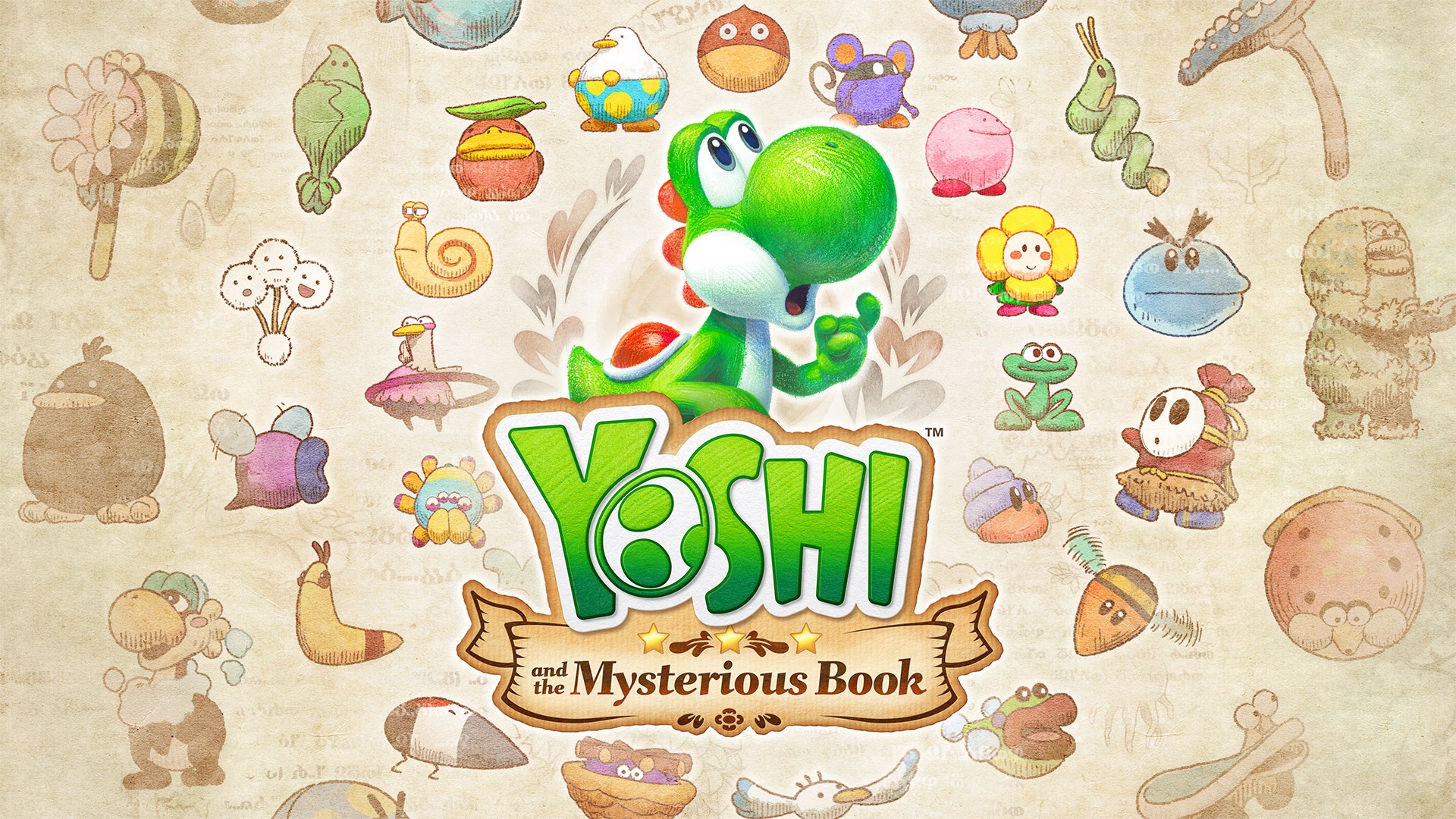


When I think about the correct term to describe Yoshi and the Mysterious Book, I find myself alternating between “whimsical”, “playful” and “twee”. It’s also saccharine, and that will make it polarising to an extent, but then if you’re not open to Yoshi melting your heart, I would argue that you’re a lost cause.
Let’s run through the litany of criticisms that you’re doing to see pop out of one corner of the Internet or another in response to this game. “It’s a kiddy game!” Well, duh. It’s Yoshi. “It’s too easy!” What the hell else would you expect from a game designed expressly so that young children can enjoy it? “It’s pointless!” – that’s coming from someone playing their 7,560th game of Fortnite, I guarantee you that.
All of these things are true of Yoshi and the Mysterious Book (for the record, that sounds like an Atelier game and now I really want some kind of weird Rorona spinoff where alchemists ride Yoshis while collecting ingredients and bopping punis on the head). I would just argue that in a more rational world, we’d see them as positives. It’s a good thing that we have a game here that children can enjoy, but also one that has the creative energy, personality and charm that adults can too. It’s a good thing to have a no-stress platforming experience to distract us from an increasingly fascist superpower loudly threatening nuclear Armageddon to any nation that looks at it wrong. It’s actually a good thing to have a platformer that doesn’t labour objectives on you and simply lets you experiment.

The point of Yoshi and the Mysterious Book is to enter a level, and then flutter jump and throw eggs around so you can discover all the weird and wonderful creatures and areas in that level. These interactions earn you stars and slowly unlock more levels and interactions as you go.
You could call it a “puzzle” game, in that it vaguely behaves like one, but there isn’t really much “puzzling” for you to do. Most of the “solutions” make themselves clear to anyone playing, so the gameplay loop isn’t so much about “solving” the puzzle as it is experiencing the outcomes. For example, early on you’ll come across a frog-like critter that blows bubbles, which Yoshi can ride to reach high in the level. Then, later, Yoshi will come across some chillies. Now, technically, you’re solving a puzzle when you get the frog critter to eat the chilli to predictably explosive effect, but it’s not like you’re going to actively think about it. It’s just a creative possibility that is going to come passively to you the moment you see it.
Yoshi and the Mysterious Book’s strength is that those outcomes are so consistently playful, silly, and delightful that you’re going to want to see them all. And so, consequently, you’re going to get creative and imaginative in every level you come across, just to noodle around and see what mayhem you can cause. There’s a fairly non-linear approach to the level design, too, so if you do, for whatever reason, find yourself lost for what to do in one level, you can always go and grab a bunch of stars in another.
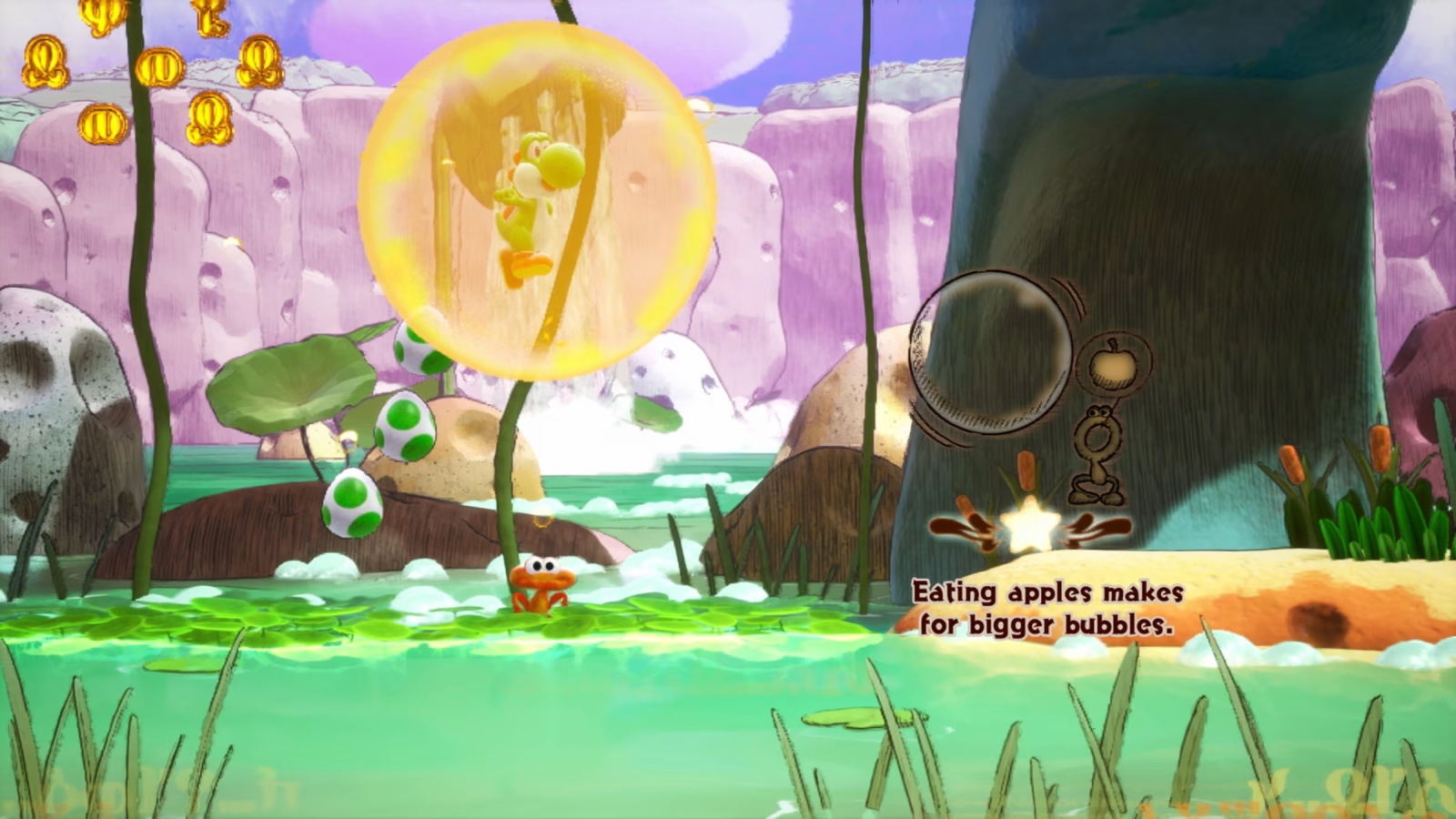
The intent is very clear that you should never be frustrated with your time in Yoshi and the Mysterious Book, however. “Enemies” can’t damage you, and there are no fail states. No lives. No points and no demands to “master” anything. The controls are slick, smooth and perfectly responsive. It’s rare that you’ll come across an environment or obstacle that requires precision, so you won’t even find yourself having your patience tested while you try a jump or trick shot over and over again. Nintendo’s developers have done a brilliant job of translating the controls and level design into a manifestation of your will – if you want to do something within the game’s mechanics and structure, chances are you’ll be able to with no friction.
Of course, Yoshi and the Mysterious Book is absolutely gorgeous, and this is one area that the Yoshi games have consistently had over the other Nintendo platform properties. The hand-crafted aesthetic, complete with sketchlines in the background and a stop-motion quality to the animation, really underpins and supports the creativity of the action. Subtly, and subliminally, this art style tells you to play and have fun doing so. The inventiveness of the critters you’ll come across is likewise superb. And so very varied.
Yoshi and the Mysterious Book isn’t the longest game out there, and that too is because young children are a key audience, and they tend to get bored with things that start to become monotonous. But note that’s also a positive because it means that there isn’t a second of this game that isn’t taking an opportunity to delight the player. Really, the biggest problem is that the incessant sweetness can become a little overwhelming at times, but there’s a few million murder sims releasing this week to distract you if the colour becomes a bit much.
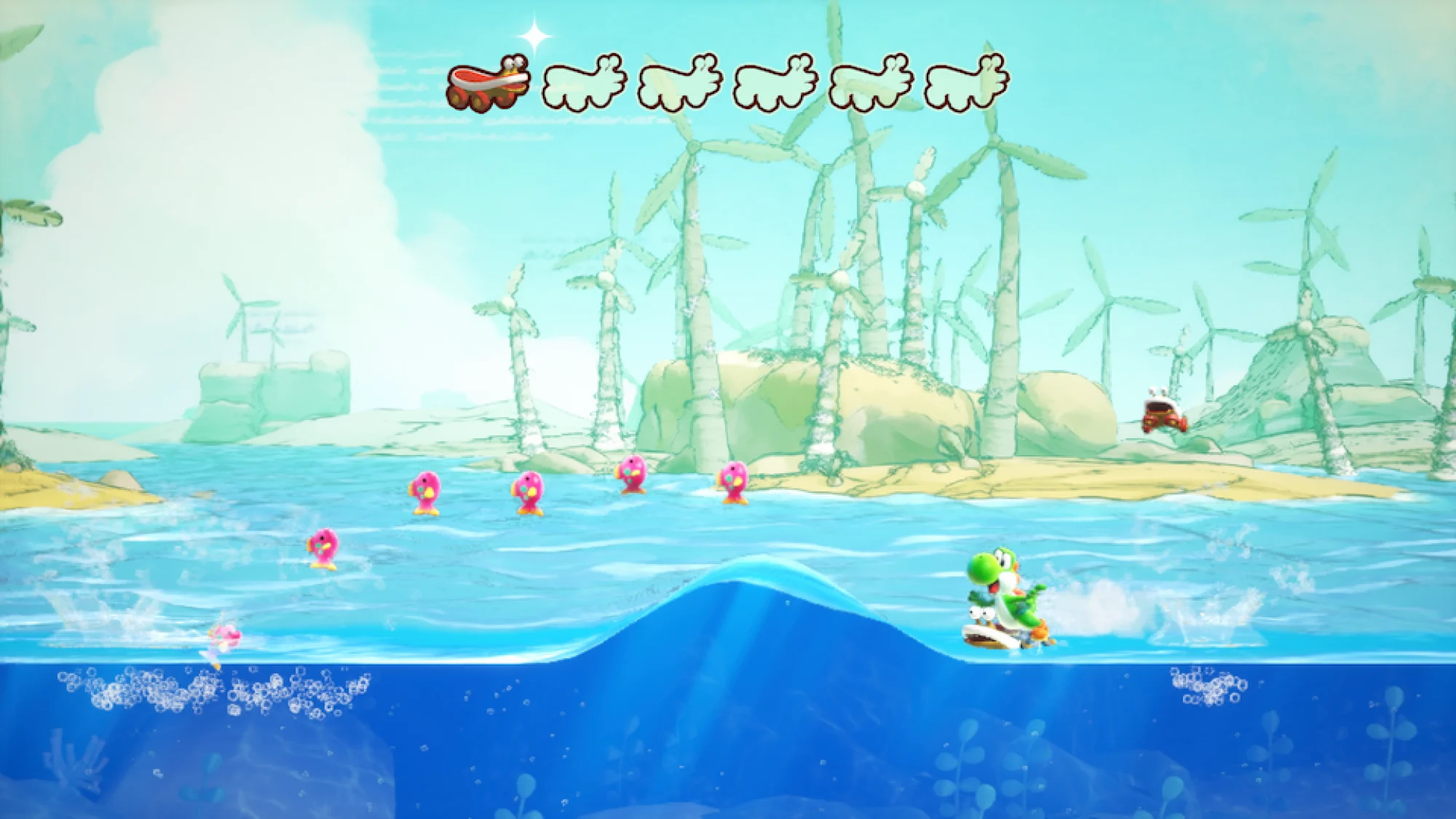
You just know that Yoshi and the Mysterious Book is speeding face-first into a relatively muted response from critics and consumers alike. They will appreciate the art style and energy, but we don’t really have a framework in gaming to properly celebrate the kind of experience that the game is. Less challenging than Mario, less expansive than Donkey Kong, and less intricate than a Hollow Knight, Yoshi and the Mysterious Book is best thought of as a toybox, filled with playthings for the imagination and rewarding if you approach it that way, rather than as a traditional “game.” I personally think it’s utterly wonderful, but then I spend my entire life chasing creative whimsy.