

Every so often, a game gets released that gets all kinds of kudos, but when I sit down to play it, none of the “hype” makes sense to me. Mouse: P.I. For Hire is an example of that. This game makes no sense to me.
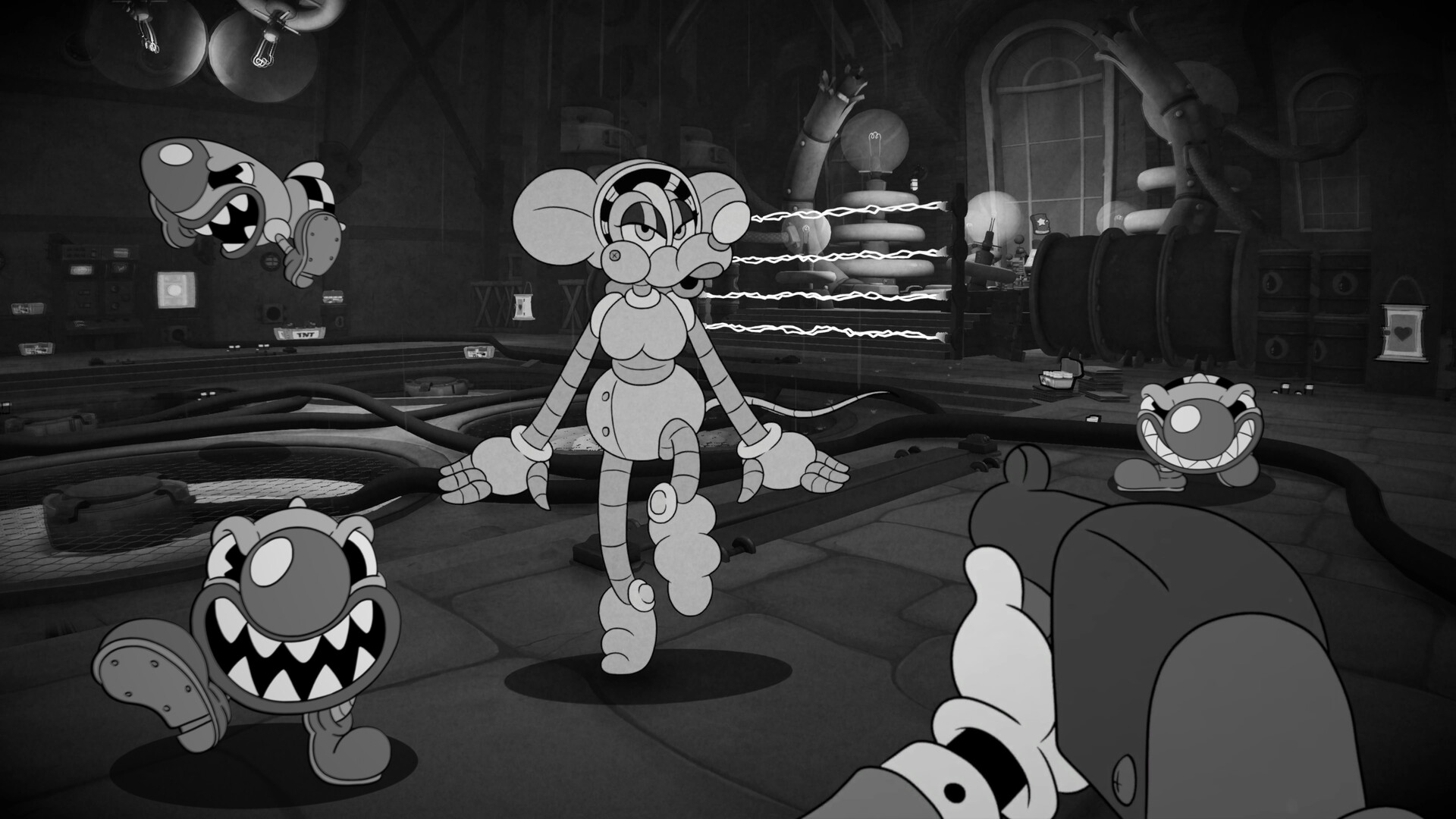
Mouse: P.I. For Hire should be something that I love. Aesthetically, it’s a combination of The Big Sleep and Steamboat Willie, after all, and classic mouse and noir aesthetics are some of my favourite things. If only the game did something meaningful with them, rather than use them as a marketing tool. Yes, it is very obvious that so much of this game was designed purely because the screenshots make it look like something distinctive and interesting.
Nothing about Mouse is genuinely interested in its setting. Noir is a genre that makes use of that heavy, high-contrast black-and-white aesthetic to deliver sexy, smouldering, or violent stories with a purpose – the aesthetic is there to symbolise the corrupting power of the worst in humanity. At its best, a noir story is a relentless, intense and disquieting experience for the very pointed observations it makes about humanity and what simmers beneath its surface. In a world with the Epstein files sitting there, being bickered over in a way that could be copy/pasted directly out of a Raymond Chandler film, the genre has never been more prescient. Hollywood and book publishing always respond to the waves of sentiment washing through our society, so I wouldn’t be surprised if, over the next few years, we do see a resurgence in the noir genre.

Mouse, meanwhile, has very little to actually say, and behaves more like Serious Sam than anything noir. It feels like every single line is either a joke about cheese or other mouse-y tropes (with humour that is an excellent example of diminishing returns), or a self-aware (if not outright fourth wall-breaking) nod about how clever it is for poking fun at itself. Enemies follow the old-school “stand in the open and fire, or charge right at them,” variety of old-school run-and-gunners, too. It plays well enough for people who enjoy Serious Sam, Hexen and the older Doom/Quake types, but I could never quite get past what a waste the aesthetic was on this particular game.
The settings are often inspired, pulled directly from what you’d expect to see in a noir adventure, but because the action moves so fast during the shooter sections, you never really get a chance to appreciate that. Worse, the massively high contrast at speed makes the whole thing a blur, and I found it much harder to enjoy exploring because the level design needed to make every point of interest even more abundantly obvious than in other games because the aesthetic didn’t allow for subtlety. Every “secret” area may as well have been lit up in flashing coloured neon for how “clever” you have to be to spot it.
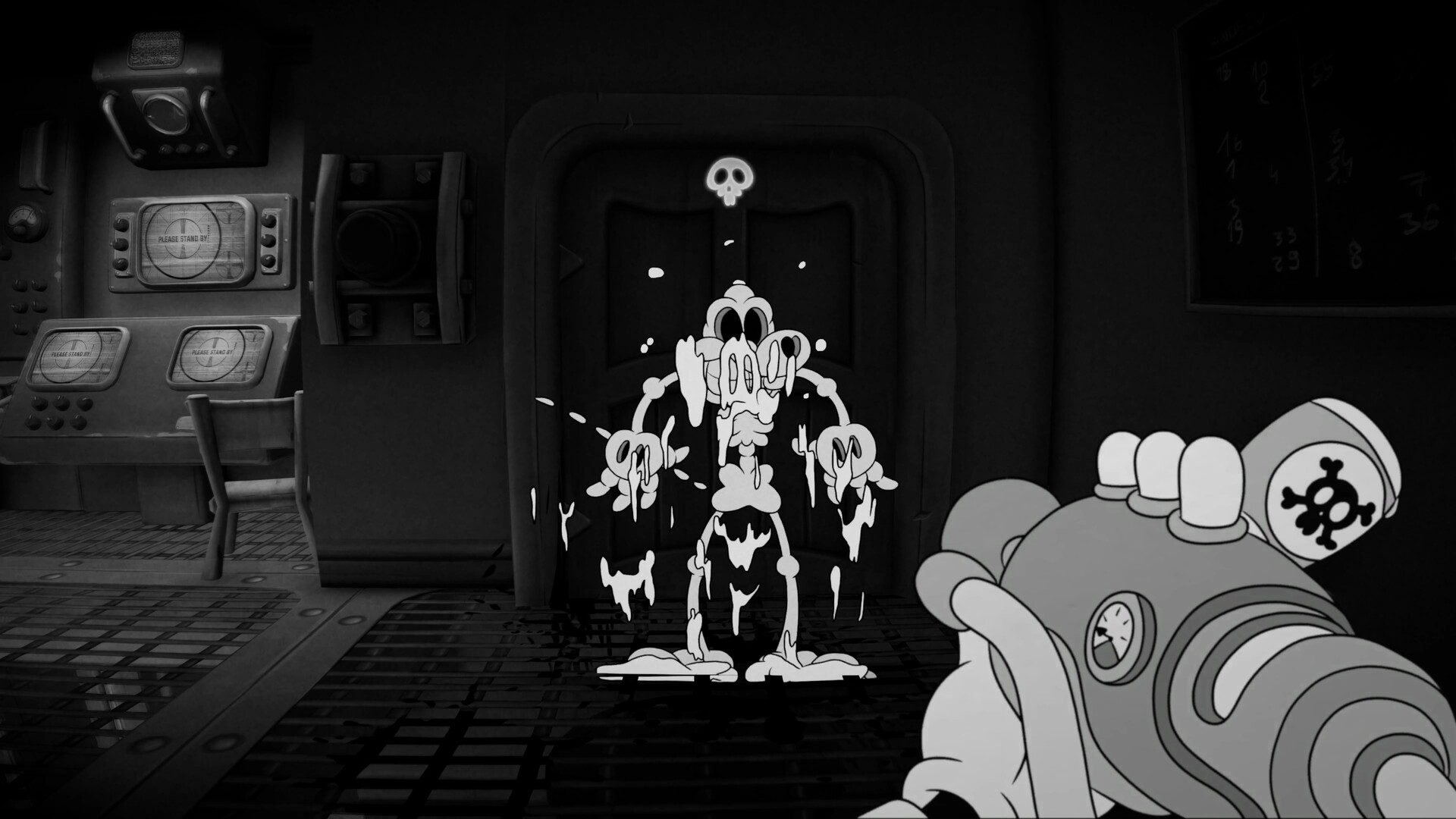
Still, the gunplay is entertaining, and the enemy hordes are designed to attack you in interesting enough patterns. Mouse isn’t difficult, but anyone who’s had fun with a Serious Sam in the past knows that there’s a visceral thrill in mowing down hordes with ever-more creative weaponry. My personal favourite was the Tommy gun. Very genre-appropriate. Also the “splat” gun that melts enemies to skeletal form with a very… gooey splat effect. Creative but also a little psychologically concerning regarding whoever designed that one up.
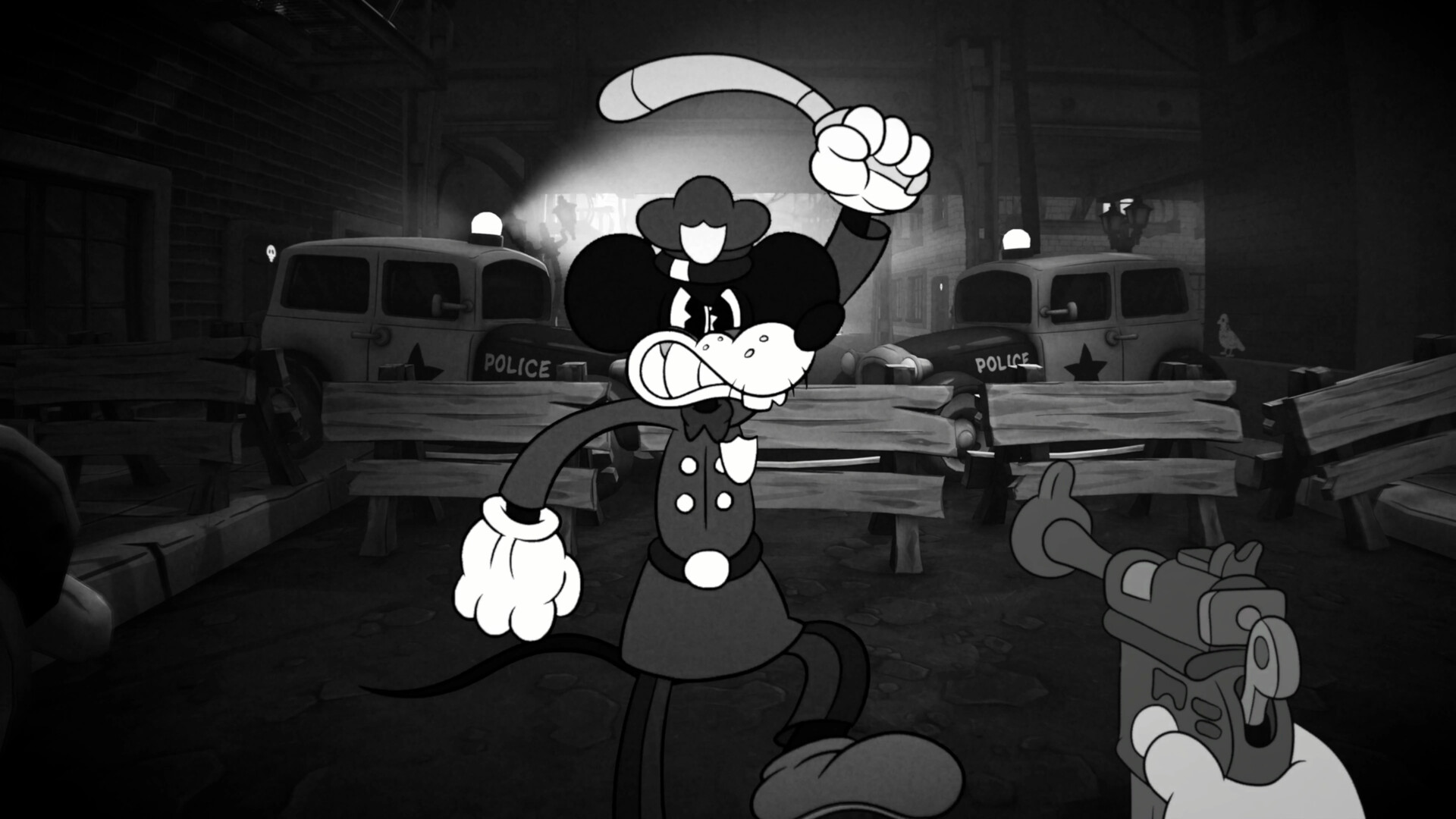
As much fun as the action is, I will say that I was not a fan of how constrained and tight environments tended to be – it made sense as noir setting points, but corridors, alleys, inner city buildings and the like don’t allow for movement to be part of the action quite like in Serious Sam. There’s a reason that series typically features very open areas, even indoors.
For some reason, and I really don’t understand this, Mouse is also peppered with puzzles, exploration and “detective” moments. Yes, you play as a detective, but why crash the forward momentum and energy of the game to indulge a silly puzzle that will be forgotten three seconds later? Why does a boomer shooter need a “hub” to mess around with between levels? There’s a fun little card game minigame there, but it’s hard to shake the feeling that the developers wanted to find ways to maximise the “how long to beat” score. It’s sure as heck not to build on the story and characters, because it never uses the downtime to do that.
I keep returning to that because it’s the single biggest issue I have with Mouse: P.I: If you’re going to use a particular narrative genre as the setting for your game, I don’t think it’s too much to ask that the game at least try to engage with that genre. Mouse never does. There’s nothing about this game that is actually noir, aside from the visuals, and the visuals are only noir because that means the game looks different. In noir, violence plays a critical thematic and narrative role. They can be extremely violent, but it’s always for a reason. Boomer shooters treat violence as a triviality. The two genres are at odds in such an extreme way that it would take a maverick artist like Goichi Suda or Hideo Kojima to resolve the tension. None of the developers who worked on Mouse is that standard.
Because the developers were so inept at resolving this tension, I lost interest in Mouse: P.I. For Hire within the first level, and each subsequent stage found me disliking it more and more. It’s a competently and even entertainingly made game, but a dismally cynical work of art, and it never manages to shake the impression that the only reason that it looks the way it does is that the marketing team thought that it would be a good way to “stand out” and shift units.