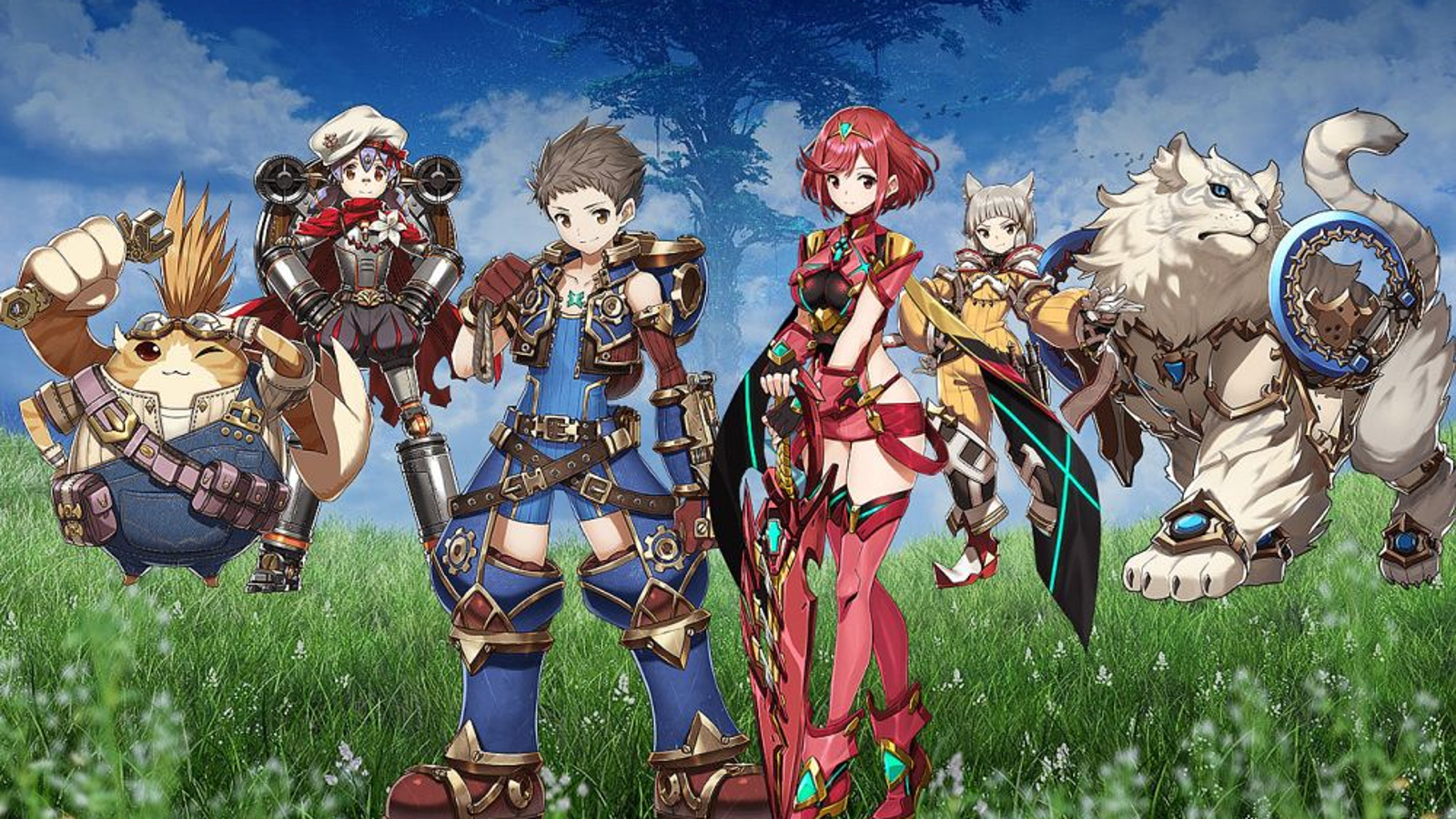


We finally have the version of Xenoblade Chronicles 2 that Monolith Software intended. The original release on the Nintendo Switch was an exceptional game with some truly ambitious scope, but that came at the expense of frame rates, and even I, a person who doesn’t usually care for frame rates, found XC2 bothering at times. With Xenoblade Chronicles 2 Nintendo Switch 2 Edition, Monolith has rectified that, and now the game runs at a smooth 60 fps at almost all times, and when it does dip, it’s nowhere near the stuttering mess that we used to have to deal with.
That, all by itself, would justify a second purchase of this game, but of course there’s more to this upgrade than that. The graphics have been crisped up across the board, particularly when playing the game in handheld mode. This matters more for Xenoblade Chronicles 2 than most, because this title stands out in the series for its love of fan service. Whether you care for that or not, it does come on heavy in Xenoblade Chronicles 2, and now the character models actually support that aesthetic direction.
And speaking of fan service, this new release finally removes the video capture limitation from the original. Yes, the original XC2 pushed the hardware so hard that there was no juice left for video capture. With the new game, you can go to town capturing and sharing all those lovely costumes and blades. Just be aware that some people will get mad at you for enjoying fan service.

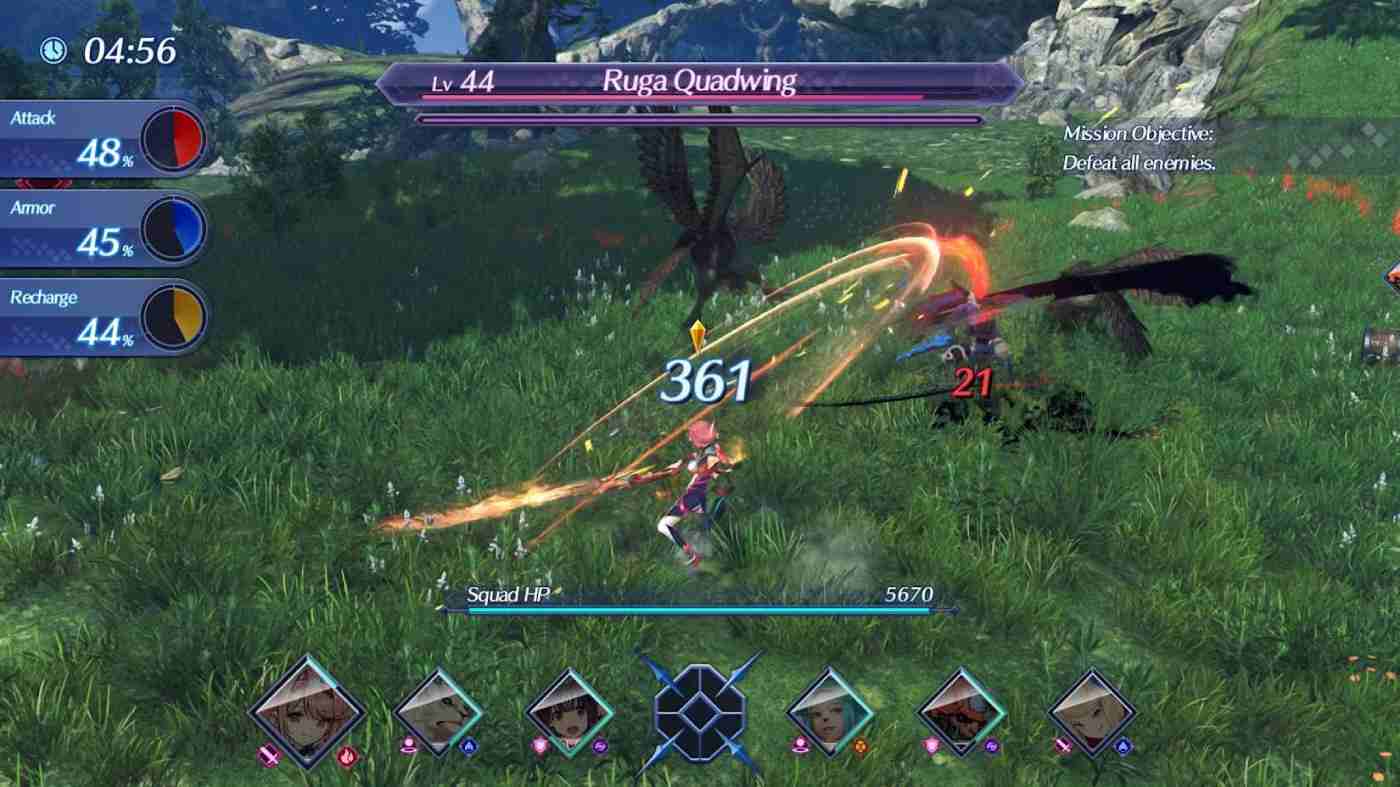
The additions in XC2 Switch 2 Edition do extend past the visuals, though. The biggest addition is the Merc Assault mode, which is a “minigame” with a heavy action spin that allows you to directly control your Blades in combat (yes, pacey even compared to the standard combat system, which is already fast – Merc Assault is proper action territory). This is a much bigger extra feature than anything that was in the Switch 2 Edition of XC1, and while it is ultimately a side distraction, it is good enough that it could have been built into a game by itself. It’s also nicely integrated into the adventure and doesn’t break with the worldbuilding or flow. There’s also a new Blade, Momo, and Monolith has been playful with the Switch 2 hardware at points too – the rumble from the scene where Rex gets slapped is amusing for the additional tactile feedback.
Of course Xenoblade Chronicles 2 is not just about the fan service, and indeed that’s why I had conflicting feelings when I first played this game. From my review:
The best way I can describe Xenoblade Chronicles 2 is as a game that’s really two narratives that have been awkwardly laid on top of one another, in a way that doesn’t really work. On the one hand you’ve got a story that’s at least as complex, nuanced, and fundamentally beautiful as the original Xenoblade Chronicles. There are some powerful themes in there around spirituality and the search for a higher being. There is poignant and timely commentary around environmentalism, too; the world is covered in a thick, unlivable fog sea, and people can only exist on the back of titans that rise above the fog. But the titans are dying, and the world is preparing for war over what little land remains. If you don’t see the parallels there with climate change in the real world, you’re simply not paying attention, because it’s a core message that the game wants you to take away from it.
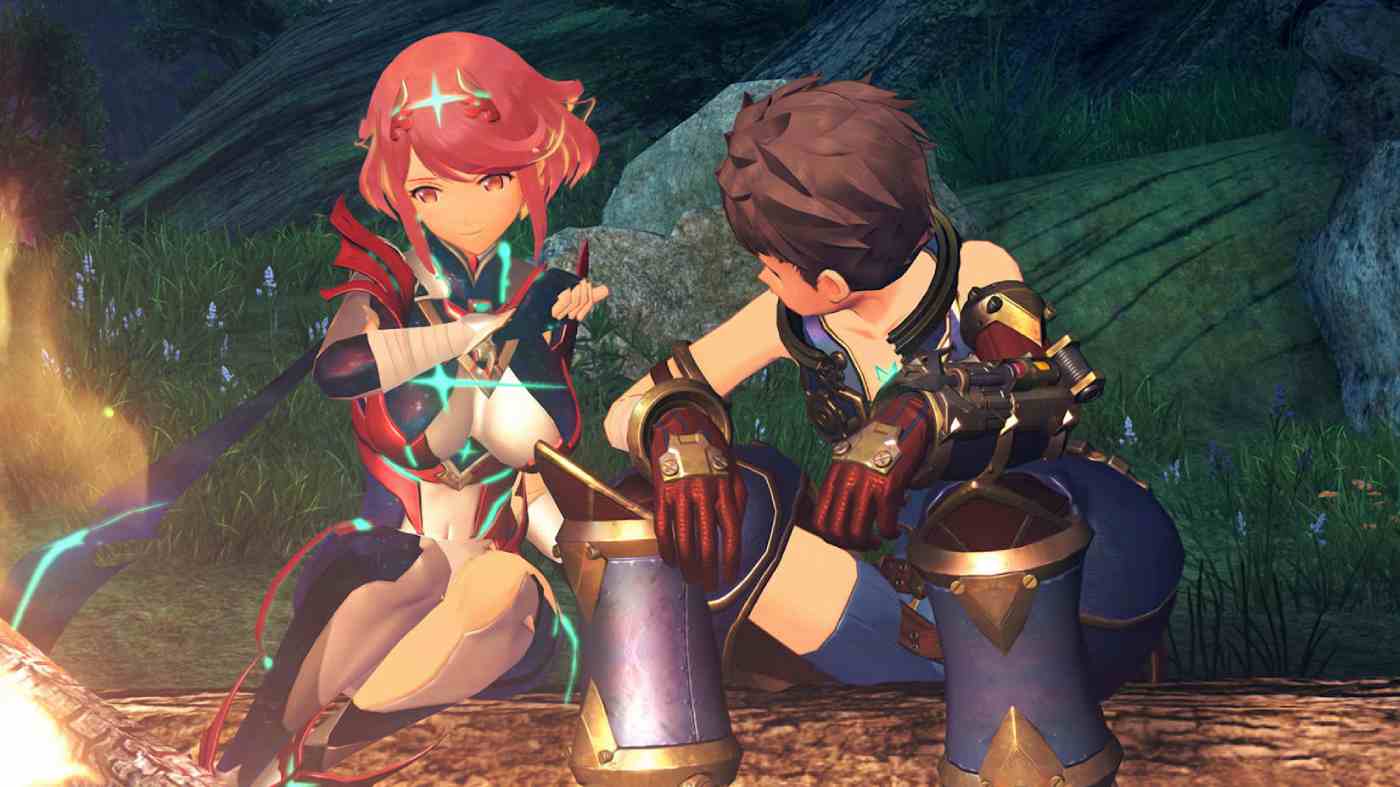
The very basis of the adventure itself is that the heroes are on a search for “Elysium,” a place that sits on top of the world tree (i.e. Yggdrasil), and was a place that humans were expelled from for doing, well, what humans do. This place, which no one is actually certain really exists (aside from the protagonist and his “blade” companion, who claims to be from there and is very much a messiah-like being) is seen as a potential salvation for the remaining humans before the last of the titans die, taking all life with them. The parallels here with the paradise of Heaven and the religions of the people of the book is quite explicit, and while the game isn’t preachy about it (especially considering it comes from a country that doesn’t really participate in those religions), and without giving away spoilers, it nonetheless draws some universal truths about the human condition, morality and spirituality out of it.
Because the game is so narrative-driven, too, once I got over the bad English accents, I found the interactions between the characters to be quite endearing too. It’s an eclectic bunch that join your crew in Xenoblade Chronicles 2, but their personalities work off one another quite wonderfully, so, purely on the storytelling level, I found myself pushing on because I was enjoying the group dynamic and their quest on that fundamental level.
But all this then clashes heavily with the juvenile humour and fan service, which comprises the other half of the game. Gags that you’d expect from any standard harem game come in abundance, and there’s an awful lot of attention placed on the anatomy of the various female bodies, what they’re wearing, and their physical appearance. We’re talking gutter humour to the point where in one scene, a male character wakes up to a face filled with DD-sized boobs because of course that’s funny… that same girl then becomes the butt of weight jokes – which is oh-so-funny because she is, of course, actually gorgeous. Previous Xenoblade games have had elements of this, but Xenoblade Chronicles 2 takes it to a different level entirely.
Over time (and at least one additional replay) I’ve become more comfortable with the tonal dissonance beating at the heart of XC2. And it’s not like I was ever unhappy with either the fan service or the serious narrative. It was just the juxtaposition that threw me at the time. So, while this might not be my favourite title in the overall series, I do think it is magnificent, and all the better now we can see the creative vision that the developers had for it in the first place.