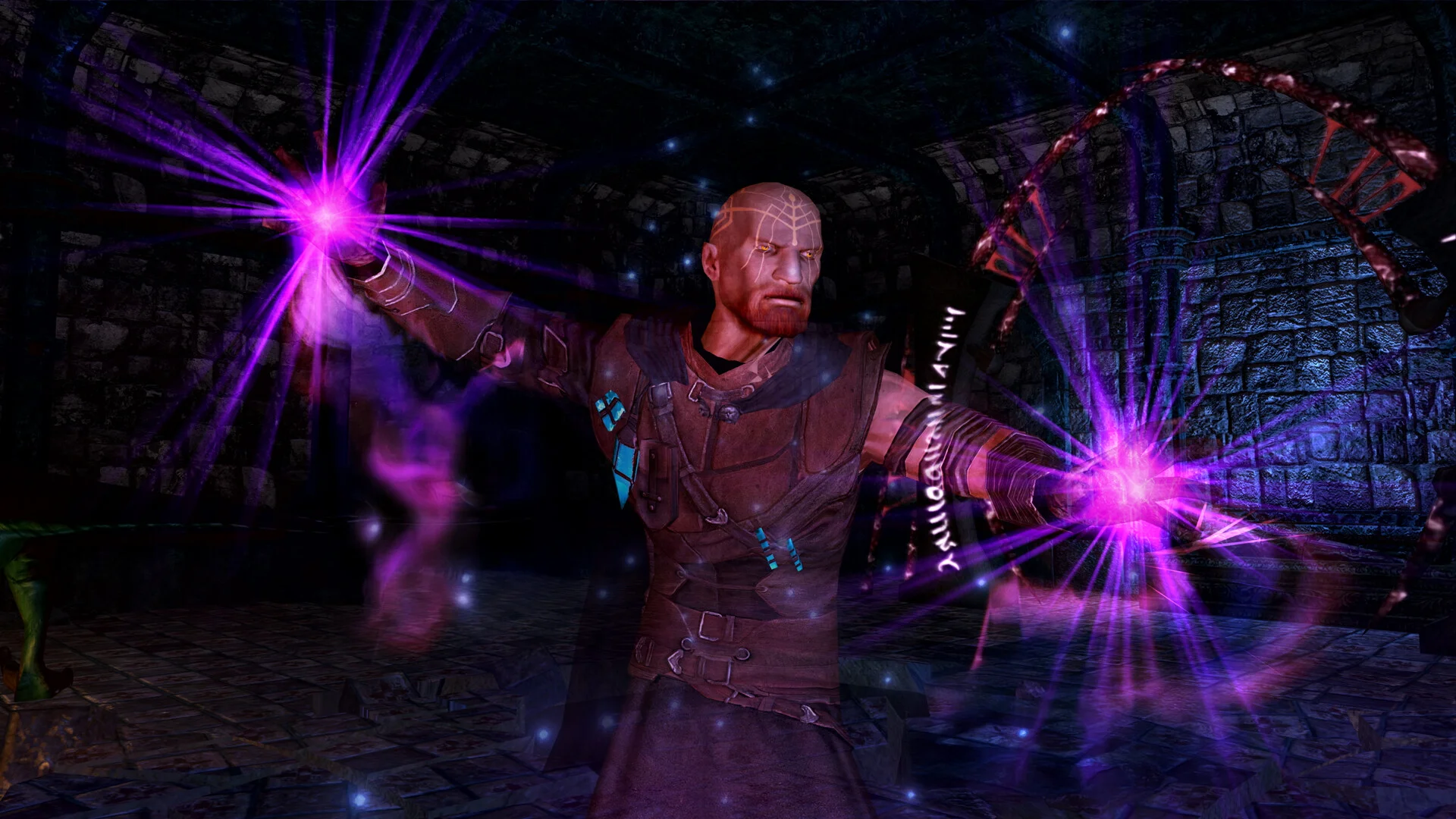


From the period where BioWare (free from EA influence and able to make good games) released Baldur’s Gate (1998) to the release of Obsidian’s Neverwinter Nights 2 (2006), we have what could be called the “golden age” for digital Dungeons & Dragons adaptations. Before that, the bulk of D&D work was handled by SSI, and those games were fine, but SSI was a wargame developer, and so they also lacked the critical accessibility that Baldur’s Gate first brought to the table.
However, around the time of Neverwinter Nights 2, Atari acquired the license for the property, and with the exception of Obsidian’s effort, did an almost incredible job of driving the property into the dirt. Some games were somewhat noble attempts that just failed in execution (the RTS-RPG hybrid, Dragonshard), but then there was the just shockingly bad Daggerdale, the distant pastiche of Baldur’s Gate, Sword Coast Legends, and the ill-fated (and not very good) MMO, Neverwinter.
Things only got worse from there, with Wizards of the Coast taking the license back before pooping out Dungeons & Dragons: Dark Alliance – an utter insult to one of my favourite fantasy characters of all time (Drizzt Do’Urden). In fact, the only bright spot between Neverwinter Nights 2 and Baldur’s Gate 3 was when Beamdog was able to somehow get all the rights together that it needed to release an expansion to Baldur’s Gate, Siege of Dragonspear, 18 years after the original game launched.

The point of this rambling about history is that Neverwinter Nights 2 was actually the only game in that “golden age” of Dungeons & Dragons that I hadn’t played already. When it originally released, I didn’t have a PC powerful enough for it, and then I just never got around to playing it. The release of the Enhanced Edition has given me a chance to tick this very big title off my bucket list, and I would have absolutely loved this game back when it first launched.
Neverwinter Nights 2 tells a fairly standard Dungeons & Dragons story… almost exactly the kind of thing that you’d expect sitting around a table with friends and rolling some dice in between the beers and chips. It starts with a pleasant festival in a remote swamp village being ruined by an attacking horde of monsters and githyanki. They’re looking for a special artifact that your adopted father happened to have hidden nearby. Going looking for that sets you on a grand quest that starts with getting revenge on the githyanki (low-level campaign) before taking on a keep and quests with a more regional importance (mid-level campaign), and then finally tangling with a massively powerful cabal of undead (high-level campaign). It’s structured almost exactly like those level 1-20 Dungeons & Dragons campaigns that give you an off-the-shelf few months of tabletop action, and it works just as well here.
The plot is entirely generic, of course, filled with all the fantasy tropes that we’ve long left behind. At the same time, Neverwinter Nights 2 is somewhat weaker than its golden age peers as the cast – both protagonists and antagonists – aren’t quite as memorable. There’s no equivalent to Minsc, Yoshimo or Imoen, for example. But what is there is still enough to have a good time, and there’s an excellent power fantasy at work to keep you keen. Any game that gives you a keep of your own is doling out the rewards and the sense that you’re a Very Important Person nicely.
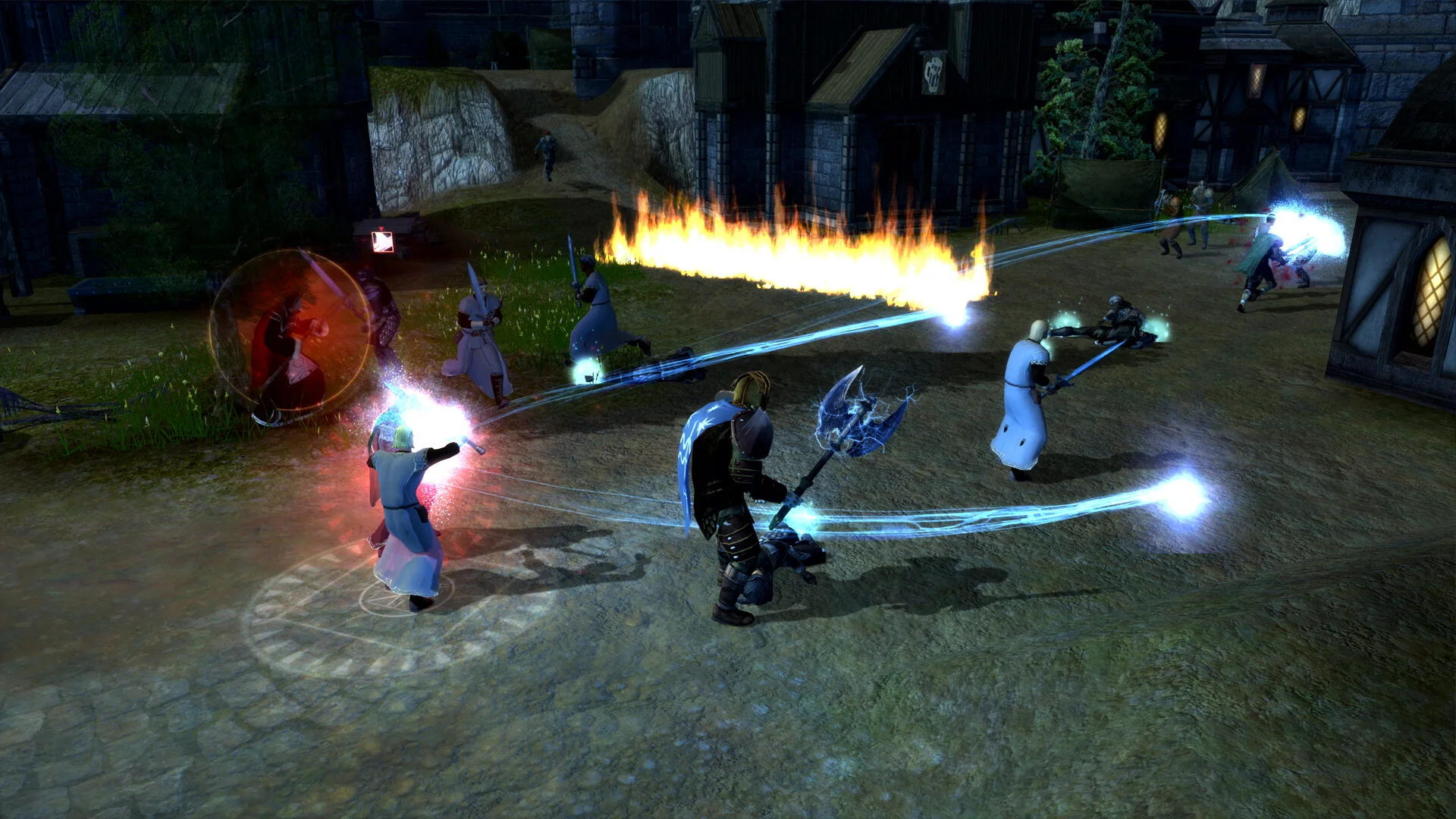
Another thing that helps immerse you despite the narrative is the art. Where Neverwinter Nights was a bit clunky and primitive, Neverwinter Nights 2 is a far more grandiose package, and it has polished up nicely so that to this day you can enjoy the quality art direction and the way that the Forgotten Realms – one of the most iconic fantasy settings ever – has been visualised. In fact, given the soulless dross that was released after it, you could easily make the case that Neverwinter Nights 2 is the most visually impressive Dungeons & Dragons title this side of Baldur’s Gate 3.
All of this is to say I was thoroughly immersed in Neverwinter Nights 2 as I played it through for the first time in 2025. Thanks to the expansions being part of the package, there’s somewhere around 100 hours of gameplay in here, and it moves at a good enough pace that I never felt it dragged. I am a Dungeons & Dragons fanatic, and I have both nostalgia for the property’s golden age and this specific type of storytelling. It’s definitely for me, but I’m not sure it’ll click quite as well for younger players. Then again, this was always a project for the millennials.
What hasn’t aged as well is the interface. I don’t blame Aspyr, the developer of the Enhanced Edition, for this. Interfaces back in those days were clumsy, and it’s not like Baldur’s Gate or Icewind Dale on the Switch fares much better. The Aspyr team HAS done a workable job to create a controller interface that is playable, but just be aware that it’s filled with menu systems, radial wheels, and button presses that take some time to become comfortable with. I also wouldn’t recommend taking a large break from playing this, because, depending on your memory, you’ll want to do a refresher course via the tutorial when you come back to it.
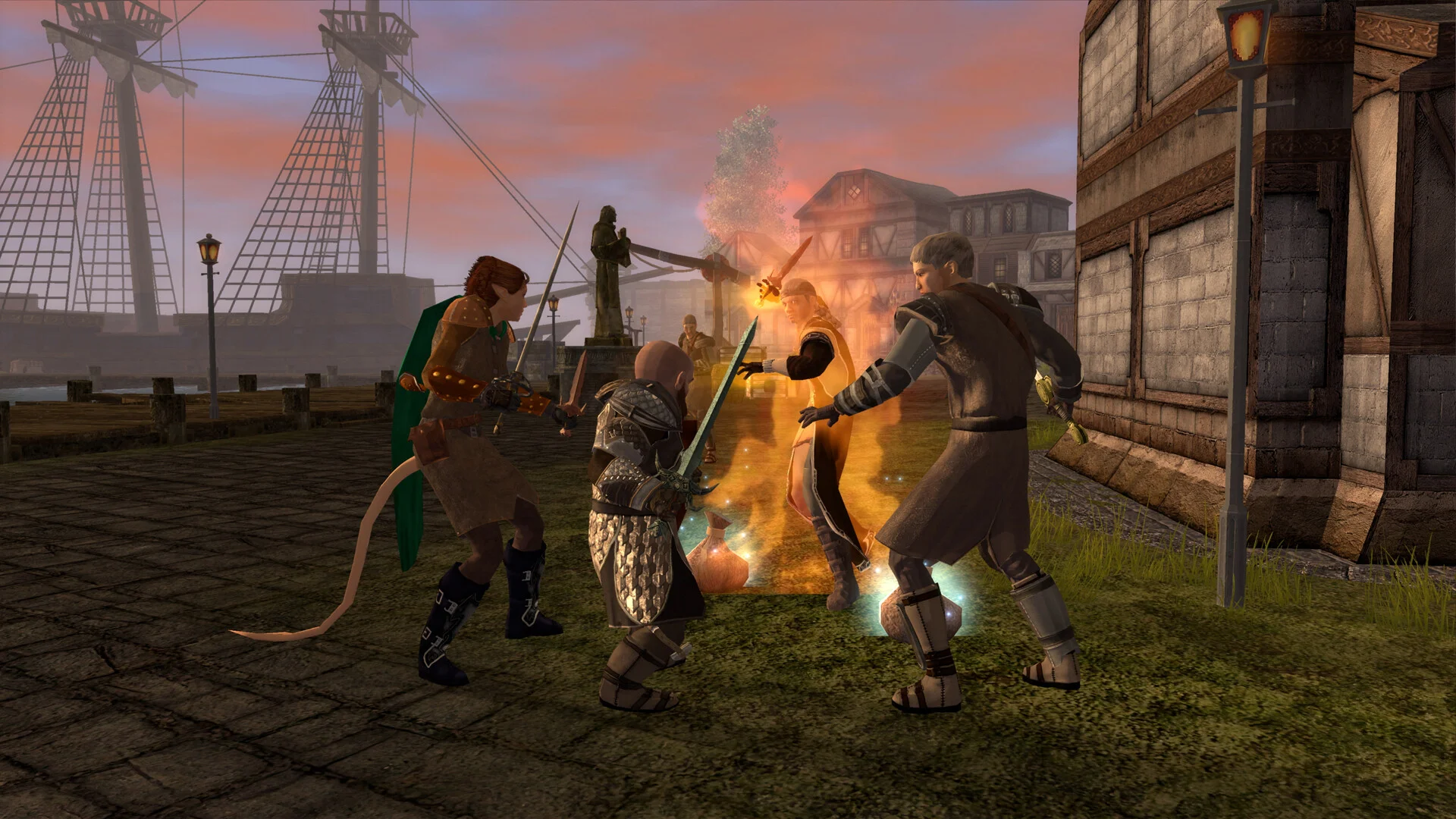
There are two options for camera angles. One is behind the back, and it’s not ideal. This game came from that earlyish era of behind-the-shoulder camera controls, and at the time, developers were still figuring out how to make it work. Consequently, the camera does tend to have a mind of its own, and loves getting scenery in the way of letting you see what’s going on. I don’t think it ever caused my party to be wiped out, but the difference between this and, say, Dragon Age Origins, released three years later, is significant.
The second option is a top-down, isometric perspective. I believe this is actually new to the Enhanced Edition, and designed to be used in combat in particular. It does work well and affords you a much greater visibility and perspective on battles that have a large number of characters in particular. Either way, however, the first thing you’ll need to do is go into the options and turn the camera speed WAY down. This is not a game that needs a twitch-speed camera, and I am amazed that they didn’t default to a much slower speed. The speed of the camera was actually straining my eyes at first. Dropping it almost to the very lowest setting possible makes the game far more comfortable to actually look at.
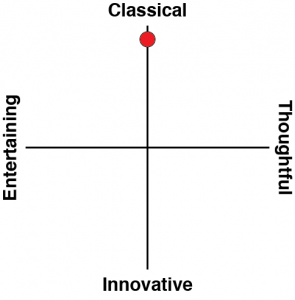
Neverwinter Nights 2 is an artifact of its time, and today straddles a somewhat uncomfortable spot where it’s not quite so nostalgic that it feels “retro” while at the same time, the games industry is now producing far more complex and nuanced narratives, in particular. With that being said, as a stand-in for getting a group together to play some tabletop Dungeons & Dragons, it’s difficult to look past this. Basically, it’s the right kind of kitsch.