
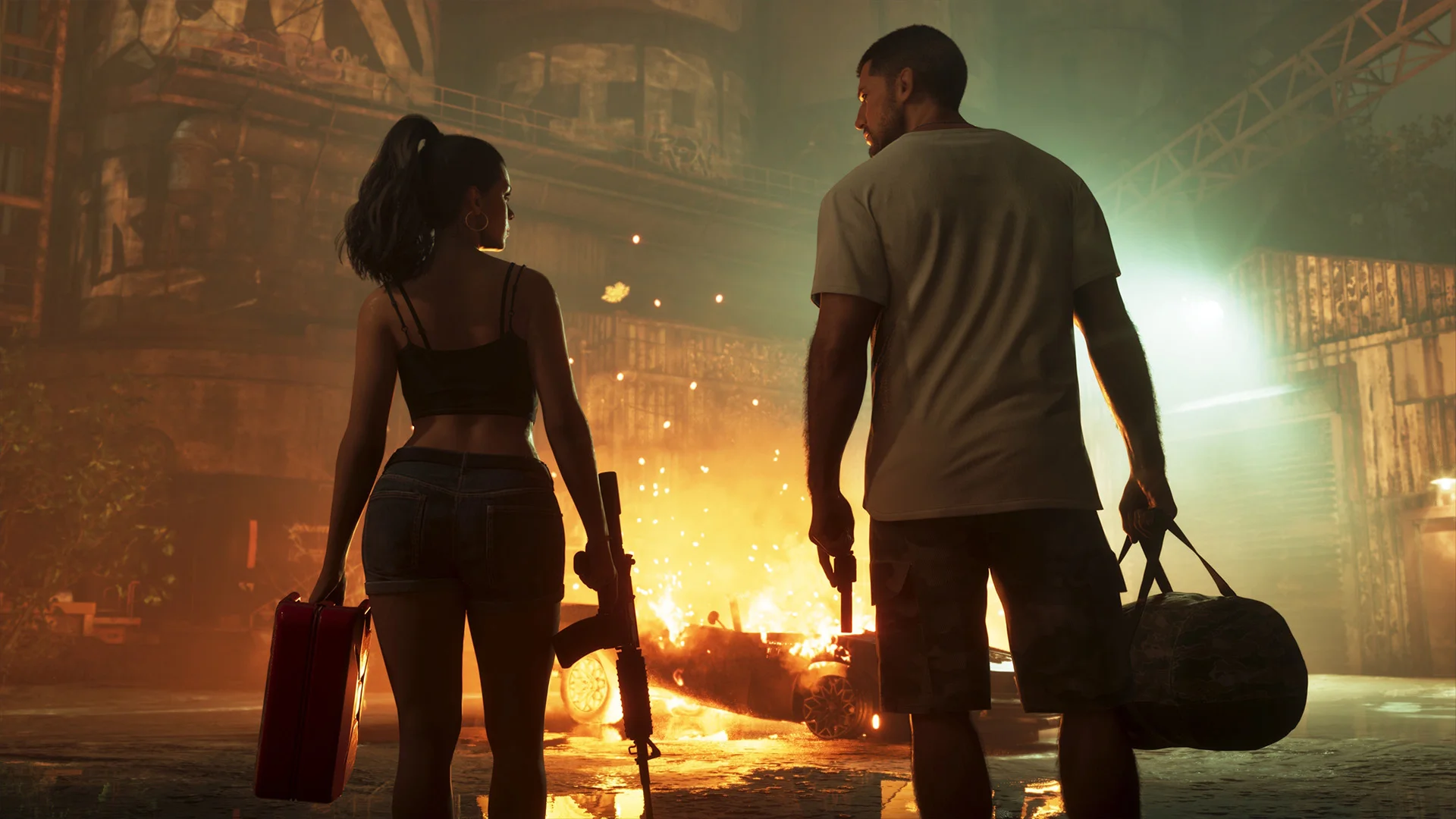
I’ll be honest here: I really didn’t expect to see the response to Grand Theft Auto VI that we got. I mean, I expected that it would be a critical and commercial hit and would sit somewhere close to the highest average score of all time on Metacritic. I also guessed – accurately, as it turned out – that people would take the statement that it is a “satire” at face value, despite the game’s key themes and main narrative not really lending themselves to that reading.
But what I really, really didn’t expect was the wave of people that seem to find the game to be downright wholesome. Yes. G. T. Freaking. A., the baddest of bad boys of blockbuster video games, is getting all kinds of accolades for being a “Good Boyfriend Simulator.” For just one example, there’s a mission very early on where Jason, one of the protagonists, has the option of buying flowers for Lucia, the other protagonist, and dear lord, did a certain corner of the media and social media go crazy for that. Still others are busy writing up opinions about how GTA is a direct response, if not a mockery of “fragile masculinity” with Jason, by implication, a shining example of a healthy approach to masculinity.
Now, look, I have considered and reconsidered writing this article a hundred times over for several reasons. The main one is the fact that the people who are upset with GTA VI and all this stuff regarding Jason and Lucia and their relationship are just the most terrible people. The right-wing reactionaries and the manosphere in particular (though that’s not as much a Venn diagram as a perfect circle), are losing their minds over this stuff, and while I’m not going to pollute DDNet’s airspace by linking to their voices, if you have a morbid interest in seeing it for yourself, it doesn’t take long delving into Elon Musk’s festering fascist sludge pile once known as Twitter to find people getting very mad at how woke Rockstar is and how much of a cuck Jason is. And that puts me in a difficult position because they’re mad at it for the reasons that the aforementioned media are celebrating the game… which I find to be frustrating. I reconsidered writing this piece several times over because I didn’t want to run the risk of being associated with those deadbeats, so to be very clear, in bold and italics, my comments here are in no way like theirs. I am critical of the idea of the Good Boyfriend Simulator, and I’m about to explain why, but it has nothing to do with it being “woke.”
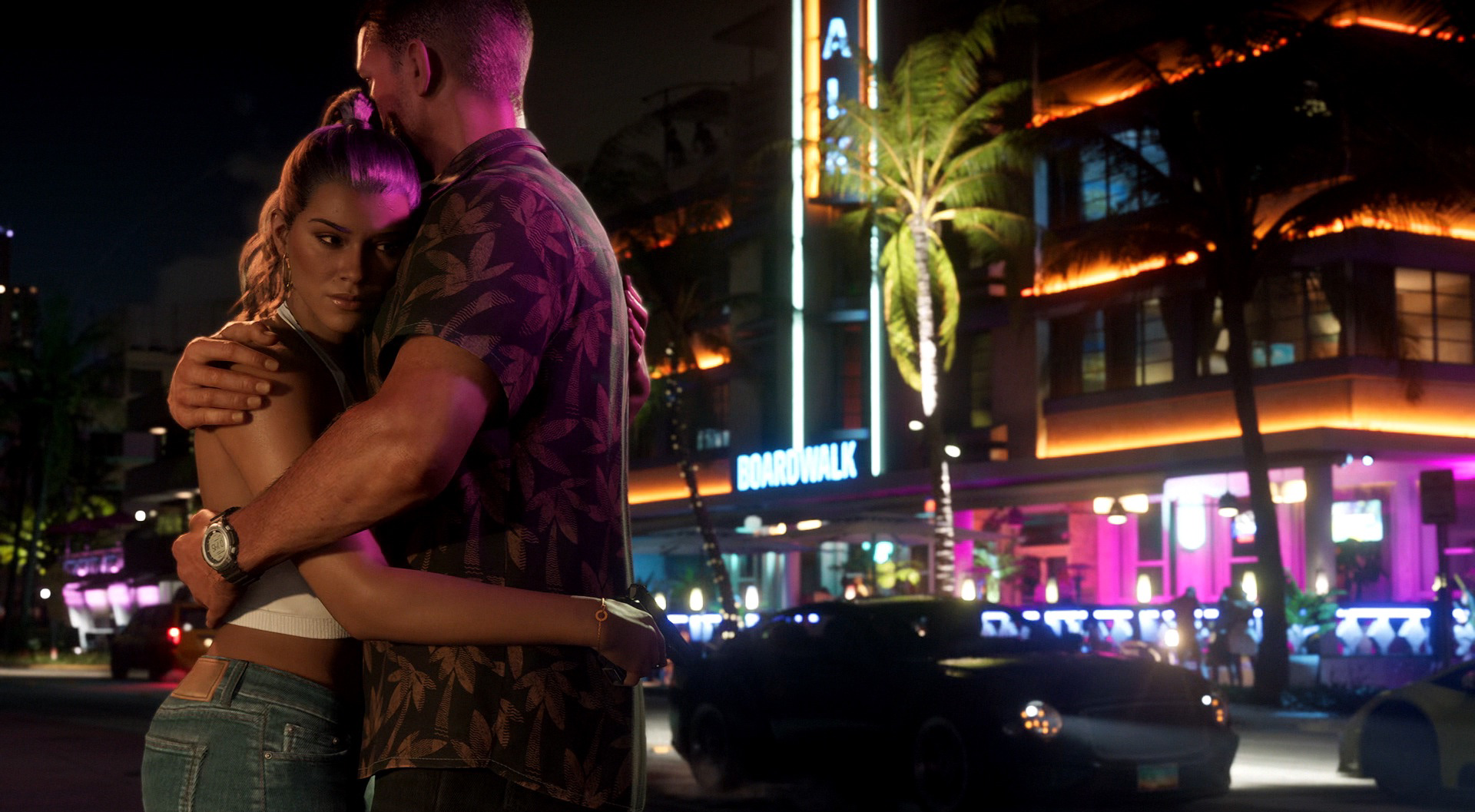
In fact, just to make this abundantly clear, from a few certain perspectives I appreciated the relationship dynamic for a similar reason to others. As I wrote in my review: In a game that surely ran the risk of becoming the biggest manosphere bible in the history of video games, the developers actually pulled off a mixed-race relationship in which both characters are mutually respectful and contribute equally to their shared goals.
But I do have some massive issues with the way GTA VI is so consistently being written up as this wholesome thing with a positive relationship in its centre. And those issues come in two flavours:
The protagonists aren’t heroic, their story isn’t wholesome, and when you consider the full context of who they are and what they do, their relationship is incredibly toxic.
Let’s start with Lucia. Lucia is a sociopath, which I am using somewhat colloquially, but if I were to summarise my general impression of her character, it’s that she has a deeply disturbing lack of empathy for those outside of her immediate circle, and an instrumental view of most of those inside it as well. Time after time after time GTA VI shows us that she takes an enormous amount of glee in the crime spree she embarks on with Jason. It’s quite blatant and written into the script in exact words that she finds it thrilling and a vastly superior way of getting her life back on track after a stint in prison than anything resembling honest work. And, yes, the game does justify that to an extent by making it clear how few open doors there are to an honest life (that’s the “criticism of capitalism” or some such that a few articles have tried to argue, apparently unaware that Rockstar criticising capitalism is like Lucifer arguing against hell), but does Lucia, at any point whatsoever, stop to consider the people she harms or uses on the way? Nope. Sociopathy. Patrick Bateman-level sociopathy. Lucia shows zero capacity for empathy towards anyone, except for perhaps Jason (though even then you’ll be left wondering just how transactional she sees that relationship at times), and her child. And even then, a responsible parent who was able to contemplate another person’s needs ahead of her own self-interest wouldn’t put herself and the father in the firing line with entire gangs and the entire police force. Parents that aren’t dangerously anti-social weigh everything they do against their responsibility to be there for their children.
Now, Jason. Jason’s relationship with Lucia needs to be contextualised with who Lucia is. Yes, he buys flowers for her, tags along as she decides to embark on the “grand adventure,” and, through most of the story, aims to be a voice of moderation and consideration to Lucia’s fire. He is a “good boyfriend” in the sense that he clearly cares for Lucia and wants to give her the world. But there is a fine line between that being the marker of a good person and someone who is an enabler in a toxic relationship, and I would argue that if you find yourself being the wind beneath the wings of someone who, at an absolute best case, has sociopathic tendencies, then you’re not navigating that fine line very well.
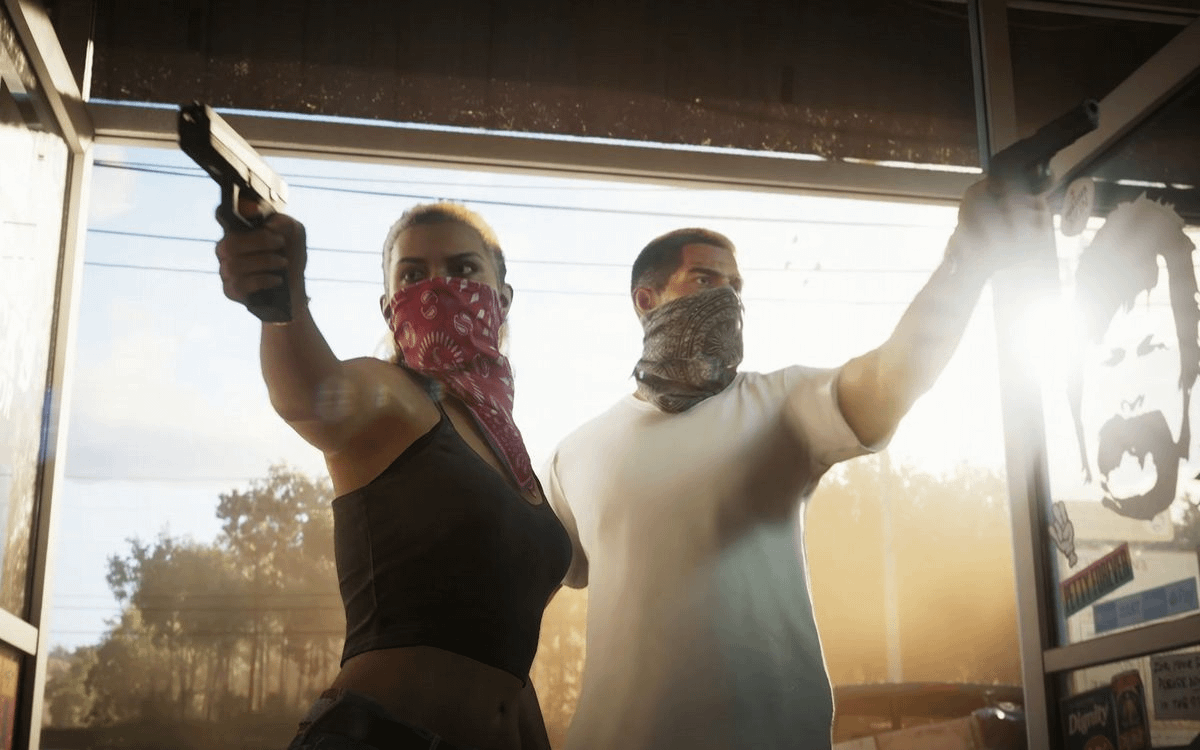
Furthermore, while Jason tends to be more of a closed book in terms of everything from his history to his view of the world, we get a pretty good sense of the kind of man he is from his other friends and associates. Throughout the story, Jason frequently calls on his contacts to help the couple find accommodation and “work,” but either Jason doesn’t know anyone with a legitimate business and lifestyle that could be even remotely considered “legal”, or he’s far less interested in a clean life for himself or Lucia than hanging out with drug smugglers and dodgy nightclub dealers.
Overall, both Jason and Lucia are just horrible people, and it really surprises me that players, overall, don’t seem cognisant of that… and even believe the opposite to be true. I do understand that GTA VI’s writers worked very hard to make you empathise with their relationship and their “it’s us against the entire world, and anyone that gets in our way gets trampled into the ground” defiance. But, if you pay careful attention, the game works even harder to make sure that none of the victims of Jason and Lucia are people that might make you uncomfortable. It’s nameless, faceless shopkeepers and bank tellers. It’s criminals that stop being useful to Jason and Lucia’s journey. Rockstar makes sure that there aren’t any children in this world, that you can’t do anything that would be considered a hate crime, and so on. Of course, I have to point out here that I think that was a wise decision by the developer, but it also means – and I would argue that this is a very deliberate design decision – that you’re not encouraged to feel empathy for the many victims of Jason and Lucia’s joint venture crime wave.
And the point here is that it really says a lot about the way people in modern culture engage with the arts that they are happy to engage with the shallow, surface-level empathy that a developer can achieve with good voice actors and touching cutscenes, but don’t seem to be able to consider the broader narrative implications of the overall work.
The second big issue that I’m having with the way people are writing GTA VI up as a contender for wholesome game of the year is the social context of GTA itself. For decades now, stretching back to the PlayStation 2 GTA titles that became the subject of moral panic because you could do things like “rob and shoot prostitutes” (to quote verbatim), the GTA series has been held up as public enemy #1 for having a toxic influence on the youth.
The response from the industry and the gamers has always been the same refrain: “You ignorant losers, games don’t make people commit crime.”
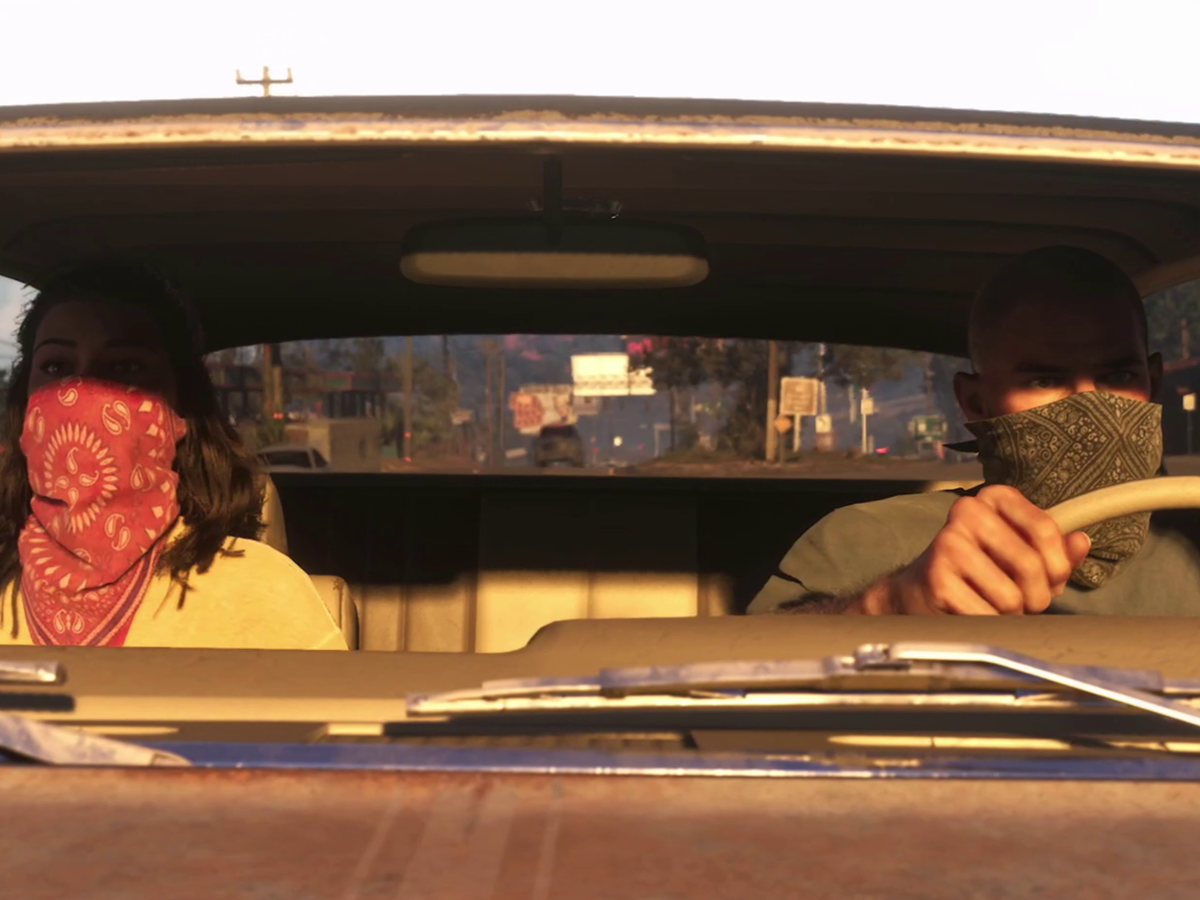
And yet, now that the industry and the gamers have decided that they like something about GTA’s messaging, suddenly this exact same once-controversial series is challenging and convincing people to better themselves. Apparently, the arts are highly engaging, influential propaganda when the message is positive, but misunderstood and have totally no impact on players when it’s negative.
To be clear here, I happen to believe that games do influence people, with all the positive and negative implications of that. I’ve been writing about that exact topic for years, looking at the knee-jerk response that the community inside games has every time someone from outside suggests that we should consider the impact that games have on people.
Games might not directly push people into an action, but they do influence a person’s mind. They’re an art form, however little that tends to weigh into most discussions about games, and as an art form they can influence in the same way that a powerful piece of cinema can inspire, how a masterpiece painting can change lives, or how a powerful play, ballet, opera, or whatever else can linger in someone’s memory through most of their life, gently shaping how they view the world around them.
Games might not influence someone to pick up a gun and go on a spree, but that’s a reductionist way of looking at it. For too long, commentators in the games industry have relied on this to dismiss criticism of the impact games have. Those games can do some horrible things – Call of Duty acts as outright propaganda for America’s military and the way it likes to shape its public image. Game publishers borrow from the kind of addiction tricks that gambling companies rely on because these things do work in getting people unhealthily obsessed with playing (and spending) on them. And GTA blatantly supports militant individualism and a vision of the American dream that results in… well, people being more engaged in a “love story” between two criminals than an entire state of shattered lives they leave in their wake. Such attitudes do bleed into how a person looks at the world, because that is how art works.
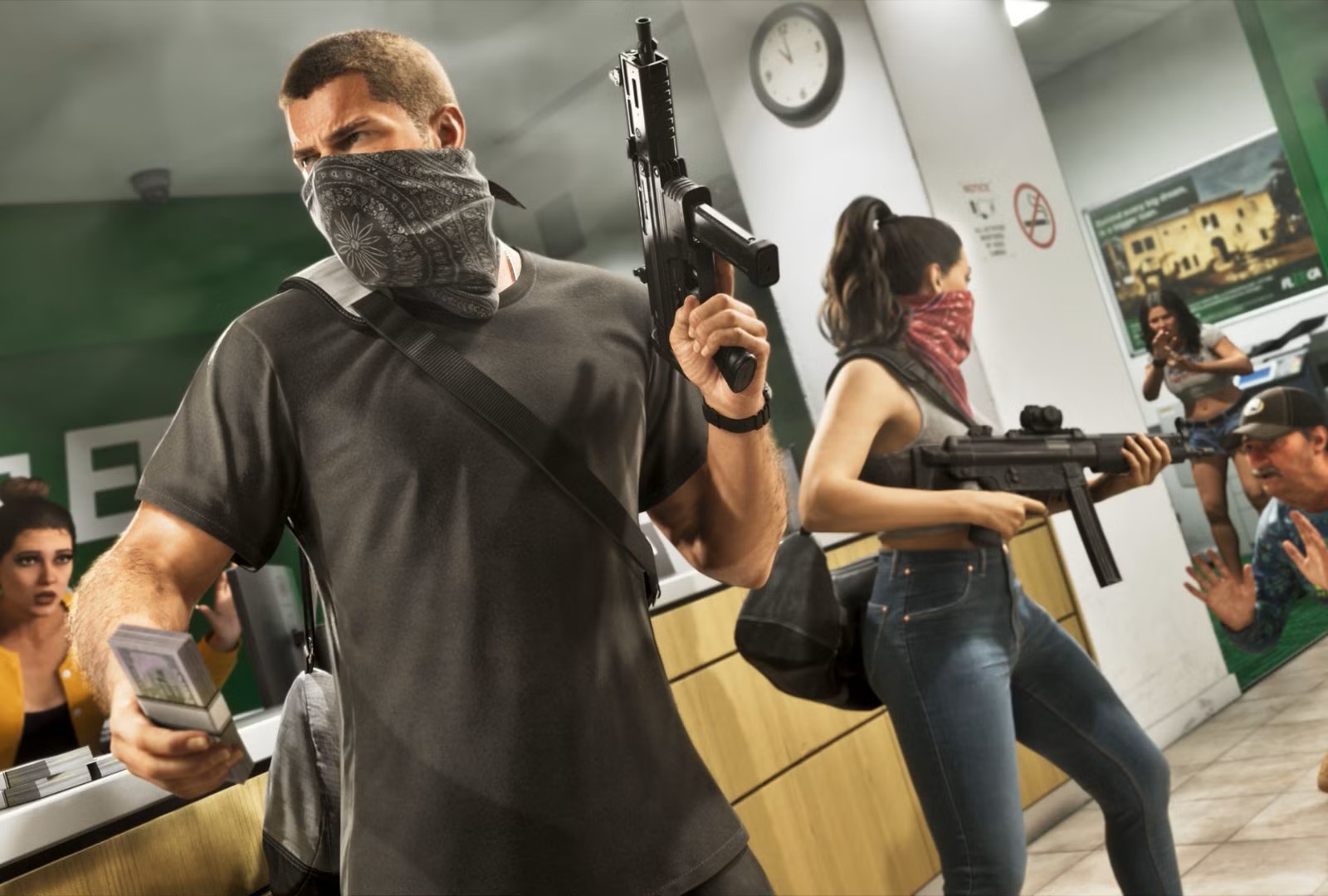
And so, yes, I do accept that GTA VI very likely has resulted in local flower shops getting a bump in sales. That makes sense. If you find yourself properly “immersed” in the world that it inspires you, then buying some flowers for your girlfriend is something it can inspire you to do with next to zero friction. But I’m seeing far fewer articles written about what else GTA VI acts to normalise. Perhaps because it’s a more complex question than a quick social media meme post from a flower shop talking about all the customers buying up stock “for their Lucias.” And perhaps because the level of immersion that it would take to overcome the friction to steal a car or go on a gun spree is monumentally greater, so it does remain true that GTA isn’t going to directly lead to that. But we should be concerned with the way it reinforces a toxic idea of the American dream. We should be very concerned about that.
Finally, to be very clear about all of this, I do not dislike GTA VI. The review score I gave the game genuinely reflects what I thought of it, and while I have tried to give the game the respect of treating it as a work of art that deserves proper critical analysis, I don’t for a second mean to suggest that all the people having a great time with it are wrong for doing so. I know that I’ll probably get some comments anyway, but please, for the love of our God, Hatsune Miku, take me at my word with this and understand that it’s possible to both enjoy something and have a serious discussion about the more complex issues that surround it than whether it was fun to play or not.
But I am frustrated that the single biggest cultural product of the year, and quite possibly decade, if not generation, is being reduced to such limited analysis, silly culture war shots back and forth, and a bad case of cherry-picking incidental side quests as though they turn a game of social nihilism into our generation’s Romeo & Juliet. I happen to think Rockstar’s work is significant and complex enough to deserve better than that kind of reductionism.





What you’re saying reminds me of conversations I’ve had about Beauty and the beast (the animated disney version) and how that’s a wholesome story about a wronged individual turned into a beast by an evil witch, finding wholesome love and finally receives justice by turning back into a human… Never mind that he threw belle’s dad in a dungeon to die of starvation or how abusive he is to Belle from the start! How does nobody see this blatantly obvious stuff? It’s not like it’s subtle. Or how in the new God of War games we’re supposed to care for Kratos because he cares for his son despite all the horrible stuff he’s done.
Didn’t read this beyond the first few paras in case there are spoilers, so my comment may well be irrelevant or addressed. I don’t know if the relationship in the full context of the story is ‘wholesome’ or not, but it is from what I’ve played so far probably the most realistic and interesting relationship I’ve encountered in a video game that gives you much control over how it plays out. And moment to moment many parts of it can certainly feel wholesome (at least by game standards, where usually you’re either railroaded into a successful relationship, or have a binary yes/no choice, or just make a visible meter go up by showering someone with gifts.)