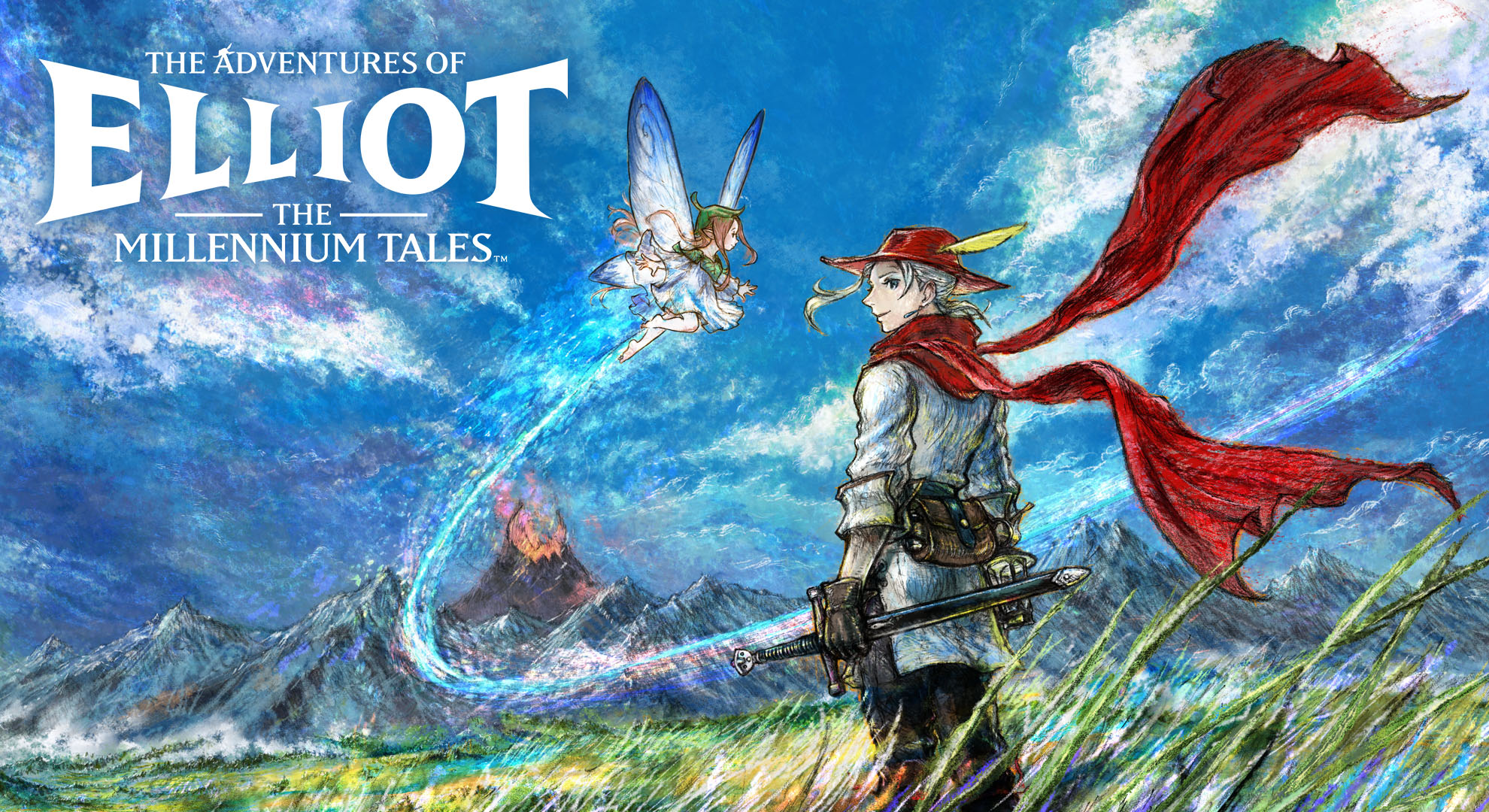


The Adventures of Elliot: The Millennium Tales is what happens when the Octopath Traveler team decides they’re going to tackle Zelda next. It’s an incredibly brave project. Zelda doesn’t really need a “spiritual sequel,” with Nintendo very much committed to its continuation. And it’s Nintendo’s single biggest property. To actively encourage the comparison is to actively ask players to compare this thing to a series that in a very real sense shaped childhoods and the very understanding of what creativity looks like in a video game.
Can it be done? Sure. Developers are constantly inspired by the video games that they themselves love, and there are no end of examples of worthy homages. The Zelda series itself has the Oceanhorn series on Apple devices as a warmly regarded “clone”. But this is also an HD-2D game, and we’re talking about a visual engine that has, quite rightly, become beloved for JRPGs. From the Octopath Traveler series itself, through to the remakes of Dragon Quest 1-3, HD-2D has almost single-handedly driven a new renaissance in interest in pixel art JRPGs. There are a bunch of developers doing them now, many of which look very much like the HD-2D engine, and we fans are rightfully celebrating that.
So there’s a big risk in taking that engine and deciding to do a project that is not really a JRPG (no, Zelda fans, I’m not getting into that debate. It’s not, okay? These are fantasy-themed action puzzle games). If The Adventures of Elliot had landed flat, it would have undermined the very faith people have in the engine to deliver.

After that long-winded introduction, I’m pleased to say The Adventures of Elliot gets the bits right that you’d expect a Zelda clone to get right. That might sound like I’m dodging some points, and that’s because I am, but I wanted to front-end this review with the good because, overall, I love this game. At a nice, breezy pace, The Adventures of Elliot captures all the qualities that we love in the Zelda series.
There is the joy of discovery, both in terms of the overworld and the many quirks that occupy its nooks and crannies, and the intricately designed dungeons that are filled with puzzle traps and treasure chests (filled with keys) that often come tantalisingly into visual range, but making it clear that actually reaching the chest is going to be a process. To compare it to the Zelda series, I was consistently left with the impression that this was most closely modelled on Link’s Awakening, given the speed that it does move through the adventure, and I still consider Link’s Awakening to be one of the finest games ever.
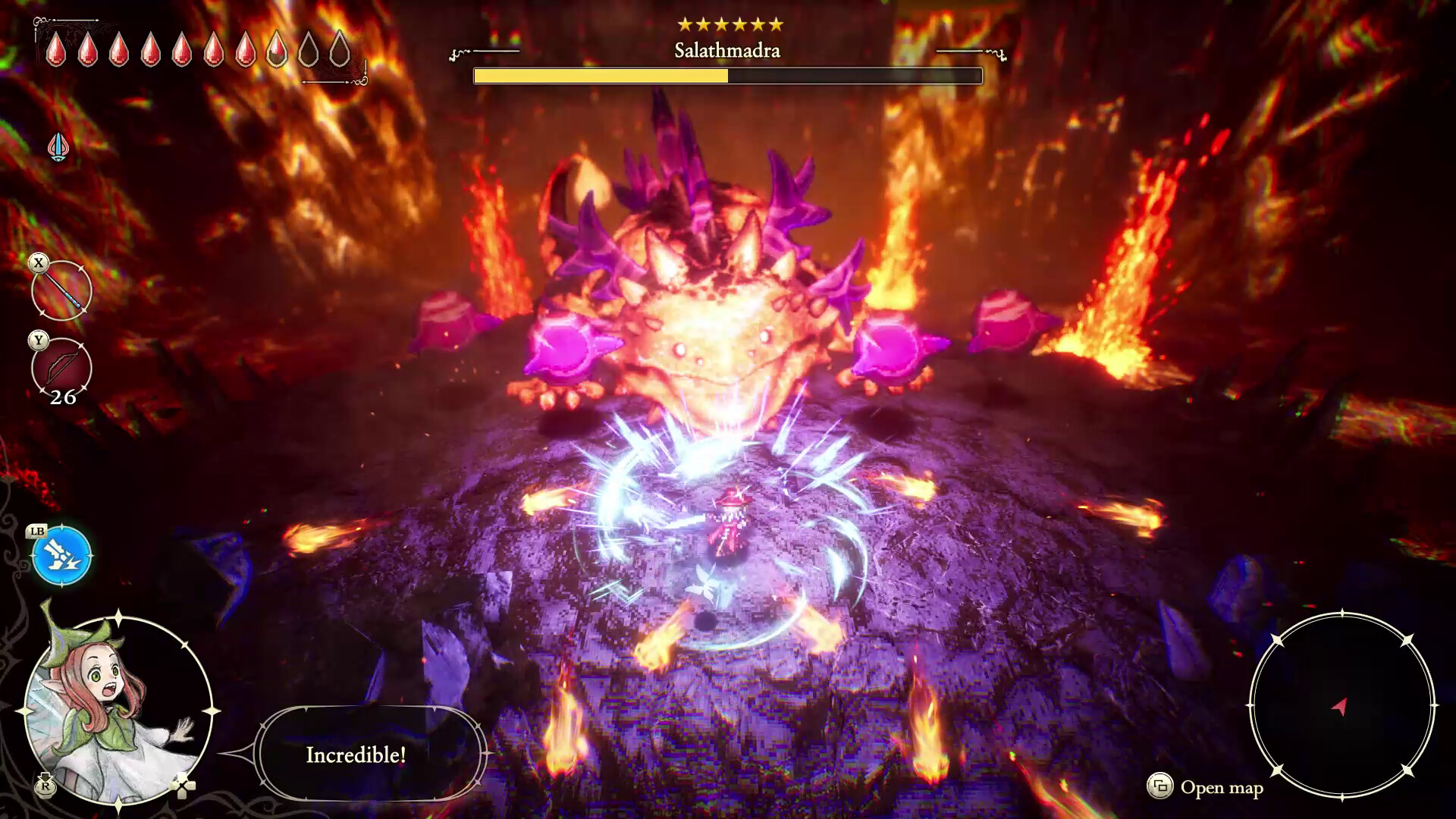
The HD-2D engine does great favours for the gameplay, too. I felt this most with the enemies, with the critters that swarm at you all being a delightful sort. The first couple of boss enemies were disappointing by comparison, but even there I got into the groove of things. Elliot himself moves nicely and fights with flair. One of the concerns many would have shared, no doubt, is how the HD-2D engine handles the demands of an action combat system, and I’m glad to say that it does so with precision. One of the key gameplay mechanics is the ability to combo up – by defeating enemies in succession without taking a hit, the rewards that future enemies drop will be increased. If the combat system was in any way cumbersome or sluggish, that system wouldn’t have been any fun, as it would have felt like there was no way to properly navigate through a hitless run. Thankfully that isn’t the case, and while I frequently ended up having my combos disrupted, I always felt like that was due to my failures at action combat.
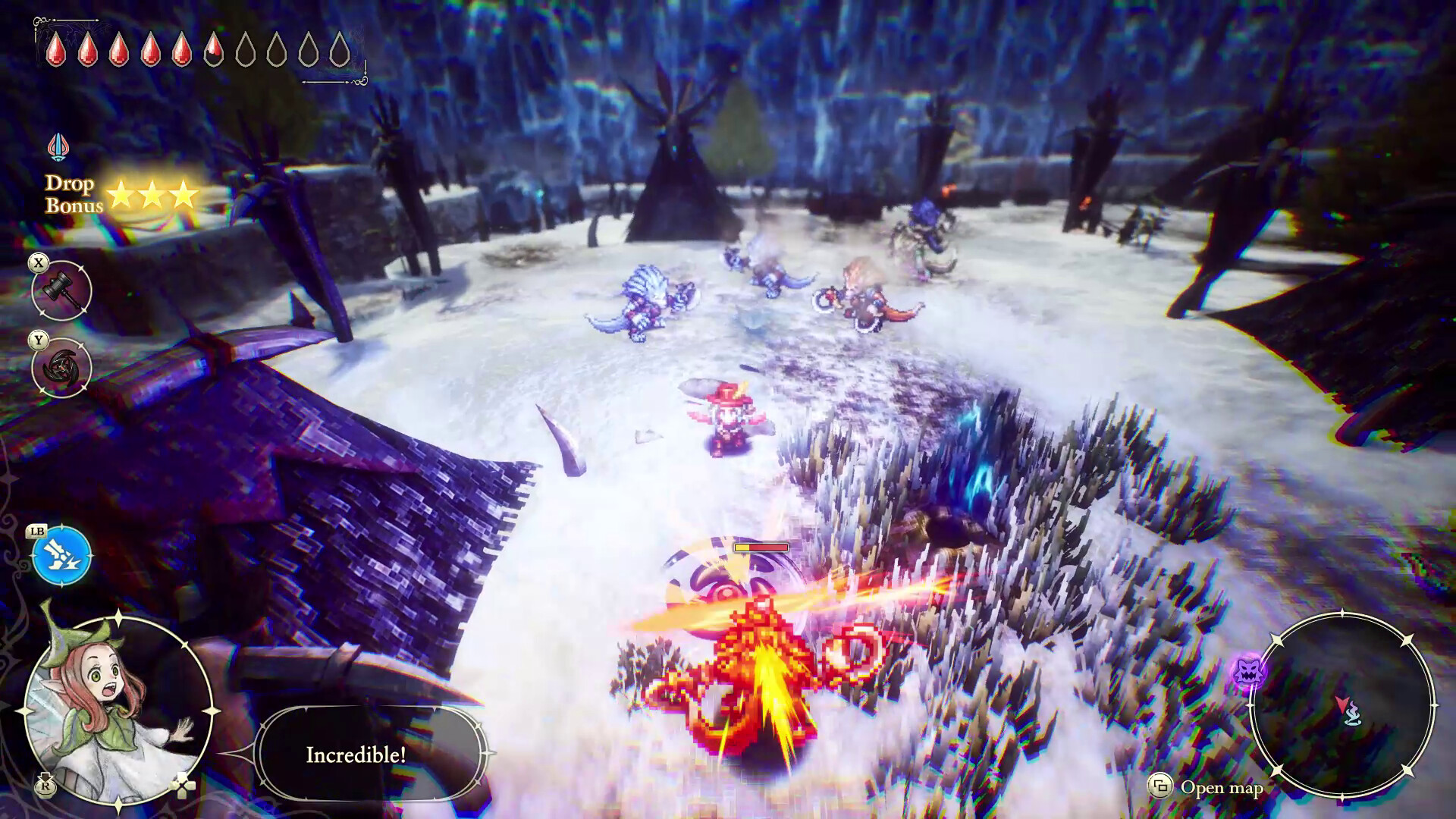
Likewise, the platforming, when it’s relevant, is tight and fair, and like any Zelda-like game, the range of tools to use to navigate the world and kill enemies was fun and varied. There’s also some great variety in the combat thanks to a combination of plenty of weapons and the presence of a companion fairy, who has her own range of skills. It’s still manageable for action novices, while more experienced players will appreciate that Elliot is anything but a button masher. The developers really have done a great job in building on a beloved formula here, making it clear that they are students of the genre.
Now, with all of that said, I do have to say that the developers dropped the ball, and hard, with the narrative. We all know that Zelda games largely let the narrative get out of the way of the adventure, with an efficiency of storytelling that puts you on the right path, and makes it clear that the stakes are significant, before centring the experience on the emergent story that comes out of play. Does anyone really remember the narrative of Breath of the Wild, or Link’s Awakening, for that matter? No, but we sure remember the contraptions we built in the former and how clever we felt uncovering the secrets in the latter.
Elliot makes the mistake of trying to centre more of the experience on the story while keeping the story as brief as a Zelda game. It lost me early on, and I can in fact pinpoint the moment it did. In the opening cut-scene, we’re introduced to a dear friend of Elliot’s in a few lines, before starting the adventure. Then, two dungeons later, he’s dead and over the course of three lines, Elliot mourns him and then continues on his quest. What I’m saying here is that the gravitas is not there to have earned that scene.
The world is an ambitious one, and as the promo material will tell you, covers 1000 years and four distinct ages. The ending, in particular, hints that at some stage this was a much more ambitious project that got whittled back in the name of efficiency and to meet genre demands. It’s rewarding, and that makes it compelling to journey through, but the developers definitely hedged with the storytelling, wanting to both canvass deeper themes while maintaining Zelda’s brevity, and that doesn’t work in its favour.
Typically, a weak narrative would matter to me. Even with my action games (see: NieR), I like to play something that has something to say (and that’s why I don’t quite hold Zelda in the same esteem as some others). However, with Elliot, the gorgeous production values and entertainingly breezy action roped me in anyway. This is a charming, if transient little game, and has the added benefit of demonstrating that HD-2D is a versatile engine that developers have only really started to play with.