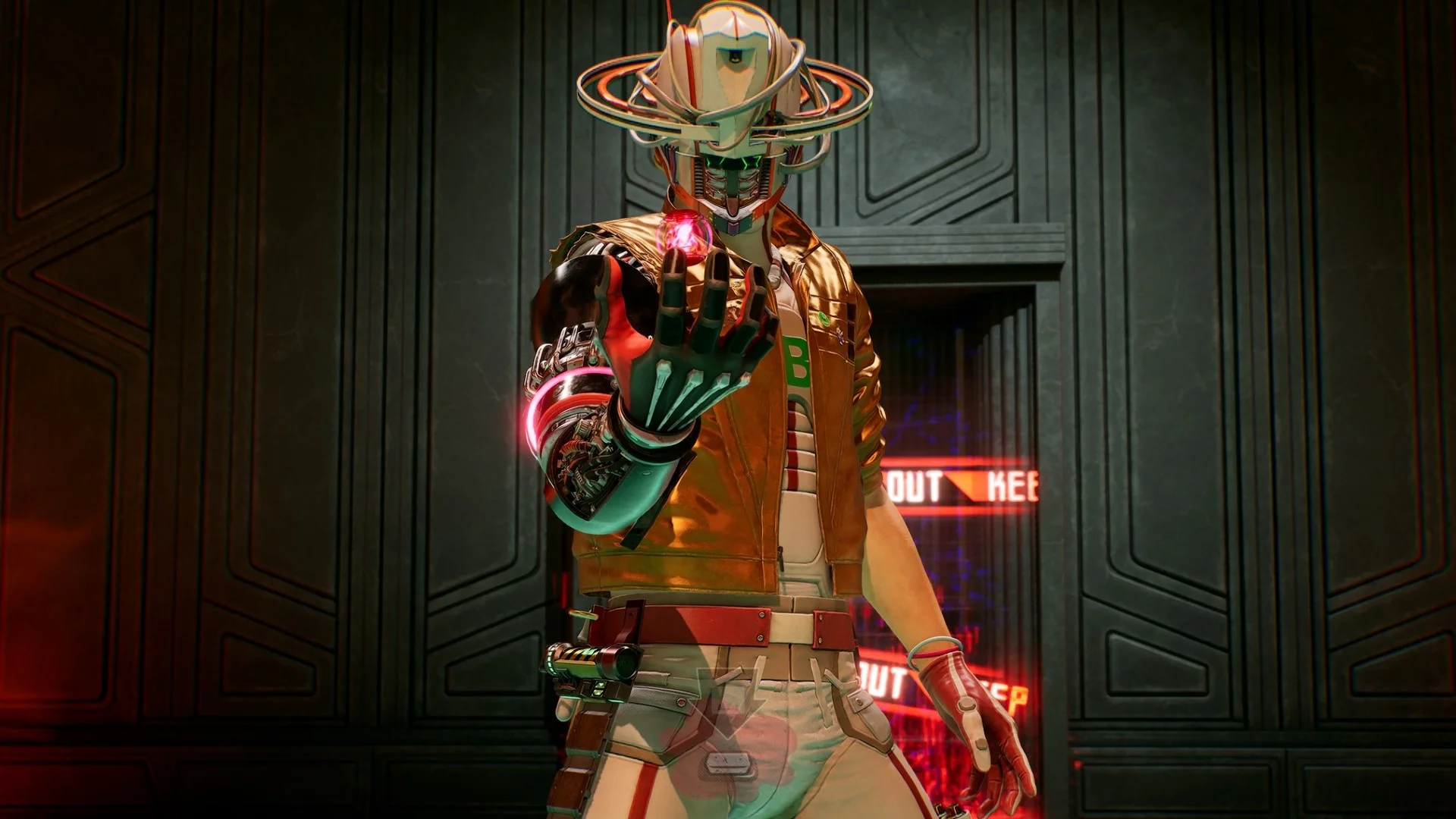


Goichi Suda and his team at Grasshopper Manufacture have carved out a very specific niche. Starting with the likes of Killer7, No More Heroes and Lollipop Chainsaw, the developer has mastered the grindhouse aesthetic and where most of the time “kitsch” is a pejorative term, with Goichi Suda, it’s a creative weapon. Romeo is a Dead Man is the latest in this very fine tradition. It’s crass, grotesque, extremely violent, and bludgeons you with its energy, but it’s also really quite brilliant.
I’m not entirely sure I can properly explain what the concept and narrative behind Romeo is a Dead Man, and that’s because I’m not sure Goichi Suda wants people to be able to articulate it. My best go at it is this: You play as Romeo Stargazer, who becomes deaded thanks to one of the many Juliets across time and the multiverse. Returning from the dead, our hero Romeo is recruited into some kind of government agency and needs to take down all the Juliets before his reality (or all realities, I’m not entirely certain on this point) can be annihilated.
But to be abundantly clear here, this bonkers plot and concept is not the point of Romeo is a Dead Man. Rather, it’s the background noise that gives Goichi Suda the opportunity to either homage or parody (again, jury’s out, it’s likely both) just about everything Suda’s come across. The title and character names are obviously a play on Romeo & Juliet, for starters. I was initially a bit disappointed that Suda and his team didn’t go to greater lengths to subvert and play with Shakespeare. It’s not Tom Stoppard: The Video Game. But it’s there in a very abstract way.

From there, the game follows a similar structure to the No More Heroes series, with lots (and lots) of anecdotes, random moments of philosophy, and brazen humour bookending an episodic format. The connections between some of this stuff and the overarching plot are sometimes tenuous, but we are talking about a game creator that has, in the past, had his characters take long digressions to discuss his (Goichi Suda)’s favourite films. Part of his subversive quality is his willingness to have stuff in his games that aren’t directly relevant to the plot.
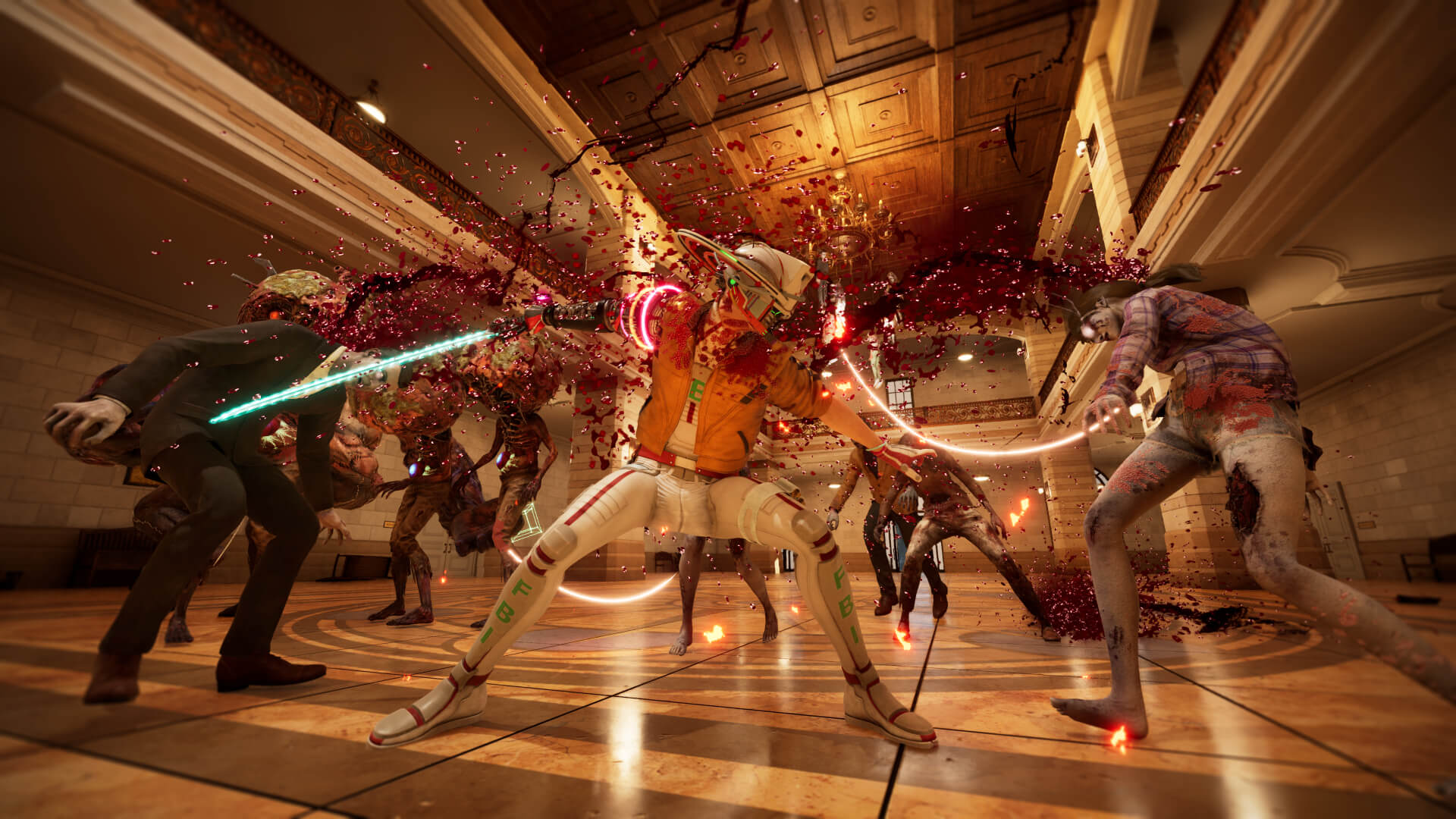
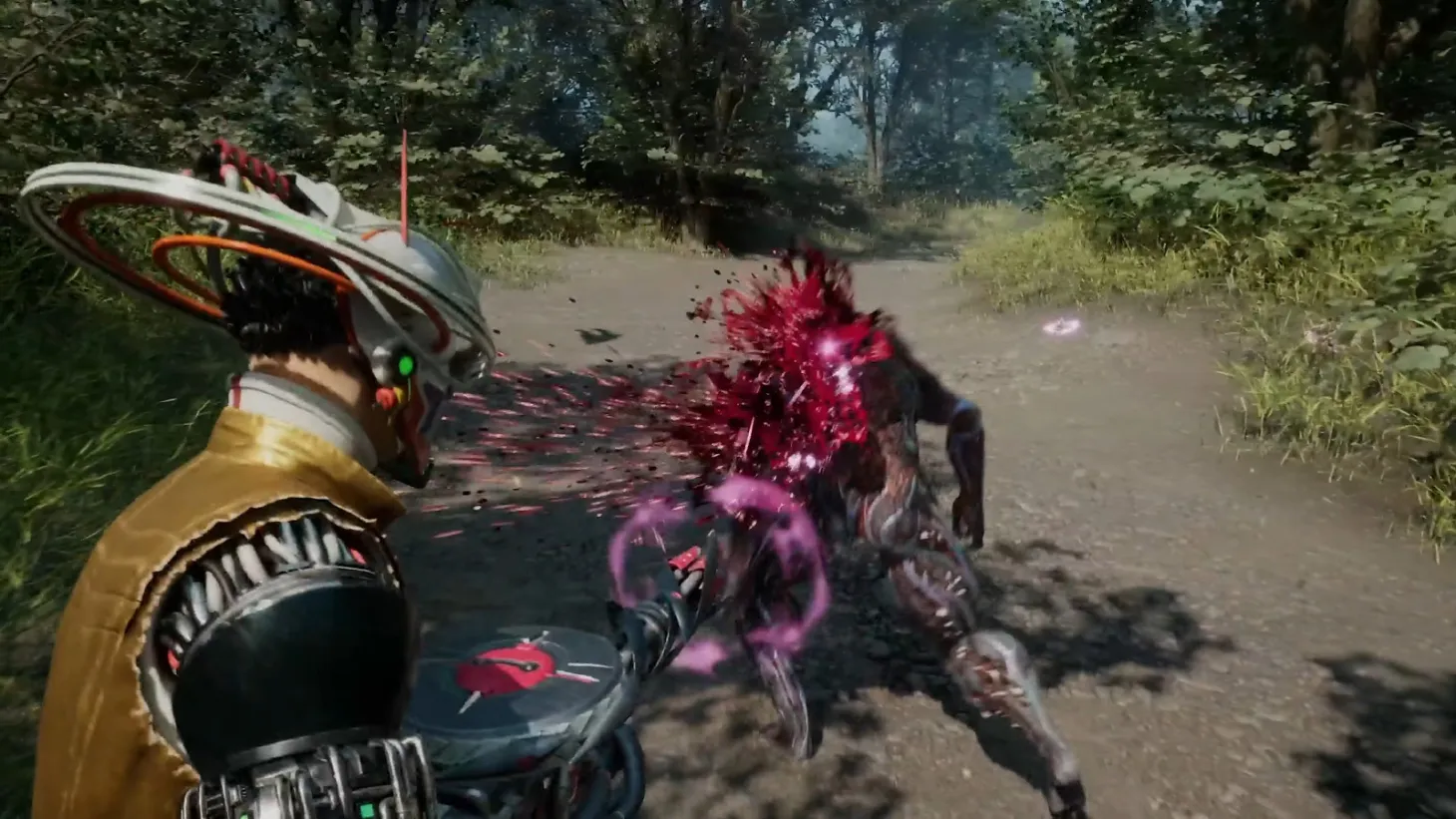
Romeo is a Dead Man plays in a very similar way to No More Heroes, too. Romeo has standard weak and strong attacks, and can also build up a meter that allows him to unleash a powerful attack that wipes out most enemies around him and restores a bunch of health in the process.
What further spices things up is the gun. More powerful enemies are difficult to take down in melee, but somewhere on their bodies is a weak spot. Shooting this a couple of times will do massive damage to the enemy, if not outright defeat them. Of course, it’s not necessarily easy to access those weak spots, particularly if they’re behind the enemy, or one of their more active limbs.
Outside of the combat, there is some effort to make players solve puzzles and “unlock” new areas to further drive forward. Honestly, this is possibly the biggest weakness in Romeo is a Dead Man, and it’s because you may find yourself needing to explore either a non-combat “other world” to search for pieces of a key, or just backtrack through a level because you missed something. However, enemies remain dead until you reach a save spot and resurrect them (Dark Souls style). The levels themselves are fairly basic without the explosive combat, so the momentum and overall vibe of the experience declines significantly in those moments.
Between episodes, you’re given access to a starship, and can do all kinds of minigames in there. You can “plant zombies” which give you little critters to support you in tough battles. You can also play a spaceship maze minigame, flying around a Pac-Man-like maze, and getting permanent boosts to stats as you pass over dots and objects. The ship’s fuel is the experience points you earn in missions, so there is an incentive to explore thoroughly and slaughter everything.
All of this is wrapped up in an aesthetic that is distinctly Goichi Suda. The amount of neon-soaked, psychedelic colour in the action that is as excessive as the gore. The boss monster designs are horrific in a surrealistic, grindhouse, grotesque manner. The spaceship itself is a top-down, pixelated, 2D environment, contrasting with the 3D spaces you’ll fight in, and further deepening the homage to the 80s aesthetic that Suda clearly finds so appealing. It’s messy, particularly in the UI, and that’s going to put some people off, but it’s glorious.
Ultimately, Suda seems to be making a point about how fundamentally absurd various popular culture trends are. He’s taking a title derived from one of the greatest theatre plays ever written, and deliberately juxtaposing that against a whole lot of nonsense that brings everything from Marvel to From Software’s esoteric approach to Souls storytelling. “Deadman” also comes across as a deliberate reference to Kojima’s approach to naming characters in the Death Stranding series. It’s not mean about it, but it’s easy to read into this that Goichi Suda is questioning whether popular art has lost something over the last few centuries since Shakespeare. Or perhaps he’s saying that popular art has always been this way. You’d be able to make both arguments after playing Romeo is a Dead Man.
I’d be lying if I said that this is a game for everyone. By its nature, the absurdism and surrealism of Romeo is a Dead Man is only going to resonate with people who can appreciate that quality about it. The game itself point-blank refuses to be entertaining to play on a passive level. But given that video games around us are becoming more and more generic, “best practice” driven, and in general, everything that Romeo is a Dead Man pokes fun at, it’s nice to have the occasional game that’s willing to put some people off in pursuit of its creative vision.