

Dragon Quest VII did need a reimagining. I don’t say this as a criticism, as it is my favourite Dragon Quest of all time. But it is undeniable that it is a massive, weighty, lengthy thing, to the point of being inaccessible. Making some small concessions and compromises to that narrative in the name of accessibility has resulted in a game that more people will want to play through, and fans can jump in for another run without having to commit a holiday to it.
Related reading: Our review of the 3DS remake of Dragon Quest VII.
Dragon Quest VII Reimagined opens in much the same way, on a small island where a group of childhood friends are brought up to believe that is the extent of the world, but they never quite get to the point of believing the adults on that one. So they set about piecing together how to escape their mundane (yet safe) existence, and find themselves dragged into another world entirely.
That’s the point where things do change, and the massive amounts of backtracking and journeying-for-the-sake-of-journeying are smoothed over to allow for faster progress through the narrative. Other parts of the original game have been cut entirely or made optional to further reduce the raw runtime of a game that would have previously taken 70 (or more) hours to get through.

These changes won’t be for everyone, and purists are going to be rankled by the mere suggestion that not everything in Dragon Quest VII was critical to the game, and therefore could be safely cut. What’s left is still more than substantial enough, and (as far as I’m concerned) all the best parts have been retained. In general, I personally feel that the approach the developers have taken here has resulted in a “less is more” game that the original should have been in the first place.
Perhaps the underlying reason to explain why I don’t feel that the underlying game has been compromised in the slash and burn is that Dragon Quest VII was always pretty modular in design. You’d access a new area (island), run headlong into a town with a unique “culture, accent and aesthetic” with a singular problem that needed to be solved, and after solving that problem, you’d be moved on to the next location. The narrative tying these locations together is pretty wafer-thin beyond the set-up and finale, so snipping out some links in the overall chain was a pretty seamless process from that perspective.
That’s not to say that the narrative is shallow and uninteresting, of course. It’s actually very engaging, especially where it involves travelling back and forth in time, and allowing you to see the results of your actions in the past manifested in the future. The game perhaps misses a trick in asking the audience to really analyse anything that’s going on – even by Dragon Quest standards this is a fairly straightforward story of heroism and world-saving – but it’s well written, consistently funny and charming and in general everything that you want from Dragon Quest.
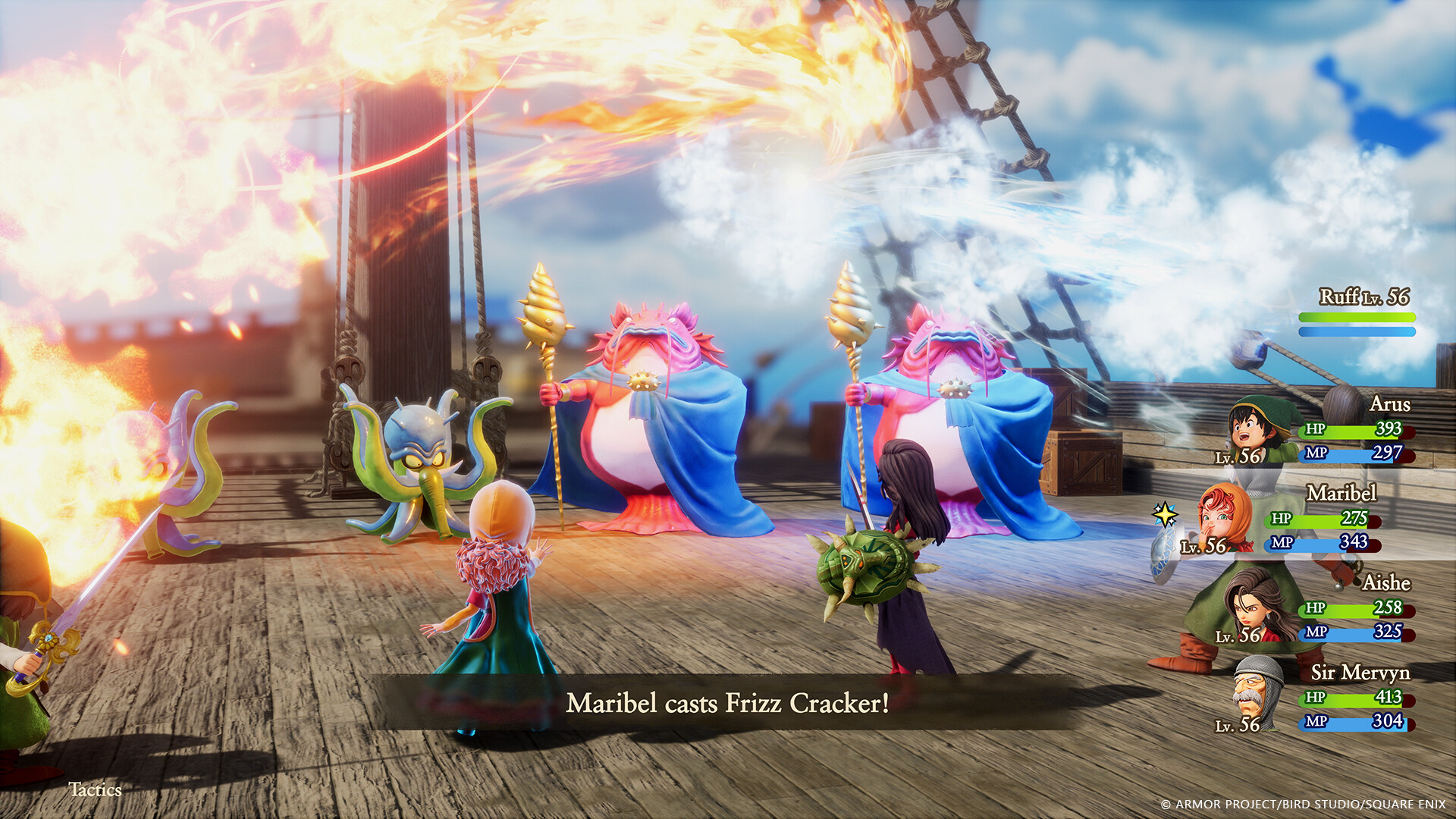
What has been given depth is the character development and combat system. There are new features, such as Monster Heart accessories, that allow you to really tailor your characters. One allows you to reflect 100% of damage that a character takes back to the enemy, which is an ideal way to deal with bosses if you can get them to target a beefy meat-shield character. Another one allows a character to survive a blow that would otherwise kill them with 1hp left, which can be a lifesaver against a total party KO if you give it to the healer.
Another new feature that was added to this remake is the “Moonlighting” feature, which allows each character to have to jobs at the same time. This allows you to come up with some pretty creative combinations and layer on skills and stat points in a very nuanced fashion. Min-max type players are going to delight in how these systems – and others – come together to allow for a granular level of detail in how the party comes together.
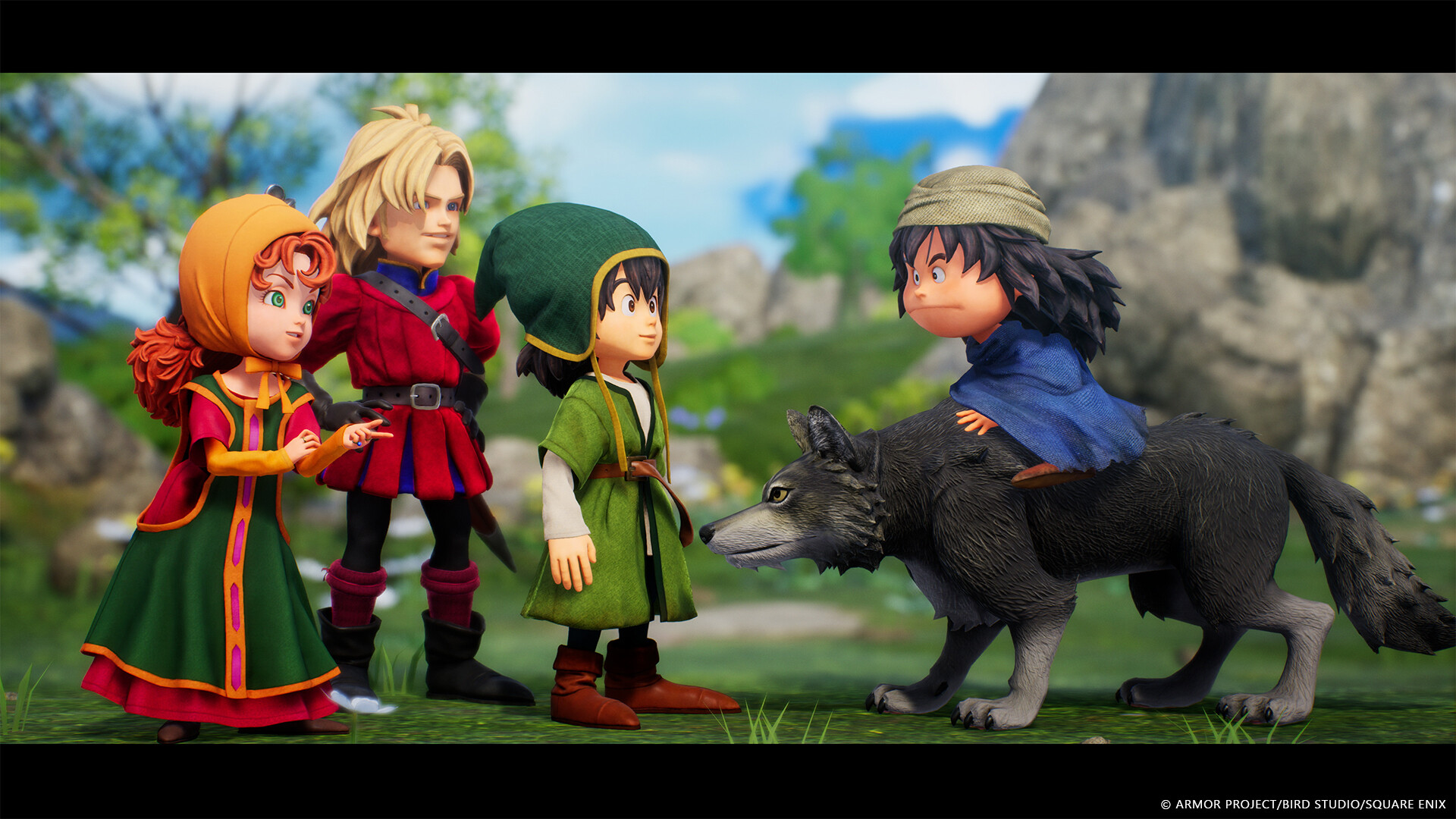
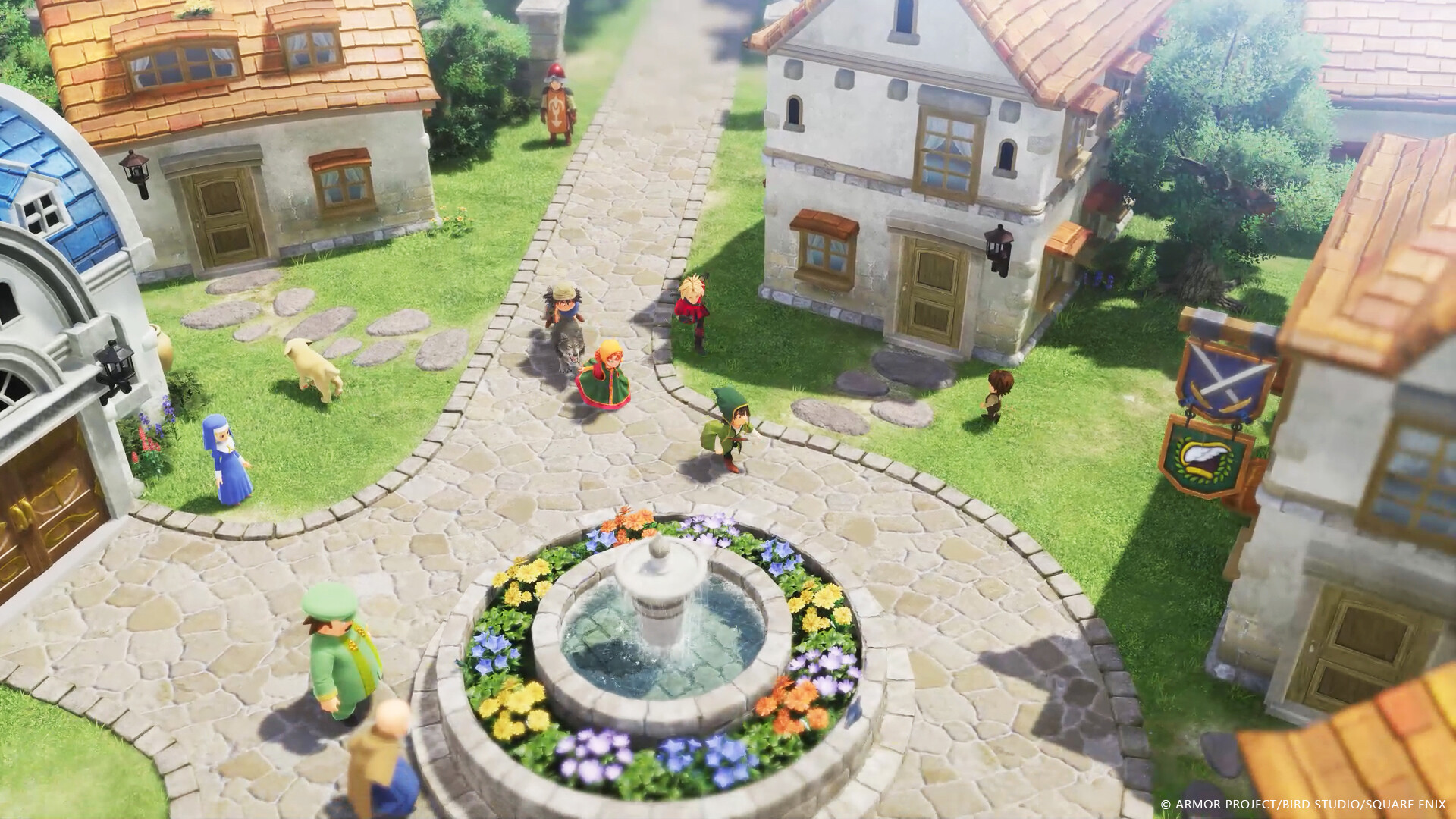
While I very much enjoyed the combat system of Dragon Quest VII Reimagined, and found the changes to the narrative to be, on balance, the right edits to make, the one thing that did disappoint me was the aesthetics. The developers have gone for a diorama-like look, with character models that look like they were inspired by remakes like Link’s Awakening and Atelier Marie. It’s a fine look, and I wholeheartedly support the attempt, but the developers seem to have been very timid in its application. Fantasian was far more authentic with the diorama aesthetic, and the characters sit awkwardly halfway between the standard Dragon Quest look and that rounded chibi style of the game’s remake peers.
The only other disappointing thing is that the developers decided that absolutely no one should feel like death has a consequence in Reimagined. Healing items are so plentiful that they would have no value in a proper economy. Characters that die in battle respawn with 1 HP at the end of the battle, meaning you don’t need to store up expensive revive potions or abilities as you used to need to with JRPGs. The difficulty in battle is generally lower, but in the event that your characters do all get knocked out, the penalty for revival is nowhere near half your gold, as it is traditionally with Dragon Quest. I am all for a game’s easy mode being pitched this way, so that less experienced players and people that struggle with JRPGs can enjoy the game on their terms, but at the risk of saying something controversial, there was nothing wrong with how difficult Dragon Quest VII was, in that it demanded some skill and thought from the player but wasn’t punishing about it.
I mean, they even got rid of cursed items penalising players for equipping them without first figuring out what they were. Dragon Quest VII Reimagined aims for a difficulty level that anyone can enjoy, but the inability to set yourself a real challenge is going to put off JRPG fans, more than even the narrative trims will.
It is strange to me that in the end, Dragon Quest VII Reimagined is better for new players to Dragon Quest than existing fans. I would think that the “VII” next to the title would put off those newcomers, who would assume that they would be coming in six titles too late. More to the point, no RPG trading on nostalgia – port, remake, or entirely new game – should overlook the existing fans entirely. Dragon Quest VII Reimagined makes some very smart decisions with the narrative and gameplay, and is so very close to the perfect version of the masterpiece thanks to that, but players have to go in knowing that the challenge is essentially non-existent.