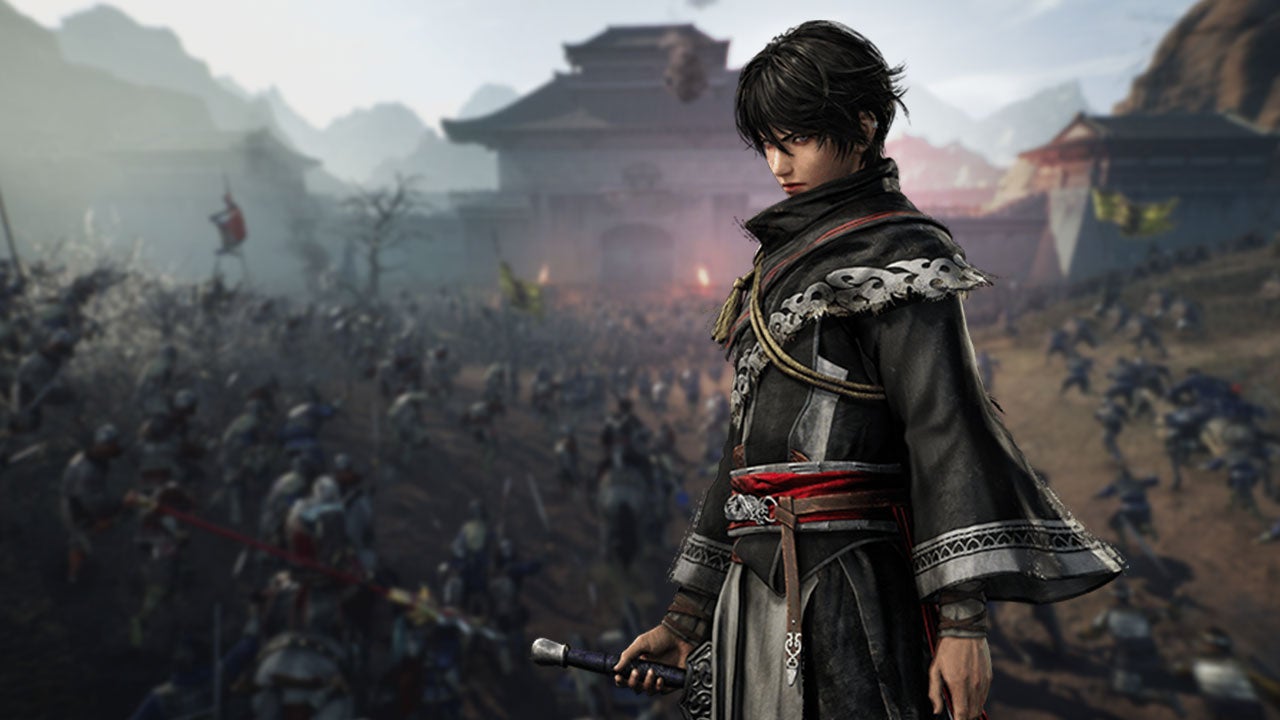


Just a few weeks ago I was saying how impressive it was that Square Enix managed to squeeze Final Fantasy VII Remake onto the Switch 2, at such a quality fidelity. Now it’s Koei Tecmo’s turn: I didn’t think Dynasty Warriors: Origins could work on the Switch 2. But it does. Very well. So much so that having the game in portable form makes this the better version, as Dynasty Warriors Origins lends itself really nicely to pick-up-and-play.
In itself Dynasty Warriors Origins is a superb game, precisely because it does such good work with the Romance of the Three Kingdoms base material. I’ll let my review of the game on PlayStation 4 speak for itself below, but in basic terms, Koei Tecmo decided to cast you in the role of an observer to the action unfolding around you. Ultimately you are responsible for the outcome of the massive battles that you participate in, but as a silent protagonist your job is to essentially move through the epic fiction and make sure the leaders that you choose to support have the best outcome from the battles they participate in.
Ultimately you’re not going to change history, as such – if that were possible and I had my way Lady Sun – Sun Shangxiang, would be the ruler of the entire world and then some – but the narrative is written in such a way that, within the historical context, you feel like what you’re doing is consequential.

In terms of the port, Koei Tecmo has done something technically beautiful. Dynasty Warriors has always struggled with the trade-off: On the one hand the developers want to give players really, REALLY big action across sweeping battlefields, with thousands of characters running around and doing battle with one another at any given moment. On the other hand, rendering that much action is punishing for any engine and so Koei’s team have frequently had to resort to having characters pop into the screen only when the player gets really close to them, or hope that players are willing to put up with a frame rate that shudders at times.
Dynasty Warriors Origins on the Switch 2 makes one compromise to the game on higher-end devices like the PC: it locks the framerate at 30fps rather than 60fps (exactly the same as Square Enix and Final Fantasy VII Remake). This doesn’t impact on the feeling of the game to play on any level. It never feels sluggish or unresponsive. And the frame rate remains robust no matter how big the action gets.
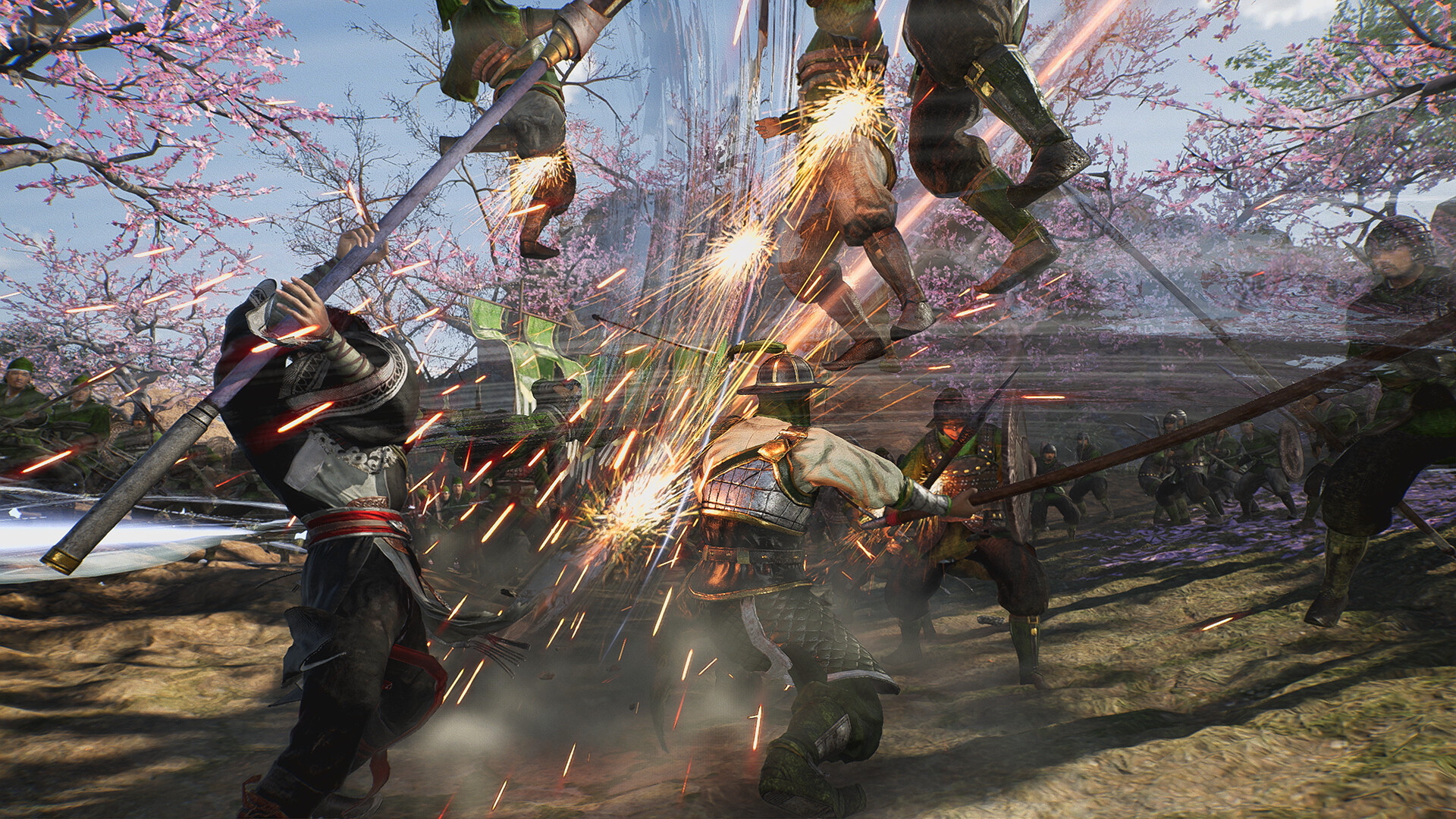
On top of that, the character models look almost as good as their big-screen counterparts, and there’s no noticeable drop in visual fidelity, particularly when the action is heating up. The Switch 2’s screen is large and dense enough that you won’t miss any details that you need to, and in general, Dynasty Warriors Origins very much feels like a native game on the console. Koei’s developers very clearly understand the hardware (and given their work with Nintendo on Nintendo properties like Hyrule Warriors it’s like Koei Tecmo has particular access to the hardware teams), and they get everything out of it.
Otherwise, this game is a straight port of the big console version, so I’ll let my previous review speak to it:
I can’t even remember where I first came across this quote, but one of my favourite statements about historical fiction is “historical fiction isn’t history, but it can reveal the historical truths that lie beyond the evidentiary.” Dynasty Warriors, particularly the later ones, and most particularly, now, Dynasty Warriors Origins, is better historical fiction that almost anyone will give it credit for. It isn’t an authentic recreation of history, but it does such an exceptional job of turning those many characters from the pages of a very dense book and making them fascinating figures that we can understand, become interested in, and want to learn more about. It’s by no means a textbook, but you’ll come out of Dynasty Warriors Origins with a better understanding of the events, characters, and overall history than with any previous game in the series… or just in general from video games.
Of course, Dynasty Warriors is an action game first, historical fiction second, and the action in this one is exceptional. Koei Tecmo has gone back to the drawing board a little, given how bloated and overly systems-focused Dynasty Warriors 9 could get, and has delivered what Dynasty Warriors does best: Big battles featuring hundreds of characters on screen at once, and you being uniquely equipped to carve through them.
You have standard, strong, and Musou attacks, as well as the ability to stun an enemy if you deplete their “shield” rating by attacking them furiously enough. You’re able to take into battle any of nine different weapons, each with a significantly different feel to them, and there are two defensive maneuvers – parry and dodge – both of which you’ll need to make liberal use of.
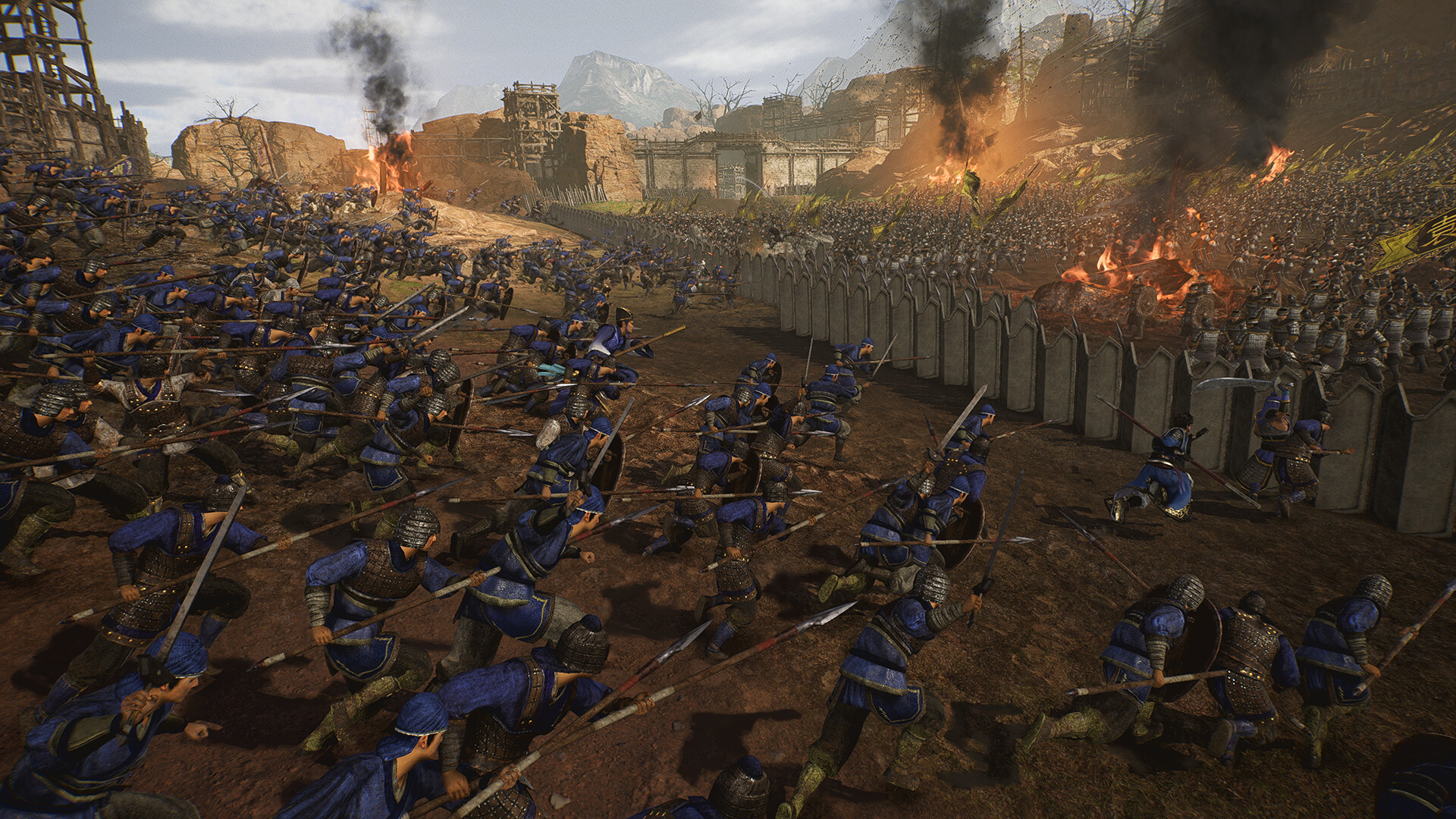
That’s more or less all there is to the combat system, with some of the superfluous systems of other recent Dynasty Warriors games that resulted in pointless over-complexity left to the wayside. Thanks to the speed of the action and the way that levels are designed to funnel you into yet more action constantly, this combat system never gets dull. The developers also do several clever things to keep you on your toes, too. Firstly, in most levels there are multiple competing objectives, so you need to think carefully about what’s going on around the battlefield and shift quickly between defending key characters and locations before going on the attack to try and capture new strategic points or defeat enemy leaders.
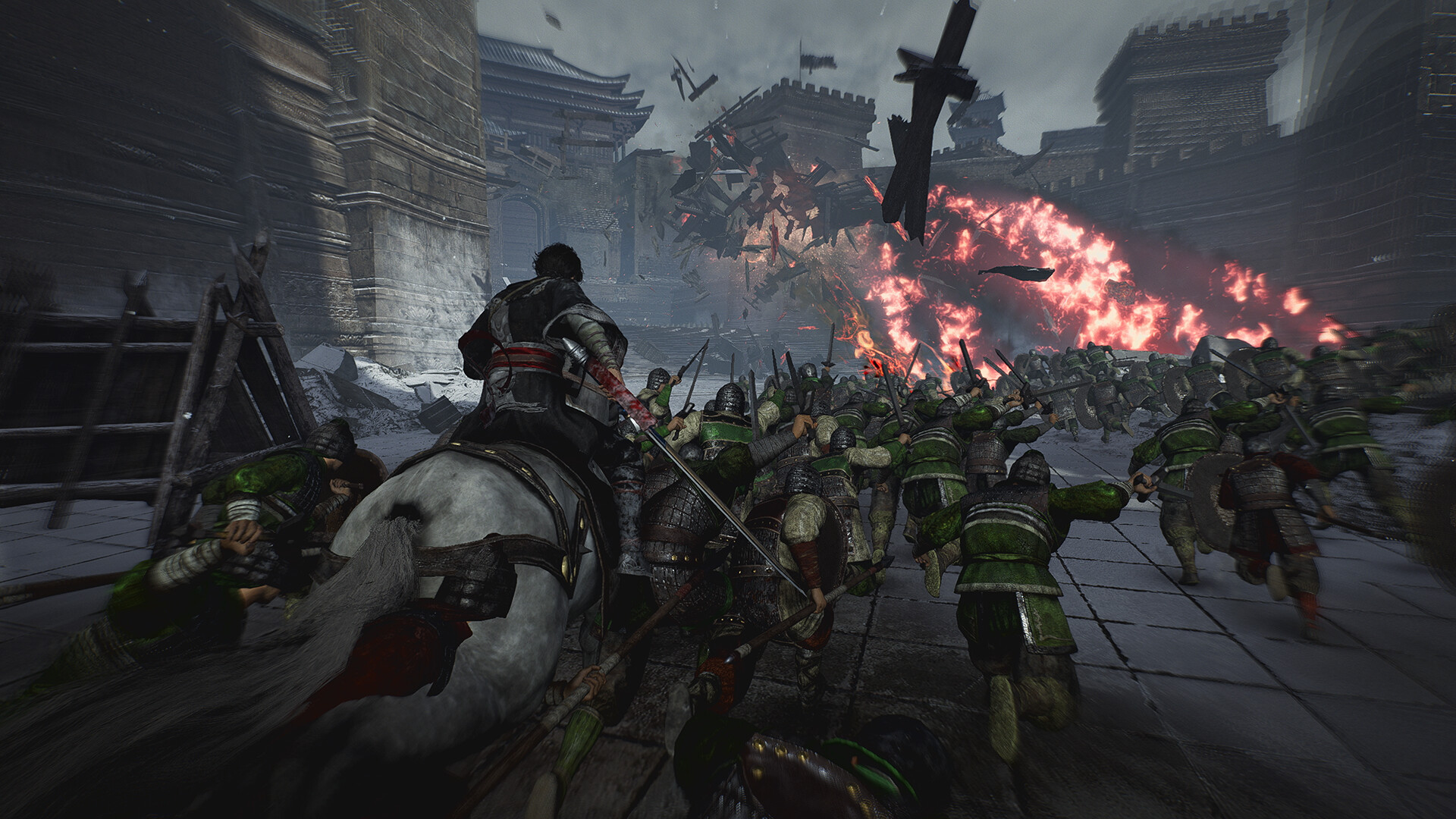
Secondly, every so often there will be a critical battle, in which thousands of soldiers on each side will mass and then clash. These are incredibly dangerous places to be, and even on the easier difficulty levels you can find your health depleted quickly if you end up swamped by enemies or isolated away from the main force. In these moments you need to defeat enemy leaders quickly, while also completing objectives that will prevent the enemy from executing a catastrophic tactic. You’ll have to do that while dodging unblockable enemy attacks, having multiple leaders come at you simultaneously, and you’ll be in a chaos where there’s so much movement that it’s difficult to keep track of it all. These moments are always major set pieces for the stage and both exhausting and exciting.
Finally, there are the major chapter boss battles – not the ones at the end of a level, but characters like Zhang Jue, where there’s a one-on-one fight and the battle is a level in itself. Koei Tecmo has learned a little something from the Souls series and its own games like Nioh or Wo Long here. It’s not as difficult as those games, but it requires much the same discipline. These enemies will cycle through a range of devastating attack patterns, and you need to learn how to dodge, parry, move, attack, and otherwise respond to each, while also launching your own attacks to wear their health down. These battles are multi-staged, and quite lengthy at 10 (or more) minutes to play out, and fast. You’ll need to be right on your toes throughout.
Between battles, you are presented with a map of China that you can wander around. There you’ll be able to speak to the various characters you’ve met, undertake some side quests (always more battles), and dig up loot to use to upgrade your weapons and capabilities. There’s not much to this map and system, but it’s enough to link the various battles and key scenes together and strengthen the sense of continuity across the entire game.
Overall, Dynasty Warriors Origins is a big, explosive, and massively entertaining action game, and true to its title, a conscious effort by Koei Tecmo to get back to the qualities that so many people have enjoyed from the series over the years. Lu Bu is terrifying, Sun Shangxiang is history’s greatest tomboy, Zhuge Liang is brilliant, and watching all these stories play out with such energy is just utterly brilliant.