

Last year, a humble Ukranian developer released Light de Deux, a sweet little romance visual novel about ballet dancers that I absolutely loved. The dance theme got to me, of course, but it was also well-written, well-drawn, and the characters inspired me so much I arranged with the developer to have them guest in my own game (which is getting so close to the release date now, I promise!). Now that the developer is back with Submansion, and as it turns out, it’s not just the dance theme that hooked me. There is something about how this guy goes about his work that I really like.
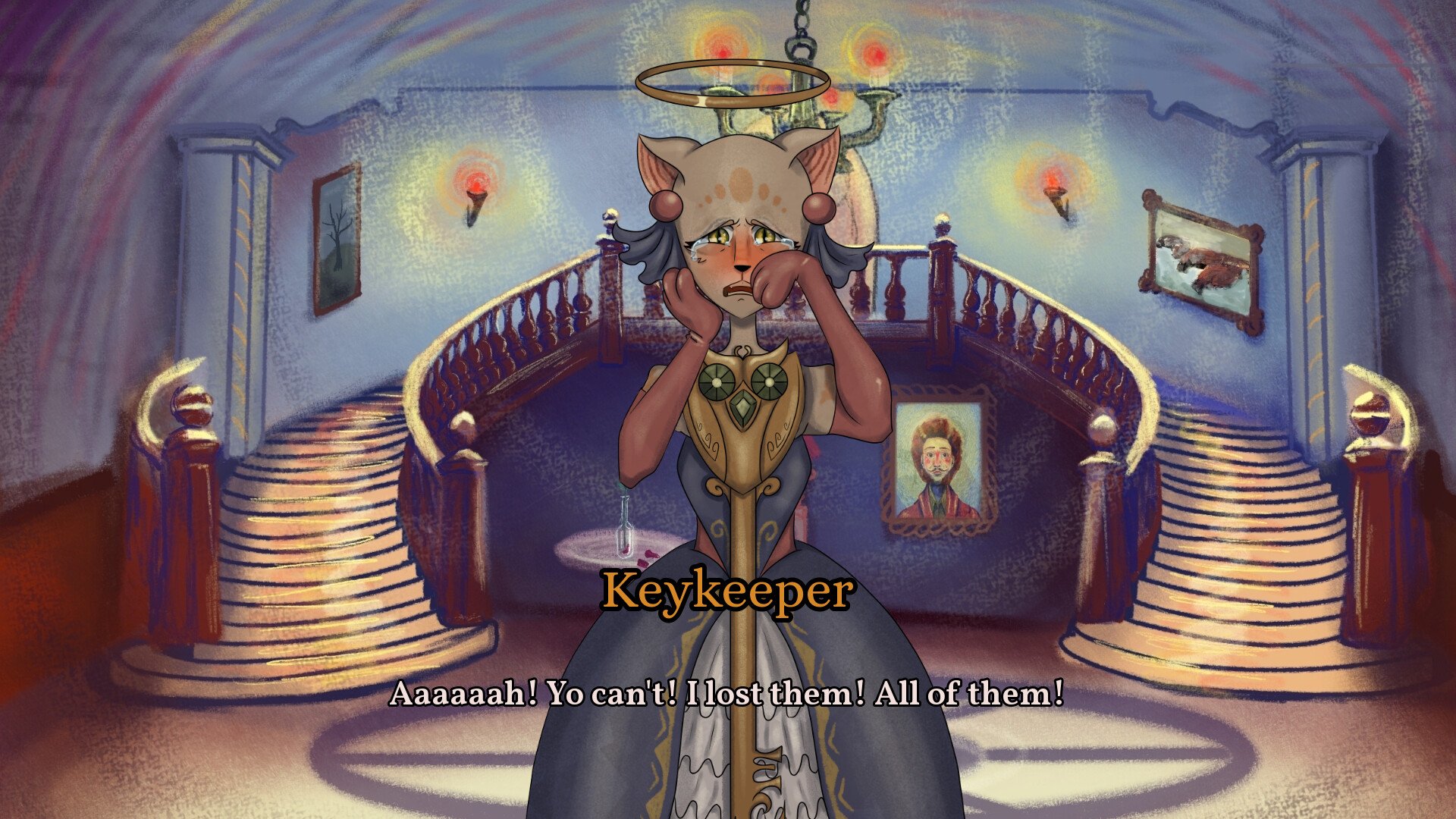
Submansion is a surrealistic experience where you play as a character called “Snitcher” who has entered a house in order to steal a great treasure. To do that, he first needs a key, which brings him into contact with the perpetually whining and morose Keykeeper. That Keykeeper has lost the keys (accounting for at least one reason why she’s perpetually crying), and so you need to help her find them… so you can then steal the aforementioned “invaluable item.”
Keykeeper isn’t the only character you’ll interact with. You’ll also need to have a chat with a painting, a broken cuckoo clock, and even stranger characters deeper into the story, all of which add to the grand mystery that is the mansion and what the hell you’re doing in it. There are some big revelations along the way, as well as decisions that can impact on the direction of the story (distinguishing it from the entirely linear and kinetic Light de Deux). There are even minigames in this one, so it’s a substantially more ambitious project as a video game than the developer’s previous work.

One thing people need to be aware of, however, is that this is localised into English with far less professionalism than Light de Deux (which was flawless). With Submansion, you’re going to come across all kinds of strange turns of phrase, as well as frequent grammatical issues that you’d expect from someone who knows how to translate Ukrainian words into English, but is overly literal about it and thus struggles to maintain a coherent flow of language. The script needed a heavy edit for the use of language, structure and style for it to read as well as I’m sure it does in its native Ukrainian. As we saw with Light de Deux, the developer is a talented and interesting writer.
Normally, I’d be extremely critical of a visual novel for such unrefined translation, but here’s the wild thing about Submansion: Because the underlying narrative, characters and aesthetics are so surrealistic, this localisation, in a very strange way, actually works to the game’s benefit. You can still, quite easily, understand what’s going on in the plot, and having stilted, weird, Mad Hatterish language coming out of a portrait… feels appropriate. While I don’t think it’s the case here, it’s also not impossible to imagine that a developer might have done it deliberately.
As mentioned above, Submansion does have puzzles and little minigames, and these are mandatory for progress. It is… not always a good idea for a developer of a visual novel to do this, as players within this genre tend to get very annoyed when something blocks progress. I personally found it all manageable, albeit not the game’s strength, but I have seen a review on Steam that criticised this as well. Good on the developer for pushing themselves with each project, though, so hopefully the next project handles this side of things a little better.
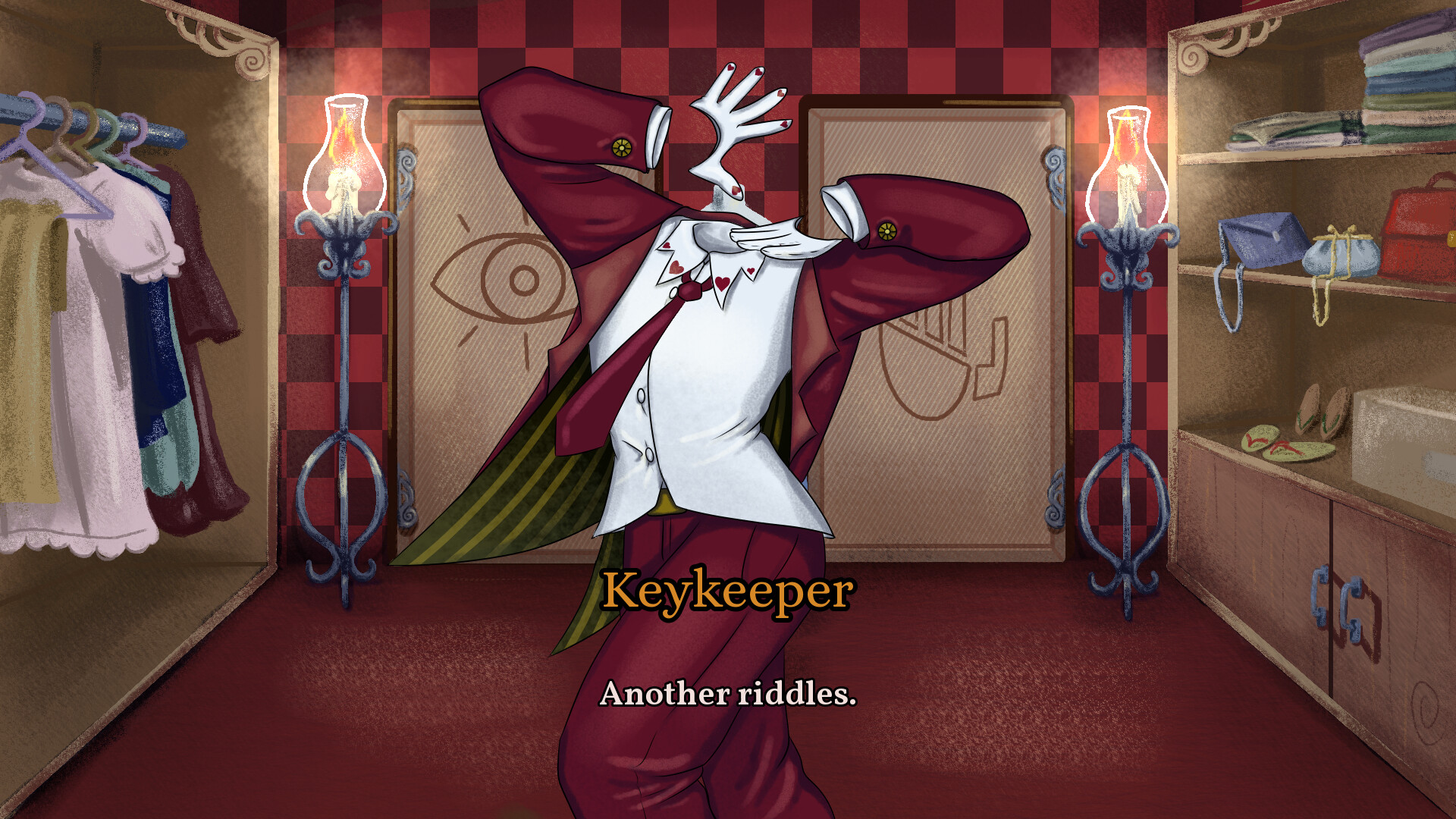
Aesthetically, the game is lovely, with the characters all having a dark whimsy to them, and the environments being nice and detailed. The music is also lovely and fits with the visual aesthetics nicely.
It’s always great to see a developer grow in confidence, embrace new ideas, and find new ways to embrace their creativity. Submansion is a lot of things – quirky, surreal, whimsical and dark. It’s also the kind of game that could only come from a single developer exploring their personal creativity.