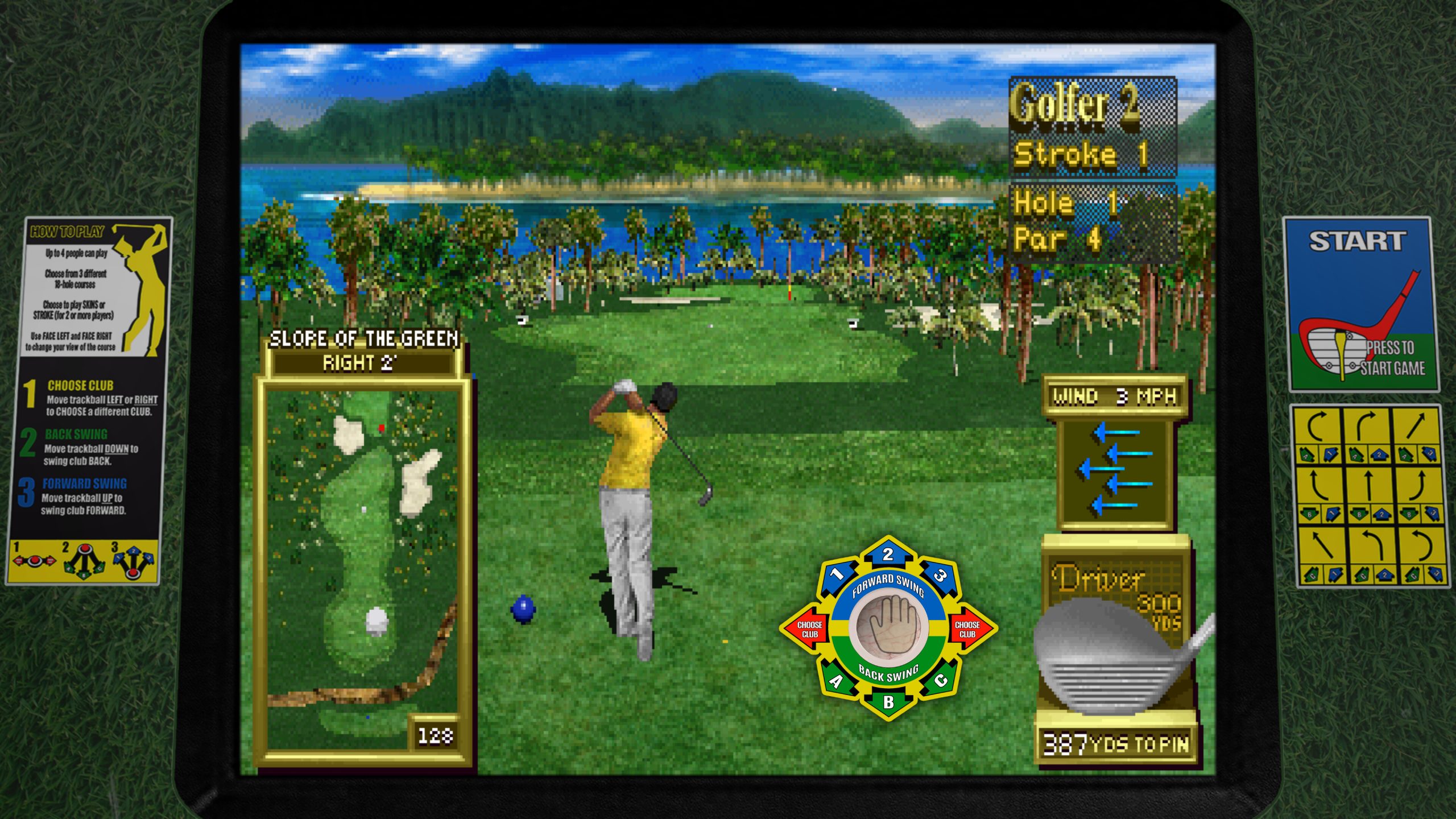


Golden Tee Arcade Classics is a fascinating package. As far as I can tell, it is the first time that Golden Tee has been released on console. I’m sure someone’s going to correct me on that, but I’m a fair golf fan, extending right back to the Microsoft Windows Golf on Windows 95 machines, and this is the first I’ve ever heard of this series. And yet, it’s huge.
There are actual eSports competitions built around Golden Tee. It’s a successful enough “arcade only” series that the “Home Edition” of the actual machines are $4,000. US dollars. Obviously, people buy and play them at home, but this may well be the only series left that exists only for arcade environments. Which is what makes the release of a retro collection on console all the more fascinating. Why is this the way to introduce Golden Tee to home console players? Just who is this even for?
I ask the latter question because the experience on console is vastly inferior to what you’d get with that “Home Edition” arcade box. Golden Tee’s big gimmick and feature is that it’s controlled with a giant trackball controller. You roll it back to decide swing and roll it forward for power, and in the arcade, you do get a lot of precise control over slice, draw, angle and distance.

With the Switch version, you have two options. You can emulate the action of rolling the trackball back and forward using virtual controls, or you can opt for a system where you select where, on the trackball you’d like to enact both motions. It’s almost like playing a “turn-based” golf game, in that you can take as long as you’d like to decide on your swing in this mode. The former play style more accurately emulates how Golden Tee should be played, but I found it finicky, and the virtual controls failed to offer the kind of control that I would expect from a trackball. So I reverted to playing this “turn-based” style golf, and had a much better experience.
To be clear: Playing this way does not make things easier. The combination of pull-back and push-forward inputs allows for the ball to travel in nine distinct directions after you hit it. Straight, with early fade and draw, late fade and draw, and diagonal. You actually have very limited angles and places on the golf course that you can aim. Your player shifts around 15 degrees with each press of the “turn” button, and you can’t manipulate the target area prior to a shot. So, in other words, you’ll need to make good use of the fade and draw capabilities to avoid the rough and water hazards at times.
This takes practice. I’ve hit the water hazards more in this collection than I think I have in all the other golf games I’ve ever played combined. For hour upon hour upon hour of play, I was hoping to get to the end of the 18th with an overall par for the round… and most of the time missing that objective. I’m getting better and better at it, but Golden Tee is the first time my video game golfing score more or less matches my real-life results.
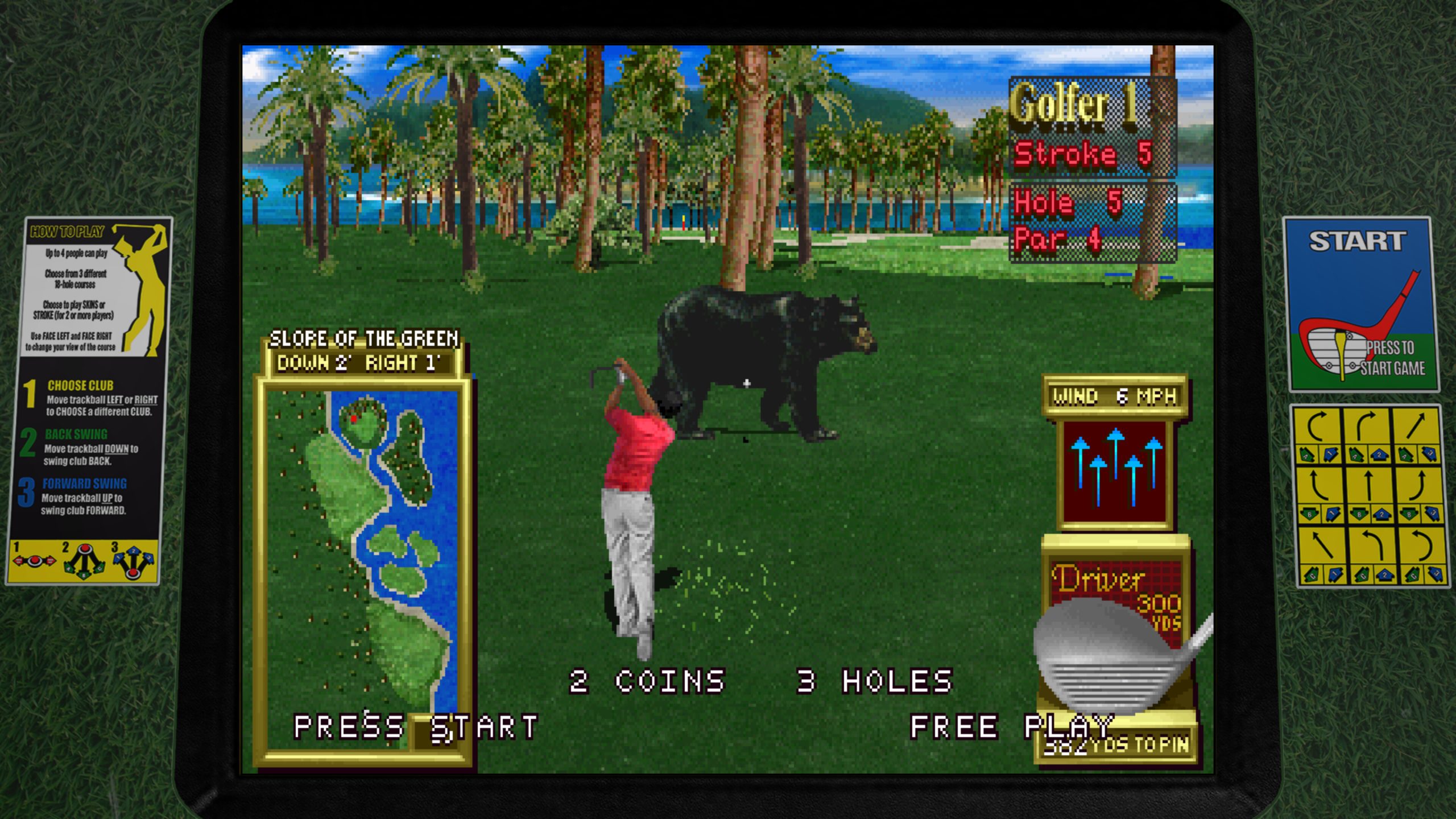
And I love that. I love that this is a genuinely challenging approach to golf that makes birdies (let alone eagles) earned. I like that it makes me feel genuinely excited when my short game leaves me with a simple putt. I feel good about getting out of a bunker disaster with a par. As much as I love golf games, they do often provide such a power fantasy about the sport that real golf achievements start to feel mundane. Golden Tee takes a very different path.
As far as presentation goes, this did tap into my sense of nostalgia, given that it’s likely the closest I’ll ever come to playing the Microsoft Windows Golf games ever again. While I know the screenshots look like a grainy mess, that is what “realistic” golf games used to aspire to. Thanks to the number of games in the collection, there’s some excellent variety in the courses (18 in total), and it’s fun to see the incremental improvements to the engine over time.
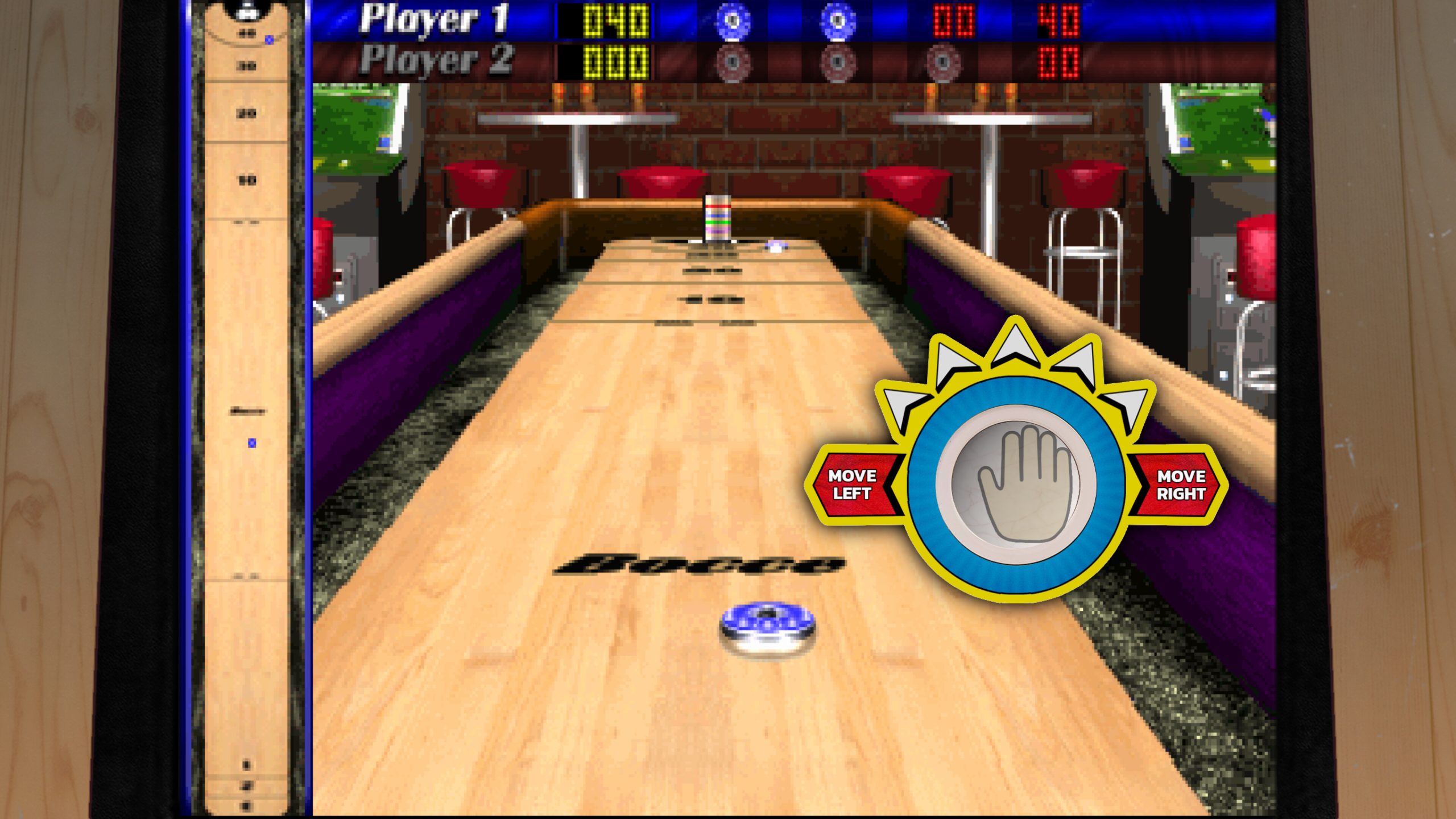
There are indeed six editions of Golden Tee in the collection, each with three courses. On top of that, there are two random non-golf games in there, just to make the package even weirder. There’s a somewhat decent take on ten-pin bowling, which won’t topple Wii Bowling but still gets the job done. There’s also a shuffleboard game, which is actually quite possibly the best shuffleboard game ever made (in that it’s also probably the only one). These might not be why you buy Golden Tee, but they work as a neat distraction and break from the golfing. A virtual 19th hole, so to speak.
Honestly, while I acknowledge there are issues with the controls on account of trying to turn a trackball into a virtual input, the game is still perfectly playable anyway. My only real criticism with the package is that it’s a Digital Eclipse project, and after seeing the incredible work that the team did with the “digital museum” concept for Atari 50, Tetris Forever, and others, it’s really disappointing that all you get here is some lousy scans of the arcade cabinet’s promotional fliers. I really wanted to hear what inspires the developers of these games.
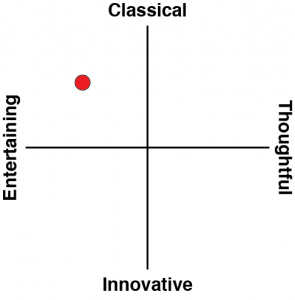
I genuinely didn’t know that I wanted Golden Tee Arcade Classics until it was released, and now I fully expect to be one of my most played games with Nintendo does its annual “what did you play” wrap. It’s challenging, it’s rewarding, it’s nostalgic and, as strange as the entire project is, it’s so very entertaining. I now know what the Simpsons’ excellent Lee Carvallo’s Putting Challenge was parodying, and like so many of the best Simpsons jokes, it’s making fun of a very fine thing indeed.





Golden Tee Golf was available for the original Playstation back in around 2000. It was very similar to the PC game release at the time.