

Tamagotchi are one of those iconic things that you just hope hands around forever. The little devices that you pin to your backpack or carry around in your pocket for micro-distractions throughout the day are wholesome and charming. You’d be lucky if you spent more than five minutes with your little virtual “pet” per day, cleaning it and playing the tiny little minigames that come on the devices, but you quickly find that it absolutely must stay with you all day. I have Hatsune Miku and Pac-Man Tamagotchi, and in a weird way, over the years, they’ve become some of my most played gaming devices ever.
There is also some really interesting thinking that can be done around the entire idea of these things, particularly around how we interact with them and the ethics of them, as brilliantly explored in this academic paper:
Although this game is eminently repeatable (you can simply press reset if your current ‘pet’ dies) it is not an experience I would personally wish to repeat. My ability to respond to its beeps (in all manner of contexts) lasted only a short time. After a while, I basically programmed it to ‘sleep’ (to minimise its beeps), and it died soon after. I pressed ‘reset’ and got a brand new pet, the last one was soon forgotten. This pet lasted slightly longer (I had learnt a few tricks), but ultimately it suffered a similar fate to the first. Is this a reflection on my poor ability to mother and nurture? Should I be feeling guilty? The context of my use of the game had almost completely pre-figured my experience of it – I was researching an article, I was already cynical, I did not ‘believe’. But more than this, my ontological experience of the object made it very easy for me not to care, it is small and plastic, it is very easy to make it ‘go away’. Nevertheless, I still did not feel entirely comfortable in admitting that I had let it die so easily, and the children I spoke to were appalled at my lack of remorse.

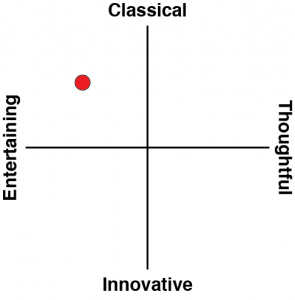
So, as simple as Tamagotchi is, like all massively popular phenomena, it does actually say something about us as a people and how we are wired. Anyhow, the point of this very long-winded introduction is to highlight that Tamagotchi Plaza highlights how difficult it is for Tamagotchi to scale beyond those tiny little micro devices.
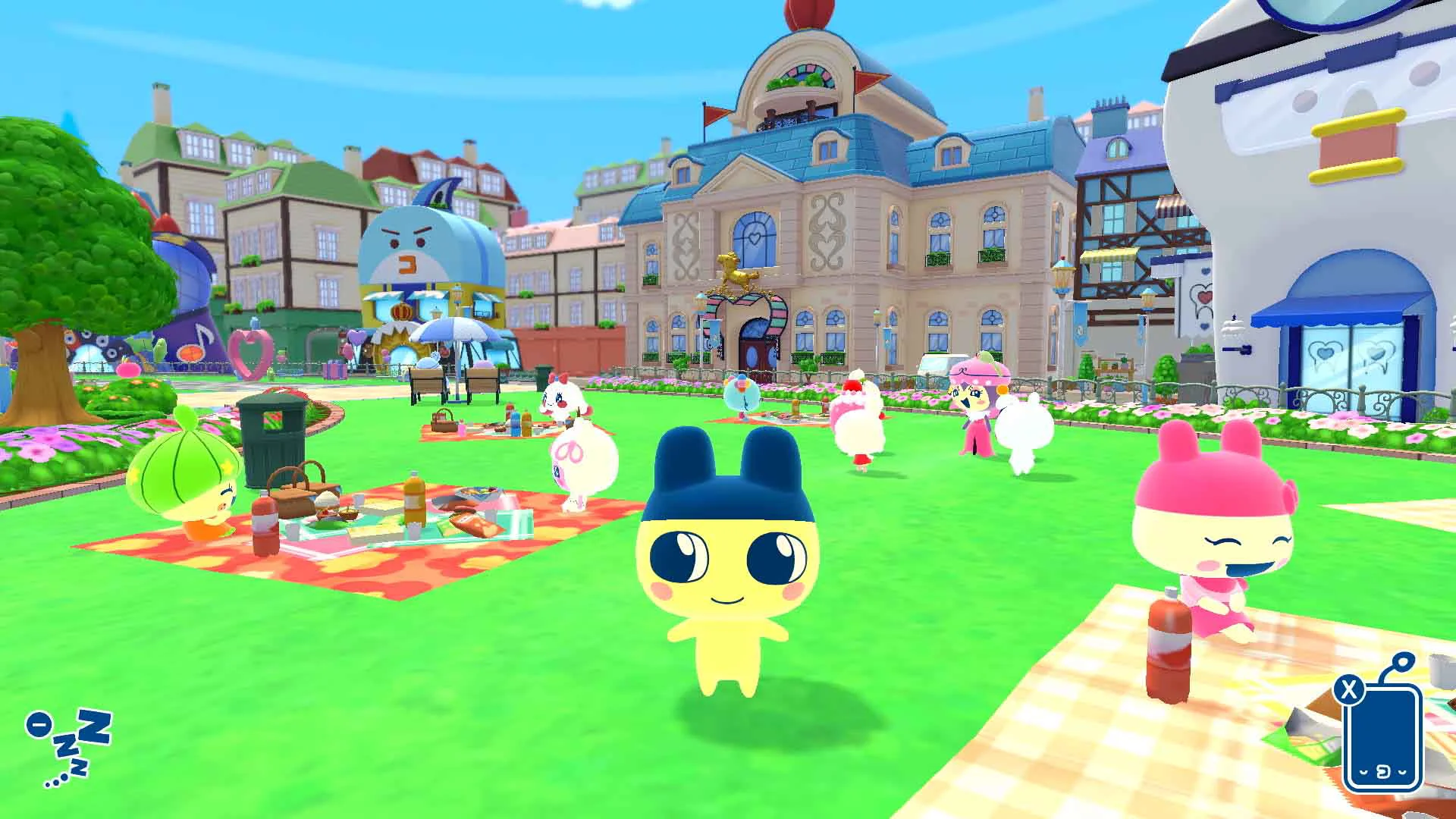
For a start, the basic loop that makes Tamagotchi devices what they are – the simple actions of feeding, grooming and playing with your “pet” to keep it alive – is pushed way to the side with Tamagotchi Plaza. Instead, this game trades in the aesthetic charm of Bandai Namco’s invention. By that, I mean the overly cute design of the critters themselves, and that essentially turns the game into a mascot experience, closer to Hello Kitty Island Adventure than the actual Tamagotchi devices. You’ll select your favourite little monster and then simply inhabit the same space as it, playing little minigames and slowly grinding away the resources to grow the town. As you do that, you’ll get to play more challenging versions of the minigames, and on it goes.
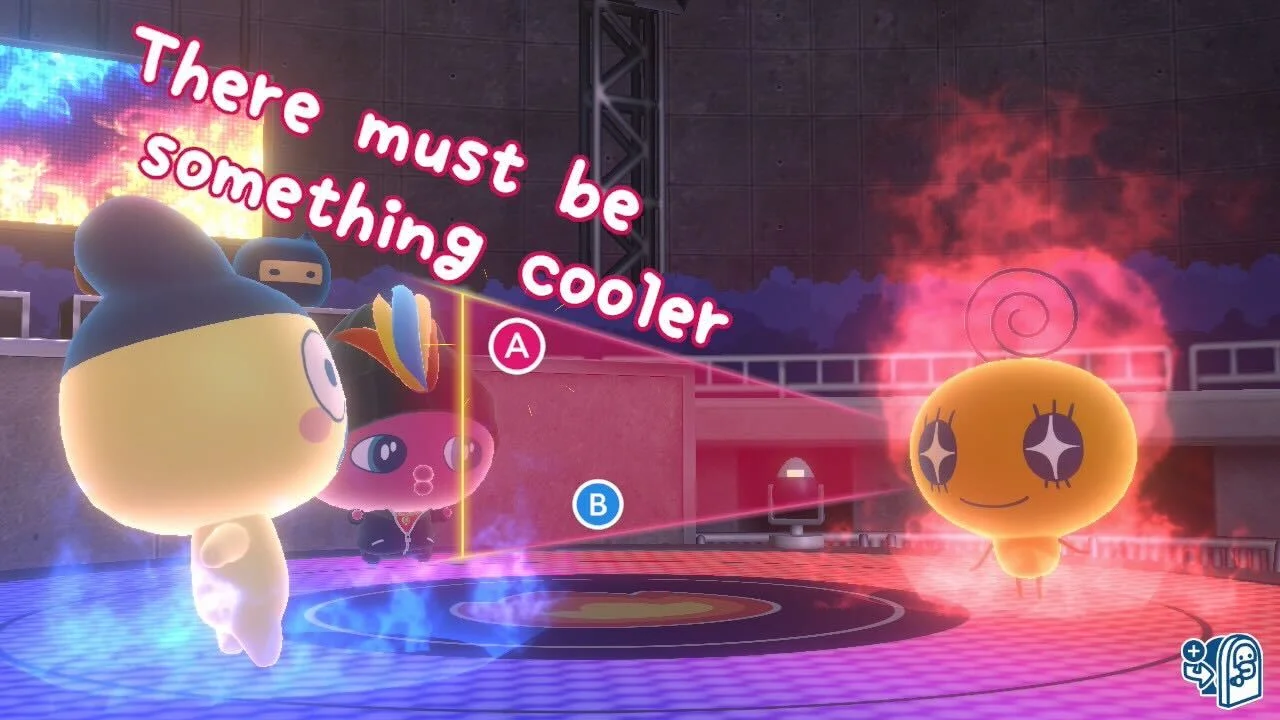
The minigames are exceedingly simple, from basic rhythm games (rap battles!), to a simple riff on those “restaurant sims” where you need to create orders that meet the request of the characters. Or you could play the tooth-brushing children’s take on the classic board game, Operation! Or you can even be a sushi chef for a while, if being a manga artist doesn’t appeal to you! On the Switch 2, there are 15 of these minigames (three more than the Switch 1 version, as three minigames make use of the Switch 2’s mouse controls). They are generally well-made and entertaining at first, but you’ll be done with all of them within an hour or so, and because this is a very all-ages game, even at its most challenging, adults are not going to be tested at all.
Unfortunately, that’s all there is to the Tamagotchi Plaza, too. There is a hub town, but there’s quite literally nothing to do in it, other than enjoy watching the Tamagotchi wandering around (and you can’t interact with them in any meaningful sense, either). All the town is there for is to force you to “physically” wander from one building to another, when you want to change minigames. A simple menu of minigames would have achieved the same result, far more efficiently.
The presentation is, at least, bright and colourful, and the minigames all have a fun personality. There is an in-game “mobile phone” that you can load up to see some basic “Twitter-like” chatter and… that’s about all there is to that. You also better get used to seeing a whole lot of this limited world because the grind to unlock everything is pretty intense.
What’s in Tamagotchi Plaza is well-made enough and entertaining, particularly for the younger audience, but this is a very limited and shallow game that somehow manages to lack the meaning and intellectual value of Tamagotchi themselves. As an opportunity to play a few little minigames with your favourite critters, it has value, but as an experience where you get to hang out in the world of these mascots, Tamagotchi Plaza is lacking badly compared to the likes of Hello Kitty Island Adventure or Disney Dreamlight Valley.