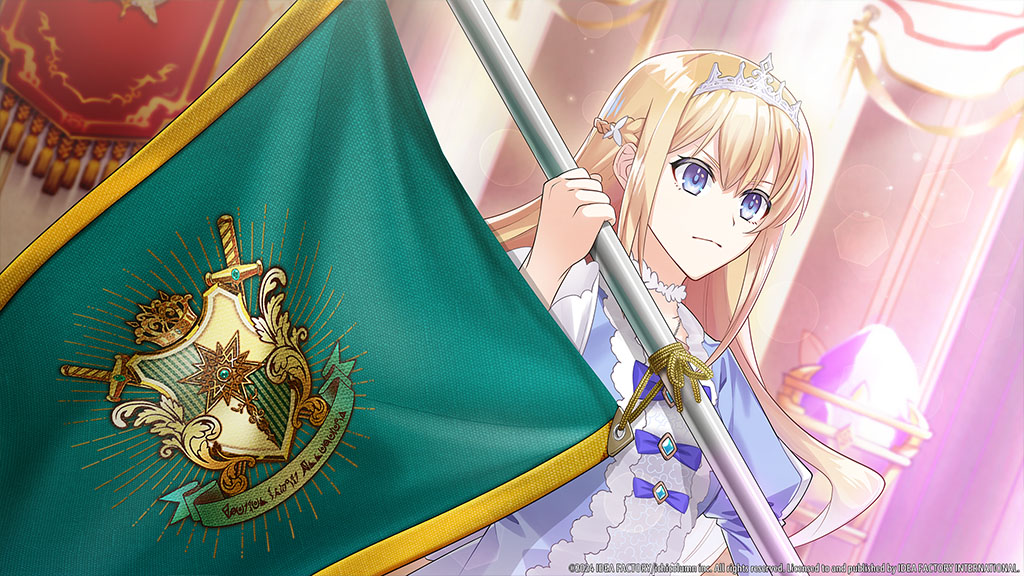


Temirana: The Lucky Princess and the Tragic Knights is a little bonkers, and that makes it delightful. The very concept of the thing is silly, funny, and charming: Cecilia is the third princess in a family that, generally, hates her. She’s also meant to be “unlucky” but has a mysterious ability; she sees a blinding flash of light whenever she’s in serious danger. Then, on the day of her coming-of-age ceremony, she sees five such flashes of light, each attached to a man. Rather than do the right thing and run for the hills, our dear Cecilia instead decides that she should recruit these men into her bodyguard and order of knights.
See? The girl is bonkers.
In practice, Temirana: The Lucky Princess and the Tragic Knights is a fairly standard otome. A princess and a reverse harem of male suitors is a common, warmly familiar trope. As is the coming-of-age journey. As is the fact that there’s an underlying mystery to learn about as you play. The characters will also be familiar to people who have played more than a few otome games, and the secondary characters, like Cecilia’s family, the help, and even the silly little mascot character, are all very standard stuff for either otome or fairy tale-style storytelling.

Yet there’s a lot that has gone into the storytelling, and that’s what makes Temirana interesting rather than generic. The game’s world, Etrudia, is fascinating enough, I hope it gets used again. There are six nations, each with its own cultures and religions, as well as cults, forgotten family lines, and lore. Temirana is the kingdom in which this game is principally set, and while it’s presented as this place where peace has reigned for eons and the population live a comfortable existence, there’s the sense, almost immediately, that beneath the surface, there are issues. A rigid caste system means that your entire existence is determined from birth, for example, and that sucks for those that fate has decided should be on the bottom caste.
There’s also the ever-present promise of a cataclysm hanging over society like the Sword of Damocles, with people spending so much of their time preparing for the worst. And there’s the fact that you play as a princess, who is clearly an unreliable narrator. She’s sheltered and naïve, and you’re left to wonder just how accurate her understanding of the world around her really is.
The game never gets too hard and heavy with these themes. It is, ultimately, a lighthearted romantic comedy about a totally bonkers princess, but the depth of lore and effort that went into building out the fantasy is what gives the humour (and romance) the kind of texture and depth that means it avoids being cringeworthy and cliched.
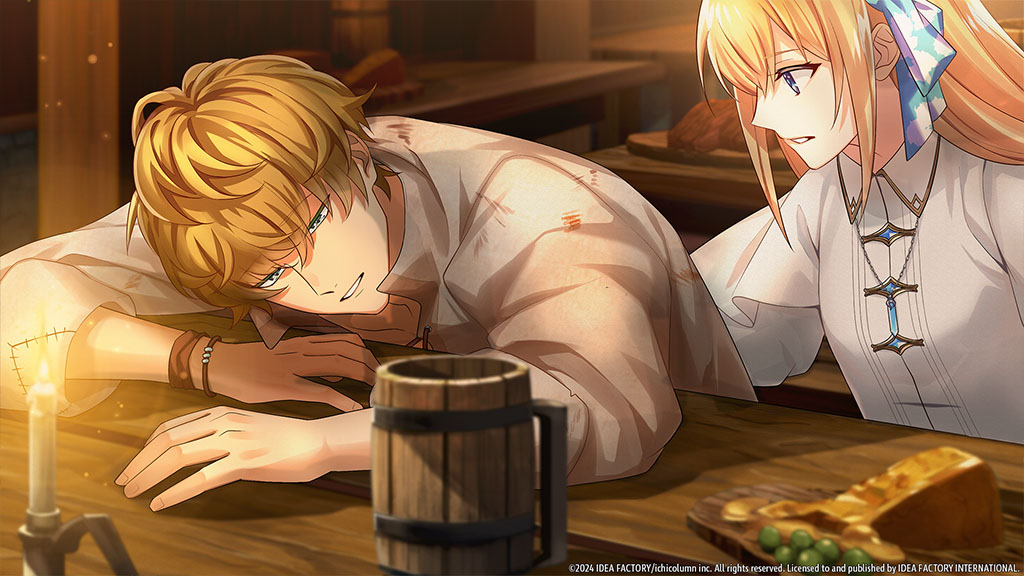
With all of that said, I have to say I found the aesthetics to be surprisingly disappointing. Idea Factory publishes the most beautiful visual novels via the Otomate label. Their historical fiction, like Hakuouki or Piofiore, generally features breathtaking character design and detailed CGs that really set a scene. Their darker fantasies like Olympia Soiree or Virche Evermore are ravishingly beautiful, and then there’s works like the quirky colour overload of Cupid Parasite. Regardless of genre or intent, I am used to Otomate games being gorgeous works of art.
Temirana, I discovered after the fact, is not an Otomate. It’s an Ichicolumn title, and I’m far less familiar with their work overall. Temirana is not ugly by any means, but the CGs don’t have the same grandeur, and the character designs are a little more mundane than I’m used to Idea Factory sticking its name next to. Ultimately, I didn’t mind because I found the narrative to be absorbing enough, but I did have a relatively muted first impression.
There’s nothing overly creative with the way the game handles decisions and endings, either. Occasionally, you’ll come across a “danger” choice, but it’s typically pretty easy to figure out which is going to result in the bad ending. The decisions that you need to make to decide whether you’ll woo your preferred boy are a little less overt, though they’re also not the kind of questions that will have you put the controller down to really think about what you’re doing. There are also only two endings for each boy, one good and one bad, with a final route unlocking once you’ve finished all five of the “normal” guys. I don’t necessarily think that visual novels need to break beyond this structure, but it’s a pity that the developers didn’t look to lean into the humour and unique premise with some kind of secondary system running in the background.
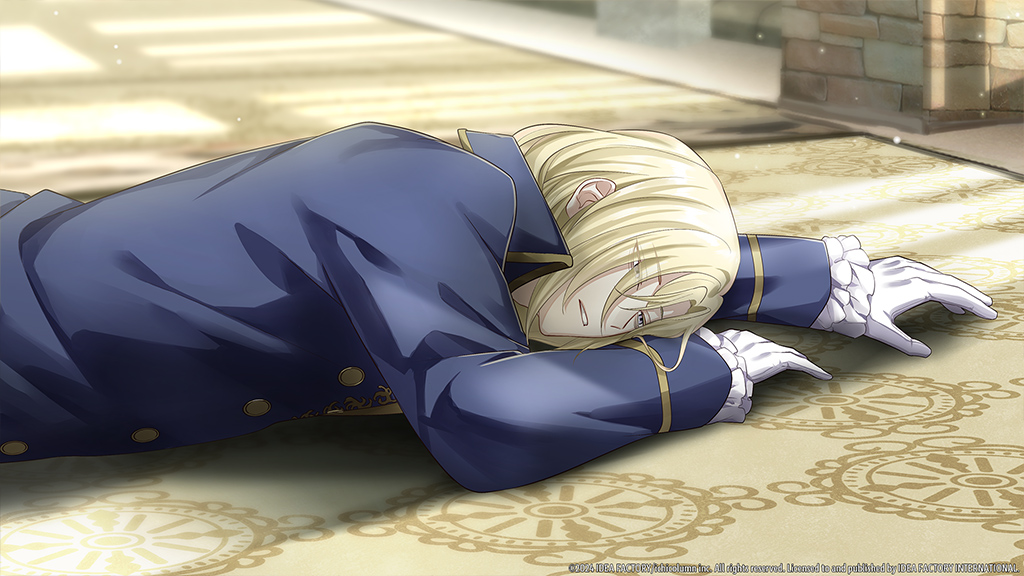
Finally, I was disappointed to see that this one was clearly localised with a short contract for the translator. While there’s no hint of AI machine translation, there is some questionable spelling and grammar at times, and that’s unusual for Idea Factory. A bigger issue, however, is the inelegant nature of the translation. It’s a little too routine and direct, when a good translation finds a way to convey the meaning intended by the developers with language that is itself engaging and creative to read. Temirana is a fairly lengthy visual novel, and it just needed a longer time in localisation to address these issues.
Temirana might not be up with my very favourite visual novels, but it is entertaining, with good and warm energy behind it. It’s not the ideal entry point to otome as it doesn’t really have a hook beyond “exactly the kind of game otome fans like to see,” but if you are a convert, you’ll find yourself chuckling along with the way it plays within the genre traditions right throughout.