

Android-based consoles, such as those Anbernic produce, are made for an application that is obvious: Emulation. By extension, that means they facilitate piracy, and that tends to make the games industry’s suit people mad. However, it is also because of devices like these that the indie scene flourishes with new games developed for the Game Boy, GBA, and 32-bit systems. Just check out itch.io and see for yourself. Many of these even get physical releases. Yes, people are buying NEW Game Boy games in 2026, and it’s thanks to the emulators that any of this is possible.
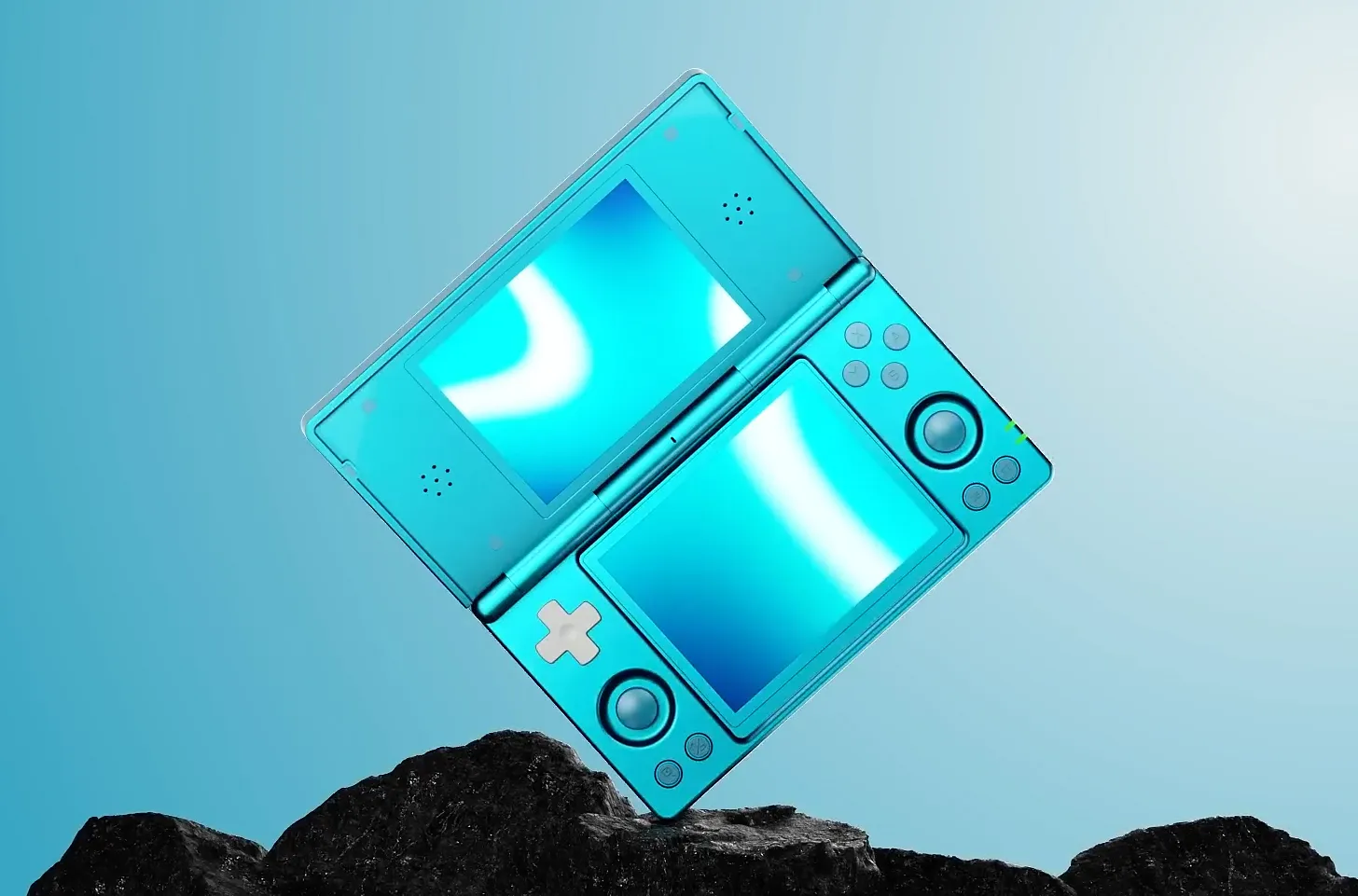
One console that hasn’t had the chance to flourish like this is the Nintendo DS, because the DS has two screens and all the solutions to this challenge on single-screen devices are immersion-breaking. Having two screens side-by-side on a single widescreen makes everything look tiny and DS games were designed around having you flick your eyes up and down, not left and right. And so, while the DS is arguably my favourite retro console of all time (so many JRPGs), it’s also the retro console I play the least, given that I no longer have the original device, and therefore had no way to play the games the way they were intended to be played. Thankfully, there are some dual-screen devices that are coming to market, and the Anbernic RG DS is pitched as the budget entry-level device in this particular category. It’s not perfect, but coming in at under US$100 makes it very impressive.
To be clear, if power matters to you (and/or you want to play 3DS games as well), the AYN Thor is $150 more expensive, but also more fit for purpose. AYN is the prestige manufacturer in this surprisingly competitive market, and Anbernic isn’t going to challenge that here. However, the RG DS does get plenty right. Firstly, it feels really great in the hand. It has a similar heft to the real Nintendo DS, the clamshell opens and shuts nicely, and the buttons themselves all feel good. The face buttons are extremely low profile and clicky (which I like), as is the D-pad (which will dominate the movement inputs for the games you’ll play on this. I was less of a fan of the analogue sticks, which are set deep into the console and very slippery, and therefore very difficult to roll around in a proper 360 degrees. But, again, the DS itself didn’t have analogue sticks, and while this device can technically play games from other consoles, it’s not really what you’ll be doing with it. Not if you have any other device for those other consoles.
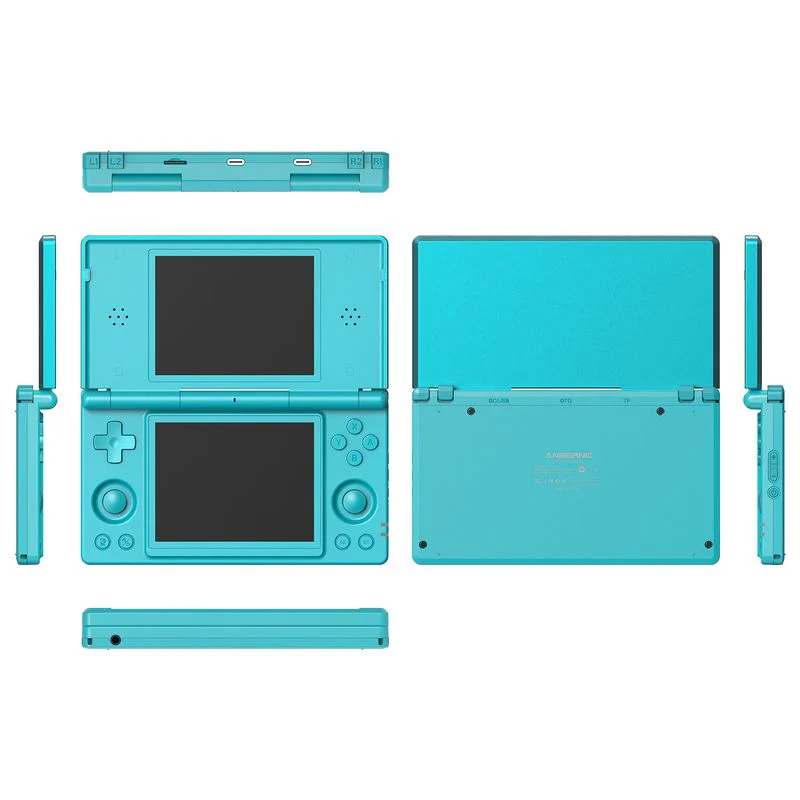
When you turn the device on, you’ll find that the screens are of a nice quality, though we certainly have more premium screens on the market in abundance now. They’re bright and offer enough contrast to enjoy the games that you’ll be playing on it, though. Both screens are touch screens (unlike the DS), and that was necessary because they both run Android simultaneously. With non-DS games, you could be playing on one screen while using the other to watch a movie or read a guide. There’s even an option to have “Anbernic AI” translate a non-English game for you, though I have no idea how to get that to work or how effective it will be if it does.
Unlike the DS, which used a resistive touch screen, the Anbernic device uses capacitive screens. Anbernic does provide a stylus that has both the soft tip that is standard for capacitive styluses, and a “plastic-coated pencil” like stylus that aims to recreate the precision of a DS stylus. For the most part, these options are good, and most games will play just fine with one or the other, but the occasional game that requires both speed and precision with stylus inputs will be more challenging than you remember with this console. I wouldn’t want to play something like Rhythm Heaven on this device, for example. But, again, JRPGs do just fine given their much more modest input requirements.
Otherwise, the device operates just as you’d expect for an Android console. Bluetooth allows you to use a wireless controller, and you can connect the console up to the TV for big-screen play (for single-screen consoles, at any rate). There’s also a headphone jack for wired headsets, and I genuinely love that Anbernic still includes this when most hardware manufacturers now refuse to.

Once you get around to playing a DS game, you’ll find that Anbernic’s choice to throw in a Rockchip RK3568 and 3GB of RAM to power the device is something of a strange one. Obviously, they were aiming to keep the costs down as much as possible, but this chip means that the 3DS is well beyond the console, and DS games will only really run in native resolution, with no upscaling. Given that the screens are about 2.5 times the resolution of the DS, it does mean that image quality will be compromised while you play a little, though with the filters turned on, I still found the aesthetics to be highly playable and comfortably nostalgic, so I didn’t actually mind too much. With that compromise, every DS game that I’ve played on the device to date has run perfectly well.
The console shipped to early reviews with a couple of other issues built in (most notably poor synchronisation between the two screens). That has been remedied with the commercial release unit that I have. The DraStic emulator that is the default on the device is no longer in active development, but it plays most DS games nicely at this point. However, it’s not capable of playing DSi games, and unfortunately, the emulator that does (melonDS) doesn’t run well on the device at all.
This review probably comes across as a critical one, given the weakness of the internal chip and some of the hardware decisions that Anbernic made, but the main point to make here is this: I wanted a device that could play DS games. I got a device that can play DS games. That’s it, and the fact that Anbernic has delivered it at a genuinely good price point has made this one of my most used devices over the past month (and all that Christmas gaming!)