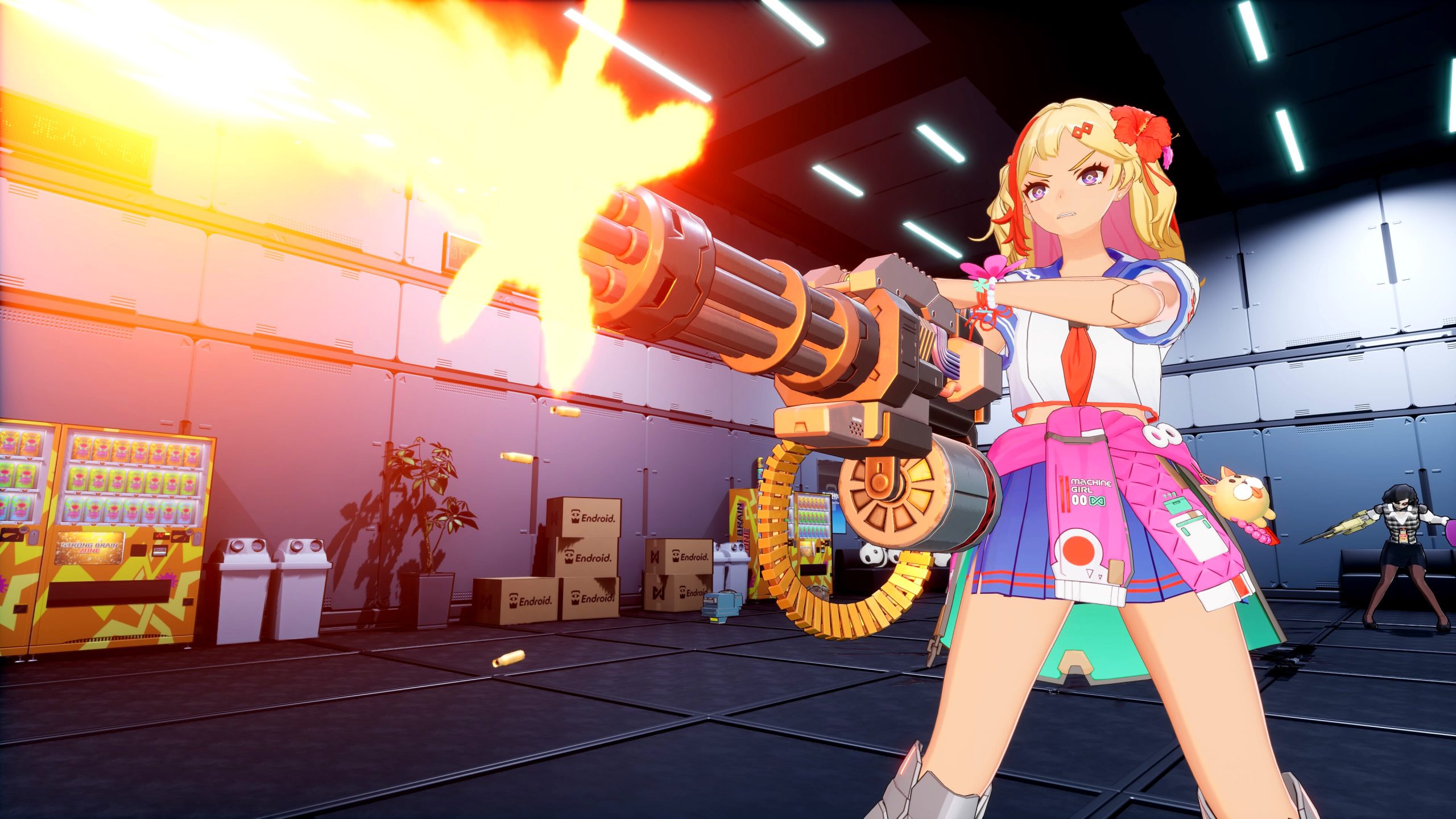


George A Romero’s Dawn of the Dead is considered one of the finest horror films of all time for the clever way that it blends B-grade cinema tradition with some sharp themes – most notably, a criticism of consumerism and capitalism. Now I’m not going to sit here and argue that Full Metal Schoolgirl is of the same calibre, but it itself blends B-grade aesthetics and sensibilities with some sharp themes… most notably, a criticism of consumerism and capitalism.
Developed by Yuke’s, a developer with a proven track record in satire (the team previously worked on Earth Defence Force titles), Full Metal Schoolgirl is a roguelike that tasks you with fighting to the top floor of an office building and taking down its CEO. Enemies are workers who have been so abused and overworked that they’ve essentially become mindless zombies now. As the famous Romero quote goes: “Why do they come here? Some kind of instinct. Memory of what they used to do. This was an important place in their lives.” Were there a zombie apocalypse, I would fully expect a fair chunk of people to wind up haunting their former offices for the same reason.
Anyhow, all the bosses are cartoonishly villainous, and you do play as a robot schoolgirl, so it’s not like Full Metal Schoolgirl is serious about how it goes about its themes. It is savage, though. At the start of a new game, a message pops up to give everyone peace of mind that the game was developed without abusive working conditions. As anyone who has ever been involved in game development knows, abusive working conditions are almost standardised at this point, so it’s pretty obvious what the team at Yuke’s is pointing their hyperbolic humour at.

As a roguelike, Full Metal Schoolgirl doesn’t have too many surprises. You’ll run through randomly generated sets of corridors and rooms, mowing down enemies with a combination of melee and ranged combat that is very snappy and really quite enjoyable. Every room you come across will be filled with a big horde of enemies. Clear it, and you’ll be rewarded with a piece of loot, with more powerful weapons being unlockable this way. Eventually, you’ll run into a room or boss that is just a touch too powerful for you at this moment, and after they defeat you, you’ll be sent back to the start, but having earned some resources that you can use for upgrades to make the next run a little easier.
There really are 100 levels to work through, but don’t fret, as you defeat bosses, you’ll be given access to lifts that allow you to jump directly to certain floors and cut the lower level ones out. Unfortunately, this is also the one big mistake that Yuke’s made, and it’s a BIG one: Access to lifts comes in the form of a key that is gone the first time you use it. Get defeated again, and you’re going to have to start at level 1 the next time. Only, of course, by then you’ll likely find those early levels mind-boringly dull as you’ll be far too powerful for them. The developers really should have made those keys permanent.
Otherwise, however, the action moves at a great pace, with great humour thrown in as the characters banter and fight. Interestingly, it’s not all that fanservicey, either. I went in expecting something like School Girl/Zombie Hunter or Onechanbara, especially given the short skirts and big boobs of the two protagonists, but while there is an Onechanbara unlockable costume, and the occasional line of racy/flirty language, the developers have kept the sex side of these B-grade action titles on the side of subtle. There is the one exception (when you upgrade your character, a short cut scene plays as the “engineer” that does the upgrades behaves truly lecherous for a split second), but even then, in comparison to the likes of Bullet Girls Phantasia, the dial on the fan service intensity is firmly down We can probably thank the heavy wave of censorship washing over the games industry right now for that. Not even a publisher like D3 would be willing to risk its work getting refused entry to the various platforms.
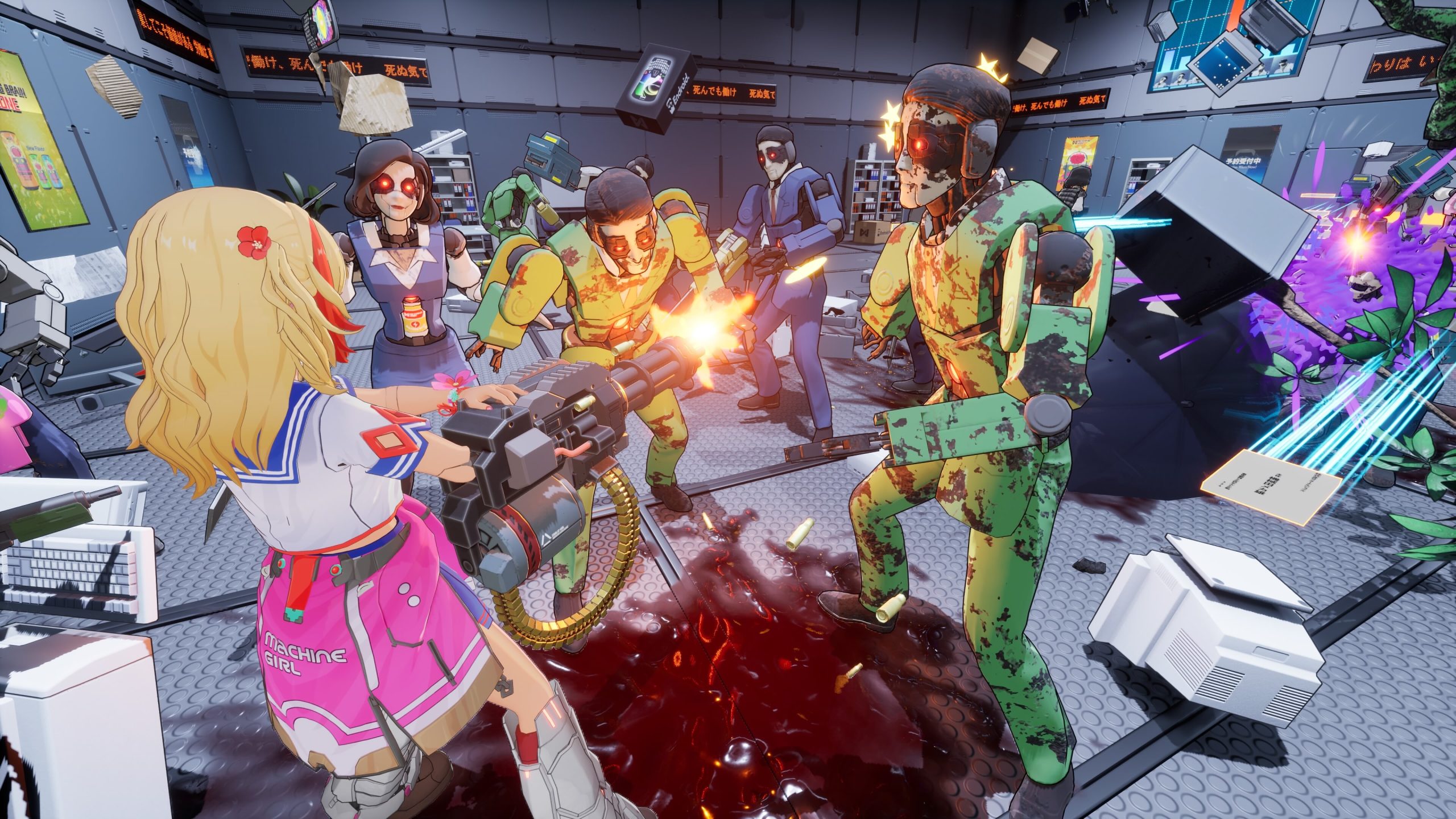
When it’s at its best and most high octane, Full Metal Schoolgirl is an explosively colourful and noisily energetic action game which feels fundamentally good to play (with the exception of the “dodge” button being a bit cumbersome and unresponsive, though given how the game plays, dodging is not as important here as in some other action titles). It’s repetitive, but then you’re frequently given mini-challenges within the battle rooms (tasks such as “clear the room in 40 seconds” or “clear the room without healing”), and the corridor areas often have some basic platforming or hazard-dodging to keep things fresh enough.
The range of enemies is good enough to also keep the action interesting by throwing different challenges at you from time to time. Some rooms are filled with ranged specialist enemies. Others have multiple high-health enemies, or enemies that are more nimble, can climb walls, and so on. Thanks to the sheer pace which you move through the game, none of this ever manages to get dull as it does with some other, more deliberately paced roguelikes.
Basically, Yuke’s is doing what Yuke’s does best: Creating gameplay loops that punch well above its weight and are very moreish and hard to put down. Just as you can easily spend hour upon hour in Earth Defence Force: World Brothers, blasting away at massive hordes of enemies and giving your brain a good break from whatever is stressing you out in the real world, so too can you do so with Full Metal Schoolgirl.
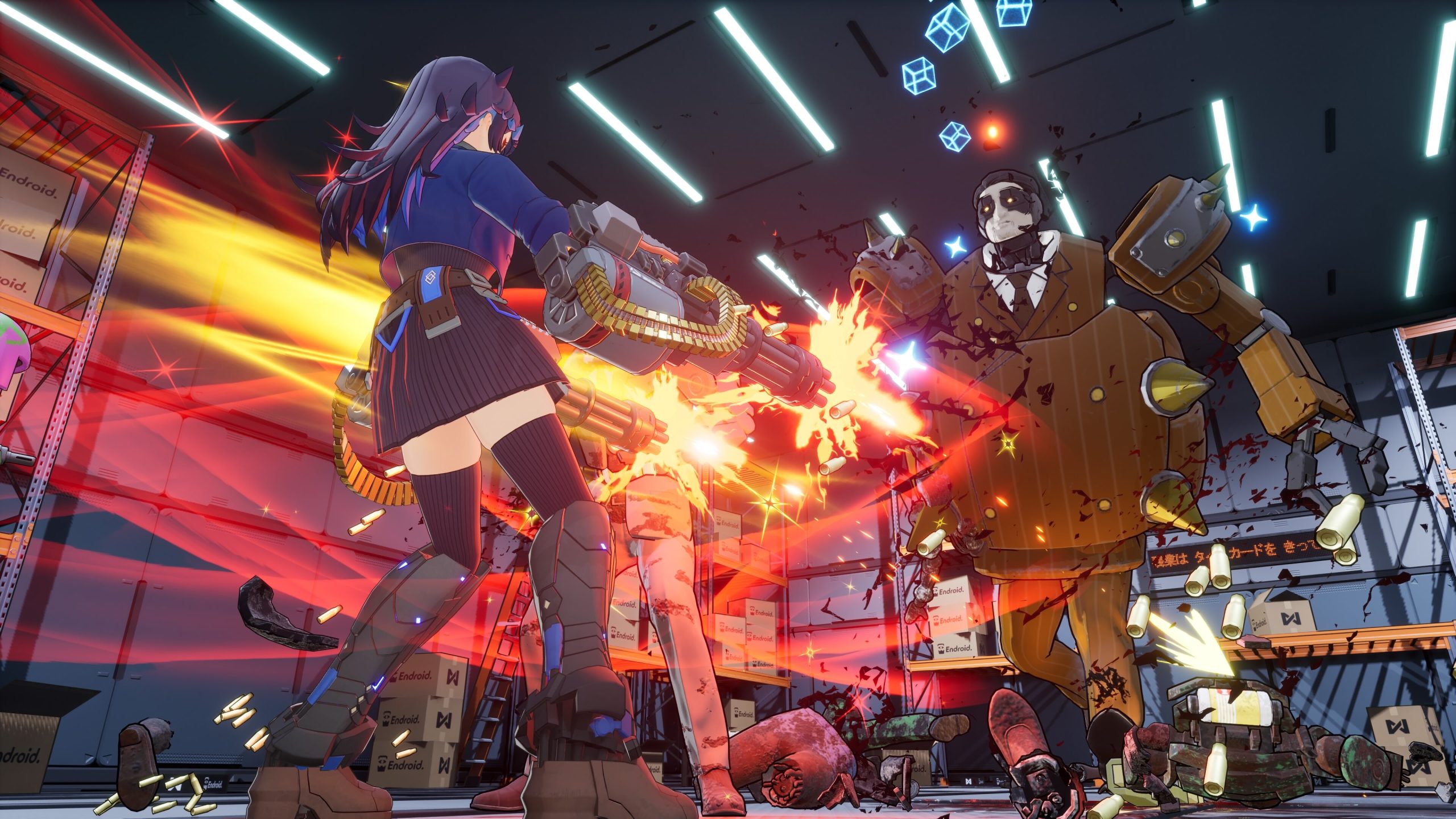
When I shared a clip of this in action on social media, someone asked me if this was Lollipop Chainsaw. And perhaps that’s the best way to describe it; it is very much like Goichi Suda and James Gunn’s grindhouse masterpiece. Full Metal Schoolgirl isn’t quite as sharp as a satirical commentary (though it is there), and it doesn’t have quite the slick brawler action or memorable boss battles (though they are there). What it does have, though, is an excellent example of a roguelike formula largely done right, with great loot loops and an upgrade path that doesn’t make you feel like you’ve taken too many steps backwards every time you “die” and need to start a new run. And, hey. The pretty and sassy robot girls are the cherry on top.








Sounds less like a critique of capitalism and more like of office job culture to me. Non-capitalist states still have offices with CEOs as far as I know.
Frankly I’ve yet to see a “critique of capitalism” that actually gets capitalism aside from the first season of Squid Game. Because most of the time it’s just Soviet Russia or China with Party switched for a “corporation”.
This is a fair point, but also worth remembering that as far as *Japanese* capitalism is concerned, slavish (zombie-ish) devotion to the CEO and other senior executive remains part of the business culture. I know expats that have really struggled with this, so the game needs to be considered in terms of the business culture (and take on capitalism) that it was made.