
I must admit that I’ve come to the conclusion that reviewing fandisc-style sequels to visual novels are pointless to review. Not because they’re bad! Not by any means. Who wouldn’t love the opportunity to return to a bunch of characters they enjoyed, after all? It’s just that with one of these sequels you can’t talk about the narrative without spoiling the original game, and it’s pointless to play the game without first working through to the conclusion of the original.
In other words, read the original review of the base game, and if it captures your interest, play the game. If you like the game, then you’ll know, without needing a review, if a sequel is for you.
This is a long-winded introduction, but after several attempts to review sequels to Otomate’s various visual novels, I’ve never really landed on a format that I’m happy with, so I’m not going to write a standard review for the new one, 9 R.I.P. Sequel. At the same time, though, I did want to use this opportunity to remind people who enjoy visual novels that it’s worth checking this one out, because I suspect that most VN fans who play 9 R.I.P. will indeed be interested in the sequel.

9 R.I.P.’s main quirk and hook is that it’s about dead people. Specifically, you play as a protagonist, Misa, who, in the original story, finds herself dead enough that she gets to interact with ghosts. And those ghosts just happen to include a harem’s worth of very pretty boys for Misa to choose between.
The sequel here picks up with you having the choice of Misa either returning to her human (living) life but still being able to have limited interaction with her boy, or alternatively following them into the afterlife. I will say that this is obviously a pretty significant decision that the game handles in a very blasé fashion, and in some ways it being a decision at all does conflict with the general characterisation of Misa in the original story… but on the other hand, fandiscs have “fan” in it for a reason. They effectively work as fanservice in showing players what the protagonist and her lover’s relationship is like after they seal the deal, and, well, from that perspective, the hypothetical works in the sequel.
On top of that, there’s a mode that features a lot of short romantic moments between Misa and whichever boy you choose for her, which are heavy on the sweet. These are pure reading, no choices, and really just there as wish fulfilment.
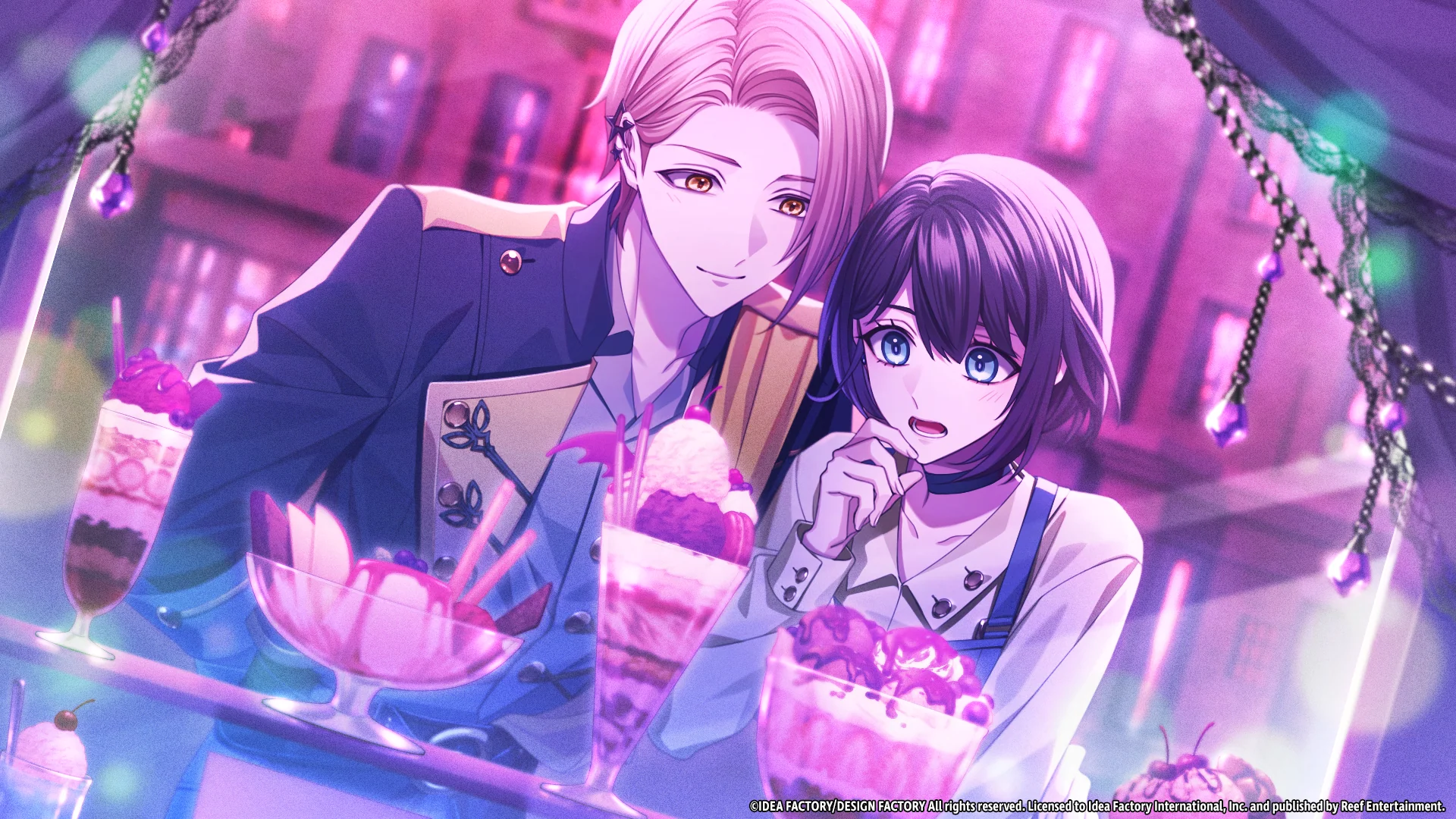
That really is about all I can say about the sequel: It offers more of the high-quality writing that people who enjoyed the high-quality characters from the original visual novel will enjoy. As I noted in my review of the game (which I very much enjoyed):
9 R.I.P. is, ultimately, a playful take on urban legends and more akin to that classic film, Ghost, than something more visceral….
There are moments where the story deals with heavy themes like abuse, self-harm and suicide, and those are self-evidently dark, horrific themes, but 9 R.I.P. is not even as transgressive or adult as some of Otomate’s other work, like Piofiore (you know, the one with extreme torture and sexual violence from Italian mobsters) or Olympia Soiree… or of course Virche Evermore (that visual novel, in particular, will forever haunt me, I think).
I reviewed 9 R.I.P. back in 2024, and two years is a lot of time when you play as many games as I do. I think it’s worth noting that, when I heard this sequel was on its way, I remembered Misa’s story instantly, as well as my pick of a mate for her (Kureha). There are plenty of other visual novels I play where I can’t even remember the main character’s names two years on. And I appreciated the opportunity to step back into this somewhat unique and interesting world one more time. So I guess the point of this review is to recommend you play 9 R.I.P. if you haven’t yet… and then keep this on the watchlist for when you finish that.