

There was a time when visual novels were a rare thing in the West, particularly on consoles. Steins;Gate, from 2009, was one of the pioneers in changing that. Brought to the West on PS3 and Vita, it turned heads by proving to a wide and mainstream audience that it was possible for a game to be compelling while being almost entirely narrative-focused. Not a hybrid narrative/puzzle game like Phoenix Wright, mind you. Like a book. Steins;Gate proved that gamers like to read, too.
The visual novel was such a hit that it has already had an anime and one remake (Steins;Gate Elite). Now there’s this new one, Steins;Gate Re:Boot, which is worthy in its own right.
Read more: Also in the Steins;Gate universe is the prequel, Steins;Gate 0. Read our review.
The main reason for a returning player to give Re:Boot a swing is that there’s an all-new and really very dark timeline that is added to the story, and that in turn means a new ending to follow through to. This “Gamma Worldline” storyline removes the time travel element, and then has the (very confused) protagonist trying to deal with naked hostility from the people that should have been his friends. This narrative arc really is a fascinating trip into despair, and functions as a really effective “what if” scenario that adds meaningful context to the existing narrative threads within the story as well.

So this isn’t a case of simply throwing more words into the cauldron. The game really has been rebuilt from scratch to account for this additional storyline and ensure that it’s woven in naturally. The artist returned to redraw characters, costumes and backgrounds; the voice cast came back for one more whirl at these beloved characters; and there’s a familiar-yet-redone music score too. The visual novel fandom being what it is, these changes are being fiercely debated, but my personal feeling is that overall the project is cohesive, coherent, and Re:Boot is now the definitive edition of the game.
The main reason for a new player to give Re:Boot a swing is… well, it’s Steins;Gate. It’s a genuine masterpiece. The game’s narrative effortlessly blends rich humour (at least in the first half) about a certain type of nerd and his nerdy friends with what becomes an incredibly dark, taut thriller in the second half. It grabs time travel as a hook, and the writers show an incredible depth of research in the way they play with the urban legends and theories around that topic. True story; I learned about John Titor from my first playthrough of Steins;Gate, and I’ve been fascinated by that pristine example of early Internet-era trolling (there was a time when the Internet was, generally speaking, fun and not ruined by libertarian social media CEOs).
But it’s not just fun and games with how Steins;Gate handles its themes. That second half really does take an intense turn (and if you’ve played any of the other games in this lose-and-vaguely-connected Science Adventure series, especially Chaos;Head, you’d know how dark these things can really be), but it does thematically interesting things with that dark turn, such as explore ideas around the Butterfly Effect and determinism, perceptions of reality (and whether that’s subjective or objective), and some unreliable narrator for good measure, because the protagonist of Steins;Gate is possibly the best example of an unreliable narrator we’ve ever had in the video game medium. The narrative does some enormously clever, near-on literary things with that theme too).

Some of these themes are only becoming more relevant with time. The idea that reality can be manufactured around us is, in a world of AI, AR glasses and the increasing interaction of the physical and digital world, a more pressing issue than ever. So Steins;Gate is aging like any great work of art in that it’s becoming more poignant.
In fact, another good reason to use Re:Boot as an excuse to replay the game is to see how the last few years have challenged your response to the VN itself. Personally, I found that back then the game’s treatment of shut-ins and technology seemed more detached from reality, whereas now it comes across as prescient. Not that time travel is a discovery around the corner, of course, but rather that the manufactured reality theme is something that is becoming both increasingly real and increasingly concerning at the rapid speed with which technology is developing. Steins;Gate might be abstract to the real world, but it’s certainly a realistic dystopia that it depicts.
Steins;Gate was never the most interactive video game. Endings are determined based on how you interact with messages that come through to your phone. This is a somewhat obtuse way of determining narrative branches, but it does have the benefit of being a more organic interaction with the narrative than, say, arbitrarily choosing between two decisions at arbitrary points, as most visual novels do. Re:Boot doesn’t mess with this approach to “gameplay” at all. The “remake” is really a combination of that new storyline, as well as the animation added to the characters and the general lift in production values to ensure that Steins;Gate remains at that “AAA” level for the genre.
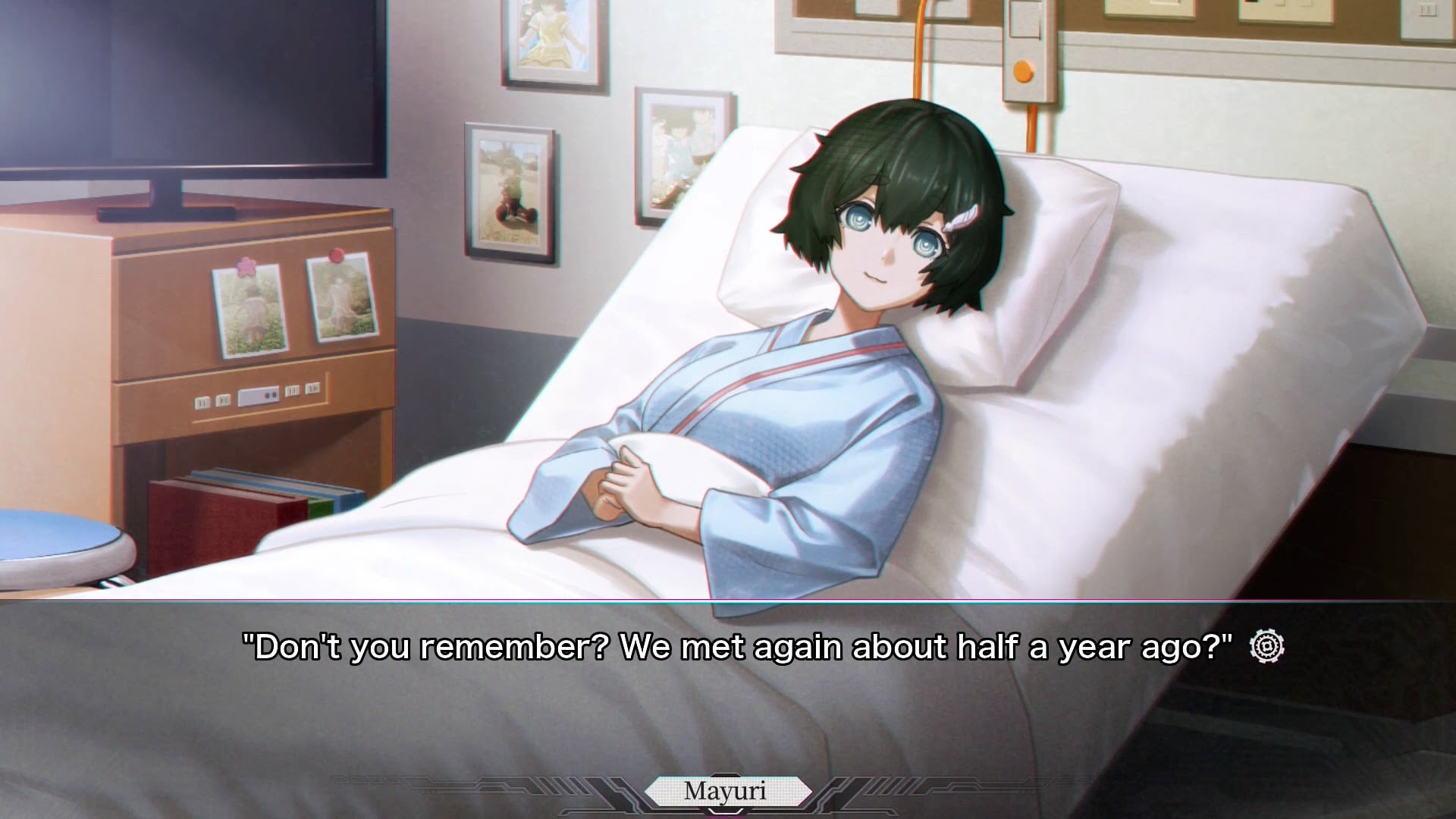
The biggest question for Re:Boot is whether it was necessary, especially when there is already one remake of the game readily available, and that remake (Elite) really went all out with the production values. Fair enough that the original Steins;Gate isn’t really available on modern platforms, but could the developers not have just released that, or continued to bring Elite to new platforms?
I’m not sure what business decisions led to this version being greenlit and produced, though there is more new Steins;Gate in the pipeline so perhaps this was to be the vehicle to remind fans why they loved the game and find some new fans in the process. Whatever the reason, Re:Boot is the definitive edition of a true giant of the visual novel genre. As long as you can get along with the tweaked art direction, I doubt you’re going to have any complaints with Re:Boot.