

Sugoroku is, as far as the mechanics go, not the most exciting board game. In fact, it’s not far removed from Snakes & Ladders, and no one really plays it for the tactics or challenge. But it is a piece of Japanese culture that anyone with an interest in the country should be familiar with, and Sat-Box’s Sugoroku New Year’s Party is one of the best examples of the game as a piece of culture.
Sugoroku is traditionally played as part of the New Year’s celebrations. Because the base board game relies entirely on luck, winning it is a sign of fortune for the year ahead. That, of course, is total nonsense, given that everyone in the world is in for a decidedly unlucky year when Greenland finds itself invaded by the Bad Tan Reich, but it’s a fun and frivolous bit of escapism in the meantime, I guess. Whatever the case, the fact that c theming and minigames (more on them soon) are all tied in with New Year’s celebrations in Japan gives the game additional resonance for that theme.
It helps that it’s really quite delightful to play.

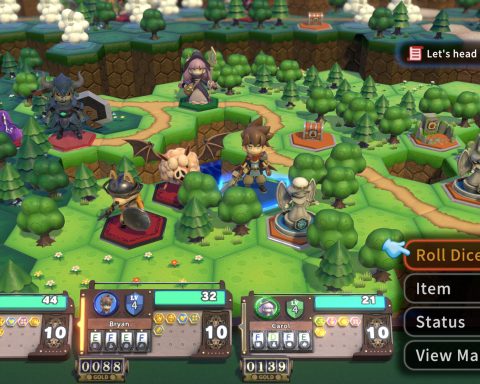
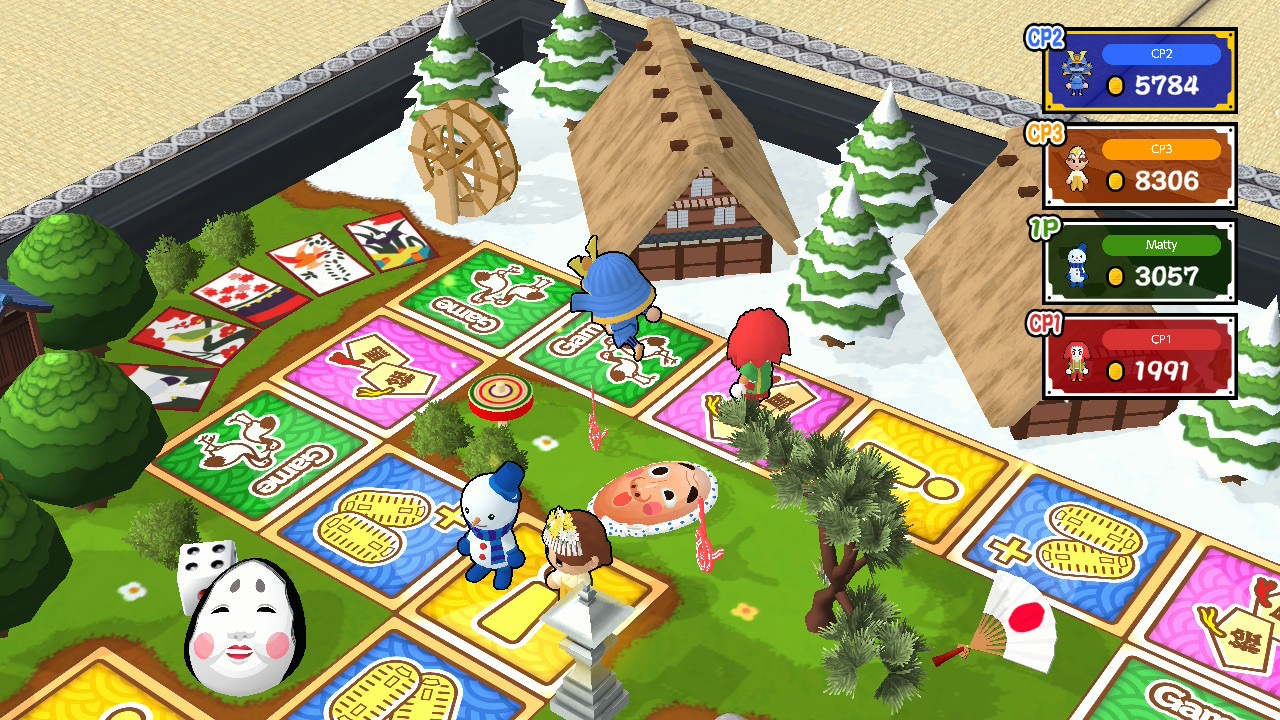
Ultimately, all you’re doing is rolling dice and hoping that you land on positive squares, as you move around a board that is almost entirely linear. However, that board is colourful and charming, and the large array of characters you can choose between gives it a warm personality from the outset. You do earn some very limited tactical options via cards that you collect that can give you the ability to roll two dice in a turn, steal coins from an opponent as you pass them, or force opponents to only move one or two spaces on their turns. These cards are the basics from any modern Mario Party title, and while they are simple, they do add just enough excitement in terms of player agency to help move the game beyond a very standard take on Sugoroku.
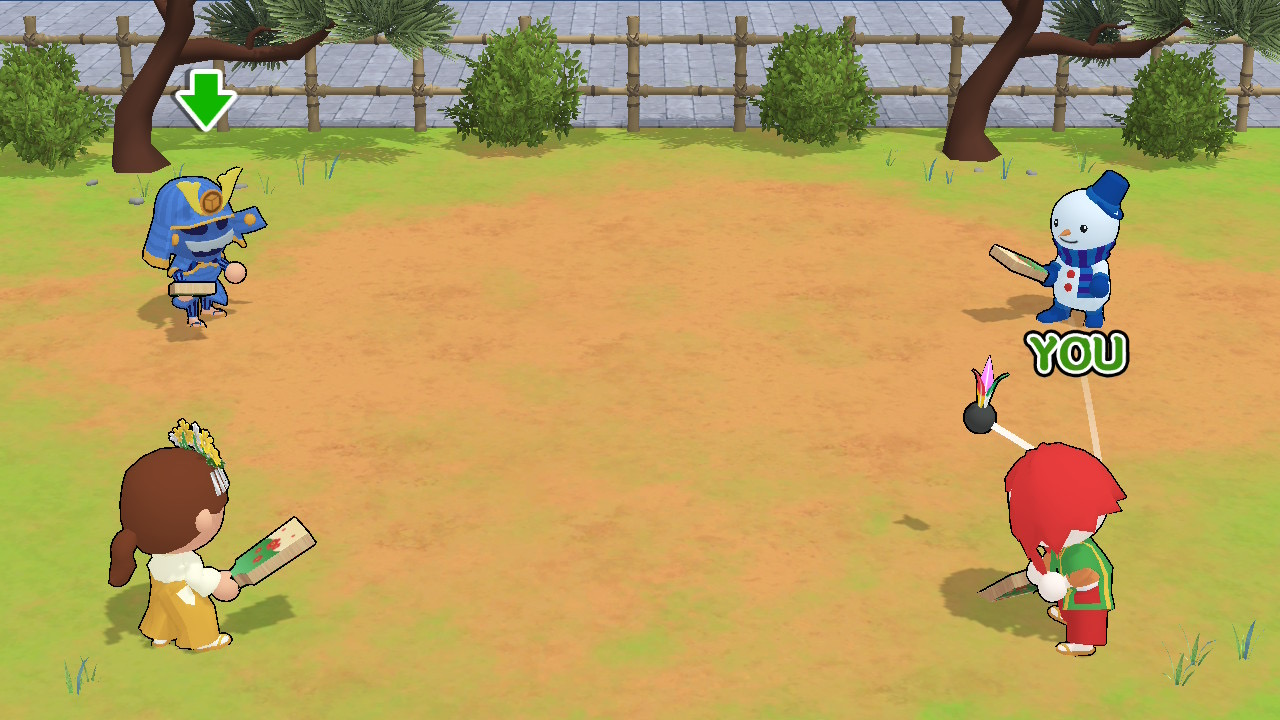
Taking things even further are the minigames. There aren’t many of them, and this isn’t Mario Party. However, the ten minigames that are there are all closely themed after Japanese festival games and traditions. To the point that I found myself looking through the photos from the one time I attended a festival (over there it’s such an aesthetically and tonally different experience) and feeling a bit homesick from the dancing lions, daruma, and wooden paddle game thing.
These minigames are mostly skill-based. They’re not as well-made as the better Mario Party minigames… though they’re also nowhere near as bad as the lesser ones. And so, while you’ll have seen everything that Sugoroku New Year’s Party has to offer within two short games, replay value remains pretty solid because there is that skill element and the ten games that are there are all enjoyable enough.
In terms of long-term longevity, there are some unlockable character types that you’ll earn by playing each game mode (10-turn game, 20-turn game, 30-turn game) a few times each. It’s only a few replays to unlock each as the developers are clearly aware that no one’s going to want to grind away at this game for hours and weeks, but it’s enough to make the first few hours rewarding. There’s also online play, but you’re going to need a friend who also has a copy of this game to get a match going. No one is hanging around in the lobby system waiting for another player keen on playing Sugoroku with strangers, I can assure you.
Sugoroku isn’t a brilliant board game. It’s not Wingspan, or Catan, or Lords of Waterdeep. It’s not even Hero Quest or Talisman. But sometimes a game has cultural resonance beyond the entertainment value of its mechanics and systems. Sugoroku is as Japanese as Shinto, Kabuki, Pikachu and Sushi. And for that sociological reason, it’s actually worth having a take on Sugoroku and playing it. This one is actually one of the best examples of it.