

I was very hesitant to review Ghost of Yotei, as my experience reviewing its predecessor was… less than great. Applying even a rudimentary critical analysis to the artistic side of a major blockbuster game is asking for the fanbase to take it as a personal affront and then proceed to harass you over it for months (and, in that case, months). But then I started to play Ghost of Yotei and, dear lord, it’s frustrating to parse.
Ghost of Tsushima was a fetishistic fantasy in which a very American company gathered every Japanese cultural marker it could think of, threw it into a giant pot, and, after giving it a stir, spat something out that really struggled to understand anything it was depicting. It made some very fundamental missteps in just about every way, from the way it depicted samurai legends, to the history that it was set in, right down to minor activities, such as the embarrassingly bad “compose Haiku in a hot spring,” minigame. At best it was a pastiche of The Last Samurai, but more often it was right up there with the most infantile take on Japanese culture I’ve ever seen.
Ghost of Yotei does some of that too (thankfully ditching the Haiku scenes at least), but it has a far bigger issue, and to start to explain that, I need to first reference former Australian Prime Minister Tony Abbott. Abbott was, as leader, a staunch advocate for Western imperialism (and still is though is no longer leader). One of his speeches that I’ve never quite forgotten went like this: “I guess our country owes its existence to a form of foreign investment by the British government in the then unsettled… or scarcely settled… Great South Land.” It was Freudian slips like this that he reminded you that, as he was no fan of Australian indigenous people, in his mind, they never existed at all.
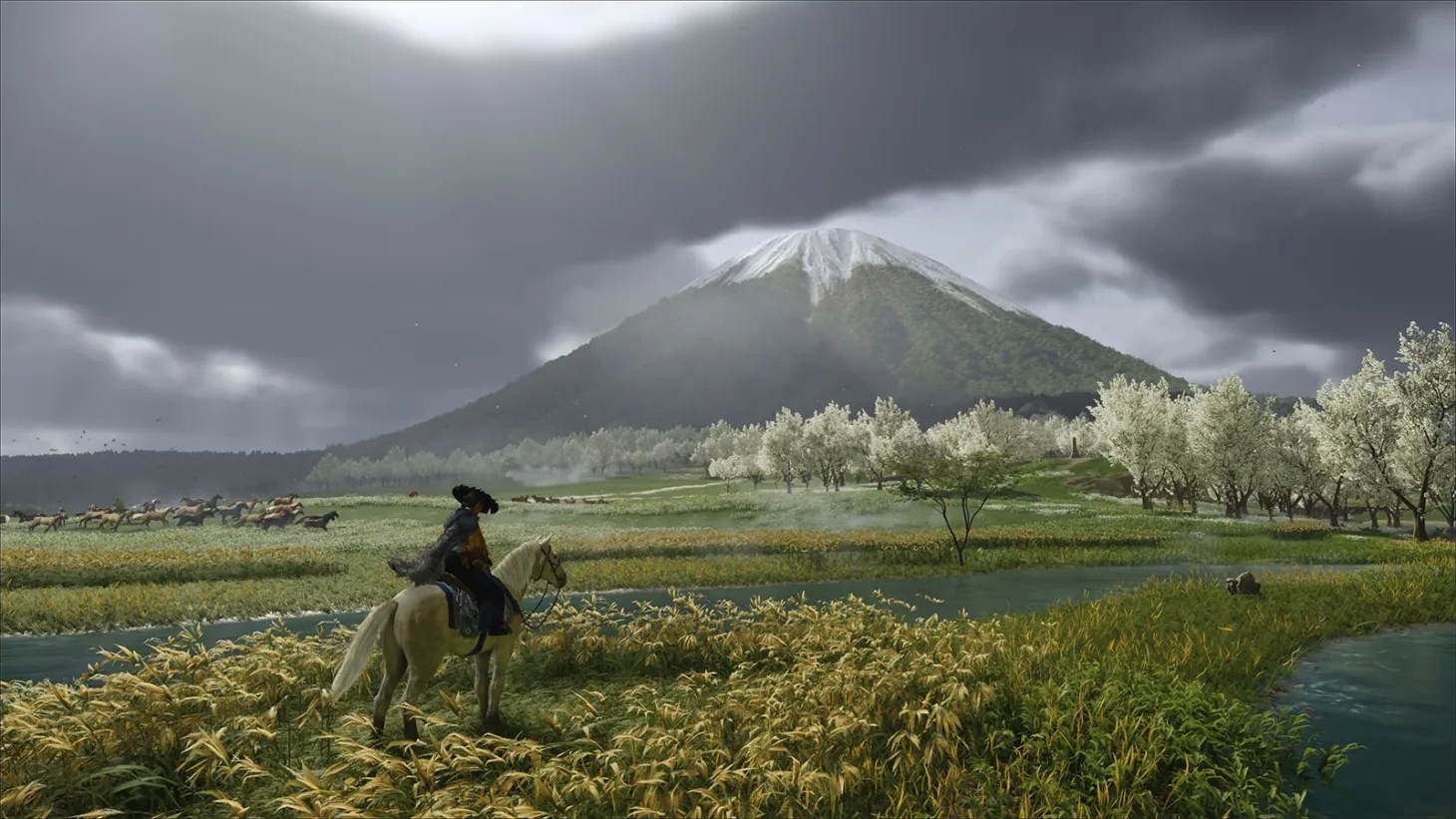
Ghost of Yotei does that a bit. This is a game that is absolutely obsessed with showcasing just how “untamed” Ezo (now Hokkaido) is. You’ll go running on horseback for the equivalent of miles through fields of flowers and not meet a soul. Human camps and settlements are tiny, sparse, and far apart from one another. Indeed, one of the easiest ways to figure out where to explore next is to look for a dot of flame or smoke on the distant horizon. That’s a sign that you’re about to run into a rare person, and that means either a quest or something to kill.
Of course, Ezo was actually inhabited. Its native people are the Ainu, but the game barely acknowledges them. You’ll run into some Ainu from time to time, but they’re very minor characters within the game, seemingly placed there simply because Sucker Punch understood that otherwise they’d be asked some pretty pointed questions. Also, by including some Ainu characters, the development team could do an interview victory lap and claim that they really worked hard to handle the subject respectfully. Which, of course they did. Just like they toured all the big media outlets to talk up how they even visited Tsushima when making the previous game, this time they even spoke to “Ainu experts.”
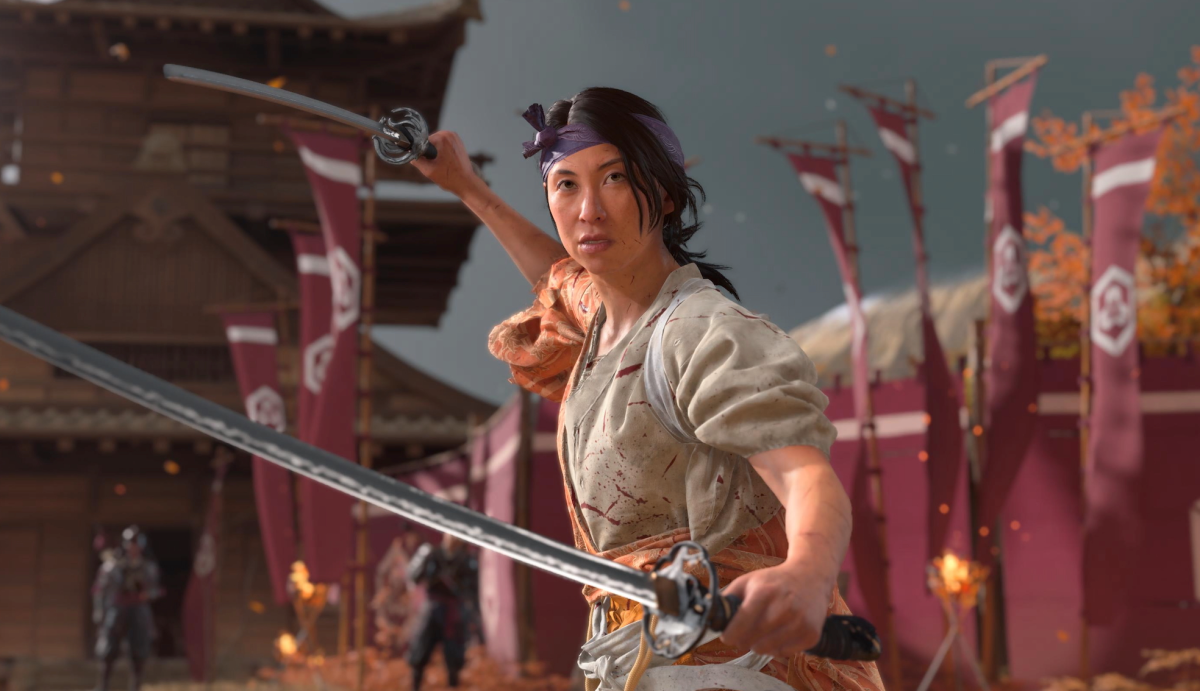
If they did, they only did so in a very superficial manner (just as was the case with the Tsushima visit). For one thing, the story doesn’t make them core to their own homeland, at a time when it was still theirs. Instead, it is almost entirely focused on a conflict between two opposing colonising forces – the Shogun’s designated expansionist clan (the Matsumae, who were initially instructed to defend northern Honshu from “barbarians” from the north before being given leave to expand into the island), and a gang of thugs and rebels run by a guy called Saito. You play as a Japanese woman in conflict with Saito, so naturally, you largely fall in with the Matsumae, even as the dialogue impresses that you really don’t like them either. When you do run into the Ainu, they’re presented as largely passive, if not welcoming to colonisation, which is just not what happened.
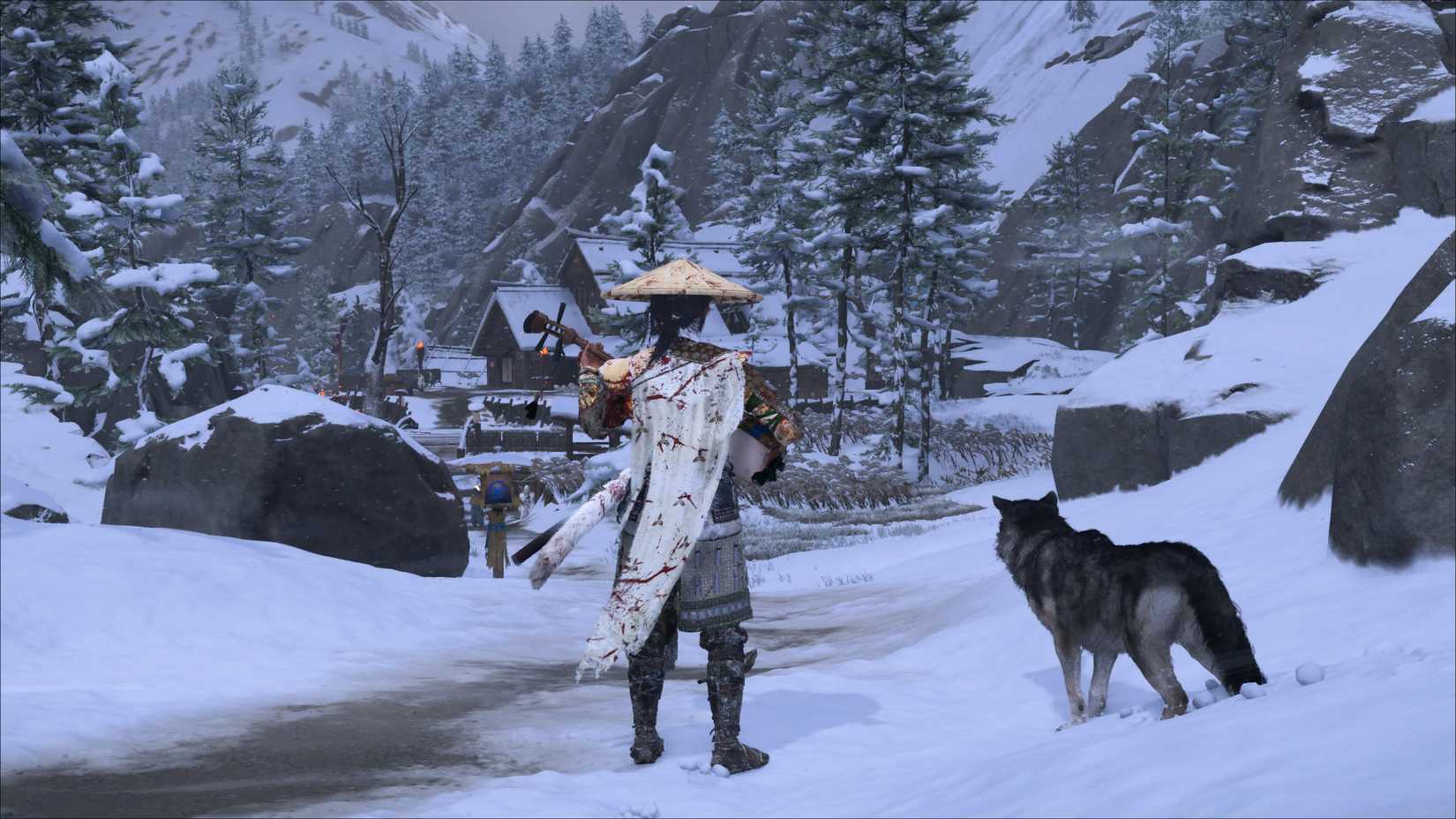
This sidelining of the Ainu is particularly disappointing when you consider that all the developers really needed to do was follow the Ghost of Tsushima precadent. In Ghost of Tsushima you play as a native to an island that is fighting back against an invasion – with the intent of colonisation – of the Mongolian people. It would have been almost painfully easy to follow that mould and cast you as an Ainu warrior fighting back against the Matsumae invaders. Instead, Sucker Punch point-blank refused to even broach the topic, and instead wrote a story that cloned Kill Bill and then spread it over way too many hours. You’re a woman on a quest for vengeance against a group of six thugs. How entirely original and I’m sure glad the developers sidelined what could have been the first Ainu story in video games for it.
The issues run deeper than this, too. Sucker Punch’s team was so over-eager to remind us all of how very Japanese (not Ainu) their game was that they went and inserted Japanese stuff where, at the time, there wouldn’t have been any of it. In doing so, once again the team effectively sidelines the Ainu. As noted in a Japan Times report: “An anachronistic set of armour in 13th-century Tsushima may be a matter of taste; a sprawling Shinto shrine complex atop a mountain in the northernmost reaches of Hokkaido in 1603 substitutes the presence of one culture over another as if it were a matter of set dressing.”
I know, in writing all this, that I’m going to have to deal with some truly nasty comments (heads up, I will be deleting them, so if you want to waste your time, good for you), but this stuff really does matter. The Ainu have really struggled for recognition in Japan. Really, really struggled. The Japanese government only recognised the Ainu as an indigenous people in 2019 (no, not a typo. Six years ago). The language is at major risk of dying out. The Japanese learn nothing about the Ainu during their time in the education system. Misinformation and disinformation about the culture is rife. The organisers of the Tokyo Olympics, at the last moment, even dropped a dance performance from the opening ceremony, meaning the Ainu were totally absent from the games. What a kick to the collective balls that was.
So for an American company to come in and set a story during a time that was of critical importance to Ainu history, to then turn around and go terra nullius with it… It’s more than insulting. It’s downright irresponsible and reinforces a view of the Ainu people that the Japanese government itself continues to perpetrate, to the point that they’re at risk of becoming a lost culture. Pragmatically speaking, I understand why it happened: I’ve been trying to study the Ainu from afar for many years now myself, and it’s almost impossible (in Japanese, let alone English). I’d be terrified to try and locate a story in Ainu history and then actually write Ainu characters and culture. What little expertise on Ainu history and culture exists, exists among people who spend a lot of time fully immersed in what’s left of it. I know enough that I know I don’t know enough. Sucker Punch can claim that they met some Ainu people to make sure that their game is “respectful” all they like, but a handshake and a quick tour just didn’t cut it. So I do understand why the executive decision might have been made not to write an Ainu story, but, in that case, perhaps they should have also thought about locating the game somewhere where they wouldn’t have had this challenge? Japanese history is filled with opportunities for “Ghost”-style stories. I could give the team a dozen in about a minute, just off the top of my head.
Or to put all of this another way – if a Japanese game developer were to decide to set a game in 16th/17th century America, where you play as colonisers, and the only time you saw a Native American person was a side story that romanticised Pocahontas, we all know the kind of headlines and write-ups that hypothetical game would get. Being entirely frank and blunt about it, Americans were not the right people to tell the story of Ezo.
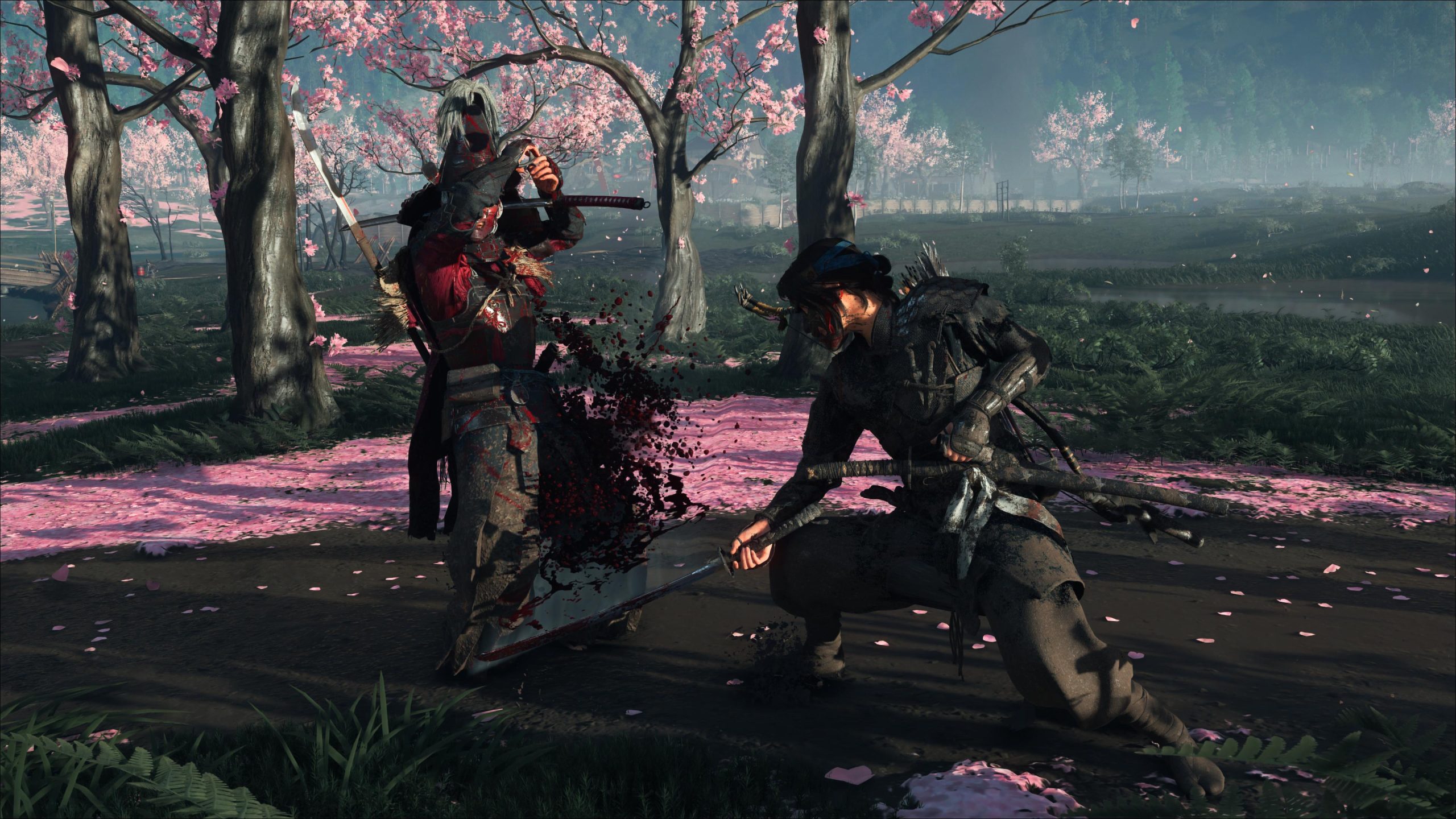
I realise I’ve rambled on quite a lot about the narrative, setting, and thematic background of Ghost of Yotei (and yes, commenters, I know half of you are furious at me for it now). As a game, it’s… fine. It’s a big and technically detailed (though aesthetically overwrought to an almost broken degree) open world game that is designed by people who understand how to make open world experiences. You’ll be carefully guided across the landscape by strategically-placed quest markers, side-quests and mini-activities, and the exploration will be frequently broken up with an awful lot of very violent combat. By the end of it’s 50-hour run time you’ll feel like you’ve explored a lot, done a lot, seen a lot and killed a whole lot. Seriously, given how sparse of humans it is, it feels like you’re single-handedly cutting the population in half at times.
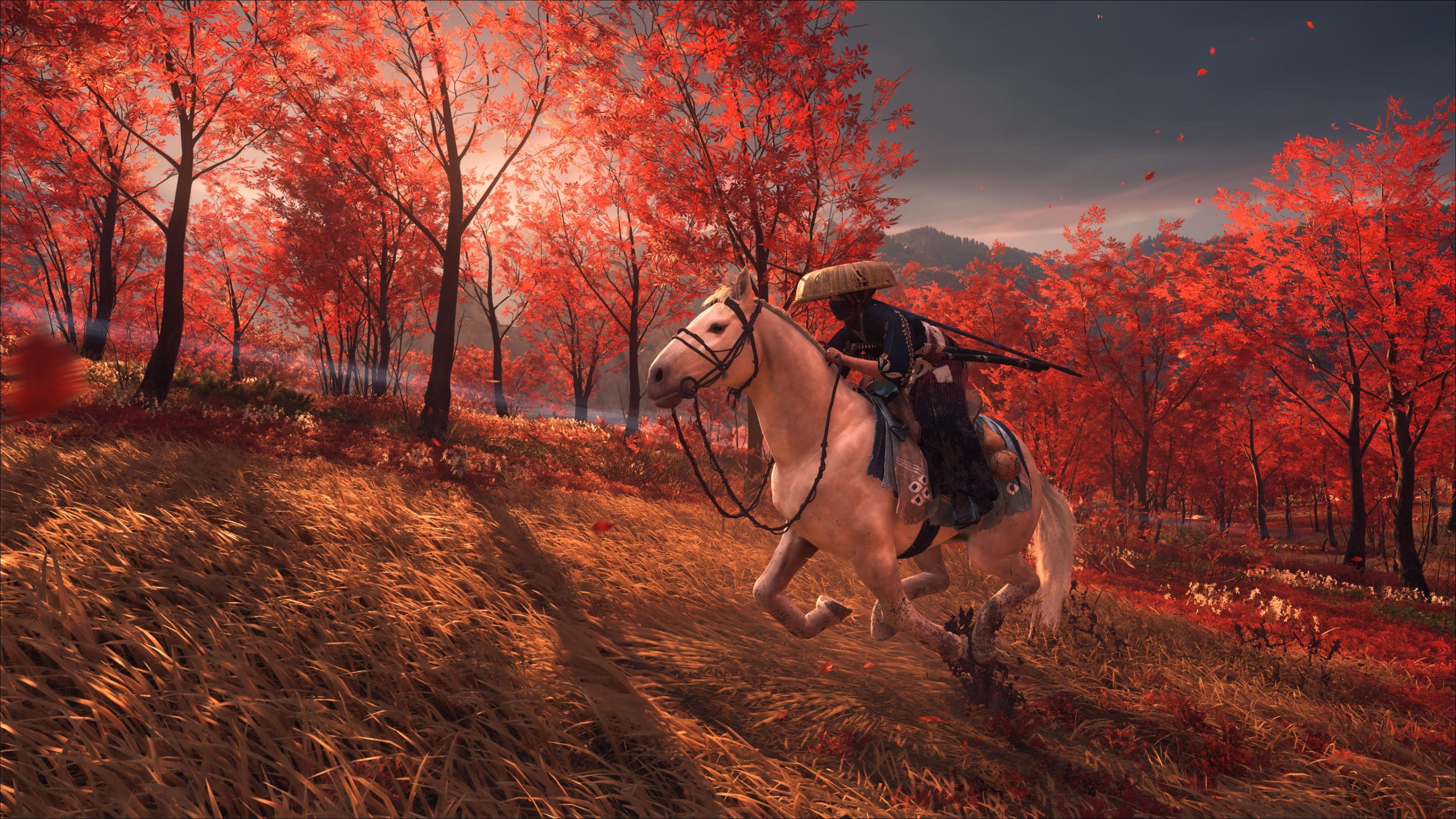
Just like with Ghost of Tsushima, the combat encourages you to make good use of parries and standoffs (which does nicely support the “Wild West” vibe). You’re also going to need to quickly cycle through weapons, as weapons are strong against some other weapons, while weak against others. Better enemies will also cycle through, creating a dance-like situation where you’ll both be waiting to respond to the other’s aggression.
Throw in the ability to stealth around before combat and an expansive toolkit featuring just about every gimmick and trick you’ve ever seen in a samurai film, and Ghost of Yotei’s minute-to-minute action remains interesting and varied throughout. You’ll be constantly tasked with thinking up creative ways to use your arsenal and growing range of skills, right to the end. This is good, because, again, there’s an awful lot of this action to spread over an incredibly thin plot, so we should all be glad that the developers have worked really hard to keep the more visceral side of the experience varied, exciting and engaging.
Ghost of Yotei achieves what it set out to, in that it wanted to take what makes Ghost of Tsushima so popular (the visual engine, the combat, Sucker Punch’s open worlds) and transport it to a “barely settled” location where they could give us a rip-roaring, all-American Wild West story. So… good on them for achieving that, I guess. But, as I brace for the inevitable comment moderation job ahead, I gotta be honest and say I just didn’t care for any of it. Or the way it capitalises on the Japanese/Ainu setting rather than tries to work with it.



Sadly I wasted 10 minutes reading what feels like un unjustified ragebait “review” with the sole purpose to drive engagement to this site. Matt, if you write 10,000 words for a review and still can’t substantiate your criticisms by explaining why or how the game is lacking in those areas, it’s going to come across as mere provocation. If provocation wasn’t the purpose of the review, you’d better find another job.
You didn’t read the review at all, lol
Two thirds of the review are spent substantiating and explaining precisely how the game lacks from the locus of the reviewer…
I know that it was localized/translated instead of developed in North America, which resulted in uncertain spellings amongst other divisive quirks, but how would you assess the Utawarerumono inclusion of Ainu, years after the release of those games? :O Perhaps a followup article could analyze such, rather than a reply within this box. Leaf/Aquaplus & their Uta series introduced many newcomers to traces of Ainu heritage in the first place, well before Sucker Punch trode north of Honshu.
Save your reading time!
The review reads less like a game critique and more like a thesis on cultural politics. The author spends 90% of the piece fixating on perceived historical and sociological failings instead of actually reviewing Ghost of Yotei as a game. It’s fine to discuss cultural representation, but here it replaces gameplay analysis, pacing, design critique, or player experience entirely.
If you came here hoping for an honest assessment of whether Ghost of Yotei is worth playing, don’t bother.
Thank you for your kind words. When a game warrants it I do like to write actual art criticism rather than tell the gamers how much fun it is to press buttons. I’m glad I achieved that with this review <3.
I’d argue you didn’t really include artistic criticism but rather a lot of narrative criticism. One of the things I found most amazing playin Ghost of Tsushima was how alive the world felt. From the weather to the leaves. It didn’t just feel like a bunch of static polygons. You’ve completely ignored that in your “art criticism” in favor of your historical accuracy analysis.
Literature – narrative – is a form of art.
And yeah, I ignored the visuals that Sucker Punch spent their massive available budget on, because ultimately the visuals were meant to be in support of that narrative in this kind of project.
Beyond that, you really don’t want to know what I think of the way Sucker Punch has indulged crass orientalism in their efforts to make both Tsushima and Yotei – real places – as “exotic” and “fantastic” as possible in their games. That’s an article for another day, but it’s particularly insulting that they package this overwrought and kitschy aesthetic up with something they claim is based in real history.
I’m a little torn on this. A review is ostensibly consumer advice, but this article reads more like a post-launch think piece with some throw-away comments about gameplay and a tacked-on score meant to allow it to be passed off as a review. That said, reviews are inherently subjective and given what you said about your life in another comment I can see how the issues you talked about might have completely dominated your subjective experience of the game.
As someone who knows nothing about Japan and had never even heard of the Ainu, I found their inclusion in the game to be revoltingly patronising and reminiscent of the well-intended but mostly insulting way that Americans have been portraying Native Americans ever since it became fashionable to feel slightly guilty about stealing their home. I realise this will come across as callous, but I would rather the Ainu hadn’t been included at all, because – and this brings us back to the review vs think piece distinction – I don’t play games to educate myself, I play them to enjoy myself, and I work on the assumption that any “history” portrayed in the game is probably bollocks. To that end, I look at reviews to tell me which games I might enjoy. Or, to use your words, how much fun it is to press the buttons. As Ghost of Yotei reminds us, games are not art.
It finally posted! I was wondering what your thoughts on the game would be after your review of the first game. That review stuck with me because it was very different from anyone else’s and gave me a bit to reflect on; it’s one of the reasons I come to this site.
I, personally, found the Ainu content quite interesting. It was enough to spark my interest and look elsewhere and see what the actual history of their people were, both historically and during the period. Like the last one, the Ainu collectibles is game were just as interesting as the Mongol artefacts with their accompanying descriptions; I enjoyed collecting every one and the educational value it brought.
When I think of Indigenous peoples in videogames there are a woeful amount that come to mind. Never Alone would probably be the best one I can think of, it also helps that is has a documentary alongside it to further delve into the people it represents.
What did you think of Connor in Assassin’s Creed 3? I read your review of the game and that review didn’t touch on Connor’s roots and struggles, and that game closer resembled your proposal for the setting of Yotei from an Ainu lense.
This is a nice writeup, and while I will still play the game as a “game”, I did enjoy reading an informed perspective on the marginalization of communities and measured criticism on how representation and world building can be more thoughtful. I also appreciate that the review highlights these themes without resorting to hyperbole or vitriol.
It’s sad that people cannot read a 5 minute article without feeling the need to resort to tribalism. Or disappointment that it’s not exactly to the tone they prefer, and anger over a different point of view, but that’s the world we live in. Perhaps, that’s the world we’ve always lived in. Games are recreation, but they are also art and culture, and it’s very okay and frequently refreshing to profess a differing point of view, especially when it is expressed respectfully.
Thank you for this very enlightening review. I’m fully on board with your approach on video game critique. Reading this I feel like Ghost of Yotei is historical negationism, making the colonization and suffering of the Ainu people invisible. This stinks real bad and you’re right to make it the focus of your review.
Interesting take, but I find it odd how often you bemoaned-in-advance the comment section, and how you don’t really address your piece from the game’s announcement. There, you said that they would probably completely ignore the Ainu or make them villains, and they did neither. Yes, the Ainu were largely sidelined, and I agree with your overall critiques of the game’s narrative as being too long and too simple, a bit too colonialist, and too Matsumae friendly despite the weak gestures towards the idea that they aren’t good either. But I was actually surprised the Ainu were not only in the game but given some exploration. The player learns who the Ainu are, why they are distinct from the Japanese people, and the game makes it clear that they were in Ezo before the shogun or Saito. Credit where it’s due, in my opinion, they cleared the very low bar.
I think the game would have benefitted if they’d made that a great element of the story. You can keep the Atsu vs Saito plot, but also fight back Matsumae expansion and keep the land in the hands of Ainu. Would fit Atsu’s role as the ghost in the middle of the war between Saito and the Shogun, and would give more depth to a story that is otherwise a pretty predictable revenge plot.
So yeah, neat post! Just a very bloggy writing style, which isn’t necessarily a bad thing.
Sucker Punch did indeed exceed my expectations in that they put Ainu in the game and not as the antagonists. However, I do think my broader point about the lack of understanding of the culture and inability to do it justice is the more important one here.
As I explained in the review, the real issue is just that the developers went very Terra Nullius with the game. Terra Nullius doesn’t actually mean “empty land,” but rather “land that belongs to no one” and it’s essentially denying that the native people of a geography have any claim to that territory. It was used by England to justify colonising Australia, and somehow *continues* to be used in Japan to defend the treatment of the Ainu.
This game doesn’t really put forward the position that Ezo belonged to Ainu, and in that way, they may not have denied the existence of the Ainu and put some in their game, but they did an absolutely awful job of respecting the Ainu identity and culture. That’s really the point I’ve been making across both pieces I’ve written in the game.
As for the comments section… well, the comments I’ve had to delete on this review have validated me on that one :P. It has been pretty awful and I’m glad other people don’t have to read them.
On the one had I can agree with your criticisms of Ghost of Tsushima. As someone who has watched a lot of Samurai Films it definitely struck me how American the narrative was. Even the Mongols came across as a more standard antagonist than is typical in most Samurai Films.
But on the other hand, Famitsu, a Japanese publication also gave the game a 40 out of 40. So its amusing when what I assume is an English speaking American/Brit(?) is super critical of the culture represented.
I enjoyed the aesthetic and combat even if the main narrative was very American. Some of the stories like Yurriko or Tadoe were still pretty great.
Famitsu’s reviews are around 50 characters each. Famitsu’s reviews don’t extend much past whether the reviewer enjoyed pressing buttons or not.
Not that Famitsu is invalid – I actually subscribe to the magazine – but it’s not the source for serious criticism that you’re implying here.
For the record, I’m Australian. My wife is Japanese, I’ve spent the last 15 or so years splitting my time between Australia and Japan, and I’ve spent more time in both Hokkaido and Tsushima than any of the Sucker Punch team have, I can assure you. I’ve got an open invitation to study a phd in Japanese history here (I’m in Japan right now), so your characterisation of me is just not accurate.
I liked the review. I learned something about the game, and history and see your valid frustrations.
I feel like Sucker punch were right to say “… we aren’t the people to tell this story.” and also that you were right that they should have picked a different location in space and time. Or even gone entirely fictitious and just made up an island.
I’m very “Noob” to Japanese History so loved the review. I’ve been waiting to pick up the game because I had my first trip to Japan in April and was saving like a fiend to make that happen.
These games are immensely popular in Japan, both critically and commercially. You, on the other hand, are a weeaboo. You have no idea what you’re talking about.
Given that I didn’t say a single thing about other reviews of the games, nor how well they sold, or how popular they are, your comment is entirely irrelevant.
It’s actually really quite pathetic that all you can do is point to a Famitsu score (because you definitely don’t understand Japanese so your “critically popular in Japan” comment there is purely based on one or two scores that you’ve seen) and sales numbers, because you’ve got to be a knight in shining armour to Sony. Meanwhile, of course, you can’t actually engage with a single thing I wrote or a single criticism that I have, because you really do understand nothing about Japan, and because all you do with your time is play with toys, you’re never going to learn.
Good day.